
UPSC CURRENT AFFAIRS – 28th May 2025

Home / UPSC / Current Affairs / Bharat Forecast System

Bharat Forecast System

bharat forecast system

Why in News?

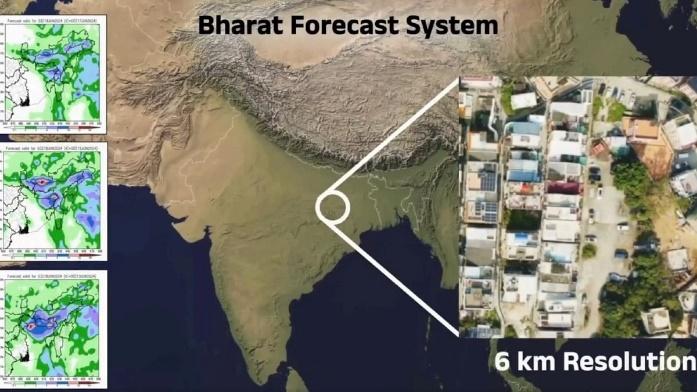
Bharat Forecast System (BFS) is India’s first indigenously developed high-resolution weather model with a 6-km grid, offering 64% improved accuracy over previous systems.

Introduction

  • In a significant scientific advancement, the India Meteorological Department (IMD) has operationalized the Bharat Forecast System (BFS)—the world’s first indigenously developed high-resolution weather prediction model
  • Launched by Union Minister of Earth Sciences Dr. Jitendra Singh at Vigyan Bhawan, BFS is poised to revolutionize weather forecasting in India and strengthen disaster preparedness.

What is the Bharat Forecast System (BFS)?

  • The Bharat Forecast System (BFS) is a next-generation numerical weather prediction model developed by the Indian Institute of Tropical Meteorology (IITM), Pune
  • It provides weather forecasts at a 6-kilometre spatial resolution, making it one of the most accurate and high-resolution models in the world.
  • For comparison, forecasting models used by advanced nations like the United Kingdom, United States, and European Union generally operate at a 9–14 km resolution.

Key Features of BFS

Feature

Description

Spatial Resolution

6 km grid size – significantly finer than earlier 12-km model

Indigenous Development

Developed entirely within India under Atmanirbhar Bharat initiative

Institutions Involved

Indian Institute of Tropical Meteorology (IITM), IMD, and National Centre for Medium Range Weather Forecasting (NCMRWF)

Computational Infrastructure

Powered by high-performance computing systems ‘Arka’ and ‘Arunika’

Accuracy

64% improvement over earlier models; 30% better prediction of extreme weather events

Operational Use

Now in full-scale use at IMD for issuing real-time forecasts

bharat forecast system features

How Does BFS Work?

The BFS utilizes powerful high-performance computing (HPC) infrastructure:

  • ‘Arka’ at IITM Pune, and
  • ‘Arunika’ at NCMRWF, Noida.

These HPC systems enable real-time simulation of atmospheric processes, resulting in:

  • Faster data processing,
  • Timely generation of weather alerts,
  • Improved spatial accuracy in predicting localized events like cyclones, heatwaves, floods, and heavy rainfall.

Significance and Applications

  1. Improved Forecast Accuracy
    • BFS offers 64% better accuracy than its predecessor.
    • Specifically enhances forecasts of extreme weather, critical in India’s context where monsoon variability and climate disasters are common.
  1. Disaster Preparedness and Risk Reduction
    • Accurate forecasts help minimize human and economic losses by enabling timely evacuation, agricultural planning, and resource mobilization.
  1. Sectoral Impact
    • Agriculture: Helps farmers with precise rainfall and drought warnings.
    • Water Management: Assists in reservoir and dam management.
    • Urban Planning & Infrastructure: Guides planning for flood-prone and high-risk zones.
    • Aviation & Marine: Improves navigation safety and scheduling.
  1. Climate Resilience
    • BFS supports India’s climate adaptation strategies, offering crucial data to design policies for sustainable development and environmental management.

Significance and Applications

Leave a Reply

Your email address will not be published. Required fields are marked *

Call Us Now !

Copyright © JICE ACADEMY FOR EXCELLENCE PRIVATE LIMITED