
UPSC CURRENT AFFAIRS – 29th May 2025

Home / UPSC / Current Affairs / It is time to stop ritualistic hunting

It is time to stop ritualistic hunting

ritualistic hunting

Why in News?

Sikari Utsav, a ritualistic hunting festival in south-west Bengal, poses ecological threats despite ongoing community-based forest conservation efforts under Joint Forest Management. 

Introduction

  • Since the 1980s, the Joint Forest Management (JFM) model in West Bengal has emerged as a successful example of participatory forest governance. 
  • This collaborative approach between local communities and the State Forest Department has led to improvements in forest cover, biodiversity, and local livelihoods.
  • However, despite these achievements, south-west Bengal faces critical environmental challenges, notably ritualistic hunting during the Sikari Utsav, which poses a threat to fragile ecosystems and undermines conservation efforts.

Joint Forest Management in West Bengal: A Model of Cooperation

JFM committees were introduced in West Bengal in the 1980s to:

  • Involve local communities in protecting and regenerating forests
  • Enhance livelihoods through sustainable forest-based activities
  • Foster a sense of community stewardship for the environment

Achievements of JFM in West Bengal:

  • Restoration of degraded forests
  • Revival of native wildlife species
  • Economic benefits to forest-dependent communities
  • Creation of local employment through forest protection and eco-tourism

Despite these gains, localized environmental pressures threaten to undo the progress made.

sikari utsav

Sikari Utsav: A Cultural Tradition with Ecological Costs

What is Sikari Utsav?

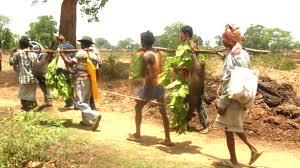
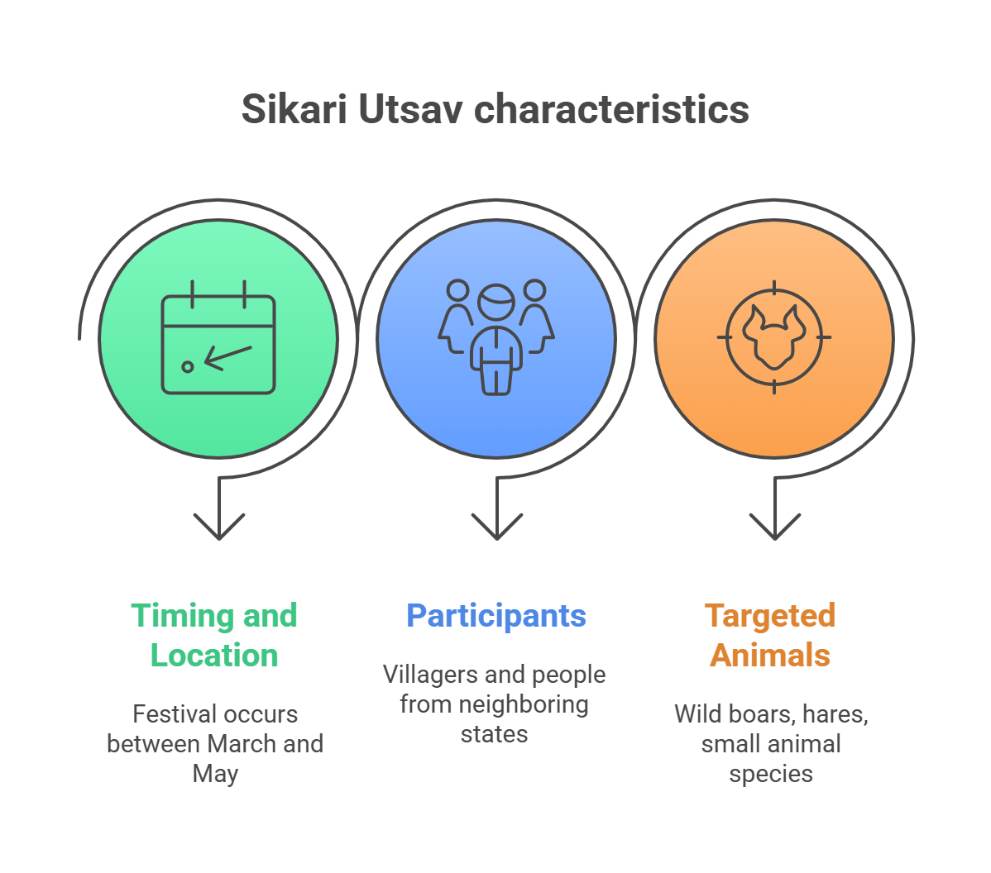
  • A regional hunting festival held between March and May in Jhargram, Paschim Medinipur, Bankura, Purulia, and Birbhum.
  • Participants include not just local villagers, but people from neighbouring states like Jharkhand, Odisha, and Bihar.
  • Wild animals targeted include wild boars, hares, and other small species.

Ecological and Conservation Impact:

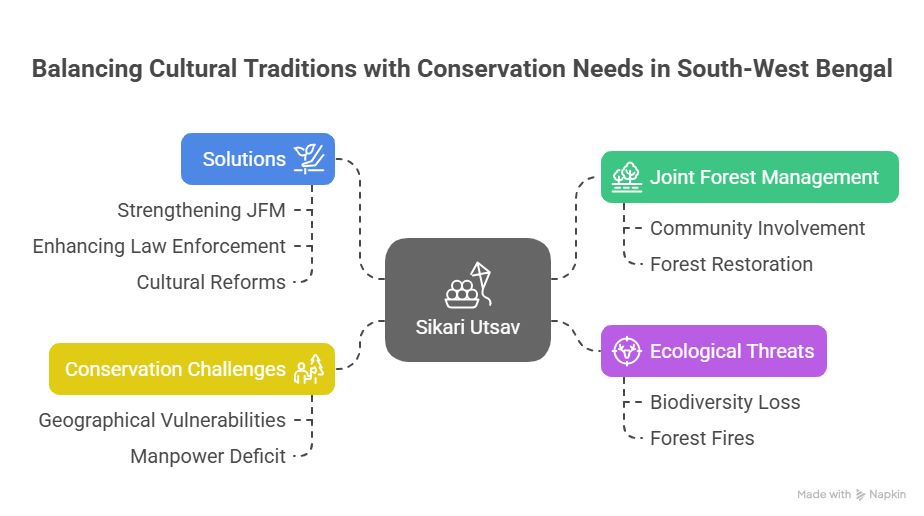
  • Biodiversity loss: The indiscriminate hunting of wildlife disturbs the ecological balance.
  • Stress on forest staff: The Forest Department is under-resourced and unable to curb large-scale illegal hunting.
  • Increased risk of forest fires: The hunting period coincides with the dry season, aggravating the risk of fire-related damage.
  • Erosion of conservation efforts: Decades of reforestation and biodiversity restoration are undermined.

Challenges Facing Forest Conservation in South-West Bengal

  1. Geographical Vulnerabilities
    • The forests are vast, open, and accessible, making them difficult to monitor.
    • Settlements around forest areas increase human-wildlife interaction and potential conflict.
  1. Manpower and Infrastructure Deficit
    • The Forest Department lacks adequate staff and resources.
    • Surveillance and enforcement mechanisms are insufficient during mass hunting events.
  1. Cultural Justification of Hunting
    • Ritual hunting is seen as a symbol of tradition, dating back generations.
    • Community pride and historical identity are often associated with hunting practices.
    • This cultural dimension complicates legal enforcement and community outreach.
balancing cultural traditions with conservation needs in south-west bengal

Balancing Cultural Traditions with Conservation Needs

  • While cultural practices like Sikari Utsav are deeply ingrained, they must evolve in the face of current environmental realities. 
  • The decline in wildlife populations and increasing habitat degradation are clear indicators that such practices are no longer sustainable.

The Need for Dialogue and Education

  • Community engagement must focus on awareness and behavior change.
  • Traditional practices can be re-imagined in environmentally sustainable ways (e.g., symbolic hunts, archery festivals without actual wildlife harm).
  • Educational campaigns must emphasize biodiversity’s role in human well-being.

The Way Forward:

  1. Strengthening the JFM Model
    • Expand the reach of JFM to more forest areas.
    • Provide training, incentives, and legal empowerment to JFM committees.
    • Ensure greater involvement of women and youth in forest management.
  1. Enhancing Law Enforcement and Surveillance
    • Deploy technology (drones, GIS, camera traps) for forest surveillance.
    • Increase the manpower and resources of the Forest Department.
    • Coordinate with inter-state authorities to control the influx of outside hunters.
  1. Cultural Reforms and Sustainable Alternatives
    • Work with cultural leaders and elders to reinterpret traditions in eco-friendly ways.
    • Promote eco-tourism and forest-based livelihoods as viable alternatives to hunting.
    • Organize community festivals that celebrate nature and conservation rather than exploitation.
  1. Forest Fire Prevention
    • Conduct fire awareness and preparedness campaigns during the dry season.
    • Establish fire watchtowers, and incentivize local participation in fire management.

For Indian Exporters

  • These reforms reduce transaction costs and compliance hurdles
  • Encourage a more competitive and efficient export environment
  • Promote value addition in key sectors like leather

For Tamil Nadu

  • The reforms particularly benefit the state’s leather industry, a major contributor to employment and exports
  • Boost the marketability of GI-tagged E.I. leather, enhancing rural and traditional industries

For Trade Policy

  • These decisions indicate a shift from regulatory controls to policy facilitation

Reinforce the goals of Make in India, Atmanirbhar Bharat, and India’s ambition to become a leading export power

Recently, BVR Subrahmanyam, CEO of NITI Aayog, claimed that India has overtaken Japan to become the fourth-largest economy in the world, citing data from the International Monetary Fund (IMF). 

India’s rank as the world’s largest economy varies by measure—nominal GDP or purchasing power parity (PPP)—each with key implications for economic analysis.

Significance and Applications

Leave a Reply

Your email address will not be published. Required fields are marked *

Call Us Now !

Copyright © JICE ACADEMY FOR EXCELLENCE PRIVATE LIMITED