
UPSC CURRENT AFFAIRS – 1st June 2025
Airborne health risks near river mouths in coastal areas
Why in News?
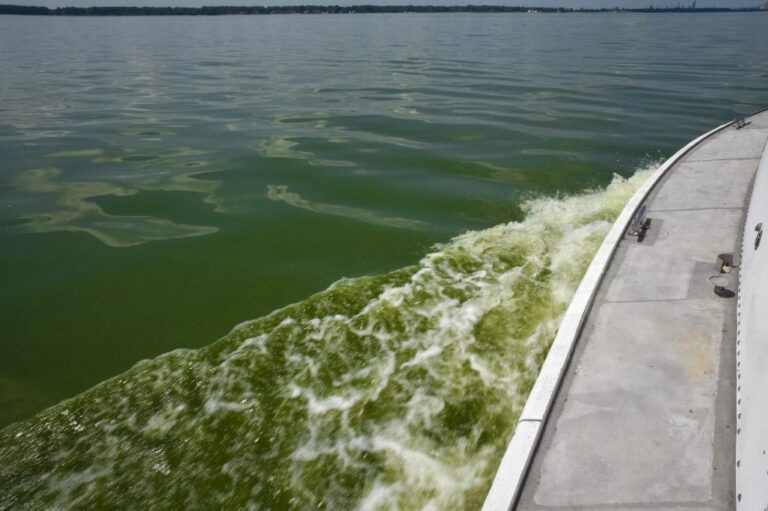
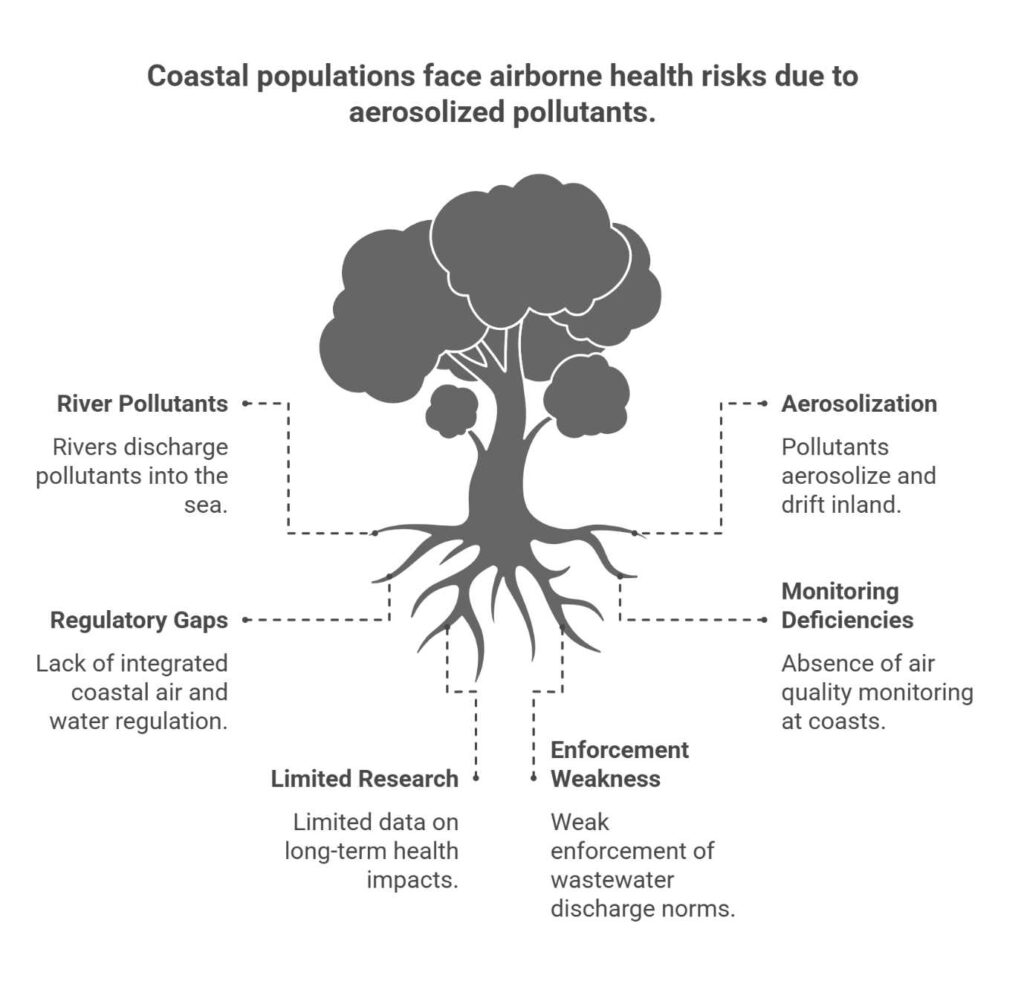
A recent study published in Science Advances (May 28, 2025) has found that pollutants discharged by rivers into the sea can aerosolize and drift back inland, posing potential airborne health risks near river mouths and coastal zones.
Key Highlights of the Study:
- Location: Tijuana River, U.S.-Mexico border, flowing into the Pacific Ocean.
- Study Period: January to March 2020.
- Methodology: Seawater and air sampling over 35 km of coastline using quartz-fibre filters and liquid-chromatography mass-spectrometry.
- Key Findings:
- 10 of 12 pollutants were more concentrated near river mouths.
- Detected substances included octinoxate (sunscreen), dibenzylamine (tire additive), methamphetamine, agricultural biocides, and benzoylecgonine (a cocaine metabolite).
- Pollutants aerosolized from seawater spray could drift inland and be inhaled by humans.
- Global Estimate: Approximately 40,000 tonnes of octinoxate and 50 tonnes of dibenzylamine may be released annually from polluted coastlines worldwide.
Concepts:
- Aerosolization: The process by which particles from seawater become suspended in the air and travel inland.
- Benzoylecgonine: A stable metabolite of cocaine, used as a marker for raw sewage contamination in water.
- Octinoxate: A UV filter commonly found in sunscreens; linked to environmental persistence and potential hormonal disruption.
Relevant Policies and Organizations:
In the Indian context:
- National Water Policy (2012): Stresses prevention of pollution and treatment of wastewater before discharge.
- Coastal Regulation Zone (CRZ) Notification, 2011: Seeks to protect the coastal environment by restricting certain activities.
- Central Pollution Control Board (CPCB): Responsible for setting environmental standards and monitoring water and air quality.
In the international context:
- MARPOL Convention: Regulates pollution from ships and marine sources.
- UNEP Global Programme of Action (GPA): Focuses on marine environment protection from land-based pollution.
Constitutional Provisions (India):
- Article 21: Ensures the right to life, which includes the right to a clean environment.
- Article 48A: Directs the State to protect and improve the environment.
- Article 51A(g): Imposes a duty on citizens to safeguard the natural environment.
Challenges Identified:
- Lack of integrated regulation of coastal air and water pollution.
- Absence of systematic air quality monitoring at beaches and river mouths.
- Limited research on long-term health impacts of aerosolized pollutant exposure.
- Disproportionate exposure risks for coastal and fishing communities.
- Weak enforcement of industrial and urban wastewater discharge norms.
Way Forward:
- Strengthen Integrated Coastal Zone Management (ICZM) with focus on air-sea pollution interface.
- Incorporate aerosol pollutant monitoring into environmental surveillance frameworks.
- Conduct health impact assessments for populations living near polluted coasts.
- Apply the Polluter Pays Principle to enforce accountability for untreated discharges.
- Promote community participation and coastal awareness campaigns.

3rd UN conference on landlocked countries
UPSC CURRENT AFFAIRS – 08th August 2025 Home / 3rd UN conference on landlocked countries Why in News? At the

Issue of soapstone mining in Uttarakhand’s Bageshwar
UPSC CURRENT AFFAIRS – 08th August 2025 Home / Issue of soapstone mining in Uttarakhand’s Bageshwar Why in News? Unregulated
Groundwater Pollution in India – A Silent Public Health Emergency
UPSC CURRENT AFFAIRS – 08th August 2025 Home / Groundwater Pollution in India – A Silent Public Health Emergency Why

Universal banking- need and impact
UPSC CURRENT AFFAIRS – 08th August 2025 Home / Universal banking- need and impact Why in News? The Reserve Bank

India’s “Goldilocks” Economy: A Critical Appraisal
UPSC CURRENT AFFAIRS – 08th August 2025 Home / India’s “Goldilocks” Economy: A Critical Appraisal Why in News? The Finance

U.S.-India Trade Dispute: Trump’s 50% Tariffs and India’s Oil Imports from Russia
UPSC CURRENT AFFAIRS – 07th August 2025 Home / U.S.-India Trade Dispute: Trump’s 50% Tariffs and India’s Oil Imports from
Eco-Friendly Solution to Teak Pest Crisis: KFRI’s HpNPV Technology
UPSC CURRENT AFFAIRS – 07th August 2025 Home / Eco-Friendly Solution to Teak Pest Crisis: KFRI’s HpNPV Technology Why in

New Species of Non-Venomous Rain Snake Discovered in Mizoram
UPSC CURRENT AFFAIRS – 07th August 2025 Home / New Species of Non-Venomous Rain Snake Discovered in Mizoram Why in

For Indian Exporters
- These reforms reduce transaction costs and compliance hurdles
- Encourage a more competitive and efficient export environment
- Promote value addition in key sectors like leather
For Tamil Nadu
- The reforms particularly benefit the state’s leather industry, a major contributor to employment and exports
- Boost the marketability of GI-tagged E.I. leather, enhancing rural and traditional industries
For Trade Policy
- These decisions indicate a shift from regulatory controls to policy facilitation
Reinforce the goals of Make in India, Atmanirbhar Bharat, and India’s ambition to become a leading export power
Recently, BVR Subrahmanyam, CEO of NITI Aayog, claimed that India has overtaken Japan to become the fourth-largest economy in the world, citing data from the International Monetary Fund (IMF).
India’s rank as the world’s largest economy varies by measure—nominal GDP or purchasing power parity (PPP)—each with key implications for economic analysis.