UPSC CURRENT AFFAIRS – 2nd June 2025
Relevance of Gandhian principles amid cross-border terrorism
Why in News?
Mahatma Gandhi’s principles of non-violence were highlighted as more relevant today during an all-party delegation’s diplomatic outreach in London following the Pahalgam terror attack.
Introduction
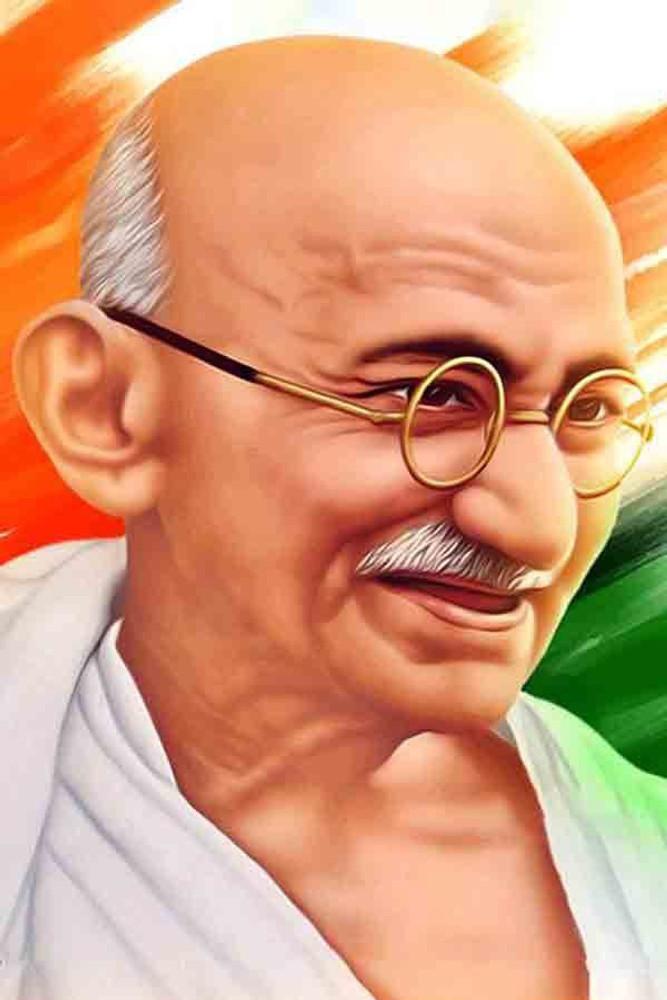
- Mahatma Gandhi, the Father of the Nation, laid the foundation of India’s freedom struggle on the principle of non-violence (Ahimsa).
- In the present context of cross-border terrorism, particularly sponsored by Pakistan, the relevance of Gandhi’s ideals continues to be a subject of intense debate.
- The recent remarks by BJP MP Ravi Shankar Prasad in London (June 1, 2025), following the Pahalgam terror attack, bring this relevance to the forefront of public discourse.
The Present Context
- In May 2025, a brutal terrorist attack in Pahalgam, Jammu and Kashmir, led to the loss of 26 innocent lives. In response, India carried out precision strikes on terror infrastructure in Pakistan and Pakistan-occupied Kashmir.
- As part of a broader diplomatic initiative, multi-party delegations were dispatched to major global capitals to highlight Pakistan’s continued support for terrorism.
- One such delegation, led by Mr. Ravi Shankar Prasad, emphasized that Gandhiji’s ideals of non-violence, truth, and goodwill are more important than ever in the global fight against terrorism.
Gandhian Principles: A Moral Compass
- Gandhiji’s commitment to non-violence was not a sign of weakness, but of moral courage. He believed in resisting evil through peaceful means, holding that violence begets more violence.
- In the modern era, his philosophy has shaped India’s democratic values, its foreign policy of non-aggression, and its identity as a peace-loving nation.
- However, Gandhi also acknowledged the need for resistance in the face of aggression. As recalled by M.J. Akbar, in response to the 1947 invasion of Kashmir by Pakistan-backed raiders, Gandhi stated that Indian soldiers had the duty to repel such forces, even while he maintained his faith in non-violence.
Cross-Border Terrorism: A Persistent Challenge
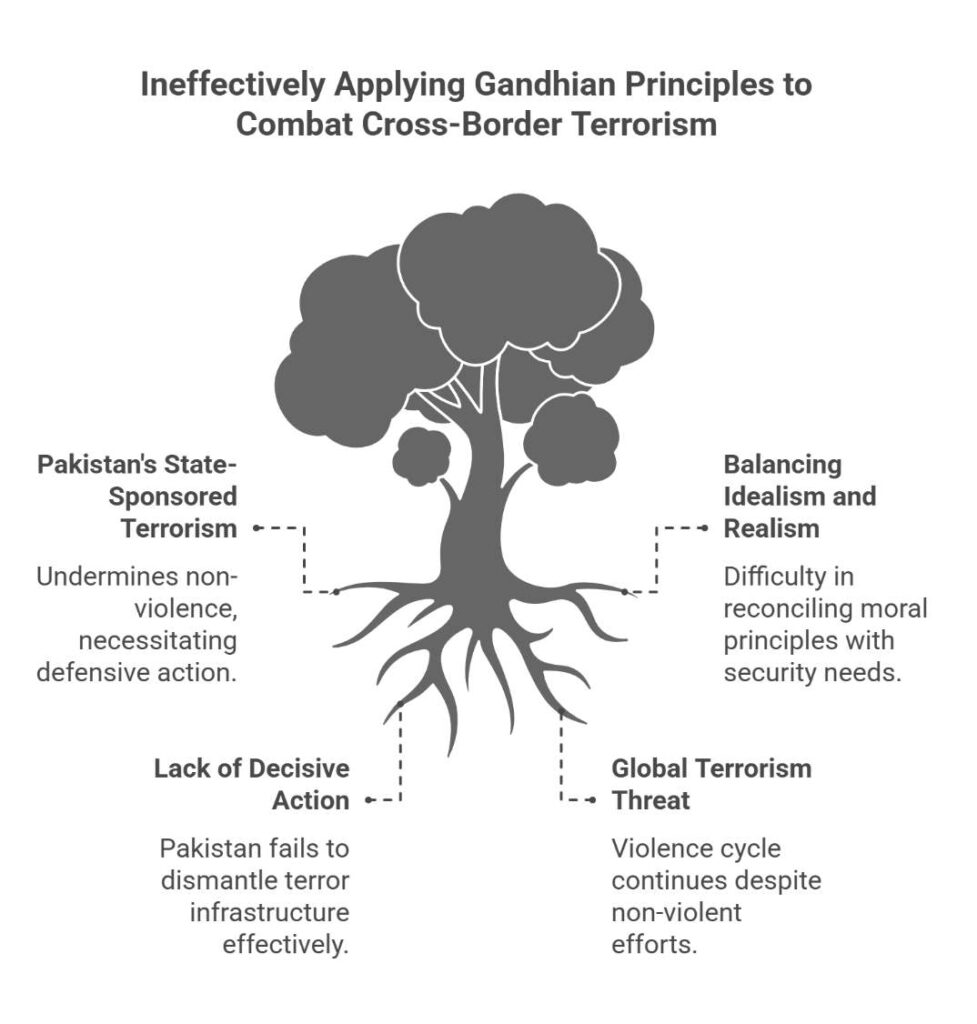
Pakistan’s use of terrorism as an instrument of state policy has been a long-standing concern. The recent Pahalgam incident is only one in a series of attacks supported by groups operating from Pakistani soil. Despite international condemnation, Pakistan has often failed to act decisively against terror infrastructure within its territory.
India’s response has been multifaceted:
- Diplomatic outreach, as seen in the multi-party delegations sent abroad,
- Precision military action, under doctrines such as zero-tolerance for terrorism,
- Engagement with the international community to treat terrorism as a global threat.
Relevance of Gandhian Values Today
- Non-Violence as a Global Ideal
Gandhi’s philosophy offers an ethical framework for resisting terrorism without descending into a cycle of hatred and vengeance. While force may be necessary for self-defense, non-violence remains the long-term vision for peace. - Truth and Transparency
India, in following Gandhian ideals, has consistently presented its case with facts and transparency in global forums, focusing on evidence-based diplomacy. - Amity and Dialogue
Gandhiji promoted the idea of Sadbhav (goodwill) among communities. This principle can be the foundation of people-to-people engagement, counter-radicalisation, and regional peace-building. - Democracy and Moral Leadership
India, as a democracy, uses its Gandhian legacy to project soft power and moral leadership, in contrast to authoritarian or militarised regimes that use violence for political ends.
Balancing Moral Idealism and Strategic Realism
- While Gandhian ideals form the ethical bedrock of Indian polity, the state must also ensure the security of its citizens. This necessitates a strategic doctrine that balances moral idealism with pragmatic realism.
- The Constitution of India, shaped by Dr. B.R. Ambedkar, provides this balance—ensuring both civil liberties and national security.
- The all-party unity witnessed in the delegation led by Ravi Shankar Prasad reflects this balanced approach.
- Political differences were set aside in favour of a united national interest, underscoring that Gandhian values can coexist with robust state responses.
Conclusion:
- Mahatma Gandhi’s philosophy is not merely a historical artifact but a living guide in the 21st century. In a world grappling with terrorism, extremism, and violence, his message of non-violence, truth, and goodwill offers a powerful alternative.
- India, while safeguarding its sovereignty and security through decisive action, must continue to uphold and project Gandhian ideals as the foundation of its global identity and diplomacy.

3rd UN conference on landlocked countries
UPSC CURRENT AFFAIRS – 08th August 2025 Home / 3rd UN conference on landlocked countries Why in News? At the
Issue of soapstone mining in Uttarakhand’s Bageshwar
UPSC CURRENT AFFAIRS – 08th August 2025 Home / Issue of soapstone mining in Uttarakhand’s Bageshwar Why in News? Unregulated
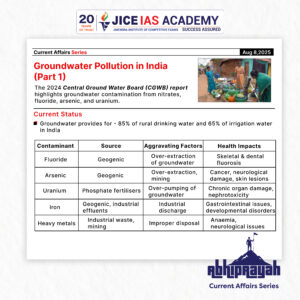
Groundwater Pollution in India – A Silent Public Health Emergency
UPSC CURRENT AFFAIRS – 08th August 2025 Home / Groundwater Pollution in India – A Silent Public Health Emergency Why
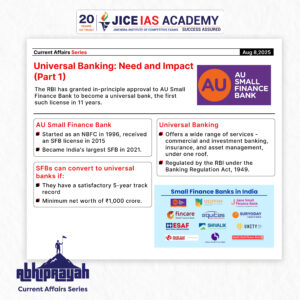
Universal banking- need and impact
UPSC CURRENT AFFAIRS – 08th August 2025 Home / Universal banking- need and impact Why in News? The Reserve Bank
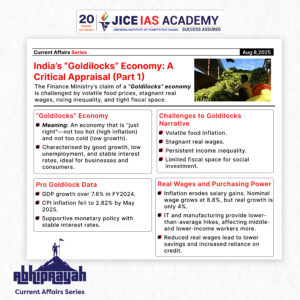
India’s “Goldilocks” Economy: A Critical Appraisal
UPSC CURRENT AFFAIRS – 08th August 2025 Home / India’s “Goldilocks” Economy: A Critical Appraisal Why in News? The Finance
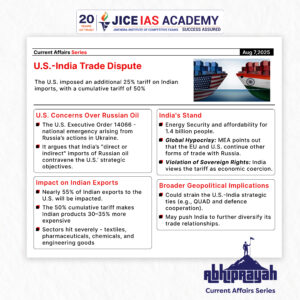
U.S.-India Trade Dispute: Trump’s 50% Tariffs and India’s Oil Imports from Russia
UPSC CURRENT AFFAIRS – 07th August 2025 Home / U.S.-India Trade Dispute: Trump’s 50% Tariffs and India’s Oil Imports from
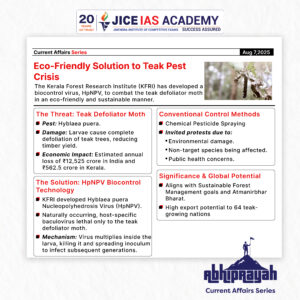
Eco-Friendly Solution to Teak Pest Crisis: KFRI’s HpNPV Technology
UPSC CURRENT AFFAIRS – 07th August 2025 Home / Eco-Friendly Solution to Teak Pest Crisis: KFRI’s HpNPV Technology Why in

New Species of Non-Venomous Rain Snake Discovered in Mizoram
UPSC CURRENT AFFAIRS – 07th August 2025 Home / New Species of Non-Venomous Rain Snake Discovered in Mizoram Why in

Economic Implications
For Indian Exporters
- These reforms reduce transaction costs and compliance hurdles
- Encourage a more competitive and efficient export environment
- Promote value addition in key sectors like leather
For Tamil Nadu
- The reforms particularly benefit the state’s leather industry, a major contributor to employment and exports
- Boost the marketability of GI-tagged E.I. leather, enhancing rural and traditional industries
For Trade Policy
- These decisions indicate a shift from regulatory controls to policy facilitation
Reinforce the goals of Make in India, Atmanirbhar Bharat, and India’s ambition to become a leading export power
Recently, BVR Subrahmanyam, CEO of NITI Aayog, claimed that India has overtaken Japan to become the fourth-largest economy in the world, citing data from the International Monetary Fund (IMF).
India’s rank as the world’s largest economy varies by measure—nominal GDP or purchasing power parity (PPP)—each with key implications for economic analysis.