
UPSC CURRENT AFFAIRS – 2nd June 2025

Home / UPSC / Current Affairs / 600-million-year-old stromatolites in the Himalayas

600-million-year-old stromatolites in the Himalayas

stromatolites in the himalayas

Why in News?

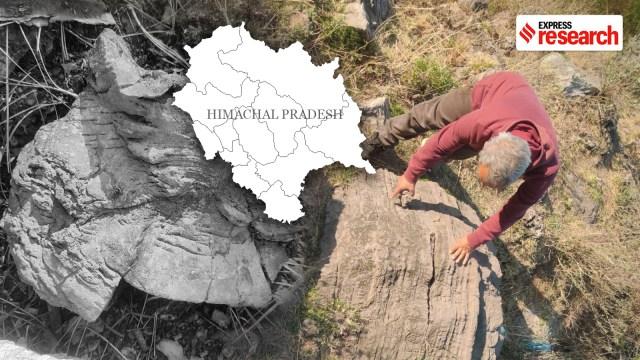
A large outcrop of 600-million-year-old stromatolites was recently discovered in Chambaghat, Solan district, Himachal Pradesh.

Introduction

  • Long before dinosaurs roamed Earth and flowering plants painted prehistoric forests, it was cyanobacteria—microscopic organisms in shallow seas—that began Earth’s transformation into a habitable planet. 
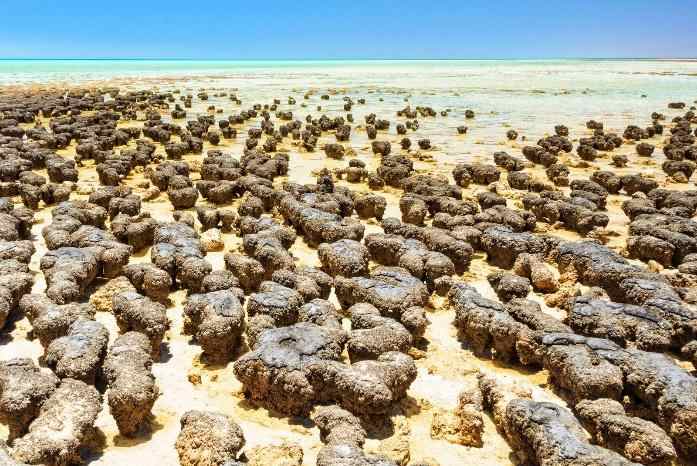
  • Their layered, reef-like structures, stromatolites, stand today as ancient monuments of Earth’s earliest life.
  • India, home to a remarkable diversity of these structures, recently added another chapter to this geological narrative: the discovery of a massive stromatolite outcrop in Chambaghat, Himachal Pradesh, dating back at least 600 million years
  • This find, though not the oldest, reopens critical conversations around preservation, scientific awareness, and public engagement with India’s geological history.

What are Stromatolites?

Stromatolites are layered, biosedimentary structures formed by the activities of ancient microorganisms, primarily cyanobacteria (blue-green algae). These organisms trapped and bound sediments in shallow marine environments, leading to laminated, dome-shaped mounds.

  • Not true fossils: Unlike conventional fossils that preserve the organism itself, stromatolites retain only the sedimentary imprint of microbial activity.
  • Biogenic origin: Despite being sedimentary in nature, they are crucial indicators of early life and planetary evolution.

Significance in Earth's History

1. The Great Oxidation Event (GOE)

Around 2.4 billion years ago, Earth experienced a pivotal transition from an anaerobic to an aerobic atmosphere due to oxygen released by cyanobacteria.

  • This event, sometimes called the Oxygen Catastrophe, enabled the evolution of multicellular life, eventually leading to complex organisms such as trilobites, dinosaurs, and humans.

2. Planetary Transformation

  • Earth’s early atmosphere (composed of CO₂, methane, and water vapour) lacked free oxygen.
  • Cyanobacteria in stromatolites produce oxygen via photosynthesis, transforming the atmosphere and oceans over billions of years.

The Chambaghat Discovery: Why it Matters

Location: Chambaghat, Solan district, Himachal Pradesh

Discovered by Dr. Ritesh Arya, the outcrop lies in the Krol Belt, part of ancient marine deposits from the Tethys Sea, which existed before the Indian plate collided with Eurasia.

Scientific Features:

  • Estimated Age: ≥ 600 million years
  • Formations: Arched, laminated, hemispheroid stromatolites in limestone ridges
  • Elevation: Found at 5,000–6,000 ft above sea level, indicating tectonic uplift from ancient seabeds

Geological Significance:

  • Highlights tectonic history of India from Gondwana to the formation of the Himalayas
  • Offers insights into Precambrian-Cambrian transition, where stromatolites gave way to abundant body fossils

Geoheritage and Conservation Challenges

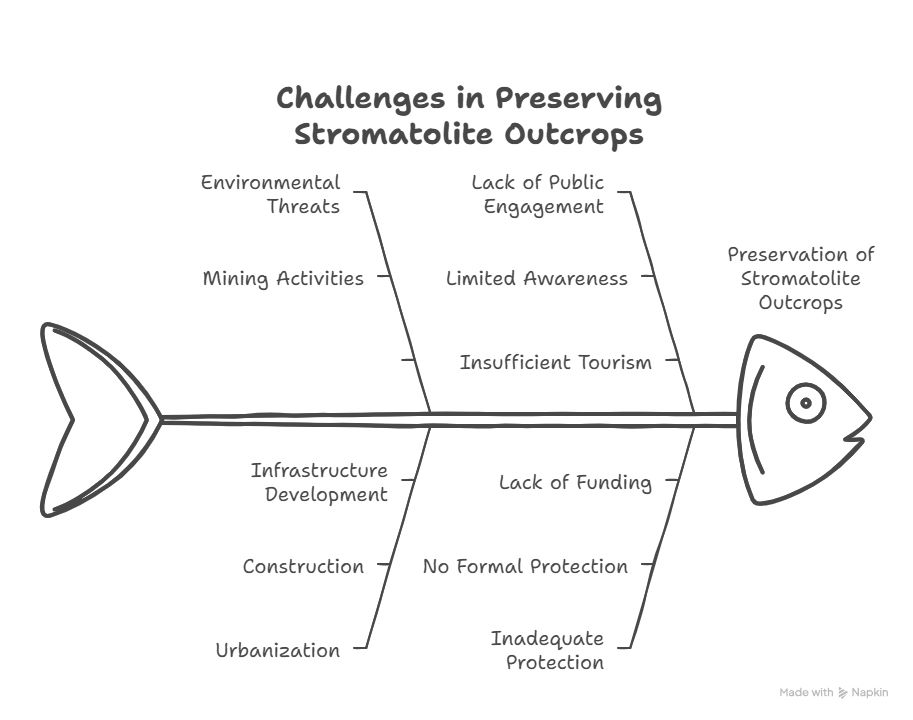
While India’s geological past is rich, its preservation is patchy. Despite the scale and accessibility of the Chambaghat site, there is no formal protection.

Major Concerns:

  • Mining, erosion, urbanization, and neglect threaten many such sites
  • Lack of public engagement and scientific tourism

Proposal:

Dr Arya has called for a Geoheritage Park at Chambaghat, involving:

  • Local schools and tourism bodies
  • Research and public exhibitions
  • Potential application for UNESCO Geoheritage status
challenges in preserving stromatolite outcrops

Debates Among Scientists

Not all experts agree on the discovery’s uniqueness:

Scientist

Viewpoint

Dr Vibhuti Rai (University of Lucknow)

Calls the find common and misrepresented — stromatolites are not fossils, and are widespread across India

Dr Arun Deep Ahluwalia (Panjab University)

Acknowledges the structure’s preservation and potential for exhibit, but clarifies that older stromatolites exist elsewhere in India

Dr Jagmohan Singh (Ex-ONGC)

Highlights its value as evidence of single-celled life evolution

India’s Key Stromatolite Sites

Location

Geological Formation

Age/Significance

Dharwar Supergroup, Karnataka

Chitradurga schist belt

>2.6 billion years (Neoarchean)

Jhamarkotra, Rajasthan

Phosphate-rich rocks

~1.8 billion years; under mining threat

Salkhan, Uttar Pradesh

Vindhyan limestone

~1.4 billion years; large public fossil park

Shali-Deoban, Himachal Pradesh

Precambrian rocks

Older columnar stromatolites

Kadapa Basin (AP & MP)

Cuddapah Supergroup

Proterozoic

Bhojunda, Rajasthan

Lower Vindhyan Range

National Fossil Park

Sikkim (Buxa Formation)

Dolomites

Fossil park under development

Way Forward: Preserving Microbial Legacy

India must adopt a holistic strategy for its geological treasures:

  1. Geoheritage Laws: Formal recognition and legal protection of stromatolitic sites
  2. Community Involvement: Local stewardship models, student outreach, and guided tourism
  3. Scientific Documentation: Centralized digital archives and field-based research stations
  4. Geo-tourism Parks: Promote educational and heritage tourism, similar to fossil parks in Australia and Canada

Economic Implications

For Indian Exporters

  • These reforms reduce transaction costs and compliance hurdles
  • Encourage a more competitive and efficient export environment
  • Promote value addition in key sectors like leather

For Tamil Nadu

  • The reforms particularly benefit the state’s leather industry, a major contributor to employment and exports
  • Boost the marketability of GI-tagged E.I. leather, enhancing rural and traditional industries

For Trade Policy

  • These decisions indicate a shift from regulatory controls to policy facilitation

Reinforce the goals of Make in India, Atmanirbhar Bharat, and India’s ambition to become a leading export power

Recently, BVR Subrahmanyam, CEO of NITI Aayog, claimed that India has overtaken Japan to become the fourth-largest economy in the world, citing data from the International Monetary Fund (IMF). 

India’s rank as the world’s largest economy varies by measure—nominal GDP or purchasing power parity (PPP)—each with key implications for economic analysis.

Significance and Applications

Leave a Reply

Your email address will not be published. Required fields are marked *

Call Us Now !

Copyright © JICE ACADEMY FOR EXCELLENCE PRIVATE LIMITED