UPSC CURRENT AFFAIRS – 2nd June 2025
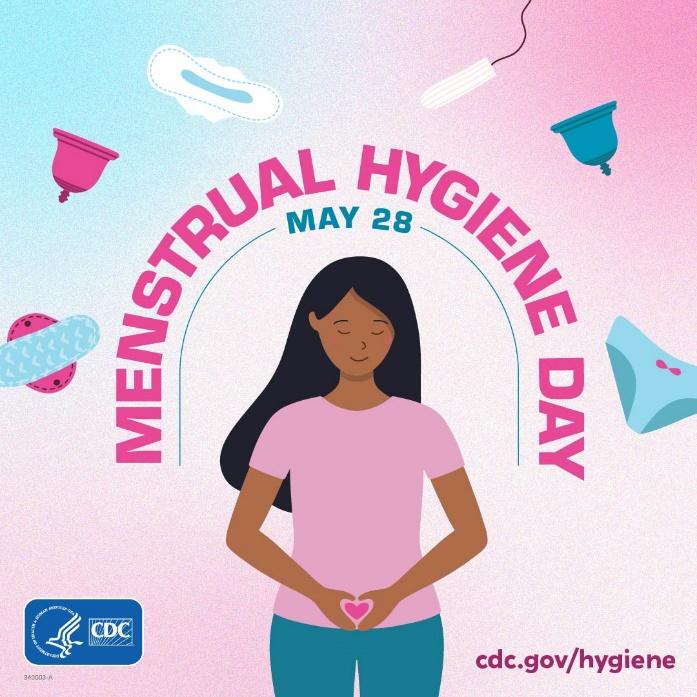
Menstrual Health in India
Why in News?
On Menstrual Hygiene Day (May 28, 2025), the spotlight returned to the persistent infrastructural, educational, and policy-level challenges affecting Menstrual Hygiene Management (MHM) in India.
Introduction
- Menstrual health is not merely a “women’s issue.” It intersects with public health, gender equity, education, sanitation, and economic participation.
- Yet, it remains largely sidelined in mainstream policy agendas, highlighting a serious governance gap that India can no longer afford to ignore.
The Complex Reality of Menstrual Health in India
1. Progress in Product Access, but Shallow Gains
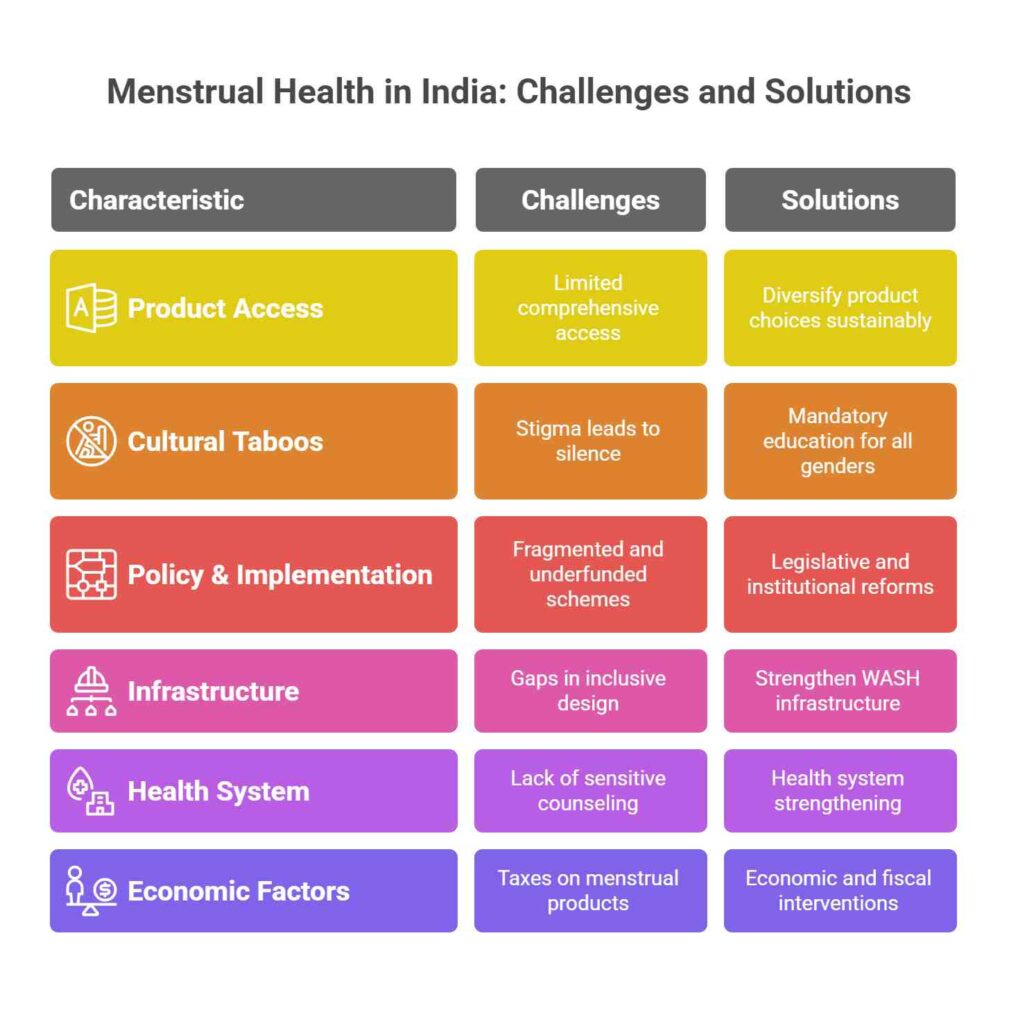
India has made progress in increasing access to commercial menstrual products. As per NFHS-5, approximately 78% of menstruators reportedly use commercial sanitary protection. However, this number masks the reality that only 27.7% of menstruators have access to a comprehensive package: products plus clean water, private sanitation, and soap – the core of menstrual hygiene.
Policy Insight: Focusing only on product distribution without investing in WASH (Water, Sanitation, and Hygiene) infrastructure creates a false sense of achievement.
2. Cultural Taboos and Social Exclusion
Menstruation in India continues to be stigmatized. Girls are discouraged from going to school, entering kitchens, touching water pots, or participating in religious or social functions. This enforced isolation limits mobility, education, and social development – reinforcing patriarchal control over women’s bodies and choices.
Societal Challenge: Stigma leads to silence, and silence results in poor knowledge, mismanagement, and psychological distress.
Limitations in Current Policy and Implementation
1. Fragmented and Underfunded Schemes
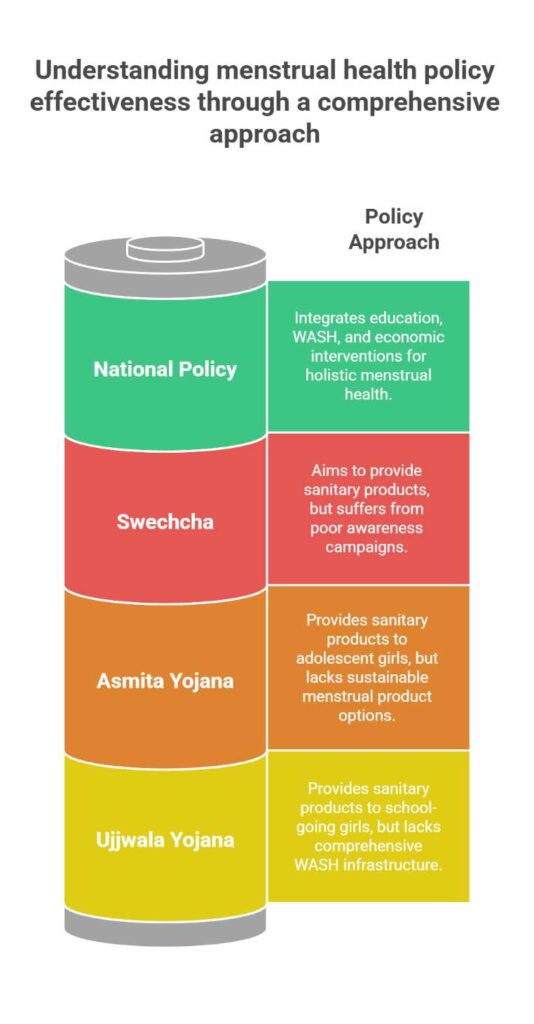
Government schemes like ‘Ujjwala Sanitary Napkin Yojana’, ‘Asmita Yojana’ in Maharashtra, and ‘Swechcha’ in Andhra Pradesh aim to provide sanitary products to adolescent girls. However, these initiatives suffer from:
- Narrow targeting (mostly school-going girls)
- Lack of sustainable menstrual product options
- Absence of disposal facilities
- Poor awareness campaigns
- Vulnerability to school closures and logistics issues
Case in Point: During the COVID-19 pandemic, menstrual products were initially excluded from the essential items list, exposing policy insensitivity.
2. Gaps in Inclusive Design and Infrastructure
- Adult women, trans persons, and disabled individuals often fall outside the focus of current MHM policies.
- WASH facilities in rural schools and public institutions are often unsafe, unhygienic, and lack privacy.
- Poor disposal systems lead to environmental hazards and social backlash.
Way Forward
To address menstrual health holistically, India needs a systemic policy approach rather than scattered schemes.
1. Legislative and Institutional Reforms
- Make menstrual health education mandatory in schools for all genders, using scientifically accurate and age-appropriate content.
- Enact Menstrual Health and Dignity Acts at national and state levels.
- Institutionalize menstrual health as part of the National Health Mission, Rural Development Programmes, and Swachh Bharat Abhiyan.
2. Strengthen WASH Infrastructure
- Ensure that every school and public institution has MHM-compliant toilets – clean, private, equipped with water, soap, bins, and disposal units.
- Develop national MHM infrastructure guidelines for implementation across schools, workplaces, and public spaces.
3. Diversify Product Choices and Ensure Sustainability
- Promote reusable and sustainable menstrual products like cloth pads and menstrual cups with proper training and community outreach.
- Ensure access to safe disposal mechanisms to mitigate the environmental impact of disposable pads.
4. Health System Strengthening
- Train frontline health workers and doctors in sensitive MHM counselling.
- Integrate MHM into primary healthcare services, including routine check-ups and health insurance coverage.
5. Economic and Fiscal Interventions
- Eliminate all taxes on menstrual products to recognise them as essential commodities.
- Offer targeted subsidies and promote local social enterprises to manufacture and distribute sustainable menstrual products.
- Integrate MHM budgets into larger frameworks like education, WASH, and women’s empowerment rather than creating isolated project lines.
Menstrual Health as a Strategic Investment
Menstrual health should not be viewed as welfare expenditure but as a long-term economic and social investment.
Benefit Area | Impact of Effective MHM Policies |
Education | Reduced dropout rates, increased attendance among girls |
Health | Fewer reproductive and urinary tract infections |
Economy | Higher labour force participation, better productivity |
Gender Equality | Greater agency, reduced discrimination |
Environment | Sustainable practices, reduced non-biodegradable waste |

3rd UN conference on landlocked countries
UPSC CURRENT AFFAIRS – 08th August 2025 Home / 3rd UN conference on landlocked countries Why in News? At the
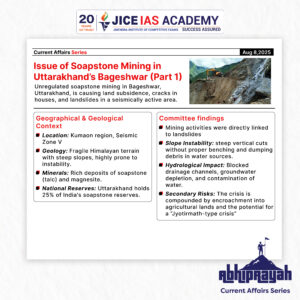
Issue of soapstone mining in Uttarakhand’s Bageshwar
UPSC CURRENT AFFAIRS – 08th August 2025 Home / Issue of soapstone mining in Uttarakhand’s Bageshwar Why in News? Unregulated
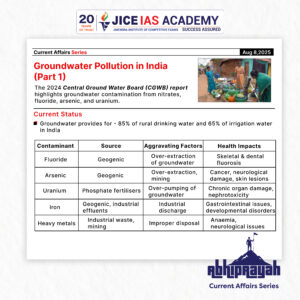
Groundwater Pollution in India – A Silent Public Health Emergency
UPSC CURRENT AFFAIRS – 08th August 2025 Home / Groundwater Pollution in India – A Silent Public Health Emergency Why
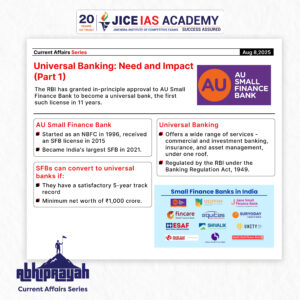
Universal banking- need and impact
UPSC CURRENT AFFAIRS – 08th August 2025 Home / Universal banking- need and impact Why in News? The Reserve Bank
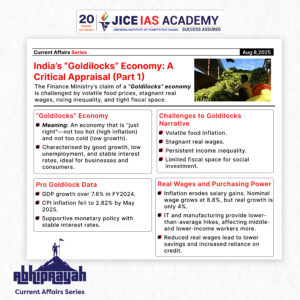
India’s “Goldilocks” Economy: A Critical Appraisal
UPSC CURRENT AFFAIRS – 08th August 2025 Home / India’s “Goldilocks” Economy: A Critical Appraisal Why in News? The Finance
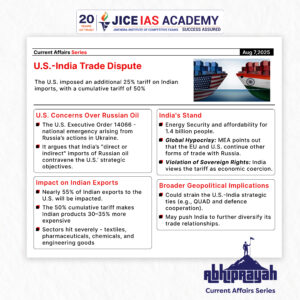
U.S.-India Trade Dispute: Trump’s 50% Tariffs and India’s Oil Imports from Russia
UPSC CURRENT AFFAIRS – 07th August 2025 Home / U.S.-India Trade Dispute: Trump’s 50% Tariffs and India’s Oil Imports from
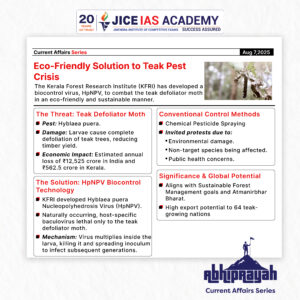
Eco-Friendly Solution to Teak Pest Crisis: KFRI’s HpNPV Technology
UPSC CURRENT AFFAIRS – 07th August 2025 Home / Eco-Friendly Solution to Teak Pest Crisis: KFRI’s HpNPV Technology Why in

New Species of Non-Venomous Rain Snake Discovered in Mizoram
UPSC CURRENT AFFAIRS – 07th August 2025 Home / New Species of Non-Venomous Rain Snake Discovered in Mizoram Why in

Economic Implications
For Indian Exporters
- These reforms reduce transaction costs and compliance hurdles
- Encourage a more competitive and efficient export environment
- Promote value addition in key sectors like leather
For Tamil Nadu
- The reforms particularly benefit the state’s leather industry, a major contributor to employment and exports
- Boost the marketability of GI-tagged E.I. leather, enhancing rural and traditional industries
For Trade Policy
- These decisions indicate a shift from regulatory controls to policy facilitation
Reinforce the goals of Make in India, Atmanirbhar Bharat, and India’s ambition to become a leading export power
Recently, BVR Subrahmanyam, CEO of NITI Aayog, claimed that India has overtaken Japan to become the fourth-largest economy in the world, citing data from the International Monetary Fund (IMF).
India’s rank as the world’s largest economy varies by measure—nominal GDP or purchasing power parity (PPP)—each with key implications for economic analysis.