UPSC CURRENT AFFAIRS – 5th June 2025

Home / UPSC / Current Affairs / Census 2027 to Include Caste Data for First Time in Nearly a Century

Census 2027 to Include Caste Data for First Time in Nearly a Century

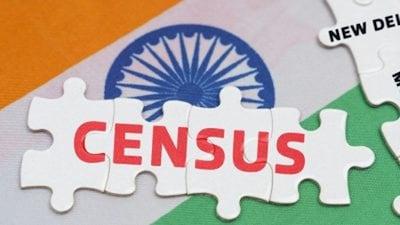
census

Why in News?

  • The Government of India announced that the long-awaited Population Census and caste enumeration will begin early next year. 

Introduction

  • The Government of India has officially announced that the process for the next Population Census, along with caste enumeration, will commence early next year, culminating in a snapshot of India’s population as on March 1, 2027
  • This will be the 16th Indian Census and the first since 2011, as the 2021 exercise was deferred due to the COVID-19 pandemic.
  • This Census is particularly significant due to its implications for delimitation, women’s reservation, and caste-based policy planning.

What is the Census?

  • The Census is the largest administrative exercise in the world for collecting demographic, socio-economic, and housing data.
  • Conducted under the Census Act, 1948, it provides data on population size, density, literacy, urbanization, languages, religions, SC/ST categorization, and housing conditions.
  • It is conducted every 10 years, and the Registrar General and Census Commissioner of India (RGI) under the Ministry of Home Affairs is responsible for its execution.

Timeline and Structure of Census 2027

Notification and Start Date

  • Government intent to conduct the Census will be officially notified in the Gazette on June 16, 2025 (tentative).

Phases of Census

  1. House Listing and Housing Census
    • Duration: 5–6 months
    • Purpose: Captures household-level data, building types, assets, amenities, etc.
  2. Population Enumeration
    • Expected Start: February 2027
    • Duration: 1 month
    • Provides the actual population count and socio-demographic details.

Reference Date

  • March 1, 2027 for most of India
  • October 1, 2026 for snow-bound/hilly regions like Ladakh, J&K, Himachal Pradesh, Uttarakhand
    (Reference date is the point at which the population is counted.)
comprehensive overview of census 2027

Caste Enumeration: A Key Feature of 2027 Census

Historical Background

  • The last comprehensive caste enumeration was in the 1931 Census.
  • The Socio-Economic and Caste Census (SECC) 2011 gathered caste data but was not published officially due to data quality concerns.
  • Traditionally, Census only categorizes SCs, STs, and religious communities.

Current Plans

  • Caste data to be collected alongside the 2027 Census.
  • No umbrella category for OBCs: Instead, a plain listing of castes is planned.
  • This listing may not directly inform reservation policies due to lack of categorization or economic profiling.

Delimitation and Constitutional Provisions

What is Delimitation?

  • It refers to redrawing boundaries of Lok Sabha and State Assembly constituencies based on updated population data.

Constitutional Backing

  • Article 82: Calls for readjustment of constituencies after every Census.
  • 42nd and 84th Amendments: Froze delimitation till after the first Census post-2026.

Census 2027 as Trigger for Delimitation

  • Since it will be the first Census after 2026, it opens the door for the next round of delimitation.
  • However, officials clarified that the final data will not be ready before 2029 elections, hence no immediate impact on upcoming Lok Sabha seats.

Link to Women’s Reservation (128th Constitutional Amendment)

  • Women’s Reservation Act, 2023 provides 33% reservation for women in Lok Sabha and State Assemblies.
  • Implementation is contingent on delimitation based on post-2026 Census data.
  • Hence, Census 2027 will play a pivotal role in operationalizing this reservation.

Political and Policy Implications

1. Caste-Based Representation and Politics

  • Congress leader Rahul Gandhi’s slogan “Jitni abadi, utna haq” amplified demands for proportional representation based on caste.
  • Pressure may mount for revisiting the 50% reservation cap, but BJP sources suggest no major shift in affirmative action policy is expected soon.

2. Avoiding Pre-2029 Census Impact

  • The government appears keen to complete the Census carefully without rushing for political implications before the 2029 elections.
  • Final Census publication is expected to be delayed (similar to 2011 Census released in 2013).

Preparations and Past Delays

  • Census 2021 was to begin in April 2020, but was indefinitely postponed due to the pandemic.
  • All field-level preparations were completed, including house listing forms and training.
  • The 2027 Census will incorporate updated digital tools and devices to enhance efficiency and data accuracy.

Significance for Governance and Policy

  1. Evidence-Based Policy Planning
    • Updated data crucial for planning schemes like PM Awas Yojana, Jal Jeevan Mission, etc.
  2. Representation and Federal Balance
    • Delimitation will affect parliamentary seat share among states, especially southern vs. northern states due to differential population growth.
  3. Social Justice Debates
    • Caste data may shape future reservation debates, affirmative action, and welfare targeting.

Economic Implications

For Indian Exporters

  • These reforms reduce transaction costs and compliance hurdles
  • Encourage a more competitive and efficient export environment
  • Promote value addition in key sectors like leather

For Tamil Nadu

  • The reforms particularly benefit the state’s leather industry, a major contributor to employment and exports
  • Boost the marketability of GI-tagged E.I. leather, enhancing rural and traditional industries

For Trade Policy

  • These decisions indicate a shift from regulatory controls to policy facilitation

Reinforce the goals of Make in India, Atmanirbhar Bharat, and India’s ambition to become a leading export power

Recently, BVR Subrahmanyam, CEO of NITI Aayog, claimed that India has overtaken Japan to become the fourth-largest economy in the world, citing data from the International Monetary Fund (IMF). 

India’s rank as the world’s largest economy varies by measure—nominal GDP or purchasing power parity (PPP)—each with key implications for economic analysis.

Significance and Applications

Leave a Reply

Your email address will not be published. Required fields are marked *

Call Us Now !

Copyright © JICE ACADEMY FOR EXCELLENCE PRIVATE LIMITED