UPSC CURRENT AFFAIRS – 15th June 2025

Home / UPSC / Current Affairs / Air India Plane Crash: High-Level Committee Constituted to Probe Causes and Strengthen Response Framework

Air India Plane Crash: High-Level Committee Constituted to Probe Causes and Strengthen Response Framework

Why in News?

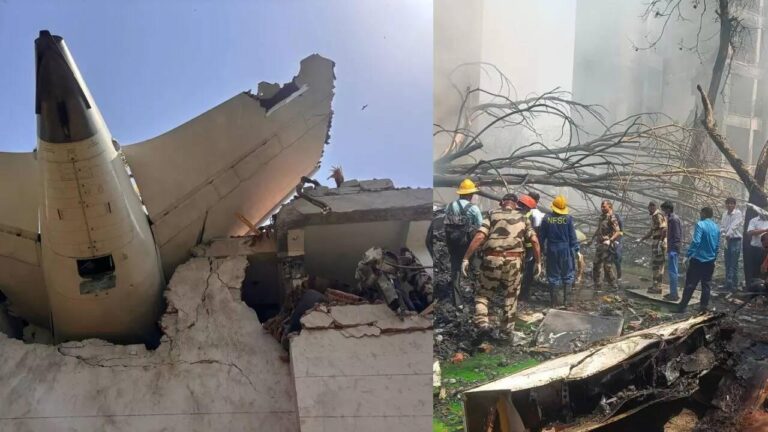
Following the tragic crash of an Air India Boeing 787 in Ahmedabad, the Government of India has constituted a high-level multi-disciplinary committee, chaired by the Union Home Secretary, to investigate the incident and recommend reforms for aviation accident response.

Key Highlights

  • The committee will ascertain the root causes of the crash, including possible mechanical failures, human error, weather conditions, and regulatory lapses.
  • It will formulate Standard Operating Procedures (SOPs) for preventing and managing future aviation accidents.
  • The committee’s report is expected within three months.
  • It will not substitute the ongoing technical investigation by the Aircraft Accident Investigation Bureau (AAIB), which has already recovered the aircraft’s black box.

Composition of the Committee

The panel includes:

  • Union Home Secretary (Chairperson)
  • Joint Secretary, MHA
  • State-level representatives from Gujarat (Home Department, SDRF)
  • Ahmedabad Police Commissioner
  • DG, Bureau of Civil Aviation Security
  • DGCA and DG, Inspection and Safety (IAF)
  • Special Director, Intelligence Bureau
  • Director, Directorate of Forensic Science Services

Scope and Mandate

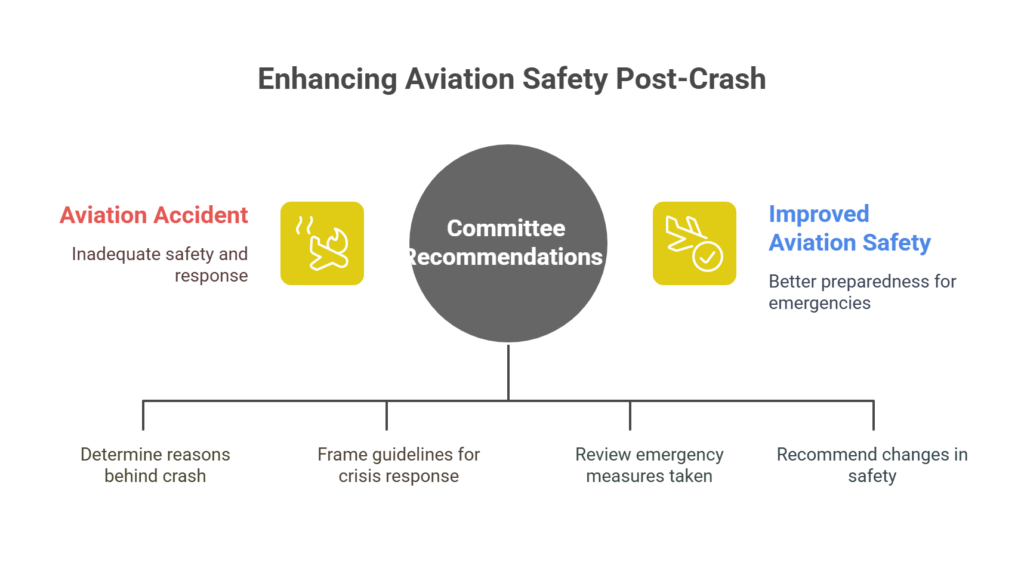
  1. Root Cause Analysis: Determine technical, human, and regulatory reasons behind the crash.
  2. SOP Development: Frame guidelines based on international best practices for prevention and crisis response.
  3. Response Assessment: Review emergency measures taken by stakeholders and suggest improvements in inter-agency coordination.
  4. Policy and Training Reforms: Recommend changes in aviation safety policy, staff training, and operational mechanisms.

Access and Methodology

  • Full access to flight data, cockpit voice recorders, ATC logs, and aircraft maintenance records.
  • The panel will conduct interviews, site inspections, and may collaborate with foreign agencies and manufacturers if international elements are involved.

Significance

  • The formation of this high-level body reflects a shift towards a more integrated and accountable aviation safety framework.
  • The recommendations are expected to shape national policy, ensuring better preparedness for civil aviation emergencies.

Way Forward

  • Close monitoring of the committee’s progress will be crucial.
  • Implementation of its findings could significantly enhance passenger safety, crash management efficiency, and inter-agency disaster response capability in India’s civil aviation sector

Economic Implications

For Indian Exporters

  • These reforms reduce transaction costs and compliance hurdles
  • Encourage a more competitive and efficient export environment
  • Promote value addition in key sectors like leather

For Tamil Nadu

  • The reforms particularly benefit the state’s leather industry, a major contributor to employment and exports
  • Boost the marketability of GI-tagged E.I. leather, enhancing rural and traditional industries

For Trade Policy

  • These decisions indicate a shift from regulatory controls to policy facilitation

Reinforce the goals of Make in India, Atmanirbhar Bharat, and India’s ambition to become a leading export power

Recently, BVR Subrahmanyam, CEO of NITI Aayog, claimed that India has overtaken Japan to become the fourth-largest economy in the world, citing data from the International Monetary Fund (IMF). 

India’s rank as the world’s largest economy varies by measure—nominal GDP or purchasing power parity (PPP)—each with key implications for economic analysis.

Significance and Applications

Leave a Reply

Your email address will not be published. Required fields are marked *

Call Us Now !

Copyright © JICE ACADEMY FOR EXCELLENCE PRIVATE LIMITED