
UPSC CURRENT AFFAIRS – 15th June 2025

Home / UPSC / Current Affairs / SPArc Therapy Achieves First Success in Treating Complex Head and Neck Cancer

SPArc Therapy Achieves First Success in Treating Complex Head and Neck Cancer

Why in News?

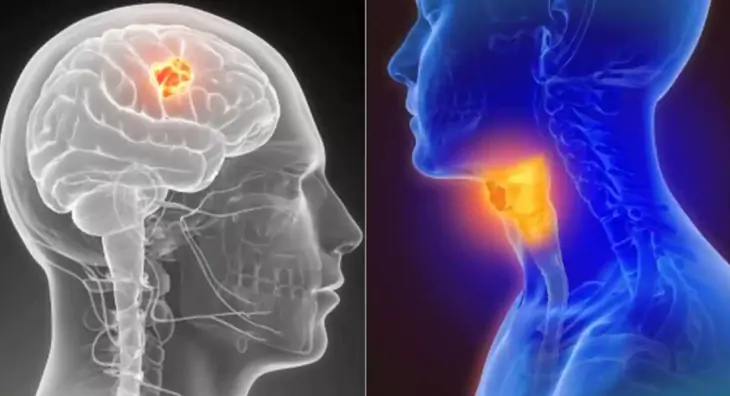
For the first time, a patient with advanced parotid-gland cancer has been successfully treated using a cutting-edge radiation technique called step-and-shoot spot-scanning proton arc therapy (SPArc) in the U.S. This marks a breakthrough in minimally invasive cancer treatment where nearby healthy tissues are spared from radiation damage.

Key Highlights

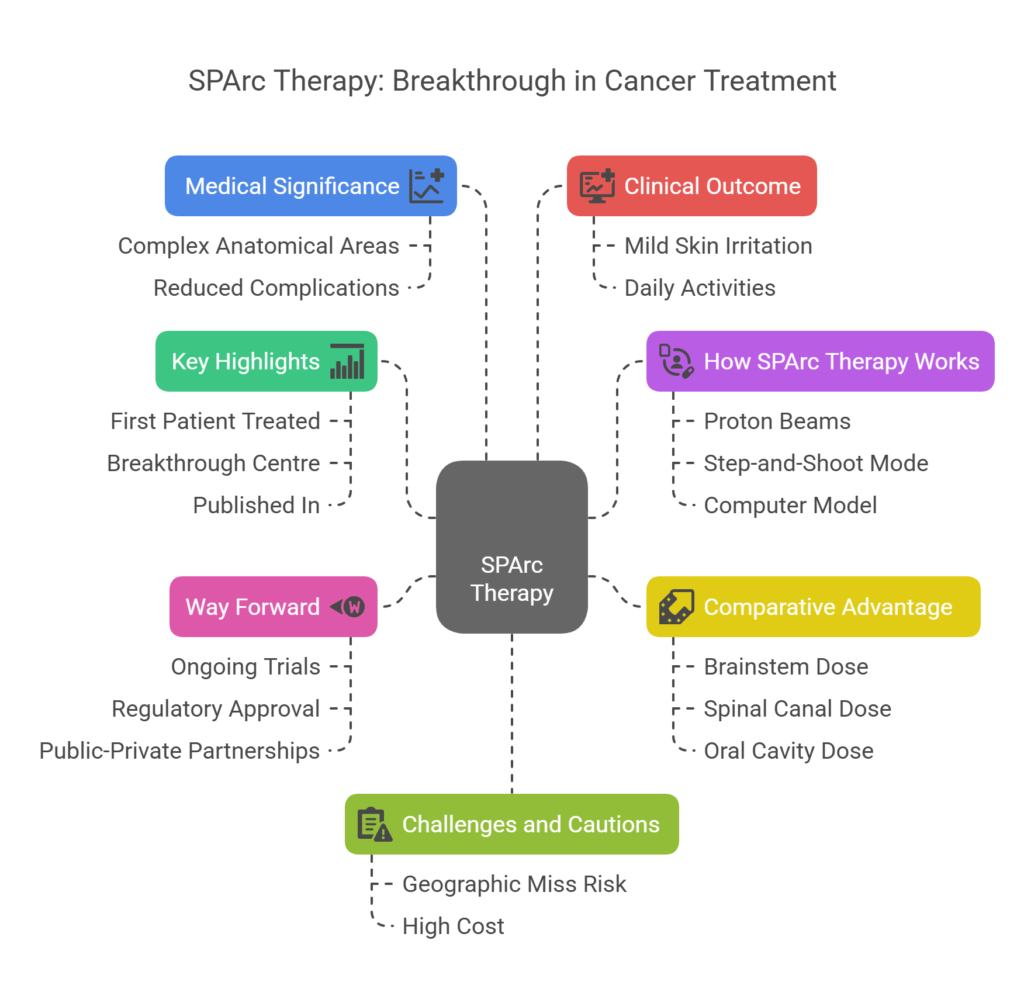
  • First Patient Treated: A 46-year-old woman with facial nerve-invading adenoid cystic carcinoma underwent 33 sessions using step-and-shoot SPArc.
  • Breakthrough Centre: Conducted at Corewell Health William Beaumont University Hospital, Michigan.
  • Published In: International Journal of Particle Therapy, June 2025.

How SPArc Therapy Works

  • Uses proton beams rather than X-rays to precisely “paint” tumours.
  • Step-and-shoot mode delivers beams in fixed angles and doses.
  • The treatment uses a computer model to calculate energy layers and beam spots.
  • Real-time adjustments were made after monitoring tumour shrinkage and weight loss using synthetic CT scans.

Comparative Advantage over Existing Techniques

Technique

Brainstem Dose

Spinal Canal Dose

Oral Cavity Dose

SFO-IMPT (current standard)

Baseline

Baseline

Baseline

Step-and-Shoot SPArc

↓ 10%

↓ 90%

↓ 72%

Dynamic SPArc (simulated)

Slightly better than step-and-shoot


Dynamic SPArc (still in development) offers further precision but is pending regulatory clearance.

Medical Significance

  • Especially useful for tumours in complex anatomical areas like the skull base, where radiation spillage risks damaging critical organs.
  • Reduced risk of long-term complications such as vision loss, cognitive impairment, or oral dysfunction.

Clinical Outcome

  • The woman reported only mild skin irritation and continued her daily activities, including eating and working.
  • The entire radiation delivery per session took 15–18 minutes.

Challenges and Cautions

  • Geographic miss risk: Even tiny shifts due to breathing or weight loss may cause underdosing.
  • High cost: Limits accessibility and raises concerns about overuse in non-critical cases.
  • Requires sophisticated equipment, regulatory approvals, and trained personnel.

Way Forward

  • Ongoing trials and regulatory approval of dynamic SPArc are essential.
  • India can explore public-private partnerships to integrate such technologies in tertiary cancer centres.
  • Focus on cost-benefit analysis, clinical guidelines, and insurance integration to ensure appropriate use.

Economic Implications

For Indian Exporters

  • These reforms reduce transaction costs and compliance hurdles
  • Encourage a more competitive and efficient export environment
  • Promote value addition in key sectors like leather

For Tamil Nadu

  • The reforms particularly benefit the state’s leather industry, a major contributor to employment and exports
  • Boost the marketability of GI-tagged E.I. leather, enhancing rural and traditional industries

For Trade Policy

  • These decisions indicate a shift from regulatory controls to policy facilitation

Reinforce the goals of Make in India, Atmanirbhar Bharat, and India’s ambition to become a leading export power

Recently, BVR Subrahmanyam, CEO of NITI Aayog, claimed that India has overtaken Japan to become the fourth-largest economy in the world, citing data from the International Monetary Fund (IMF). 

India’s rank as the world’s largest economy varies by measure—nominal GDP or purchasing power parity (PPP)—each with key implications for economic analysis.

Significance and Applications

Leave a Reply

Your email address will not be published. Required fields are marked *

Call Us Now !

Copyright © JICE ACADEMY FOR EXCELLENCE PRIVATE LIMITED