UPSC CURRENT AFFAIRS – 21th June 2025

Home / UPSC / Current Affairs / First Indian Epigraphical Reference to Halley’s Comet

First Indian Epigraphical Reference to Halley’s Comet

Why in News?

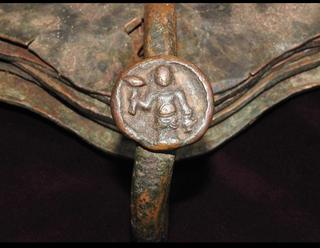
  • The Archaeological Survey of India (ASI) has discovered the first known Indian epigraphical reference to Halley’s Comet in a copper plate inscription dated 1456 CE, during the Vijayanagar period. The inscription, written in Sanskrit using the Nagari script, was found at the Sri Mallikarjunaswamy Temple in Srisailam, Andhra Pradesh.

Key Highlights of the Discovery:

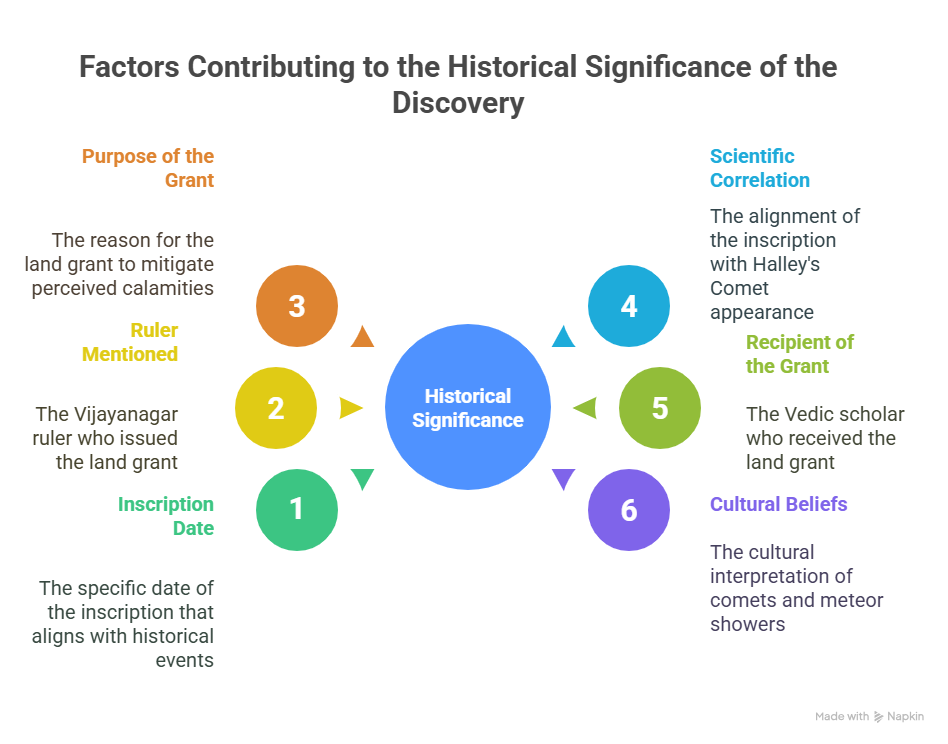
  • Inscription Date: The copper plate is dated to Śaka 1378, Dhātru Āshāḍha ba. 11, which corresponds to Monday, June 28, 1456 CE.
  • Ruler Mentioned: The inscription records a land grant issued by Vijayanagar ruler Mallikarjuna.
  • Purpose of the Grant: The donation was made “to mitigate the great calamity” (mahōtpāta śāntyartham) believed to arise due to:
    • The appearance of a comet (referred to as dhūmakētu),
    • And an associated meteor shower (referred to as prakāśyāya mahōtpāta).
  • Scientific Correlation: The date coincides with the 1456 appearance of Halley’s Comet, as recorded in global astronomical records, making this inscription historically and scientifically significant.
  • Recipient of the Grant: A Vedic scholar named Limgaṇarya from Kaḍiyalapura (likely present-day Kaḍiyapulanka in Kadapa district, Andhra Pradesh) received a village named Simgapura in Kelajhasima of Hastinavati Vemṭhe as an agrahāra (Brahmin land grant).
  • Cultural Beliefs and Astronomy: In Indian tradition, comets and meteor showers were considered inauspicious, often associated with natural disasters or misfortune. The inscription reflects the interplay of celestial events and royal policy, where astronomical phenomena influenced royal donations and rituals.

Significance of the Discovery:

  • This is the first known epigraphical reference (as opposed to textual references) in India to Halley’s Comet.
  • Confirms the observational awareness of celestial events among 15th-century Indian scholars and rulers.
  • Demonstrates how astronomical events were interpreted through religious and political lenses, often prompting donations and rituals to pacify perceived misfortunes.
  • The discovery was made during the editing of 21 unpublished copper plate charters (comprising 78 copper leaves) held by the Srisailam temple. The edited collection is expected to be published soon.

Broader Context: Astronomy in Indian Epigraphy:

  • While ancient and medieval Indian texts have several mentions of dhumaketus (comets), this inscription is unique as a primary epigraphic source.
  • Adds to the corpus of Indian astronomical heritage, showing India’s engagement with celestial phenomena not just for scientific curiosity, but also for their religious and socio-political implications.

Conclusion:

This discovery is a remarkable convergence of archaeology, astronomy, and historical linguistics. It enriches our understanding of how Indian rulers engaged with the cosmos and reflects the role of celestial interpretations in statecraft and temple culture during the Vijayanagar era.

Economic Implications

For Indian Exporters

  • These reforms reduce transaction costs and compliance hurdles
  • Encourage a more competitive and efficient export environment
  • Promote value addition in key sectors like leather

For Tamil Nadu

  • The reforms particularly benefit the state’s leather industry, a major contributor to employment and exports
  • Boost the marketability of GI-tagged E.I. leather, enhancing rural and traditional industries

For Trade Policy

  • These decisions indicate a shift from regulatory controls to policy facilitation

Reinforce the goals of Make in India, Atmanirbhar Bharat, and India’s ambition to become a leading export power

Recently, BVR Subrahmanyam, CEO of NITI Aayog, claimed that India has overtaken Japan to become the fourth-largest economy in the world, citing data from the International Monetary Fund (IMF). 

India’s rank as the world’s largest economy varies by measure—nominal GDP or purchasing power parity (PPP)—each with key implications for economic analysis.

Significance and Applications

Leave a Reply

Your email address will not be published. Required fields are marked *

Call Us Now !

Copyright © JICE ACADEMY FOR EXCELLENCE PRIVATE LIMITED