UPSC CURRENT AFFAIRS – 25th June 2025
CAR T-Cell Therapy for Cancer Treatment
Why in News?
- CAR T-cell therapy is a personalized cancer immunotherapy that reprograms a patient’s T-cells to target and destroy cancer cells, especially effective in certain blood cancers.
Introduction
- In recent years, cancer treatment has seen groundbreaking advances, with CAR T-cell therapy emerging as a major milestone.
- Unlike traditional therapies such as chemotherapy and radiation, CAR T-cell therapy harnesses the body’s own immune system to combat cancer.
- This personalized approach holds immense promise, particularly for patients with few remaining options.
What is CAR T-Cell Therapy?
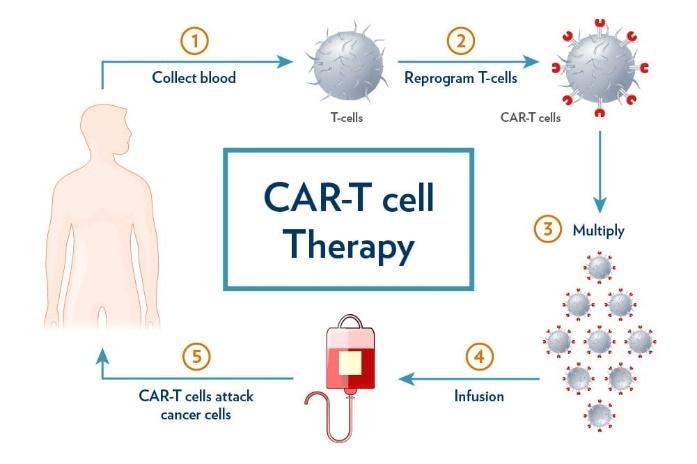
CAR T-cell therapy is a form of immunotherapy. It involves genetically modifying a patient’s own T-cells—a type of white blood cell central to the immune response—to better recognize and destroy cancer cells.
Steps Involved:
- Leukapheresis: T-cells are extracted from the patient’s blood.
- Genetic Modification: In a laboratory, these T-cells are re-engineered to produce special proteins called Chimeric Antigen Receptors (CARs) on their surface. These CARs enable the T-cells to identify and attach to specific proteins (antigens) on cancer cells.
- Expansion: The modified cells are multiplied in the lab.
- Infusion: These engineered CAR T-cells are then infused back into the patient’s bloodstream via IV.
- Action: Once inside the body, the CAR T-cells seek out and destroy cancer cells.
Clinical Applications
CAR T-cell therapy is currently approved for use in haematological (blood-related) cancers, especially for patients who are relapsed (cancer returns after treatment) or refractory (cancer does not respond to standard therapies).
Approved Indications:
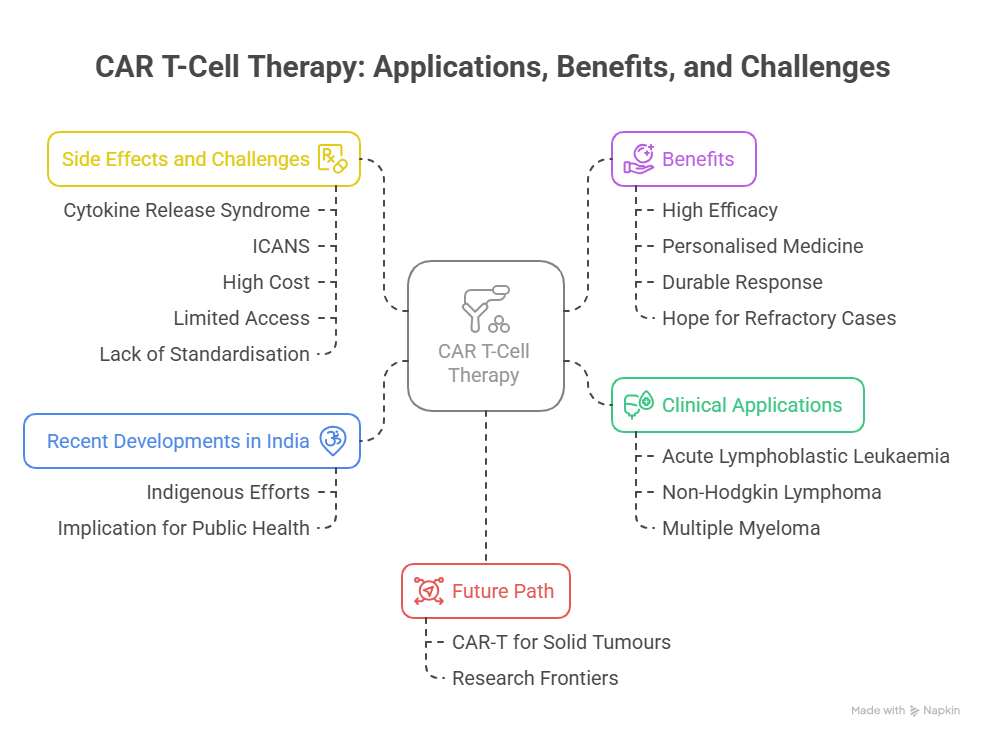
- Acute Lymphoblastic Leukaemia (ALL)
- Non-Hodgkin Lymphoma (NHL)
- Multiple Myeloma
These are cancers of the blood, lymphatic system, or bone marrow where conventional therapies may fail in advanced stages.
Benefits of CAR T-Cell Therapy
- High Efficacy: Many patients achieve complete remission, meaning their cancer symptoms disappear after therapy.
- Personalised Medicine: Since the treatment uses the patient’s own cells, it is tailored and highly specific.
- Durable Response: Some patients remain cancer-free for years after a single infusion.
- Hope for the Refractory Cases: It has shown success where other treatments have failed.
Side Effects and Challenges
Despite its promise, CAR T-cell therapy is not without risks.
Common Side Effects:
- Cytokine Release Syndrome (CRS): A systemic immune reaction causing high fever, low blood pressure, and respiratory distress.
- ICANS (Immune effector Cell-Associated Neurotoxicity Syndrome): Neurological effects such as confusion, seizures, or speech difficulty.
Most side effects are manageable with timely medical intervention.
Other Challenges:
- High Cost: Commercial CAR-T products in the West cost over ₹3-4 crore per patient, making them unaffordable for most.
- Limited Access: Advanced infrastructure and specialised teams are needed, limiting availability in low-resource settings.
- Lack of Standardisation: Need for robust regulatory and manufacturing protocols in India.
CAR T-Cell Therapy in India: Recent Developments
Indigenous Efforts:
India has made significant strides in developing affordable CAR T-cell therapy.
- The Indian Council of Medical Research (ICMR) funded trials led by Christian Medical College (CMC), Vellore, demonstrated that CAR-T therapy can be safely manufactured in hospitals using indigenous technology.
- IIT Bombay collaborated with Tata Memorial Centre to develop India’s first cost-effective CAR-T platform (named ‘InCART’).
- The Department of Biotechnology (DBT) supports indigenous biotech firms for the Make-in-India production of CAR-T products.
Implication for Public Health:
- Scalability and cost reduction through local manufacturing could make this treatment accessible to middle-income populations.
- Inclusion under Ayushman Bharat or other health insurance schemes may provide financial risk protection.
The Future Path: CAR-T for Solid Tumours
CAR T-cell therapy has so far worked best against liquid cancers. Scientists are now working to overcome the barriers that limit its success in solid tumours, such as:
- Tumour microenvironment resistance.
- Poor T-cell infiltration into solid tissues.
- Antigen heterogeneity in solid cancers like breast, lung, and pancreas.
Research Frontiers:
- Combining CAR-T with CRISPR (gene-editing) to enhance targeting.
- Use of dual CARs and safety switches to reduce side effects.
- Application in autoimmune diseases and infectious diseases in the future.
Conclusion:
- CAR T-cell therapy represents a paradigm shift in oncology. It turns the patient’s immune system into a precision weapon against cancer, offering hope to those who have exhausted conventional treatments.
- India’s efforts toward localising and democratising this therapy reflect a broader move toward technological sovereignty in healthcare.
- As infrastructure, policy, and affordability align, CAR T-cell therapy could soon be integrated into mainstream cancer care in India.

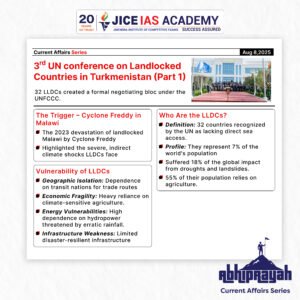
3rd UN conference on landlocked countries
UPSC CURRENT AFFAIRS – 08th August 2025 Home / 3rd UN conference on landlocked countries Why in News? At the

Issue of soapstone mining in Uttarakhand’s Bageshwar
UPSC CURRENT AFFAIRS – 08th August 2025 Home / Issue of soapstone mining in Uttarakhand’s Bageshwar Why in News? Unregulated

Groundwater Pollution in India – A Silent Public Health Emergency
UPSC CURRENT AFFAIRS – 08th August 2025 Home / Groundwater Pollution in India – A Silent Public Health Emergency Why
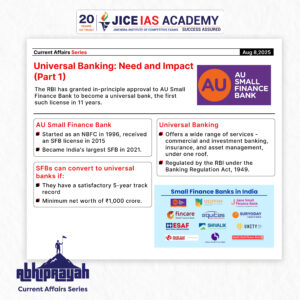
Universal banking- need and impact
UPSC CURRENT AFFAIRS – 08th August 2025 Home / Universal banking- need and impact Why in News? The Reserve Bank

India’s “Goldilocks” Economy: A Critical Appraisal
UPSC CURRENT AFFAIRS – 08th August 2025 Home / India’s “Goldilocks” Economy: A Critical Appraisal Why in News? The Finance

U.S.-India Trade Dispute: Trump’s 50% Tariffs and India’s Oil Imports from Russia
UPSC CURRENT AFFAIRS – 07th August 2025 Home / U.S.-India Trade Dispute: Trump’s 50% Tariffs and India’s Oil Imports from

Eco-Friendly Solution to Teak Pest Crisis: KFRI’s HpNPV Technology
UPSC CURRENT AFFAIRS – 07th August 2025 Home / Eco-Friendly Solution to Teak Pest Crisis: KFRI’s HpNPV Technology Why in

New Species of Non-Venomous Rain Snake Discovered in Mizoram
UPSC CURRENT AFFAIRS – 07th August 2025 Home / New Species of Non-Venomous Rain Snake Discovered in Mizoram Why in

Economic Implications
For Indian Exporters
- These reforms reduce transaction costs and compliance hurdles
- Encourage a more competitive and efficient export environment
- Promote value addition in key sectors like leather
For Tamil Nadu
- The reforms particularly benefit the state’s leather industry, a major contributor to employment and exports
- Boost the marketability of GI-tagged E.I. leather, enhancing rural and traditional industries
For Trade Policy
- These decisions indicate a shift from regulatory controls to policy facilitation
Reinforce the goals of Make in India, Atmanirbhar Bharat, and India’s ambition to become a leading export power
Recently, BVR Subrahmanyam, CEO of NITI Aayog, claimed that India has overtaken Japan to become the fourth-largest economy in the world, citing data from the International Monetary Fund (IMF).
India’s rank as the world’s largest economy varies by measure—nominal GDP or purchasing power parity (PPP)—each with key implications for economic analysis.
propecia cost https://bswfinasteride.com/# cost generic propecia without insurance