UPSC CURRENT AFFAIRS – 29th June 2025

Home / UPSC / Current Affairs / Rwanda–DR Congo Peace Deal: Key Highlights and India’s Stand

Rwanda–DR Congo Peace Deal: Key Highlights and India’s Stand

rwanda–dr congo peace deal

Why in News?

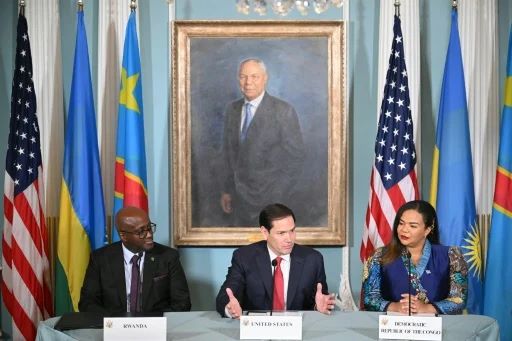
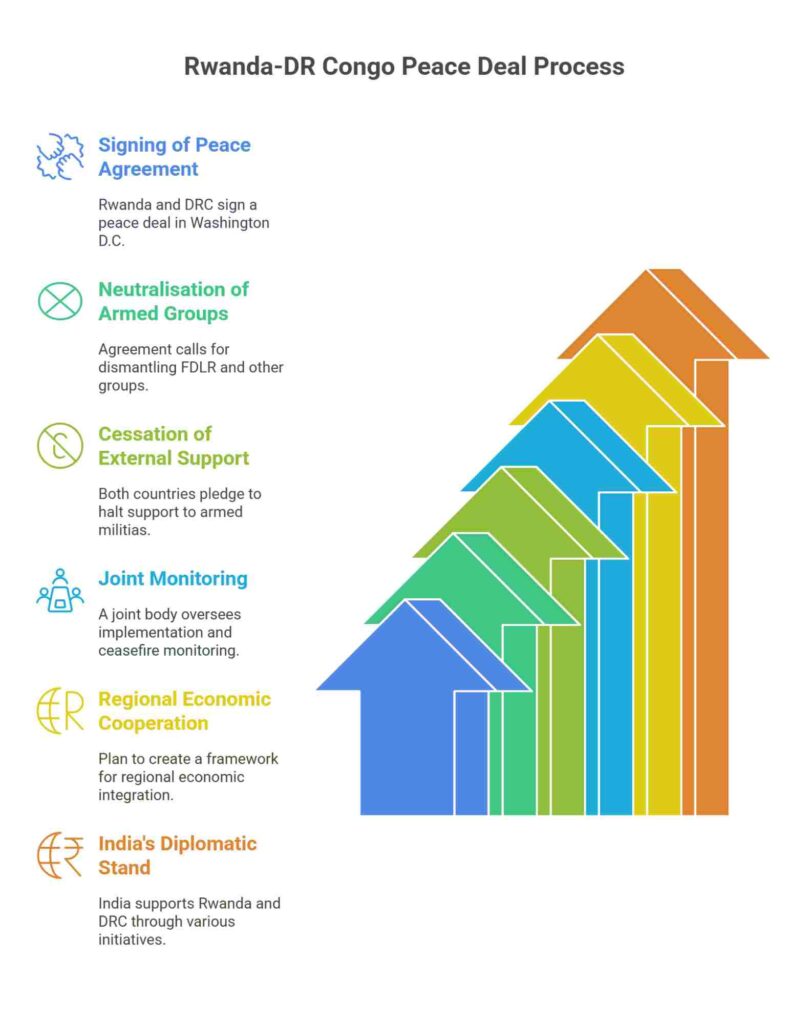
  • Rwanda and the Democratic Republic of Congo (DRC) signed a peace agreement in Washington D.C. on June 27, 2025. The deal aims to end decades of armed conflict in the Great Lakes region by dismantling rebel groups and improving cross-border security cooperation, with an emphasis on regional economic integration.

Key Highlights

  • Neutralisation of Armed Groups:
    The agreement calls for the dismantling of the Democratic Forces for the Liberation of Rwanda (FDLR) — an armed group formed by remnants of Hutu extremists linked to the 1994 Rwanda genocide.
  • Cessation of External Support:
    Both countries pledged to halt any state support to armed militias operating across borders, including groups like M23 and FDLR.
  • Joint Monitoring:
    A joint security coordination body will oversee implementation, ceasefire monitoring, and withdrawal of armed groups.
  • Regional Economic Cooperation:
    The deal outlines a plan to create a framework for regional economic integration to address the root causes of resource-based conflicts.

Background

  • Great Lakes Conflict Zone:
    The eastern DRC has been historically destabilised by ethnic violence and competition for minerals like coltan and cobalt.
  • FDLR and M23:
    • FDLR: Hutu rebel group with roots in post-genocide Rwanda.
    • M23: Tutsi rebel group linked to regional proxy conflicts.
  • Resource-Fuelled Conflict:
    The DRC’s rich mineral reserves have often funded armed groups, demonstrating the “resource curse” concept.
  • Role of International Mediation:
    The deal shows how third-party states and regional bodies facilitate conflict resolution and peace-building.
rwanda–dr congo peace deal process

India’s Diplomatic Stand with Rwanda and DRC

  • India–Rwanda Relations:
    India and Rwanda share warm bilateral ties. India has provided lines of credit for infrastructure, agriculture, and capacity building, and opened its first resident mission in Kigali in 2017. India supports Rwanda’s national development priorities and upholds Rwanda’s territorial integrity and stability.
  • India–DRC Relations:
    India and the DRC have traditionally friendly relations. India has a significant presence in UN peacekeeping through MONUSCO (United Nations Organization Stabilization Mission in the DR Congo), making India one of the largest troop contributors to peacekeeping in the DRC. India consistently supports the DRC’s sovereignty, unity, and peaceful resolution of its internal conflicts.
  • Broader Stand:
    In multilateral forums, India supports respect for sovereignty, peaceful dispute resolution, and capacity building for African Union-led peace initiatives. India also advocates for responsible mineral trade practices to curb conflict financing.

Challenges

  • Past peace agreements in the Great Lakes region have suffered from weak enforcement and lack of local ownership.
  • Armed groups may regroup if root causes like illicit resource trade and local governance issues remain unresolved.
  • Ensuring real accountability for human rights violations remains a gap.

Way Forward

  • Support effective disarmament, demobilisation, and reintegration (DDR) of ex-combatants.
  • Strengthen regional frameworks for transparent resource governance.
  • Build inclusive peace-building processes with civil society and local communities.
  • Leverage India’s peacekeeping experience to share best practices in post-conflict reconstruction and institutional capacity building.

Economic Implications

For Indian Exporters

  • These reforms reduce transaction costs and compliance hurdles
  • Encourage a more competitive and efficient export environment
  • Promote value addition in key sectors like leather

For Tamil Nadu

  • The reforms particularly benefit the state’s leather industry, a major contributor to employment and exports
  • Boost the marketability of GI-tagged E.I. leather, enhancing rural and traditional industries

For Trade Policy

  • These decisions indicate a shift from regulatory controls to policy facilitation

Reinforce the goals of Make in India, Atmanirbhar Bharat, and India’s ambition to become a leading export power

Recently, BVR Subrahmanyam, CEO of NITI Aayog, claimed that India has overtaken Japan to become the fourth-largest economy in the world, citing data from the International Monetary Fund (IMF). 

India’s rank as the world’s largest economy varies by measure—nominal GDP or purchasing power parity (PPP)—each with key implications for economic analysis.

Significance and Applications

Leave a Reply

Your email address will not be published. Required fields are marked *

Call Us Now !

Copyright © JICE ACADEMY FOR EXCELLENCE PRIVATE LIMITED