UPSC CURRENT AFFAIRS – 29th June 2025
Issues Around Deportation and Pushbacks in India
Why in News?
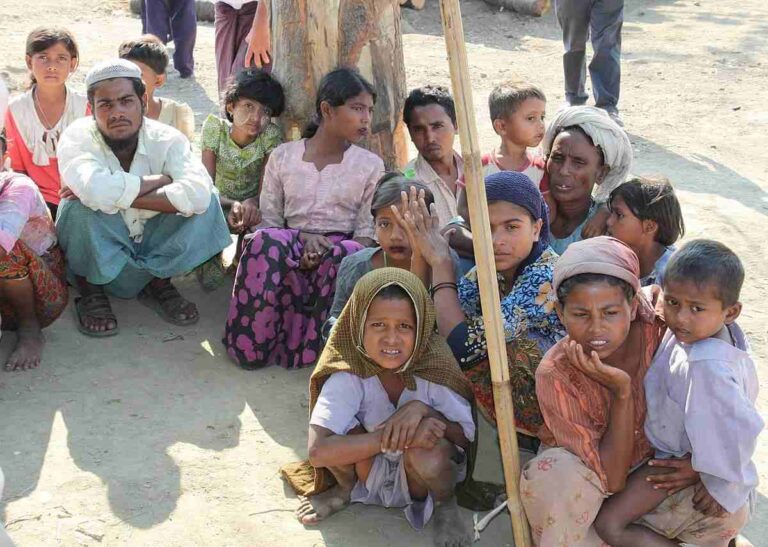
- Recent incidents have emerged where several residents of border States such as West Bengal and Assam were mistakenly pushed back to Bangladesh by the Border Security Force (BSF) on suspicion of being undocumented immigrants. The issue has gained urgency following India’s intensified drive to detect and deport illegal migrants after the regime change in Bangladesh in August 2024 and the Pahalgam terror attack in April 2025.
Key Highlights
- Distinction Between Deportation and Pushback:
Deportation is a formal, legal process involving detention, court proceedings, and bilateral coordination with the country of origin. In contrast, pushback is an informal, extra-legal measure in which border forces return suspected foreigners across the border without legal proceedings. - Scale of the Drive:
Approximately 2,500 suspected Bangladeshis have been pushed back recently. In some cases, those expelled were found to be Indian citizens or had citizenship cases pending in court. - Policy Directives:
The Union Home Ministry has directed State governments to detect, detain, and deport undocumented migrants. Some States like Assam have revived old legal provisions, such as the Immigrants (Expulsion from Assam) Act, 1950, to expedite expulsions. - Operational Issues:
In many cases, instead of legal deportation, suspected undocumented migrants are being transported by train or plane to border districts and pushed across the international border by the BSF.
Key Legal Concepts and Constitutional Provisions
- Citizenship and Foreigners as Union Subjects:
Under the Union List (Seventh Schedule), matters relating to citizenship, aliens, and immigration are the exclusive domain of Parliament. State police act under powers delegated by the Ministry of Home Affairs. - Relevant Laws:
- The Foreigners Act, 1946 governed detection and deportation for decades.
- The Immigrants (Expulsion from Assam) Act, 1950 empowers authorities to expel persons detrimental to the interests of the general public or Scheduled Tribes in Assam.
- The new Immigration and Foreigners Act, 2025 has replaced older colonial-era laws to modernise immigration governance.
- India is not a signatory to the UN Refugee Convention, 1951 or its 1967 Protocol; there is no national law defining refugee status.
Organisations Involved
- Ministry of Home Affairs (MHA): Nodal authority for policy and delegation of powers.
- Border Security Force (BSF): Executes pushback operations on the ground along international borders.
- State Police: Detects and detains undocumented migrants.
- Foreigners Regional Registration Officer (FRRO): Coordinates the registration and formal deportation process.
Border Context and Regional Challenges
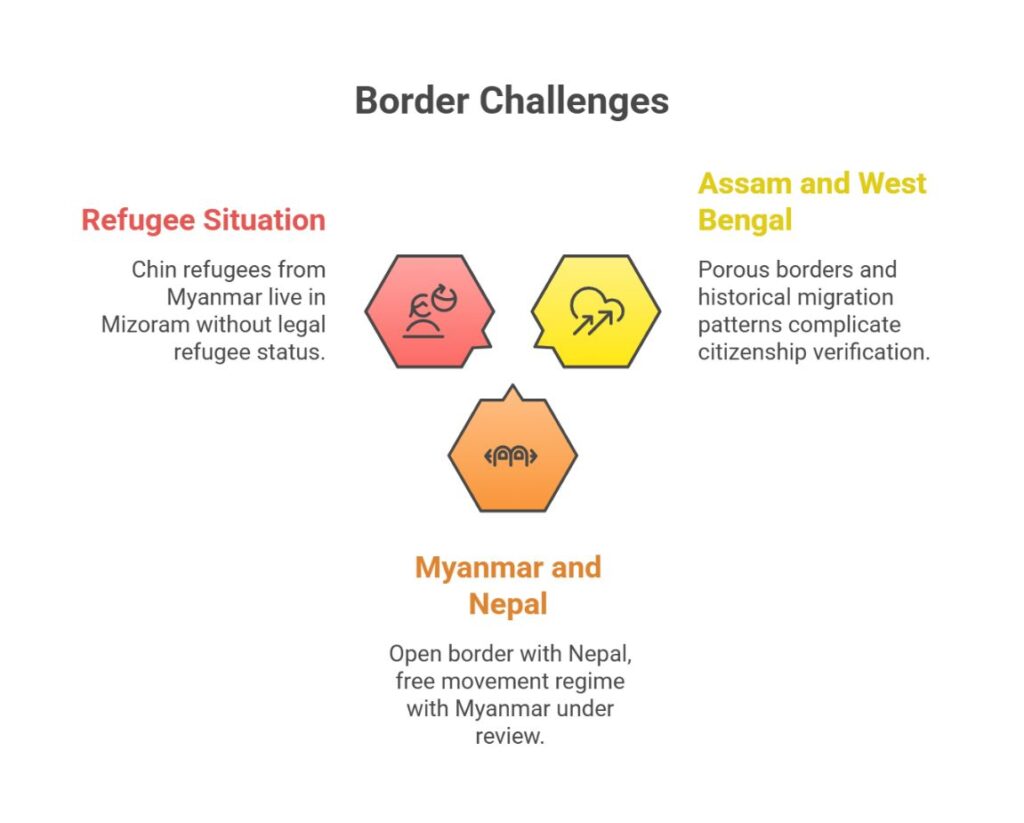
- Assam and West Bengal:
Porous borders and historical migration patterns due to Partition and the Bangladesh Liberation War complicate verification of citizenship. - Myanmar and Nepal Borders:
Nepal enjoys an open border regime with India. The India-Myanmar border has a Free Movement Regime (FMR) within 10 km on either side, but this is under review due to security concerns and refugee influx from Myanmar. - Refugee Situation:
Thousands of Chin refugees from Myanmar continue to live in Mizoram despite the absence of any legal framework granting refugee status.
Challenges
- The use of pushbacks bypasses due legal process and raises human rights concerns.
- Verifying nationality is complex, especially in border States with historical cross-border migration.
- Lack of a national refugee law creates legal and humanitarian gaps.
- Coordinating between Centre and States remains challenging since citizenship is a Union subject but detection happens locally.
- Deportation is difficult if the neighbouring country does not cooperate.
Way Forward
- Strengthen legal deportation procedures to ensure due process and human rights protection.
- Improve identity verification mechanisms to prevent wrongful expulsions.
- Consider enacting a national refugee or asylum law.
- Foster greater Centre-State coordination for consistent implementation.
- Enhance bilateral cooperation with Bangladesh to ensure humane and orderly repatriation.

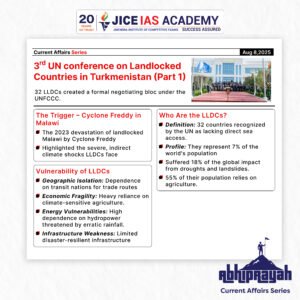
3rd UN conference on landlocked countries
UPSC CURRENT AFFAIRS – 08th August 2025 Home / 3rd UN conference on landlocked countries Why in News? At the

Issue of soapstone mining in Uttarakhand’s Bageshwar
UPSC CURRENT AFFAIRS – 08th August 2025 Home / Issue of soapstone mining in Uttarakhand’s Bageshwar Why in News? Unregulated

Groundwater Pollution in India – A Silent Public Health Emergency
UPSC CURRENT AFFAIRS – 08th August 2025 Home / Groundwater Pollution in India – A Silent Public Health Emergency Why
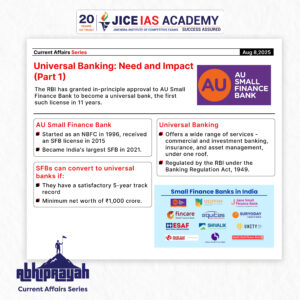
Universal banking- need and impact
UPSC CURRENT AFFAIRS – 08th August 2025 Home / Universal banking- need and impact Why in News? The Reserve Bank

India’s “Goldilocks” Economy: A Critical Appraisal
UPSC CURRENT AFFAIRS – 08th August 2025 Home / India’s “Goldilocks” Economy: A Critical Appraisal Why in News? The Finance

U.S.-India Trade Dispute: Trump’s 50% Tariffs and India’s Oil Imports from Russia
UPSC CURRENT AFFAIRS – 07th August 2025 Home / U.S.-India Trade Dispute: Trump’s 50% Tariffs and India’s Oil Imports from
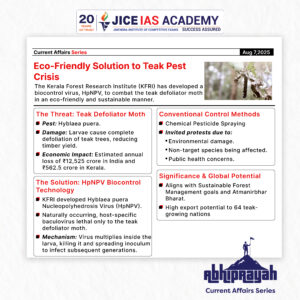
Eco-Friendly Solution to Teak Pest Crisis: KFRI’s HpNPV Technology
UPSC CURRENT AFFAIRS – 07th August 2025 Home / Eco-Friendly Solution to Teak Pest Crisis: KFRI’s HpNPV Technology Why in

New Species of Non-Venomous Rain Snake Discovered in Mizoram
UPSC CURRENT AFFAIRS – 07th August 2025 Home / New Species of Non-Venomous Rain Snake Discovered in Mizoram Why in

Economic Implications
For Indian Exporters
- These reforms reduce transaction costs and compliance hurdles
- Encourage a more competitive and efficient export environment
- Promote value addition in key sectors like leather
For Tamil Nadu
- The reforms particularly benefit the state’s leather industry, a major contributor to employment and exports
- Boost the marketability of GI-tagged E.I. leather, enhancing rural and traditional industries
For Trade Policy
- These decisions indicate a shift from regulatory controls to policy facilitation
Reinforce the goals of Make in India, Atmanirbhar Bharat, and India’s ambition to become a leading export power
Recently, BVR Subrahmanyam, CEO of NITI Aayog, claimed that India has overtaken Japan to become the fourth-largest economy in the world, citing data from the International Monetary Fund (IMF).
India’s rank as the world’s largest economy varies by measure—nominal GDP or purchasing power parity (PPP)—each with key implications for economic analysis.