

UPSC CURRENT AFFAIRS – 10th July 2025
PM Modi conferred with Namibia's highest civilian award
Why in News?
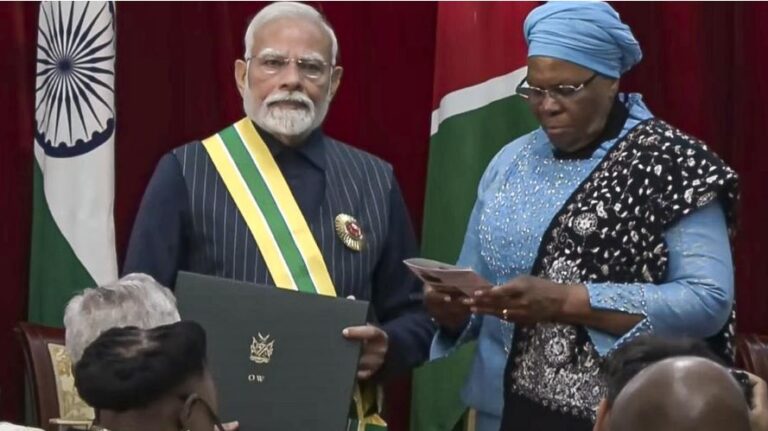
Prime Minister Narendra Modi was conferred with Namibia’s highest civilian honour, the Order of the Most Ancient Welwitschia Mirabilis
Introduction
- Prime Minister Narendra Modi was conferred with Namibia’s highest civilian award — the Order of the Most Ancient Welwitschia Mirabilis — by Namibian President Netumbo Nandi-Ndaitwah.
- This honour was presented during PM Modi’s visit to Namibia, marking the last leg of his five-nation diplomatic tour.
Significance of the Visit
- Historic Diplomacy: This was PM Modi’s first visit to Namibia and only the third-ever visit by an Indian Prime Minister to the country, symbolising the strengthening of India–Namibia relations.
- Part of a Larger Diplomatic Outreach: The visit forms part of India’s ongoing efforts to enhance ties with African nations, aligning with the government’s Vision for Global South Solidarity and India–Africa Forum Summit (IAFS) objectives.
About the Award:
- Order of the Most Ancient Welwitschia Mirabilis:
- Named after Welwitschia Mirabilis, an endemic and ancient plant native to the Namib Desert, the award symbolises resilience, longevity, and strength — qualities attributed to leadership and friendship.
- Symbolic Honour:
- The award reflects Namibia’s deep appreciation for India’s consistent support in areas like decolonization, healthcare, education, and capacity building.
- PM Modi became the first Indian recipient of this honour.
Bilateral Engagements and Agreements
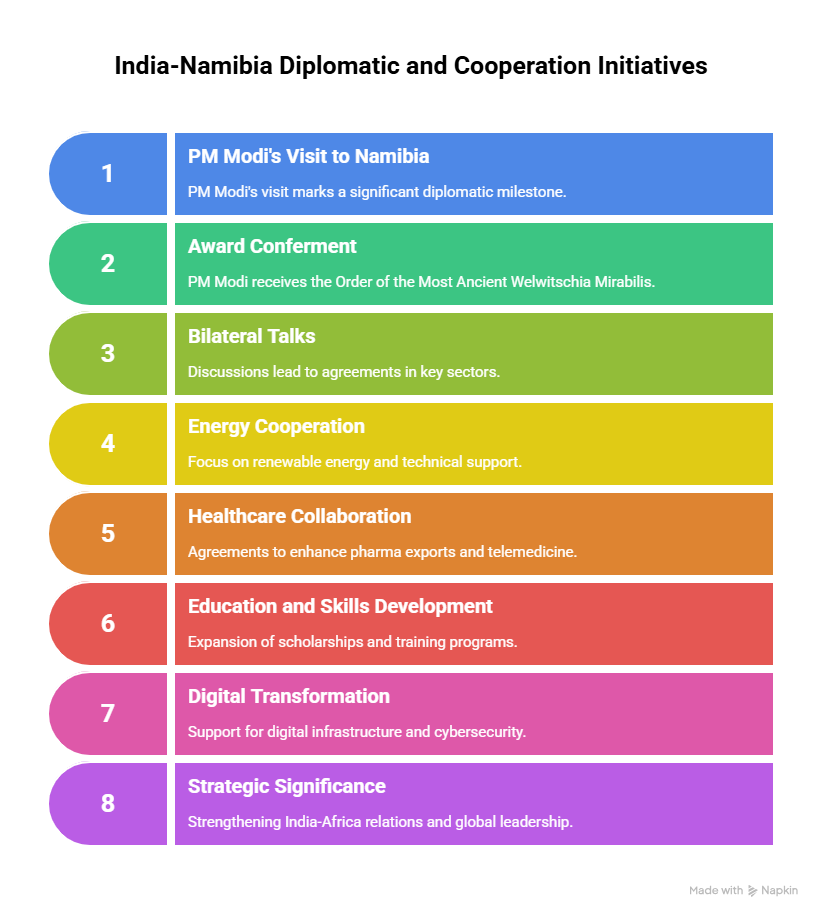
PM Modi held bilateral talks with President Nandi-Ndaitwah, leading to the signing of four major agreements to enhance cooperation in key sectors:
- Energy Cooperation
- Focus on renewable energy, especially solar and green hydrogen.
- India to provide technical support and investments in Namibia’s clean energy sector.
- Ties strengthened under India’s International Solar Alliance (ISA) framework.
- Healthcare and Pharmaceuticals
- Agreements to facilitate Indian pharma exports to Namibia.
- Collaboration in telemedicine, diagnostics, and capacity building of healthcare professionals.
- Namibia welcomed India’s Global South Vaccine Initiative and pharma diplomacy.
- Education and Skills Development
- Expansion of scholarships and technical training under the Indian Technical and Economic Cooperation (ITEC) programme.
- Support for digital education platforms and vocational training centers in Namibia.
- Digital Transformation and ICT
- Agreement to support Namibia’s digital public infrastructure in line with India’s India Stack and Digital Public Goods (DPGs) model.
- Cooperation in cybersecurity, e-governance, and data management.
Broader Strategic Significance
- India–Africa Relations: This visit reaffirms India’s commitment to Africa’s developmental priorities, particularly in line with the principles of South-South Cooperation and demand-driven development aid.
- Geostrategic Engagement: Namibia is resource-rich (especially in uranium and rare earth elements), making it strategically important for India’s energy security and critical minerals supply chain diversification.
- Global South Leadership: PM Modi’s honour enhances India’s image as a trusted partner and voice of the Global South, especially ahead of the India–Africa Forum Summit IV.
Conclusion
- PM Modi’s visit to Namibia and the conferment of the Order of the Most Ancient Welwitschia Mirabilis is a landmark in India–Namibia diplomatic relations.
- It not only celebrates shared historical ties and solidarity but also paves the way for a modern partnership rooted in energy, healthcare, education, and digital cooperation.
- This visit aligns with India’s broader foreign policy vision of “Vasudhaiva Kutumbakam” and its aspiration to be a leading development partner in Africa and the Global South.

3rd UN conference on landlocked countries
UPSC CURRENT AFFAIRS – 08th August 2025 Home / 3rd UN conference on landlocked countries Why in News? At the
Issue of soapstone mining in Uttarakhand’s Bageshwar
UPSC CURRENT AFFAIRS – 08th August 2025 Home / Issue of soapstone mining in Uttarakhand’s Bageshwar Why in News? Unregulated
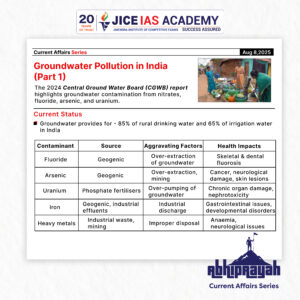
Groundwater Pollution in India – A Silent Public Health Emergency
UPSC CURRENT AFFAIRS – 08th August 2025 Home / Groundwater Pollution in India – A Silent Public Health Emergency Why
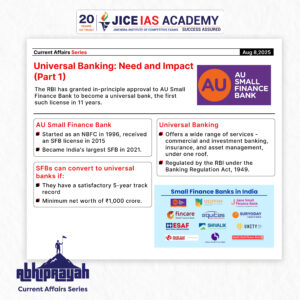
Universal banking- need and impact
UPSC CURRENT AFFAIRS – 08th August 2025 Home / Universal banking- need and impact Why in News? The Reserve Bank
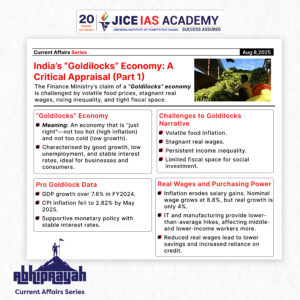
India’s “Goldilocks” Economy: A Critical Appraisal
UPSC CURRENT AFFAIRS – 08th August 2025 Home / India’s “Goldilocks” Economy: A Critical Appraisal Why in News? The Finance
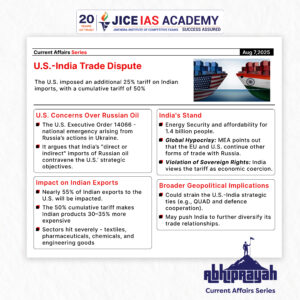
U.S.-India Trade Dispute: Trump’s 50% Tariffs and India’s Oil Imports from Russia
UPSC CURRENT AFFAIRS – 07th August 2025 Home / U.S.-India Trade Dispute: Trump’s 50% Tariffs and India’s Oil Imports from

Eco-Friendly Solution to Teak Pest Crisis: KFRI’s HpNPV Technology
UPSC CURRENT AFFAIRS – 07th August 2025 Home / Eco-Friendly Solution to Teak Pest Crisis: KFRI’s HpNPV Technology Why in

New Species of Non-Venomous Rain Snake Discovered in Mizoram
UPSC CURRENT AFFAIRS – 07th August 2025 Home / New Species of Non-Venomous Rain Snake Discovered in Mizoram Why in

Economic Implications
For Indian Exporters
- These reforms reduce transaction costs and compliance hurdles
- Encourage a more competitive and efficient export environment
- Promote value addition in key sectors like leather
For Tamil Nadu
- The reforms particularly benefit the state’s leather industry, a major contributor to employment and exports
- Boost the marketability of GI-tagged E.I. leather, enhancing rural and traditional industries
For Trade Policy
- These decisions indicate a shift from regulatory controls to policy facilitation
Reinforce the goals of Make in India, Atmanirbhar Bharat, and India’s ambition to become a leading export power
Recently, BVR Subrahmanyam, CEO of NITI Aayog, claimed that India has overtaken Japan to become the fourth-largest economy in the world, citing data from the International Monetary Fund (IMF).
India’s rank as the world’s largest economy varies by measure—nominal GDP or purchasing power parity (PPP)—each with key implications for economic analysis.