UPSC CURRENT AFFAIRS – 14th July 2025
3I/Atlas: The Ancient Interstellar Wanderer
Why in News?
-
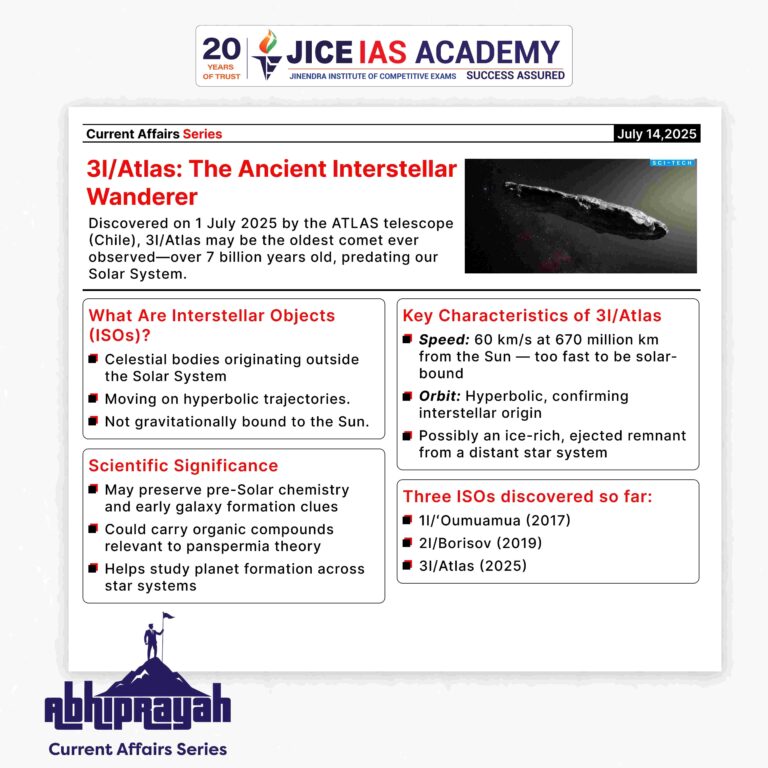
3I/Atlas, an interstellar object discovered in July 2025, may be the oldest comet ever observed, offering insights into planetary systems beyond our Solar System.
Introduction
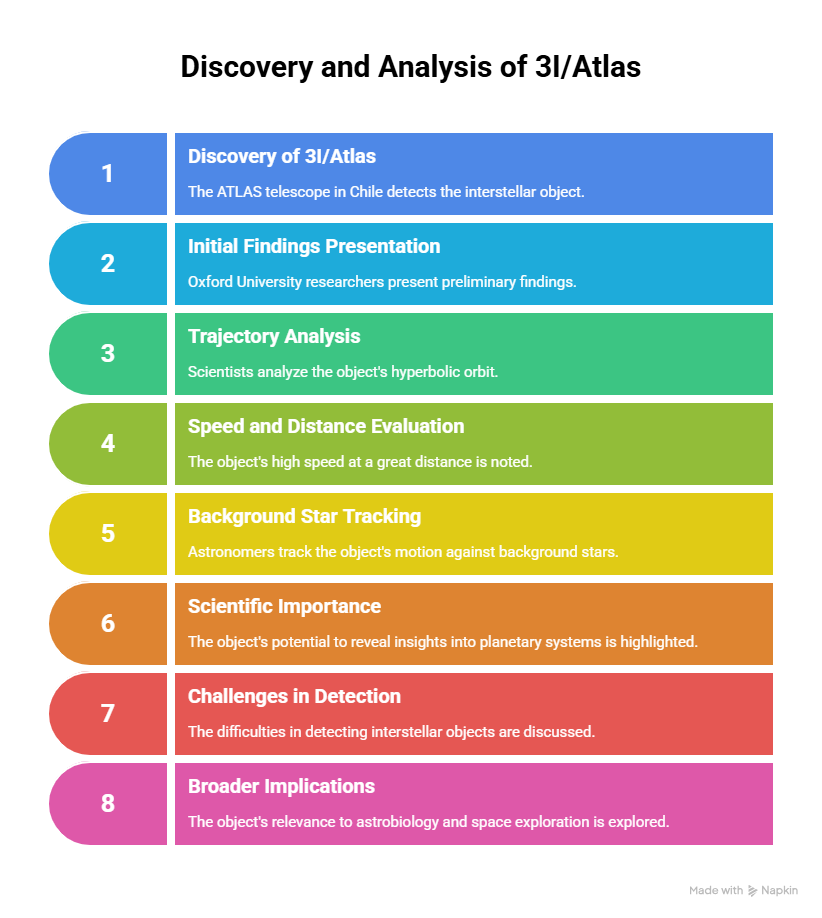
- A mysterious celestial object named 3I/Atlas, discovered on July 1, 2025, by the Asteroid Terrestrial-impact Last Alert System (ATLAS) telescope in Río Hurtado, Chile, has drawn significant interest from the global scientific community.
- Preliminary findings, presented by Oxford University researchers at the national meeting of the Royal Astronomical Society in Durham on July 11, 2025, suggest that 3I/Atlas could be more than seven billion years old.
- This would make it potentially the oldest comet ever observed—predating our Solar System by nearly three billion years.
Understanding Interstellar Objects
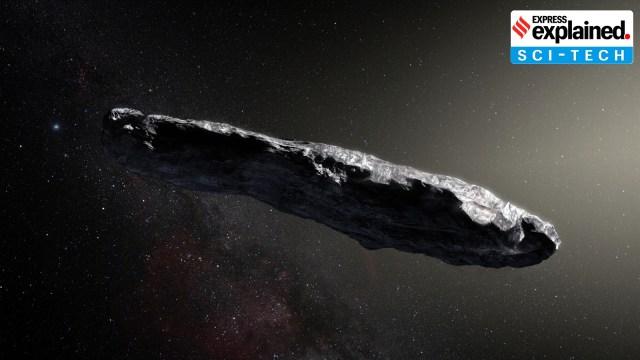
- Interstellar objects are celestial bodies that originate outside the Solar System and pass through it without being gravitationally bound to the Sun.
- Unlike planets, asteroids, or comets that orbit the Sun, interstellar objects travel along trajectories that will eventually carry them out of the Solar System permanently.
Previous Discoveries
To date, only three confirmed interstellar objects have been observed:
- 1I/ʻOumuamua (discovered in 2017)
- 2I/Borisov (discovered in 2019)
- 3I/Atlas (discovered in 2025)
These are designated with the prefix “I” for interstellar, marking them as distinct from Solar System objects.
Scientific Importance of Interstellar Objects
Insights into the Formation of Other Planetary Systems
- The study of objects like 3I/Atlas provides scientists with information about planet formation and chemical conditions in distant solar systems.
- For example, if an object is rich in ice, it likely formed far from its home star in cold regions, and may have been ejected by the gravitational influence of a massive planet.
Indicators of Early Galactic Conditions
- Since 3I/Atlas may be older than the Solar System itself, it serves as a cosmic time capsule, preserving information from the early universe and pre-solar chemistry.
- This is vital for understanding how solar systems form and evolve across the galaxy.
Challenges in Detection
- Until recently, interstellar objects were thought to pass through the Solar System frequently, but they went undetected due to their small size, low reflectivity, and high speed. The development of advanced telescopes and wide-field surveys like ATLAS has enabled their discovery.
Broader Implications for Science and Society
Astro biological Relevance
- Interstellar objects may carry organic compounds or prebiotic material. Studying them can provide clues about whether life’s building blocks are widespread in the galaxy, and whether the theory of panspermia—that life may spread from one star system to another via comets—is viable.
Comparative Planetary Science
- These objects offer a unique opportunity to compare planetary formation across different star systems, helping scientists refine models of planetary science.
Opportunities for Space Exploration
- There is growing interest in launching missions to study or intercept interstellar objects. These missions could allow direct analysis of material from another solar system, offering a historic first for human science.

3rd UN conference on landlocked countries
UPSC CURRENT AFFAIRS – 08th August 2025 Home / 3rd UN conference on landlocked countries Why in News? At the

Issue of soapstone mining in Uttarakhand’s Bageshwar
UPSC CURRENT AFFAIRS – 08th August 2025 Home / Issue of soapstone mining in Uttarakhand’s Bageshwar Why in News? Unregulated

Groundwater Pollution in India – A Silent Public Health Emergency
UPSC CURRENT AFFAIRS – 08th August 2025 Home / Groundwater Pollution in India – A Silent Public Health Emergency Why

Universal banking- need and impact
UPSC CURRENT AFFAIRS – 08th August 2025 Home / Universal banking- need and impact Why in News? The Reserve Bank

India’s “Goldilocks” Economy: A Critical Appraisal
UPSC CURRENT AFFAIRS – 08th August 2025 Home / India’s “Goldilocks” Economy: A Critical Appraisal Why in News? The Finance

U.S.-India Trade Dispute: Trump’s 50% Tariffs and India’s Oil Imports from Russia
UPSC CURRENT AFFAIRS – 07th August 2025 Home / U.S.-India Trade Dispute: Trump’s 50% Tariffs and India’s Oil Imports from
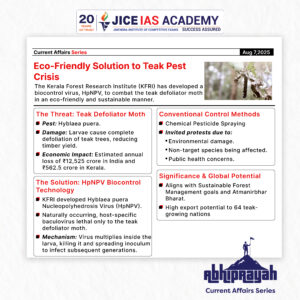
Eco-Friendly Solution to Teak Pest Crisis: KFRI’s HpNPV Technology
UPSC CURRENT AFFAIRS – 07th August 2025 Home / Eco-Friendly Solution to Teak Pest Crisis: KFRI’s HpNPV Technology Why in

New Species of Non-Venomous Rain Snake Discovered in Mizoram
UPSC CURRENT AFFAIRS – 07th August 2025 Home / New Species of Non-Venomous Rain Snake Discovered in Mizoram Why in

Economic Implications
For Indian Exporters
- These reforms reduce transaction costs and compliance hurdles
- Encourage a more competitive and efficient export environment
- Promote value addition in key sectors like leather
For Tamil Nadu
- The reforms particularly benefit the state’s leather industry, a major contributor to employment and exports
- Boost the marketability of GI-tagged E.I. leather, enhancing rural and traditional industries
For Trade Policy
- These decisions indicate a shift from regulatory controls to policy facilitation
Reinforce the goals of Make in India, Atmanirbhar Bharat, and India’s ambition to become a leading export power
Recently, BVR Subrahmanyam, CEO of NITI Aayog, claimed that India has overtaken Japan to become the fourth-largest economy in the world, citing data from the International Monetary Fund (IMF).
India’s rank as the world’s largest economy varies by measure—nominal GDP or purchasing power parity (PPP)—each with key implications for economic analysis.