UPSC CURRENT AFFAIRS – 18th July 2025

Home / UPSC / Current Affairs / Temple Entry Discrimination and Madras High Court Intervention

Temple Entry Discrimination and Madras High Court Intervention

temple entry discrimination and madras high court intervention

Why in News?

  • The Madras High Court on July 17, 2025, directed authorities to prevent caste-based discrimination at the Puthukudi Ayyanar Temple in Tamil Nadu.
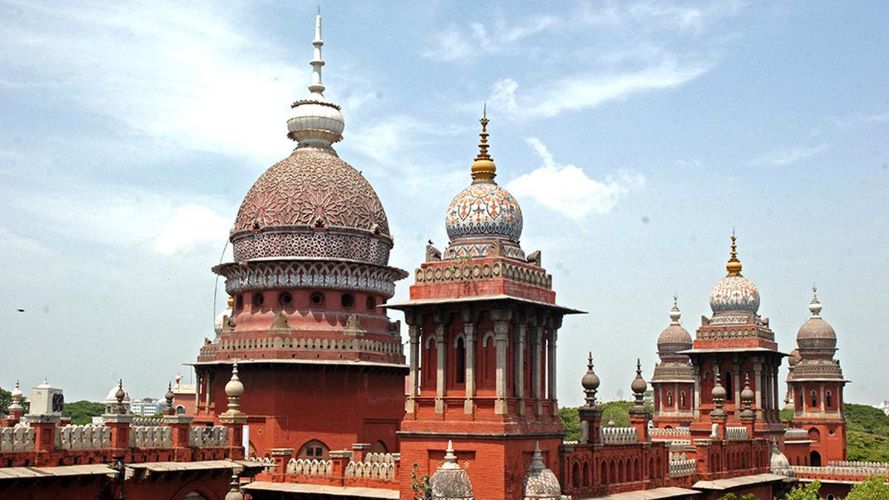
reddish-brown stone architecture of a large building

Introduction

  • In a significant ruling on July 17, 2025, the Madras High Court addressed caste-based discrimination at the Puthukudi Ayyanar Temple in Udayarpalayam taluk of Ariyalur district. 
  • The court upheld the constitutional principle of equality and religious freedom by directing authorities to ensure Scheduled Caste (SC) persons are not prevented from entering the temple and participating in religious activities.

Court’s Observations and Directions

  • Justice N. Anand Venkatesh observed that caste-based exclusion from religious places is impermissible in a country governed by the rule of law. He directed:
  • The Ariyalur Superintendent of Police and the Revenue Divisional Officer (RDO) of Udayarpalayam to ensure that all persons, irrespective of caste, are allowed to enter the Puthukudi Ayyanar Temple.
  • The officials must guarantee access to regular worship and festivals, including the ongoing temple car festival (July 16–31, 2025).
  • If any individual or group attempts to prevent temple entry on caste grounds, legal action must be initiated.
  • The Police and Revenue departments must maintain law and order without allowing fear of unrest to justify inaction.
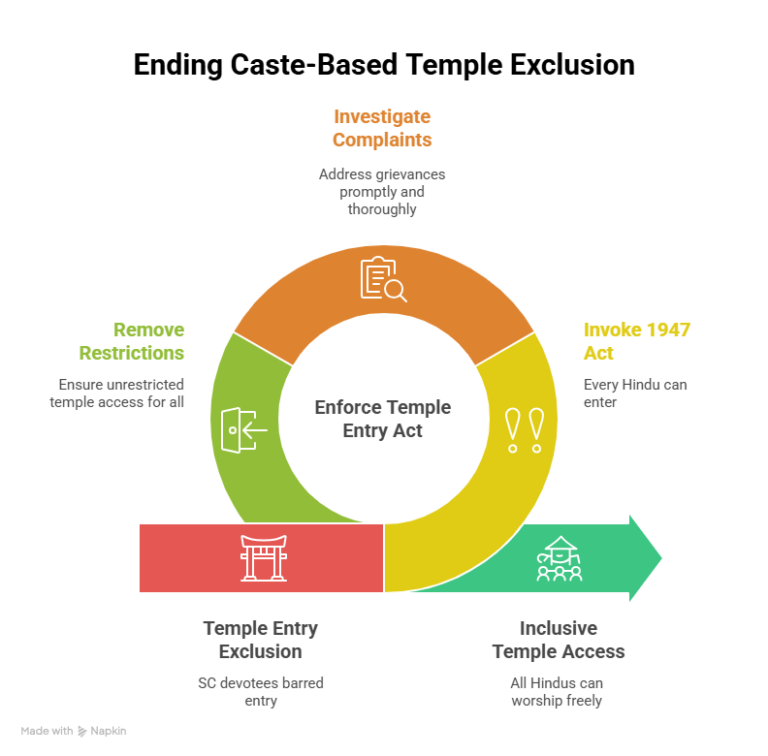
ending caste-based temple exclusion

Legal Basis: Tamil Nadu Temple Entry Authorization Act, 1947

  • Justice Venkatesh invoked the Tamil Nadu Temple Entry Authorization Act, 1947, which was enacted after extensive social reform movements led by prominent leaders to end caste-based exclusion in temples.
  • Section 3 of the Act states that every Hindu, regardless of caste or sect, is entitled to enter and worship in any Hindu temple.
  • Any restriction based on caste constitutes an actionable wrong or offence, and the offender can be sued or prosecuted.

Socio-Legal Significance

  • This case is part of a broader pattern of caste-based discrimination in access to religious spaces across Tamil Nadu and other parts of India. It also recalls the long history of the Temple Entry Movement, which sought to democratize religious spaces and challenge the hierarchical norms entrenched by caste.
  • Recent incidents, including the entry of Dalits into Amman temple in Tiruvannamalai after 70 years and the reopening of the Droupadi Amman Temple in Villupuram after years of closure, highlight both the persistence of discrimination and the ongoing struggle for equality.

Conclusion

  • The Madras High Court’s judgment reaffirms that constitutional values of equality and non-discrimination must prevail in all spheres of life, including religious worship. 
  • It places a clear responsibility on the State machinery to uphold the rights of Scheduled Caste persons and enforce laws like the 1947 Temple Entry Authorization Act in both letter and spirit. 
  • The verdict marks another important step in the legal and moral fight against caste-based exclusion in India’s socio-religious landscape.

Economic Implications

For Indian Exporters

  • These reforms reduce transaction costs and compliance hurdles
  • Encourage a more competitive and efficient export environment
  • Promote value addition in key sectors like leather

For Tamil Nadu

  • The reforms particularly benefit the state’s leather industry, a major contributor to employment and exports
  • Boost the marketability of GI-tagged E.I. leather, enhancing rural and traditional industries

For Trade Policy

  • These decisions indicate a shift from regulatory controls to policy facilitation

Reinforce the goals of Make in India, Atmanirbhar Bharat, and India’s ambition to become a leading export power

Recently, BVR Subrahmanyam, CEO of NITI Aayog, claimed that India has overtaken Japan to become the fourth-largest economy in the world, citing data from the International Monetary Fund (IMF). 

India’s rank as the world’s largest economy varies by measure—nominal GDP or purchasing power parity (PPP)—each with key implications for economic analysis.

Significance and Applications

Leave a Reply

Your email address will not be published. Required fields are marked *

Call Us Now !

Copyright © JICE ACADEMY FOR EXCELLENCE PRIVATE LIMITED