

UPSC CURRENT AFFAIRS – 19th July 2025

Home / UPSC / Current Affairs / EU sanctions Gujarat refinery as it targets Russia’s energy sector

EU sanctions Gujarat refinery as it targets Russia’s energy sector

eu sanctions gujarat nayara refinery

Why in News?

The European Union imposed sanctions on Gujarat’s Nayara refinery for links to Russia’s Rosneft, as part of its 18th sanctions package targeting Russia’s energy and military networks amid the Ukraine war.

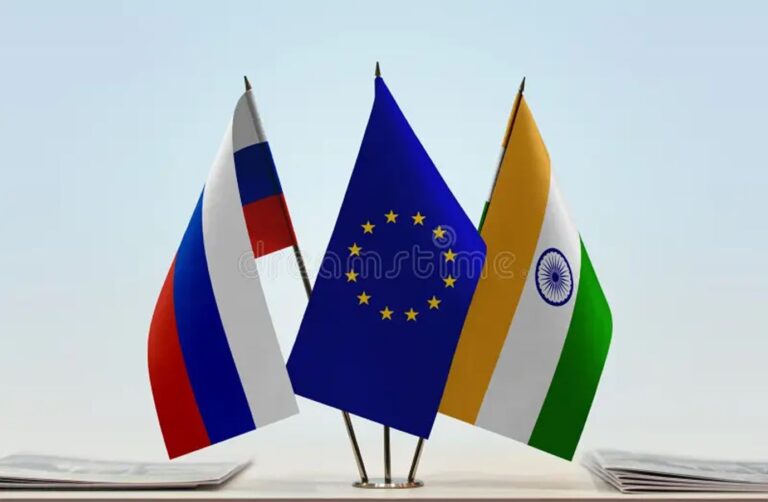
flag of Russia and the european union and india

Background

On July 18, 2025, the European Union (EU) announced its 18th sanctions package against Russia, targeting the energy sector, financial institutions, and military-industrial suppliers, with India’s Nayara Energy refinery in Gujarat included for the first time. The move coincides with the U.S. Congress debating tighter sanctions on Russian crude buyers like India, China, and Brazil.

Reason for sanction

1. Rosneft’s stake makes it a proxy entity aiding Russian energy exports.

2. Oil Price Cap Revised

  • The oil price cap for Russian crude, applicable if G7-based services like shipping or insurance are used, has been lowered from $60 to $47.6 per barrel.
  • Aims to reduce Russia’s revenue from oil exports.

3. Ban on Refined Products and Pipelines

  • EU-wide import ban on refined petroleum products made from Russian oil.
  • Full transaction ban on Nord Stream 1 and 2 pipelines between Russia and Germany.

India’s Response and Global Implications

  • The sanctions come amid India’s increasing energy ties with Russia.
  • India warned against “double standards” regarding oil imports, emphasizing its right to ensure energy security.
  • Nayara Energy is reportedly in talks with Reliance Industries regarding a possible stake sale, which could be accelerated due to sanctions pressure.

Significance and Strategic Implications

  • First EU sanction on an Indian-based refinery, reflecting broader scrutiny of countries perceived as bypassing or indirectly supporting Russian energy exports.
  • Highlights increasing geopolitical complexities in energy trade, especially for countries like India balancing strategic autonomy with global alliances.
  • May affect India-EU and India-U.S. energy and trade relations, especially if secondary sanctions are enforced.
eu sanctions on nayara refinery

Economic Implications

For Indian Exporters

  • These reforms reduce transaction costs and compliance hurdles
  • Encourage a more competitive and efficient export environment
  • Promote value addition in key sectors like leather

For Tamil Nadu

  • The reforms particularly benefit the state’s leather industry, a major contributor to employment and exports
  • Boost the marketability of GI-tagged E.I. leather, enhancing rural and traditional industries

For Trade Policy

  • These decisions indicate a shift from regulatory controls to policy facilitation

Reinforce the goals of Make in India, Atmanirbhar Bharat, and India’s ambition to become a leading export power

Recently, BVR Subrahmanyam, CEO of NITI Aayog, claimed that India has overtaken Japan to become the fourth-largest economy in the world, citing data from the International Monetary Fund (IMF). 

India’s rank as the world’s largest economy varies by measure—nominal GDP or purchasing power parity (PPP)—each with key implications for economic analysis.

Significance and Applications

Leave a Reply

Your email address will not be published. Required fields are marked *

Call Us Now !

Copyright © JICE ACADEMY FOR EXCELLENCE PRIVATE LIMITED