

UPSC CURRENT AFFAIRS – 22nd July 2025
ICMR recommends tests for TB, hepatitis at PHCs
Why in News?
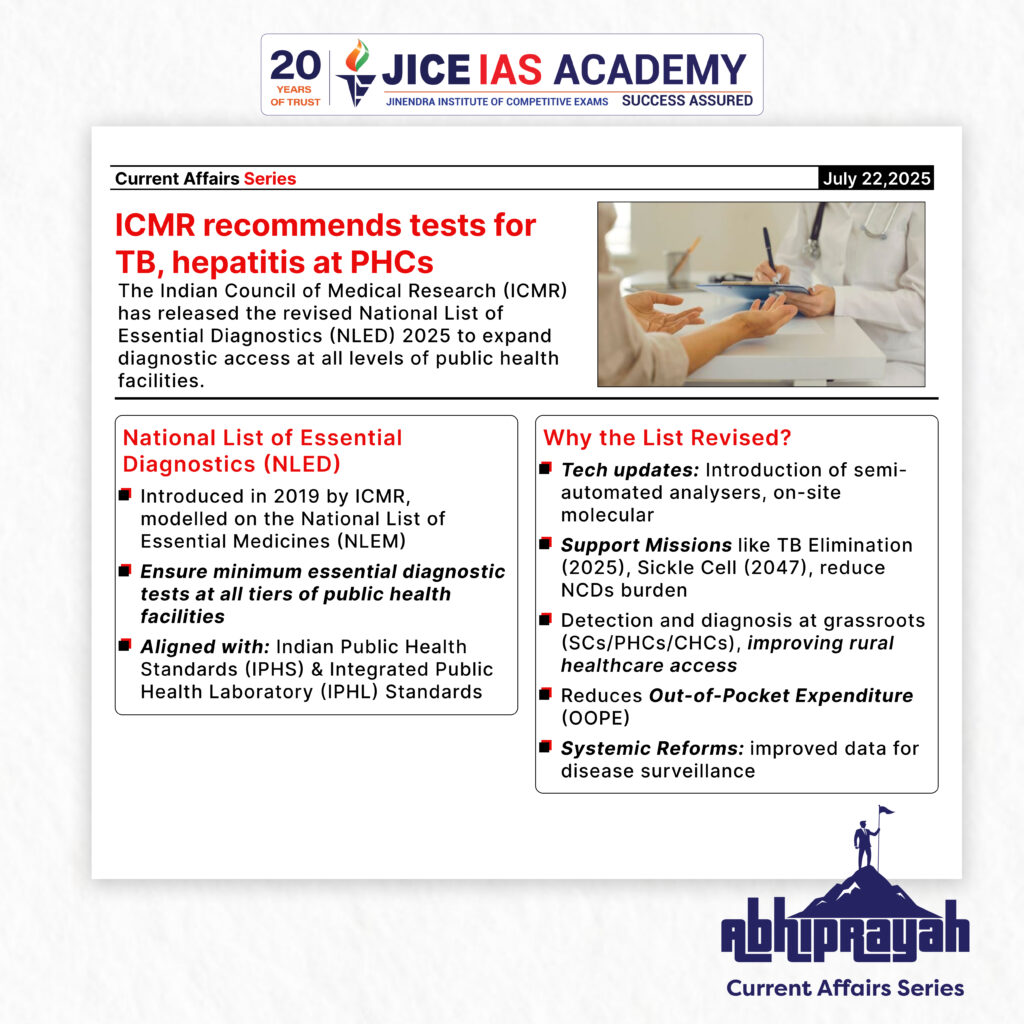
The Indian Council of Medical Research (ICMR) has released the revised National List of Essential Diagnostics (NLED) 2025 to expand diagnostic access at all levels of public health facilities.
Introduction
- The Indian Council of Medical Research (ICMR) has released the updated National List of Essential Diagnostics (NLED) 2025, expanding the scope of diagnostics available across India’s public healthcare delivery system.
- This revised list aims to strengthen early disease detection, reduce out-of-pocket healthcare expenditure, and enhance the efficiency of national health programmes.
Background:
- The National List of Essential Diagnostics was first introduced in 2019 by ICMR as a policy tool analogous to the National List of Essential Medicines (NLEM).
- It identifies a minimum set of diagnostic tests that must be available at different levels of public health facilities—ranging from sub-centres to tertiary care institutions.
- The list serves as a guiding framework for implementing the Free Diagnostics Service Initiative under the Ministry of Health and Family Welfare.
- It also aligns with other national health frameworks such as:
- Indian Public Health Standards (IPHS)
- Integrated Public Health Laboratory (IPHL) Standards
Why Was the List Revised?
- Expansion in Infrastructure and Technological Capability: Since 2019, public health centres, particularly PHCs and CHCs, have seen the introduction of semi-automated analyzers and cost-effective molecular diagnostic machines. This development enables on-site testing, eliminating the need to send samples to higher centres under the earlier hub-and-spoke model.
- Evolving Programme Targets: Several national programmes have set ambitious goals, such as:
- Elimination of Tuberculosis (TB) by 2025
- Eradication of Sickle Cell Anaemia by 2047
- Control of Viral Hepatitis through the National Viral Hepatitis Control Programme
These goals require widespread availability of diagnostic tests for early and accurate detection.
- Changes in Disease Patterns and Public Health Needs: The widespread geographical spread of diseases like dengue and the increasing prevalence of non-communicable diseases (such as diabetes and cardiovascular diseases) have necessitated enhanced diagnostic capabilities at the grassroots level.
- Administrative Rationalisation: Sub-district hospitals are being upgraded to district hospitals, and district hospitals are being transformed into medical colleges. Hence, the diagnostic requirements for these facilities have been merged in the 2025 list to reflect this transition.
Implications for Public Health:
- Early Detection and Prevention:
Rapid and accessible diagnostic testing allows early identification of both symptomatic and asymptomatic cases. This is critical in controlling the spread of communicable diseases like TB and viral hepatitis, and in managing genetic disorders like sickle cell anaemia. - Support to National Health Missions:
The availability of essential diagnostics at the sub-centre and PHC levels strengthens national programmes aimed at eliminating or controlling high-burden diseases. - Reduction in Out-of-Pocket Expenditure (OOPE): Diagnostics included in the NLED are covered under the Free Diagnostics Service Initiative, ensuring that patients do not need to pay for these tests in public health facilities.
- Strengthening of Decentralised Healthcare Delivery: The list empowers health workers at the grassroots level to conduct or initiate essential diagnostics, thereby improving healthcare access in rural and underserved areas.
- Improved Data for Disease Surveillance: Greater availability of testing contributes to better disease tracking, planning, and resource allocation.
Implementation Considerations:
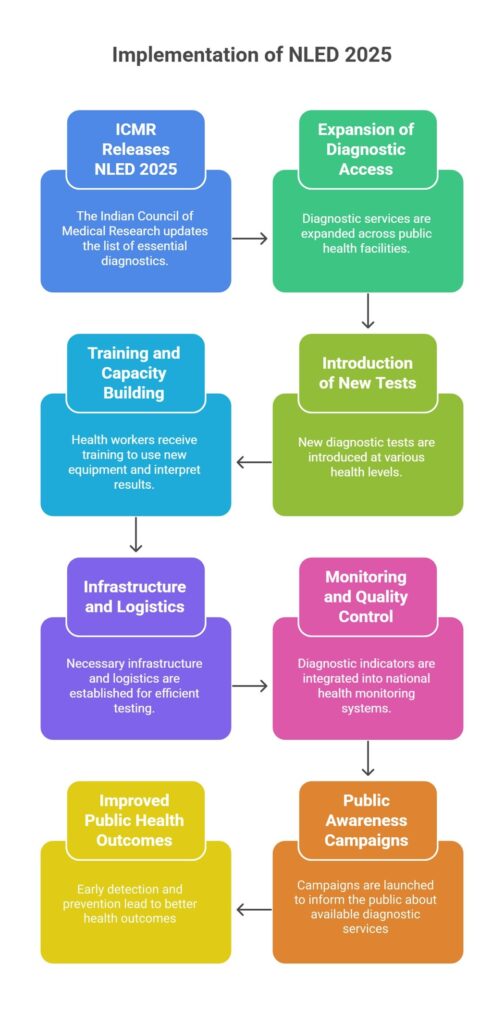
- Training and Capacity Building: Health workers, lab technicians, and auxiliary staff will require continuous training to use new equipment and interpret test results.
- Infrastructure and Logistics: Efficient implementation demands adequate power supply, internet connectivity, cold chain maintenance for sample transport, and timely supply of reagents and kits.
- Monitoring and Quality Control: The government must incorporate diagnostic indicators into national health monitoring systems like the Health Management Information System (HMIS).
- Public Awareness Campaigns: Beneficiaries must be informed about the availability of free diagnostics in government facilities to ensure utilisation.

3rd UN conference on landlocked countries
UPSC CURRENT AFFAIRS – 08th August 2025 Home / 3rd UN conference on landlocked countries Why in News? At the

Issue of soapstone mining in Uttarakhand’s Bageshwar
UPSC CURRENT AFFAIRS – 08th August 2025 Home / Issue of soapstone mining in Uttarakhand’s Bageshwar Why in News? Unregulated

Groundwater Pollution in India – A Silent Public Health Emergency
UPSC CURRENT AFFAIRS – 08th August 2025 Home / Groundwater Pollution in India – A Silent Public Health Emergency Why
Universal banking- need and impact
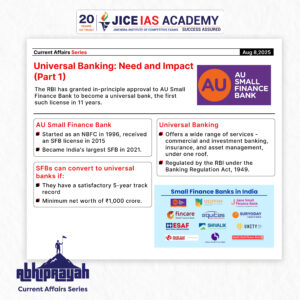
UPSC CURRENT AFFAIRS – 08th August 2025 Home / Universal banking- need and impact Why in News? The Reserve Bank

India’s “Goldilocks” Economy: A Critical Appraisal
UPSC CURRENT AFFAIRS – 08th August 2025 Home / India’s “Goldilocks” Economy: A Critical Appraisal Why in News? The Finance

U.S.-India Trade Dispute: Trump’s 50% Tariffs and India’s Oil Imports from Russia
UPSC CURRENT AFFAIRS – 07th August 2025 Home / U.S.-India Trade Dispute: Trump’s 50% Tariffs and India’s Oil Imports from

Eco-Friendly Solution to Teak Pest Crisis: KFRI’s HpNPV Technology
UPSC CURRENT AFFAIRS – 07th August 2025 Home / Eco-Friendly Solution to Teak Pest Crisis: KFRI’s HpNPV Technology Why in

New Species of Non-Venomous Rain Snake Discovered in Mizoram
UPSC CURRENT AFFAIRS – 07th August 2025 Home / New Species of Non-Venomous Rain Snake Discovered in Mizoram Why in

Economic Implications
For Indian Exporters
- These reforms reduce transaction costs and compliance hurdles
- Encourage a more competitive and efficient export environment
- Promote value addition in key sectors like leather
For Tamil Nadu
- The reforms particularly benefit the state’s leather industry, a major contributor to employment and exports
- Boost the marketability of GI-tagged E.I. leather, enhancing rural and traditional industries
For Trade Policy
- These decisions indicate a shift from regulatory controls to policy facilitation
Reinforce the goals of Make in India, Atmanirbhar Bharat, and India’s ambition to become a leading export power
Recently, BVR Subrahmanyam, CEO of NITI Aayog, claimed that India has overtaken Japan to become the fourth-largest economy in the world, citing data from the International Monetary Fund (IMF).
India’s rank as the world’s largest economy varies by measure—nominal GDP or purchasing power parity (PPP)—each with key implications for economic analysis.