
UPSC CURRENT AFFAIRS – 22nd July 2025

Home / UPSC / Current Affairs / India’s water, energy demand spotlight risk of human-induced quakes

India’s water, energy demand spotlight risk of human-induced quakes

Why in News?

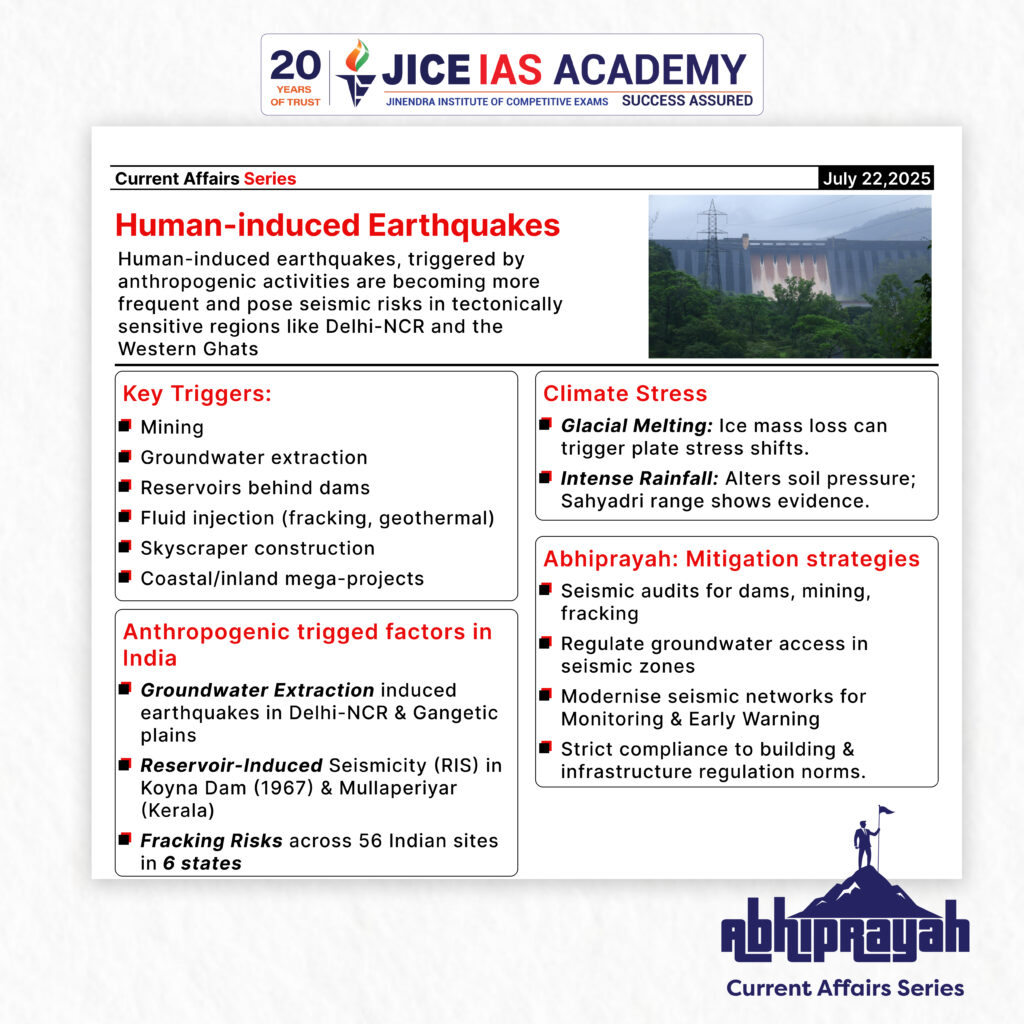
  • Human-induced earthquakes, triggered by activities like groundwater extraction, dam construction, and fracking, are becoming more frequent and pose seismic risks in tectonically sensitive regions like Delhi-NCR and the Western Ghats.

Introduction

  • While earthquakes are typically viewed as natural phenomena arising from tectonic movements, growing scientific evidence points to a subset of seismic events triggered or influenced by human activity.
  • These human-induced earthquakes, although often moderate in magnitude, can carry significant consequences, especially in densely populated and tectonically sensitive regions such as India.

Definition and Global Context

Human-induced earthquakes are seismic events triggered by anthropogenic activities. According to research published in Seismological Research Letters (2017), more than 700 such earthquakes have been recorded globally over the past 150 years, and their frequency is on the rise. Activities that can cause or modulate such events include:

  • Mining
  • Groundwater extraction
  • Water impoundment behind dams
  • Fluid injection (e.g., fracking or geothermal operations)
  • Construction of tall buildings
  • Engineering of large-scale coastal or inland structures

Mechanism: How Human Activities Cause Earthquakes

  • Experts explain that loading and unloading the Earth’s crust—for example, through reservoir construction or groundwater withdrawal—can disturb the stress equilibrium between tectonic plates.
  • Over time, such disturbances accumulate strain, which may lead to the initiation or modulation of seismic activity.

Evidence from India

1. Groundwater Extraction and Seismicity

  • A 2021 study published in Scientific Reports linked shallow earthquakes in Delhi-NCR to excessive groundwater extraction between 2003 and 2012, when the water table declined significantly.
  • Post-2014, with groundwater levels stabilizing, seismic activity in the region also decreased.
  • When groundwater is pumped out, the subsurface pressure changes, weakening the structural integrity of rocks and potentially triggering tremors.
  • Delhi lies on several faultlines and is part of Seismic Zone IV, making even low-magnitude earthquakes (4.5–5.5) potentially hazardous.
  • The Gangetic plains also face this risk, where intensive agriculture and low rainfall compel large-scale groundwater extraction, leading to geophysical stress.

2. Reservoir-Induced Seismicity (RIS)

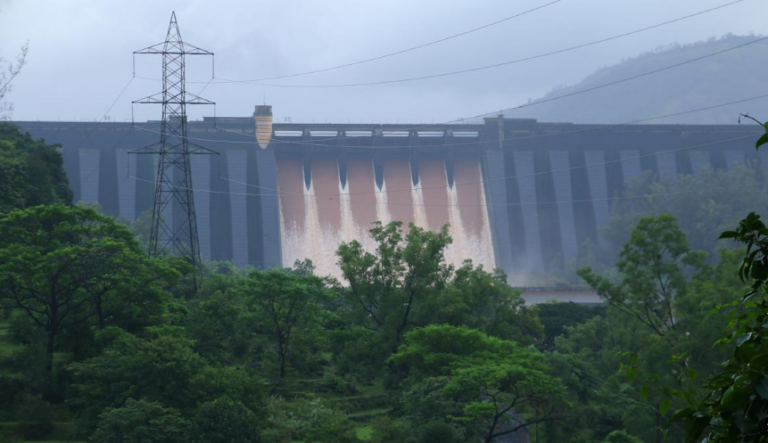
Reservoirs behind large dams have been well-documented sources of seismic activity due to the massive water load they impose on the Earth’s crust. Notable Indian examples include:

  • Koyna Earthquake (1967): A 6.3 magnitude quake near the Koyna dam in Maharashtra killed over 180 people and destroyed thousands of houses. It remains India’s most well-known case of RIS.
  • Mullaperiyar Dam (Kerala): Increased tremors in this region have been associated with the dam, which lies in an earthquake-prone zone.

3. Fracking and Energy Extraction Risks

Energy extraction processes like hydraulic fracturing (fracking)—injecting fluids into rock layers to release oil or gas—are known to induce earthquakes.

  • India currently operates 56 fracking sites across six states.
  • Fracking alters the subsurface pressure and may trigger faults or stress slips.

Geological Constraints: Faultlines and Plate Deformation

Not all areas with groundwater extraction or dam construction face seismic risk. Seismicity tends to occur only in regions:

  • Located on or near active faultlines
  • Experiencing plate deformation processes

Example:

  • Palghar (Maharashtra) has experienced recurring quakes since 2018. Studies suggest isolated plate deformation, possibly linked to fluid migration due to rainfall.

The Way Forward

  1. Regulation and Scientific Assessment
    • Mandatory seismic hazard assessments before building dams, mines, or fracking sites
    • Regulations on groundwater extraction, especially in seismically active regions
    • Learning from international standards (e.g., U.S. dam regulations)
  1. Monitoring Infrastructure
    • Expand and modernize seismic networks across vulnerable regions
    • Real-time data to monitor isolated deformation and stress accumulation
  1. Integrated Resource Management
    • Encourage sustainable groundwater recharge
    • Promote climate-resilient agriculture to reduce water demand
    • Integrate earthquake risk planning into climate adaptation strategies

Conclusion

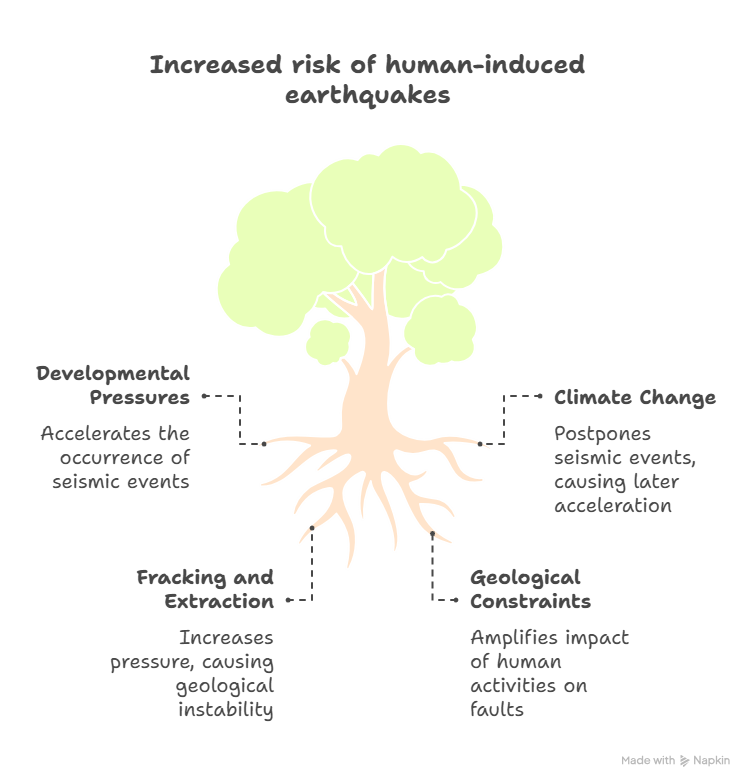
  • Human-induced seismicity is a complex but increasingly relevant phenomenon in the face of growing developmental pressures and climate change.
  • While natural tectonic forces remain the primary drivers of most earthquakes, human activities can accelerate or postpone such events.
  • Effective regulation, scientific planning, and public awareness are essential to mitigate the risks posed by this evolving threat.

Economic Implications

For Indian Exporters

  • These reforms reduce transaction costs and compliance hurdles
  • Encourage a more competitive and efficient export environment
  • Promote value addition in key sectors like leather

For Tamil Nadu

  • The reforms particularly benefit the state’s leather industry, a major contributor to employment and exports
  • Boost the marketability of GI-tagged E.I. leather, enhancing rural and traditional industries

For Trade Policy

  • These decisions indicate a shift from regulatory controls to policy facilitation

Reinforce the goals of Make in India, Atmanirbhar Bharat, and India’s ambition to become a leading export power

Recently, BVR Subrahmanyam, CEO of NITI Aayog, claimed that India has overtaken Japan to become the fourth-largest economy in the world, citing data from the International Monetary Fund (IMF). 

India’s rank as the world’s largest economy varies by measure—nominal GDP or purchasing power parity (PPP)—each with key implications for economic analysis.

Significance and Applications

One Response

Leave a Reply

Your email address will not be published. Required fields are marked *

Call Us Now !

Copyright © JICE ACADEMY FOR EXCELLENCE PRIVATE LIMITED