UPSC CURRENT AFFAIRS – 23rd July 2025

Home / UPSC / Current Affairs / US out of UN cultural agency UNESCO for second time

US out of UN cultural agency UNESCO for second time

Why in News?

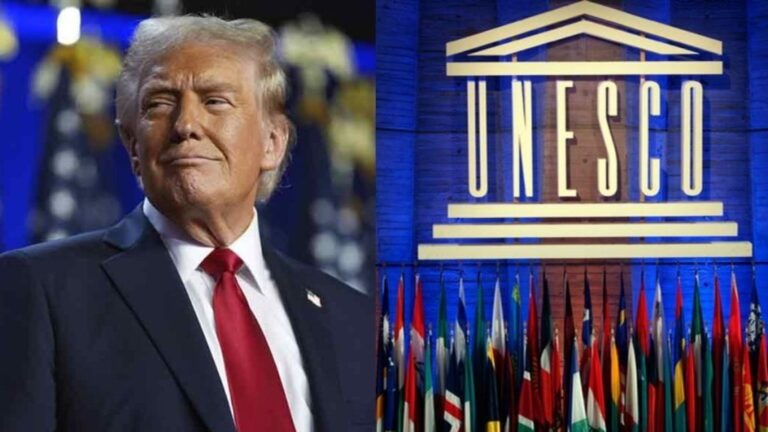
  • Former U.S. President Donald Trump has announced the U.S. will again withdraw from UNESCO, citing its “woke” and “globalist” agenda.

Introduction

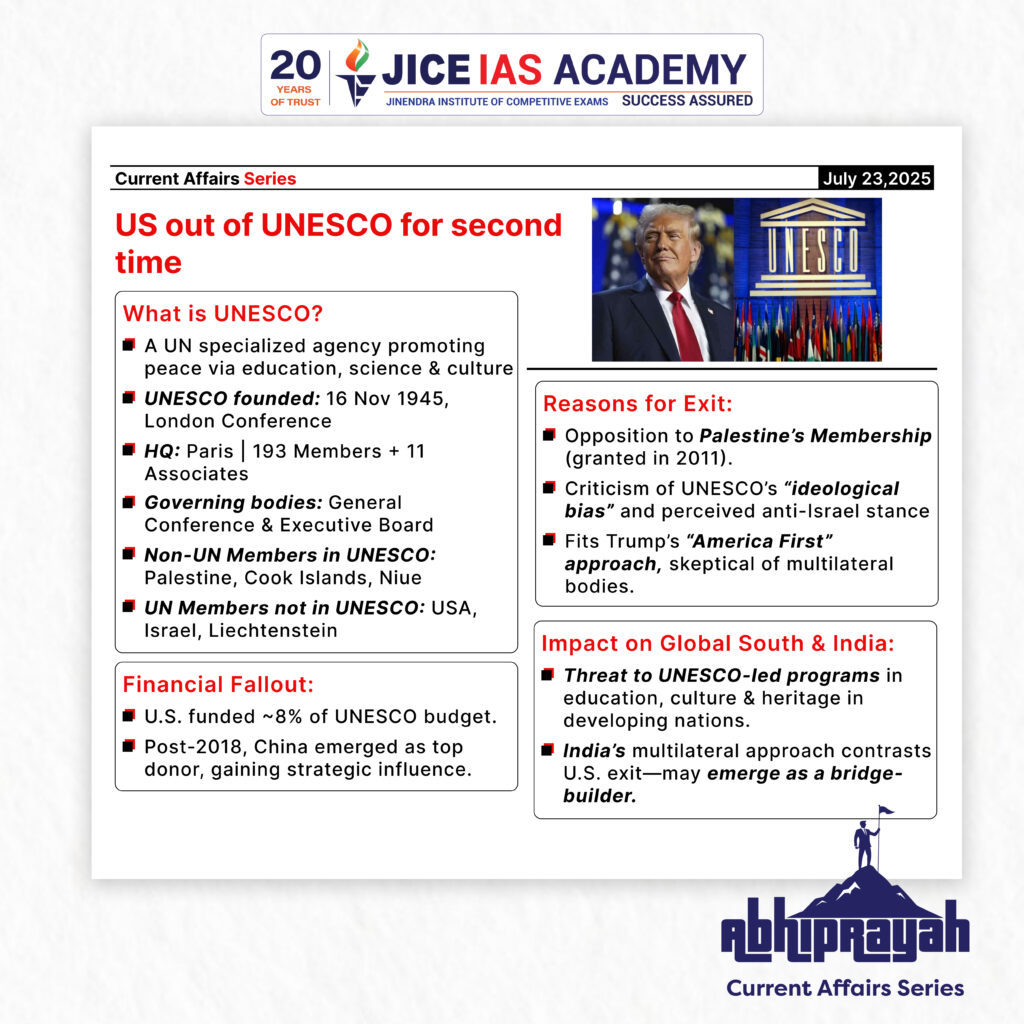
  • The United Nations Educational, Scientific and Cultural Organization (UNESCO) is a specialized agency of the United Nations, established in 1945, with its headquarters located in Paris, France.
  • Its core mission is to promote peace and international cooperation through initiatives in education, science, culture, and communication.
  • UNESCO is internationally recognized for flagship programs such as the World Heritage Sites list, Education for All, promotion of cultural diversity, press freedom, and scientific collaboration across borders.

Reports by UNESCO

  • Global Education Monitoring Report (GEM Report)
  • The United Nations World Water Development Report (WWDR)
  • UNESCO Science Report
  • World Trends in Freedom of Expression and Media Development
  • Re|Shaping Policies for Creativity (Global Report on Cultural Policies)
  • Global Ocean Science Report (GOSR)
  • State of the Education Report for India
  • World Heritage State of Conservation Reports / Periodic Reports

Recent Development

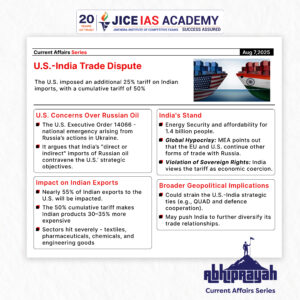
  • In July 2025, the White House under former President Donald Trump announced the decision to withdraw the United States from UNESCO, repeating an action taken during his first term (2017–2021), which had later been reversed by President Joe Biden in 2023.
  • The withdrawal is scheduled to take full effect by the end of 2026.

Reasons for U.S. Withdrawal

1. Ideological Opposition to UNESCO’s Cultural and Social Policies

  • The Trump administration accused UNESCO of supporting “woke,” divisive, and ideologically driven cultural causes that, according to them, conflict with what they termed as “common-sense” American policies.
  • The administration views these programs as a reflection of a globalist agenda that infringes upon U.S. national sovereignty.

2. Opposition to Palestinian Membership

  • The United States has long opposed UNESCO’s 2011 decision to grant full membership status to Palestine, regarding it as a breach of U.S. foreign policy and a move that encouraged anti-Israel sentiment.
  • This was a key reason behind the 2018 withdrawal of both the S. and Israel from the organization under the Trump administration.

3. Reassertion of “America First” Foreign Policy

  • The withdrawal aligns with Trump’s broader “America First” foreign policy, which emphasizes unilateral decision-making and skepticism toward multilateral organizations.
  • This policy has led to similar withdrawals or distancing from other global bodies, such as:
    • The United Nations (UN)
    • The World Health Organization (WHO)
    • The Paris Agreement on Climate Change
    • The UN Human Rights Council

Financial Implications

  • The United States contributed approximately 8 percent of UNESCO’s total budget.
  • After the previous U.S. withdrawal in 2018, UNESCO managed to diversify its funding, with China stepping in as the principal donor, thereby increasing its influence in the organization.

Geopolitical and Strategic Analysis

Decline in U.S. Soft Power

  • The withdrawal is expected to reduce the United States’ soft power and diplomatic influence in areas related to global education, cultural preservation, and international scientific collaboration.
  • It limits U.S. participation in the development of international norms, including those related to artificial intelligence ethics, media freedom, and heritage conservation.

Increase in Chinese Influence

  • China’s growing financial contributions enable it to play a more dominant role in agenda-setting and norm-building within UNESCO.
  • Analysts argue that the absence of the U.S. from multilateral organizations like UNESCO creates strategic space for China and other rivals to shape global discourse.

Undermining Multilateralism

  • The move reflects a broader disengagement from multilateral cooperation, potentially weakening the post-World War II global governance architecture.
  • It contributes to a more fragmented international order, where nationalist foreign policies take precedence over collective problem-solving.

Implications for India and the Global South

  • India continues its active engagement with UNESCO, particularly through its World Heritage Sites, educational cooperation, and cultural diplomacy.
  • A weakened UNESCO could lead to reduced global funding and technical assistance for initiatives in developing countries, affecting sectors such as education, heritage conservation, and community development.
  • India’s non-aligned and multilateral foreign policy orientation stands in contrast to the U.S. policy of selective disengagement, and it positions India as a potential bridge-builder in multilateral forums.

Conclusion

  • The United States’ repeated withdrawal from UNESCO under former President Donald Trump reflects a wider trend of nationalist, interest-driven foreign policy, distancing itself from the liberal international order established after 1945.
  • While this strategy may resonate with domestic political constituencies, it poses long-term risks to global cooperation, particularly in areas of shared cultural and scientific heritage.
  • For countries like India, the move underscores a continued rebalancing of global power structures, with emerging powers like China increasing their footprint in multilateral institutions traditionally influenced by the West.

Economic Implications

For Indian Exporters

  • These reforms reduce transaction costs and compliance hurdles
  • Encourage a more competitive and efficient export environment
  • Promote value addition in key sectors like leather

For Tamil Nadu

  • The reforms particularly benefit the state’s leather industry, a major contributor to employment and exports
  • Boost the marketability of GI-tagged E.I. leather, enhancing rural and traditional industries

For Trade Policy

  • These decisions indicate a shift from regulatory controls to policy facilitation

Reinforce the goals of Make in India, Atmanirbhar Bharat, and India’s ambition to become a leading export power

Recently, BVR Subrahmanyam, CEO of NITI Aayog, claimed that India has overtaken Japan to become the fourth-largest economy in the world, citing data from the International Monetary Fund (IMF). 

India’s rank as the world’s largest economy varies by measure—nominal GDP or purchasing power parity (PPP)—each with key implications for economic analysis.

Significance and Applications

Leave a Reply

Your email address will not be published. Required fields are marked *

Call Us Now !

Copyright © JICE ACADEMY FOR EXCELLENCE PRIVATE LIMITED