UPSC CURRENT AFFAIRS – 28th July 2025
SC-named panel proposes ‘power corridors’ through Great Indian Bustard habitats
Why in News?
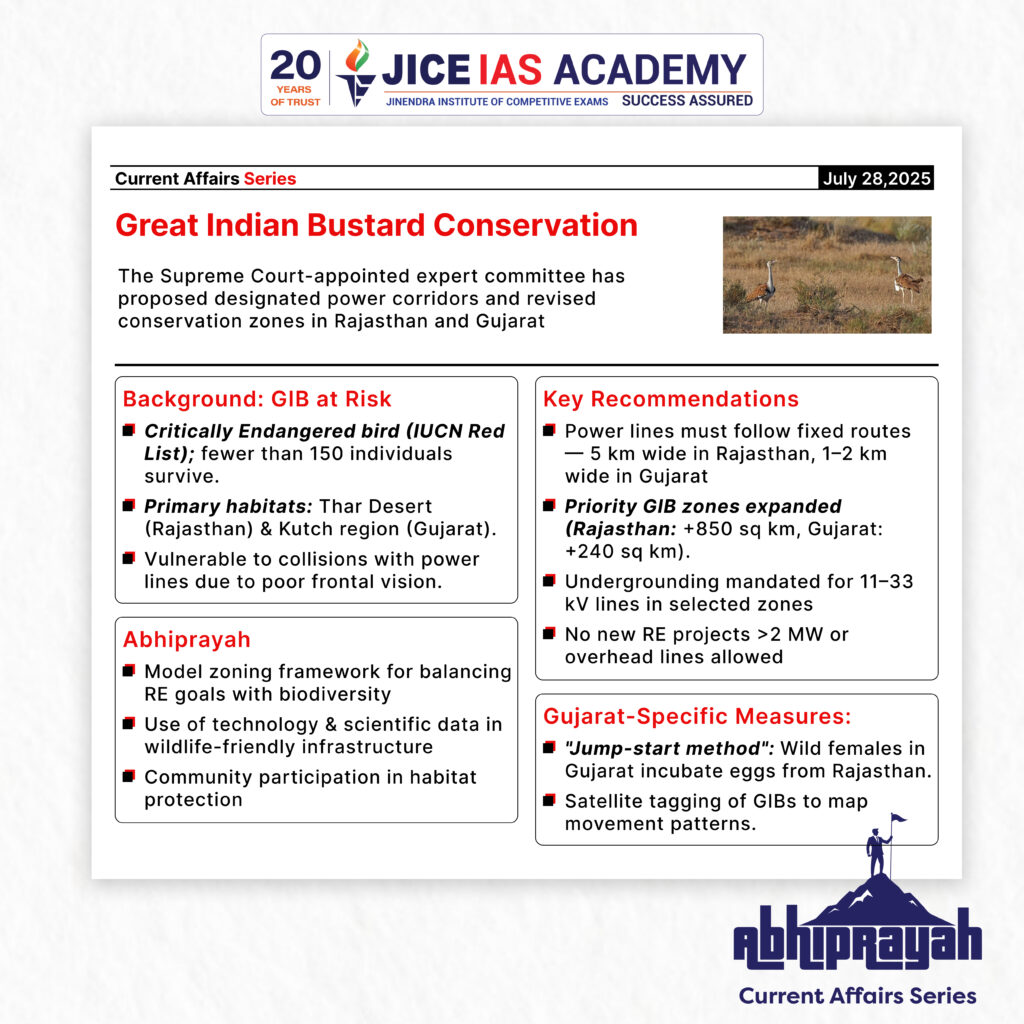
- The Supreme Court-appointed expert committee has proposed designated power corridors and revised conservation zones in Rajasthan and Gujarat.
Introduction
- A Supreme Court-appointed expert committee has proposed the creation of designated “power corridors” in the habitats of the Great Indian Bustard (GIB) in Rajasthan and Gujarat.
- This recommendation aims to resolve the ongoing conflict between renewable energy development and wildlife conservation, specifically the protection of the critically endangered GIB from fatal collisions with overhead power lines.
Background: The GIB and the Threat of Power Infrastructure
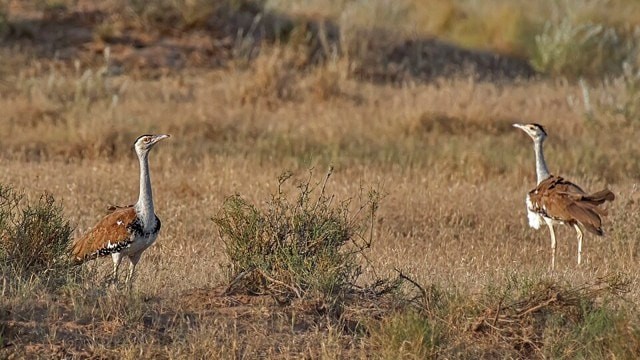
- The Great Indian Bustard is one of the heaviest flying birds in the world and is critically endangered, with fewer than 150 individuals remaining, primarily in the Thar Desert landscape of Rajasthan and parts of Gujarat.
- Due to its poor frontal vision, the GIB is highly susceptible to collisions with overhead high-voltage power lines that crisscross its habitat.
- The issue has grown more complex with the proliferation of renewable energy infrastructure—especially solar and wind power projects, and associated transmission lines—in the same arid regions where the GIB survives.
Supreme Court’s Intervention
- In 2021, the Supreme Court had ordered the undergrounding of all power lines in GIB habitats. However, in March 2024, a bench led by Chief Justice D.Y. Chandrachud recalled this order due to technical and economic challenges.
- The Court instead tasked an expert committee with designing a balanced mitigation plan to protect the GIB while ensuring that renewable energy projects are not unreasonably obstructed.
Key Recommendations of the Expert Committee
- Designated Power Corridors
To reduce the risk of bird collisions, the committee has proposed dedicated corridors through which all permissible overhead lines must pass.
- In Rajasthan, the power corridors will be 5 kilometers wide.
- In Gujarat, two separate corridors of 1 to 2 kilometers width each have been proposed.
These corridors aim to minimize the scattering of transmission lines and reduce the density of aerial obstacles in critical habitats, especially in regions like Jaisalmer and Kutch.
- Revision of GIB Conservation Zones
The committee revised the demarcation of GIB conservation zones, previously classified into three categories:
- Priority Areas: Known breeding and habitation zones
- Additional Important Areas: Less frequently used, but still ecologically relevant
- Potential Areas: Large open landscapes where GIBs may thrive in the future
Revised Priority Area:
- In Rajasthan, the area increased from 13,163 square kilometers to 14,013 square kilometers by incorporating 850 sq km from the additional important areas.
- In Gujarat, the priority area has been revised from 500 square kilometers to 740 square kilometers.
Key focus regions in Rajasthan include Desert National Park, Pokhran Field Firing Range, Ramdevra, Salkha-Kuchri, and Sanu-Mokla-Parewar zones.
- Voltage-Based Mitigation Measures
The committee recommended a differentiated approach based on voltage levels:
Voltage Level | Mitigation Approach |
Below 11 kV | Permitted within designated corridors in priority areas |
11 kV – 33 kV | Select lines to be buried underground (e.g., 80 km in Rajasthan, 79 km in Gujarat) |
220 kV and above | To be assessed individually for rerouting or insulation |
In Gujarat, 79 kilometers of existing lines have been identified for rerouting or burial.
- Restrictions in Priority Areas
Within the revised priority areas of Rajasthan and Gujarat:
- No new overhead lines, wind turbines, or solar power plants larger than 2 MW are permitted.
- No expansion of existing renewable energy facilities is allowed.
- Only overhead lines of 11 kV or lower capacity will be permitted, and only through designated power corridors.
Outside these areas, no restrictions have been imposed on the laying of new power lines or renewable energy projects.
Gujarat-Specific Measures
To address the declining GIB population in Gujarat, the committee recommended:
- The use of the “jump-start method”, where eggs from Rajasthan’s conservation breeding centres will be incubated by wild GIB females in Gujarat.
- Tagging and monitoring of the remaining GIBs in Gujarat to gather movement and habitat usage data.
Conclusion
- The expert committee’s proposal represents a pragmatic shift from earlier blanket prohibitions to a more zoned, voltage-sensitive, and scientifically informed approach.
- While conservationists have raised concerns about areas left out of the revised boundaries and exemption of certain high-voltage lines, the committee’s approach could form a model for balancing infrastructure development with species conservation in ecologically sensitive zones.
- Effective implementation will require strict compliance, continuous monitoring, and collaboration between state governments, renewable energy companies, conservation scientists, and local communities.

3rd UN conference on landlocked countries
UPSC CURRENT AFFAIRS – 08th August 2025 Home / 3rd UN conference on landlocked countries Why in News? At the
Issue of soapstone mining in Uttarakhand’s Bageshwar
UPSC CURRENT AFFAIRS – 08th August 2025 Home / Issue of soapstone mining in Uttarakhand’s Bageshwar Why in News? Unregulated
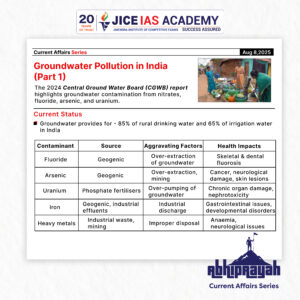
Groundwater Pollution in India – A Silent Public Health Emergency
UPSC CURRENT AFFAIRS – 08th August 2025 Home / Groundwater Pollution in India – A Silent Public Health Emergency Why

Universal banking- need and impact
UPSC CURRENT AFFAIRS – 08th August 2025 Home / Universal banking- need and impact Why in News? The Reserve Bank

India’s “Goldilocks” Economy: A Critical Appraisal
UPSC CURRENT AFFAIRS – 08th August 2025 Home / India’s “Goldilocks” Economy: A Critical Appraisal Why in News? The Finance

U.S.-India Trade Dispute: Trump’s 50% Tariffs and India’s Oil Imports from Russia
UPSC CURRENT AFFAIRS – 07th August 2025 Home / U.S.-India Trade Dispute: Trump’s 50% Tariffs and India’s Oil Imports from
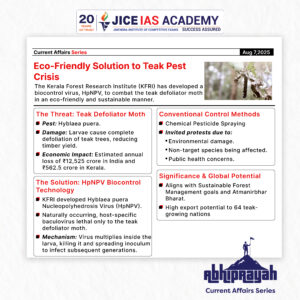
Eco-Friendly Solution to Teak Pest Crisis: KFRI’s HpNPV Technology
UPSC CURRENT AFFAIRS – 07th August 2025 Home / Eco-Friendly Solution to Teak Pest Crisis: KFRI’s HpNPV Technology Why in

New Species of Non-Venomous Rain Snake Discovered in Mizoram
UPSC CURRENT AFFAIRS – 07th August 2025 Home / New Species of Non-Venomous Rain Snake Discovered in Mizoram Why in

Introduction
Economic Implications
For Indian Exporters
- These reforms reduce transaction costs and compliance hurdles
- Encourage a more competitive and efficient export environment
- Promote value addition in key sectors like leather
For Tamil Nadu
- The reforms particularly benefit the state’s leather industry, a major contributor to employment and exports
- Boost the marketability of GI-tagged E.I. leather, enhancing rural and traditional industries
For Trade Policy
- These decisions indicate a shift from regulatory controls to policy facilitation
Reinforce the goals of Make in India, Atmanirbhar Bharat, and India’s ambition to become a leading export power
Recently, BVR Subrahmanyam, CEO of NITI Aayog, claimed that India has overtaken Japan to become the fourth-largest economy in the world, citing data from the International Monetary Fund (IMF).
India’s rank as the world’s largest economy varies by measure—nominal GDP or purchasing power parity (PPP)—each with key implications for economic analysis.