UPSC CURRENT AFFAIRS – 29th July 2025
India’s Multidimensional War on Poverty
Why in News?
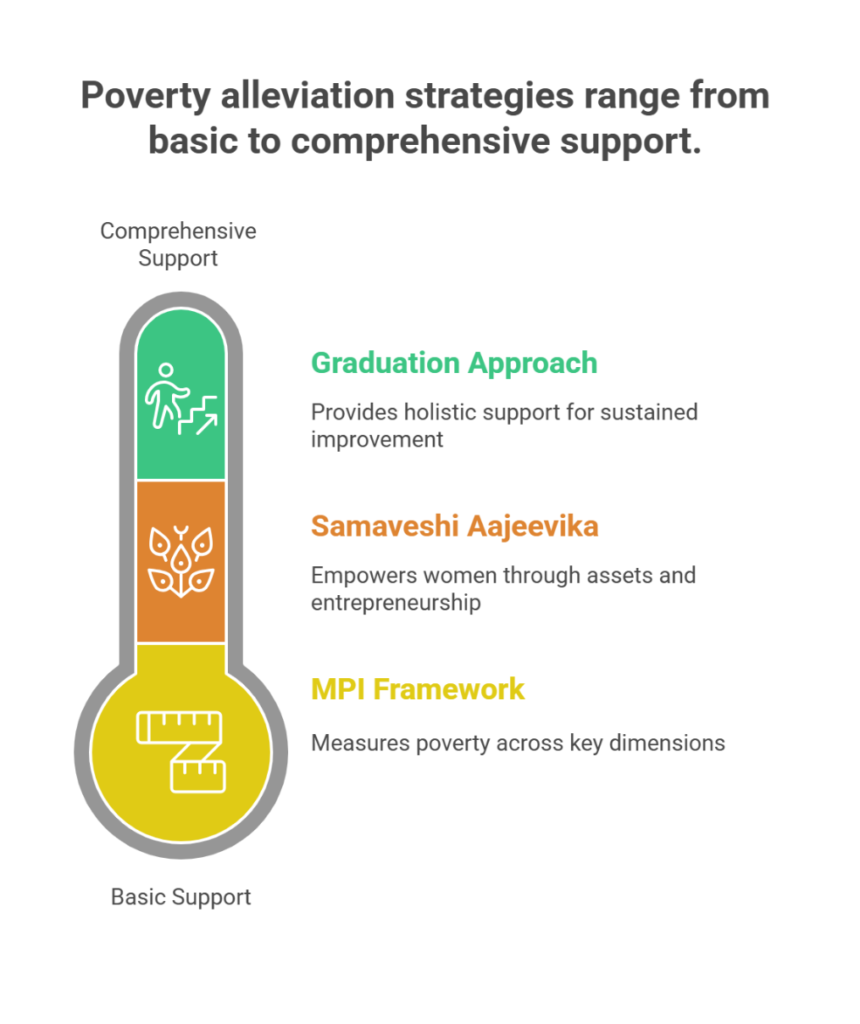
- The Graduation Approach, piloted in India through the Samaveshi Aajeevika Initiative, is a multidimensional poverty alleviation model.
Introduction
- India has made commendable progress in reducing poverty over the past decade.
- According to the World Bank’s revised poverty line, nearly 270 million people escaped extreme poverty between 2011 and 2023 — a number larger than the combined populations of Germany and Russia.
- Notably, the fastest absolute reduction was seen among the poorest caste and religious groups, reflecting the inclusive nature of recent anti-poverty efforts.
- However, poverty today is no longer understood merely as the lack of income.
- It is increasingly seen as multidimensional, involving simultaneous deprivations across various aspects of human development such as health, education, housing, sanitation, and nutrition.
Measuring Poverty the Right Way: India’s MPI Framework
- India’s Multidimensional Poverty Index (MPI), developed in line with global best practices, recognises 12 indicators across three domains: health, education, and standard of living. A person is identified as poor if they are deprived in at least one-third of these indicators.
- Despite progress, around 200 million people still face multidimensional poverty, as per NITI Aayog’s recent discussion paper.
- These individuals often live in inadequate housing, without access to clean water or sanitation, and frequently skip meals.
- They remain vulnerable to shocks such as illness or job loss, which can push them back into poverty.
Understanding Poverty as Bundled Deprivation
- The MPI approach also uncovers interconnected deprivations.
- For example, a child deprived of both nutrition and sanitation is more likely to suffer from infections, compounding the effects of poverty.
- Recognising such deprivation bundles is essential for designing effective policy interventions.
- A particularly common bundle in India includes four deprivations: nutrition, housing, sanitation, and access to clean cooking fuel. Over 34 million people lack access to these basic needs.
Towards a New Policy Paradigm: The Graduation Approach
To address poverty in its full complexity, a multi-pronged and sequenced intervention strategy is needed.
- One such evidence-based approach is the Graduation Model, pioneered by Bangladesh-based NGO BRAC.
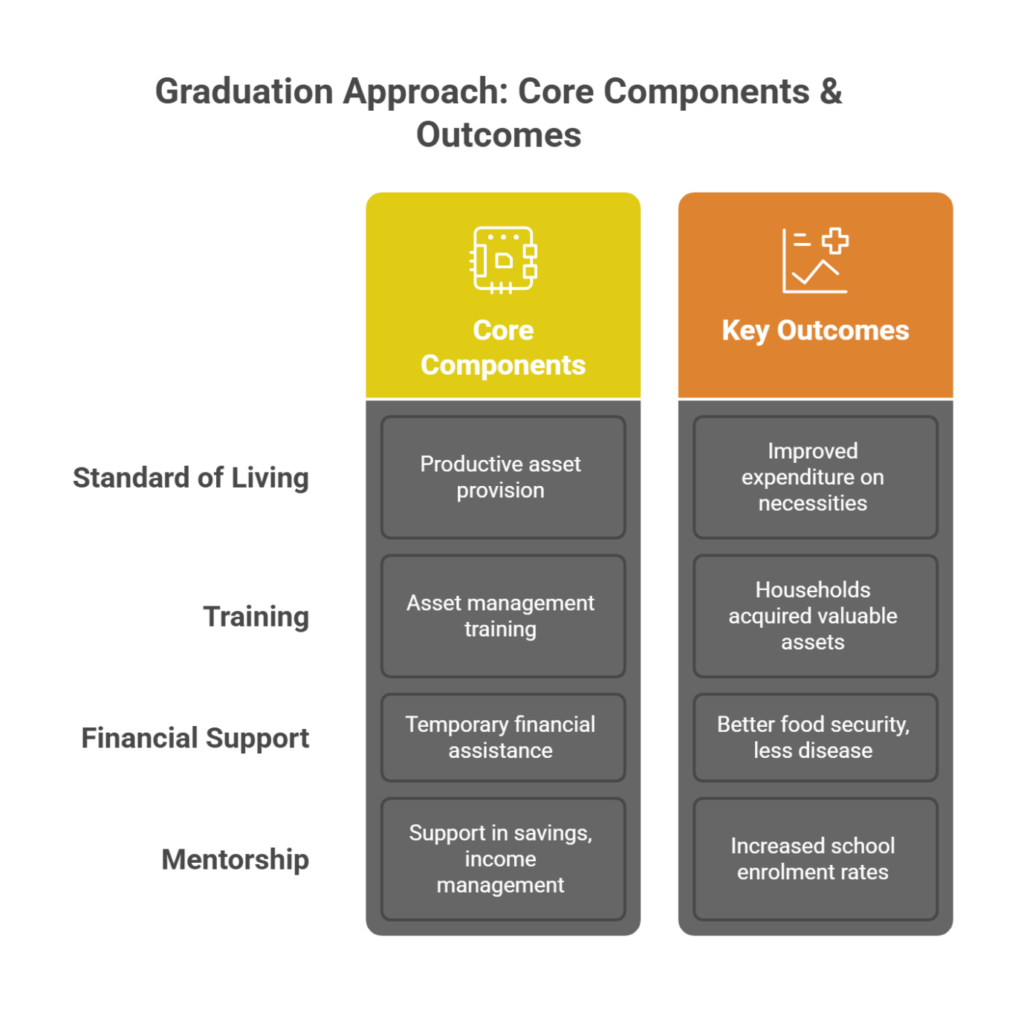
Core Components of the Graduation Approach:
- Provision of a productive asset (e.g. livestock, shop materials)
- Training to manage the asset
- Temporary financial support to meet daily needs
- Mentorship and support in savings and income management
This holistic support enables the ultra-poor to “graduate” out of poverty through sustained improvements in their standard of living, health, and education.
Evidence from India and Abroad
Randomised evaluations by J-PAL researchers, including Nobel Laureates Abhijit Banerjee and Esther Duflo, have demonstrated the model’s success across 43 countries.
Key Outcomes:
- Standard of Living: Improved expenditure on food, fuel, and household assets. In India and Bangladesh, households acquired land and shops, signalling upward mobility.
- Health: Better food security and lower incidence of disease. In Afghanistan, child diarrhoea fell by 8 percentage points.
- Education: Increased school enrolment. In Afghanistan, enrolment rose by 7 percentage points for boys and 5 for girls.
In India, pilot programmes showed that 99% of participating households did not skip meals, and reliance on informal credit declined significantly.
India’s Policy Response: Samaveshi Aajeevika Initiative
Recognising the potential of the Graduation Model, the Ministry of Rural Development in 2024 launched the Samaveshi Aajeevika Initiative (Inclusive Development Programme) across 11 States. This initiative aims to empower rural women by:
- Providing productive assets
- Facilitating entrepreneurship
- Offering mentoring and financial inclusion tools
Implemented in collaboration with BRAC, The Nudge Institute, and J-PAL South Asia, the programme offers a blueprint for scalable, multidimensional poverty reduction.
Way Forward: Strengthening Cooperative Federalism
The success of such initiatives requires strong centre-state collaboration. States must:
- Identify vulnerability hotspots using MPI data
- Adopt integrated approaches like the Graduation Model
- Coordinate across ministries and schemes (e.g., Poshan Abhiyaan, PM Awas Yojana)
By integrating efforts, governments can tackle interlinked deprivations more effectively.
Conclusion:
- India’s fight against poverty is at a critical juncture. As the country aspires to become a developed, high-income economy by 2047, it must shift from siloed welfare approaches to evidence-based, multidimensional strategies.
- The Graduation Approach and programmes like Samaveshi Aajeevika offer powerful tools to fulfil Prime Minister Narendra Modi’s vision of “leaving no one behind”.

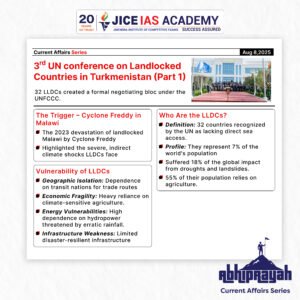
3rd UN conference on landlocked countries
UPSC CURRENT AFFAIRS – 08th August 2025 Home / 3rd UN conference on landlocked countries Why in News? At the
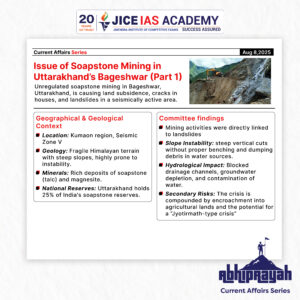
Issue of soapstone mining in Uttarakhand’s Bageshwar
UPSC CURRENT AFFAIRS – 08th August 2025 Home / Issue of soapstone mining in Uttarakhand’s Bageshwar Why in News? Unregulated
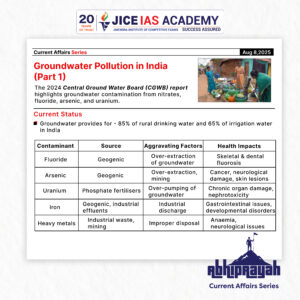
Groundwater Pollution in India – A Silent Public Health Emergency
UPSC CURRENT AFFAIRS – 08th August 2025 Home / Groundwater Pollution in India – A Silent Public Health Emergency Why
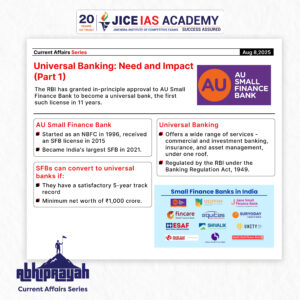
Universal banking- need and impact
UPSC CURRENT AFFAIRS – 08th August 2025 Home / Universal banking- need and impact Why in News? The Reserve Bank
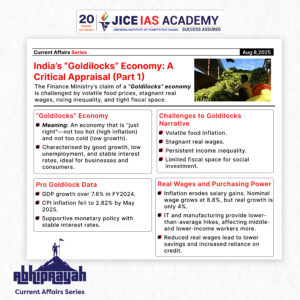
India’s “Goldilocks” Economy: A Critical Appraisal
UPSC CURRENT AFFAIRS – 08th August 2025 Home / India’s “Goldilocks” Economy: A Critical Appraisal Why in News? The Finance
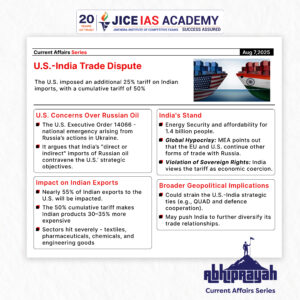
U.S.-India Trade Dispute: Trump’s 50% Tariffs and India’s Oil Imports from Russia
UPSC CURRENT AFFAIRS – 07th August 2025 Home / U.S.-India Trade Dispute: Trump’s 50% Tariffs and India’s Oil Imports from
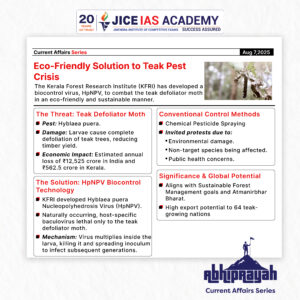
Eco-Friendly Solution to Teak Pest Crisis: KFRI’s HpNPV Technology
UPSC CURRENT AFFAIRS – 07th August 2025 Home / Eco-Friendly Solution to Teak Pest Crisis: KFRI’s HpNPV Technology Why in

New Species of Non-Venomous Rain Snake Discovered in Mizoram
UPSC CURRENT AFFAIRS – 07th August 2025 Home / New Species of Non-Venomous Rain Snake Discovered in Mizoram Why in

Introduction
Economic Implications
For Indian Exporters
- These reforms reduce transaction costs and compliance hurdles
- Encourage a more competitive and efficient export environment
- Promote value addition in key sectors like leather
For Tamil Nadu
- The reforms particularly benefit the state’s leather industry, a major contributor to employment and exports
- Boost the marketability of GI-tagged E.I. leather, enhancing rural and traditional industries
For Trade Policy
- These decisions indicate a shift from regulatory controls to policy facilitation
Reinforce the goals of Make in India, Atmanirbhar Bharat, and India’s ambition to become a leading export power
Recently, BVR Subrahmanyam, CEO of NITI Aayog, claimed that India has overtaken Japan to become the fourth-largest economy in the world, citing data from the International Monetary Fund (IMF).
India’s rank as the world’s largest economy varies by measure—nominal GDP or purchasing power parity (PPP)—each with key implications for economic analysis.