UPSC CURRENT AFFAIRS – 20 March 2025
Factors influencing women’s political participation in India- a study
Why in News:
The study by Rajeshwari Deshpande analyzes National Election Studies (NES) data to examine the increasing voter turnout among women in India and the complexities of their political participation beyond voting, influenced by caste, class, and regional identities.
Introduction
- The participation of women in Indian politics has been a subject of extensive discourse. While India has witnessed the rise of influential women leaders, overall political engagement among women remains constrained by structural and societal factors. Unlike many countries where the gender gap in political participation began narrowing in the 1990s, India saw this shift only in the 2010s.
- The study by Rajeshwari Deshpande, based on National Election Studies (NES) data, examines the emerging trends in women’s electoral participation, their voting patterns, and the challenges in shaping a distinct women’s constituency in Indian elections.
Women as Political Participants: From Beneficiaries to Agents
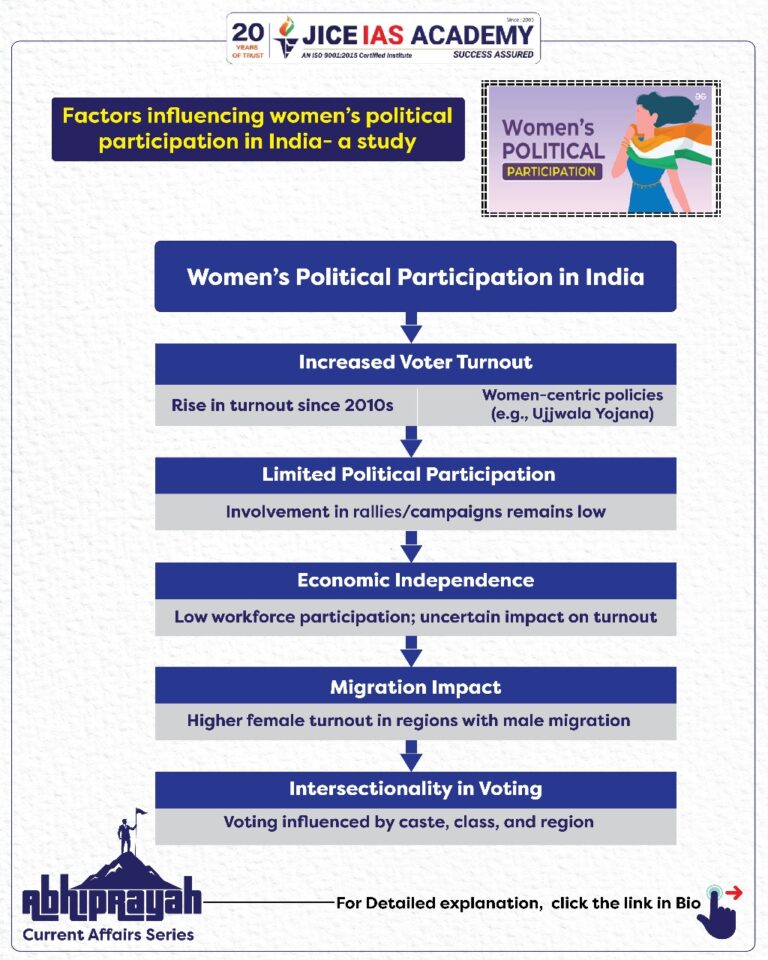
- The 2010s marked a significant rise in women’s voter turnout, prompting political parties to introduce women-centric policies such as Ujjwala Yojana, Pradhan Mantri Awas Yojana, Ladli Behna, and Ladli Laxmi.
- However, these initiatives primarily positioned women as beneficiaries rather than active political agents.
- Deshpande’s study highlights that despite higher turnout, women’s political participation beyond voting—such as involvement in rallies, campaigns, and policy advocacy—remains limited.
- Agency in Decision-Making: NES data show that 14% of women seek advice from their spouses on voting decisions, a decline from previous years but still higher than men.
- Economic Independence and Voter Turnout: Despite increased literacy, women’s workforce participation remains low, questioning whether economic empowerment drives higher voter turnout.
- Migration and Women’s Electoral Participation: In some regions, large-scale male migration has contributed to higher turnout among women, particularly in economically disadvantaged States.
Intersectionality in Women’s Voting Behaviour
Women’s electoral choices in India are shaped not only by gender but also by regional, caste, and class identities.
- Regional Variations: In States like Tamil Nadu, Kerala, and West Bengal, women’s electoral preferences align with regional political movements rather than pan-Indian gender trends.
- Caste and Class Influence: The BJP’s voter base has traditionally been upper-caste and urban, whereas the Congress and Left have drawn support from marginalized communities and lower-income groups. However, women’s voting choices remain largely aligned with their communities rather than gender-specific concerns.
Women’s Support for Political Parties
NES data indicate significant trends in women’s political support:
- Congress and Left Parties: Historically, Congress has had a gender advantage, receiving more support from women than men. This trend continued in 2024, except in 2014, when the party suffered a nationwide decline. The Left parties also had higher female support but their influence has waned.
- BJP’s Gender Gap: The BJP has traditionally faced a gender disadvantage, with fewer women supporting the party compared to men. However, this gap has narrowed from over 20% to 7% in 2024, driven by welfare schemes targeting women.
- State-Level Variations: In some non-BJP ruled States, more women than men voted for the BJP, despite no increase in female voter turnout. Conversely, in other States, women preferred opposition parties, creating an uneven gender dynamic.
Key Takeaways and Future Implications
- Increased Voter Turnout ≠ Greater Political Power: Women’s rising electoral participation has not translated into proportional representation in decision-making or political leadership.
- Voting Patterns are Shaped by Multiple Identities: Gender is not the sole determinant of women’s electoral choices; caste, class, and regional influences remain dominant factors.
- No Unified Women’s Constituency: Despite increasing outreach, Indian elections have yet to witness the emergence of a distinct women’s voting bloc.
The study underscores that while women’s participation in elections has increased, their political agency remains constrained by socio-economic structures. Achieving true gender parity in political engagement requires moving beyond welfare-based outreach to fostering active political participation, leadership, and representation.

3rd UN conference on landlocked countries
UPSC CURRENT AFFAIRS – 08th August 2025 Home / 3rd UN conference on landlocked countries Why in News? At the
Issue of soapstone mining in Uttarakhand’s Bageshwar
UPSC CURRENT AFFAIRS – 08th August 2025 Home / Issue of soapstone mining in Uttarakhand’s Bageshwar Why in News? Unregulated

Groundwater Pollution in India – A Silent Public Health Emergency
UPSC CURRENT AFFAIRS – 08th August 2025 Home / Groundwater Pollution in India – A Silent Public Health Emergency Why
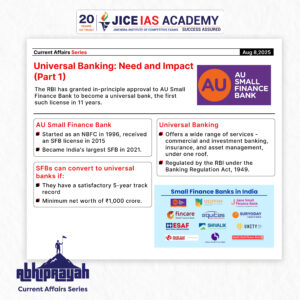
Universal banking- need and impact
UPSC CURRENT AFFAIRS – 08th August 2025 Home / Universal banking- need and impact Why in News? The Reserve Bank

India’s “Goldilocks” Economy: A Critical Appraisal
UPSC CURRENT AFFAIRS – 08th August 2025 Home / India’s “Goldilocks” Economy: A Critical Appraisal Why in News? The Finance

U.S.-India Trade Dispute: Trump’s 50% Tariffs and India’s Oil Imports from Russia
UPSC CURRENT AFFAIRS – 07th August 2025 Home / U.S.-India Trade Dispute: Trump’s 50% Tariffs and India’s Oil Imports from
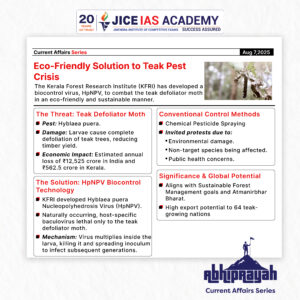
Eco-Friendly Solution to Teak Pest Crisis: KFRI’s HpNPV Technology
UPSC CURRENT AFFAIRS – 07th August 2025 Home / Eco-Friendly Solution to Teak Pest Crisis: KFRI’s HpNPV Technology Why in

New Species of Non-Venomous Rain Snake Discovered in Mizoram
UPSC CURRENT AFFAIRS – 07th August 2025 Home / New Species of Non-Venomous Rain Snake Discovered in Mizoram Why in