
UPSC CURRENT AFFAIRS – 03rd April 2025
Green Credit Programme
Why in News?
The Green Credit Programme (GCP), launched in December 2023, aims to incentivize voluntary environmental actions by awarding tradable green credits.
Introduction
- The Green Credit Programme (GCP) was officially launched by Prime Minister Narendra Modi and UAE President Sheikh Mohammed bin Zayed Al Nahyan on December 1, 2023, during the United Nations Climate Conference (COP28) in Dubai.
- It aims to incentivize “pro-planet” actions under the Centre’s Mission LiFE (Lifestyle for Sustainable Environment).
- The Union Environment Ministry notified the Green Credit Rules in October 2023, outlining its objectives and implementation framework.
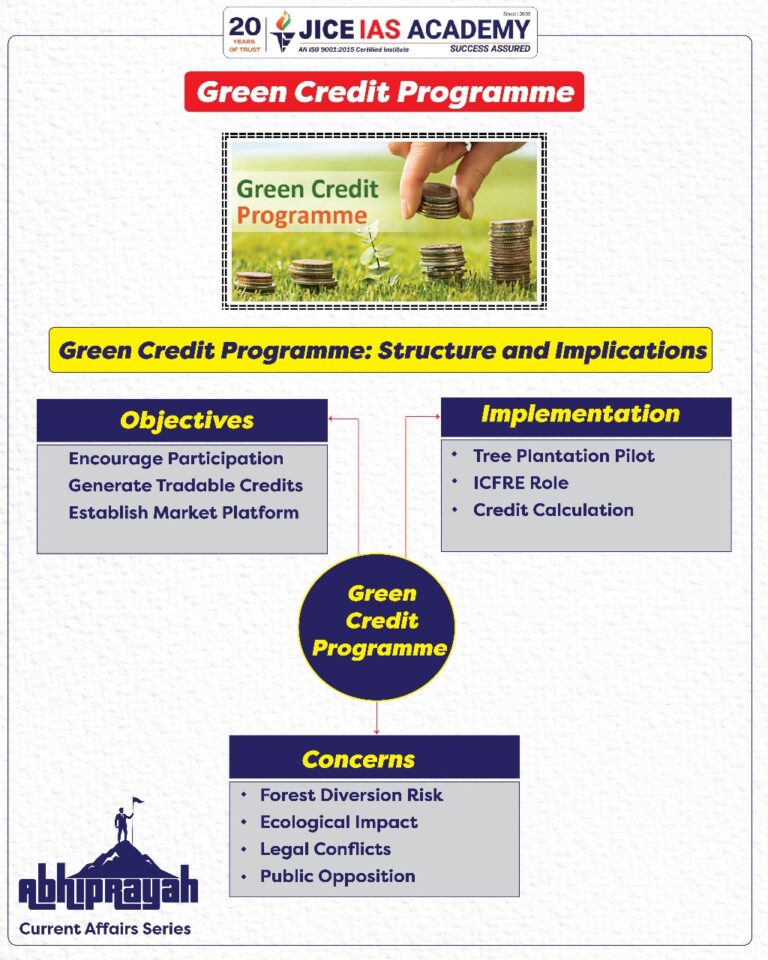
Objectives of the Green Credit Programme
- Encourage voluntary participation of individuals, companies, industries, and other entities in environmental activities.
- Generate tradable “green credits” through participation in activities such as:
- Tree plantation and afforestation
- Waste management
- Water conservation
- Sustainable agriculture
- Air pollution reduction
- Mangrove conservation
- Ecosystem restoration
- Establish a domestic market platform where green credits can be traded for meeting sustainability goals or legal obligations.
- Allow listed companies to use green credits as part of their Environmental, Social, and Governance (ESG) disclosures under SEBI’s Business Responsibility and Sustainability Reporting (BRSR) framework.
Implementation and Calculation of Green Credits
- The pilot phase focuses on tree plantation and eco-restoration of degraded lands.
- Nodal Agency: Indian Council of Forestry Research and Education (ICFRE), Dehradun
- Target Areas: Degraded lands, open forests, scrublands, wastelands, and catchment areas of 5 hectares or more.
- Process:
- State forest departments identify degraded lands.
- Interested parties register with ICFRE and pay a fee for land allotment.
- Forest departments carry out and maintain the plantations.
- Completion timeframe: Within two years after payment.
- Green Credit Calculation:
- One tree planted = One Green Credit
- Minimum density requirement: 1,100 trees per hectare
- Certification of completion provided by the forest department.
- Current Status (as of March 2024):
- 2,364 land parcels registered (total area: 54,669.46 hectares)
- 384 entities registered, including 41 public-sector undertakings (PSUs)
Concerns and Criticism
- Potential Incentive for Forest Diversion:
- The scheme allows tradable credits to meet compensatory afforestation obligations, possibly encouraging forest land diversion for industrial projects.
- Ecological Concerns:
- Plantations on degraded lands, open forests, and scrublands could impact existing ecosystems that offer valuable ecological services.
- Survival of Plantation Trees:
- The Supreme Court has sought the Environment Ministry’s views on the survival rate of plantations under GCP.
- Conflict with Forest Conservation Act (Van Adhiniyam, 2023):
- The Forest Conservation Act mandates compensatory afforestation on non-forest land equivalent to diverted forest land.
- GCP allows compensatory afforestation on degraded forest land, contradicting the land-for-land principle.
- Monetization of Forest Conservation:
- Critics argue that arbitrary tree plantations cannot replace old-growth forests.
- Public Opposition:
- In April 2024, over 100 environmental organizations and 400 citizens petitioned for the rollback of GCP citing environmental concerns.
Conclusion
- The Green Credit Programme is an ambitious initiative aimed at promoting environmental sustainability.
- However, concerns over forest diversion, ecological impact, and legal contradictions raise serious questions about its effectiveness.
- While it provides financial incentives for environmental actions, stronger safeguards are needed to prevent misuse and ensure genuine ecological benefits.
- Future success of the programme will depend on transparent implementation, scientific monitoring, and balancing conservation with economic interests.

3rd UN conference on landlocked countries
UPSC CURRENT AFFAIRS – 08th August 2025 Home / 3rd UN conference on landlocked countries Why in News? At the
Issue of soapstone mining in Uttarakhand’s Bageshwar
UPSC CURRENT AFFAIRS – 08th August 2025 Home / Issue of soapstone mining in Uttarakhand’s Bageshwar Why in News? Unregulated
Groundwater Pollution in India – A Silent Public Health Emergency
UPSC CURRENT AFFAIRS – 08th August 2025 Home / Groundwater Pollution in India – A Silent Public Health Emergency Why
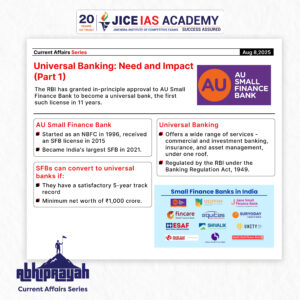
Universal banking- need and impact
UPSC CURRENT AFFAIRS – 08th August 2025 Home / Universal banking- need and impact Why in News? The Reserve Bank
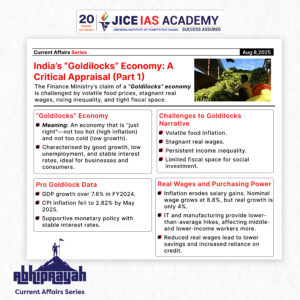
India’s “Goldilocks” Economy: A Critical Appraisal
UPSC CURRENT AFFAIRS – 08th August 2025 Home / India’s “Goldilocks” Economy: A Critical Appraisal Why in News? The Finance

U.S.-India Trade Dispute: Trump’s 50% Tariffs and India’s Oil Imports from Russia
UPSC CURRENT AFFAIRS – 07th August 2025 Home / U.S.-India Trade Dispute: Trump’s 50% Tariffs and India’s Oil Imports from
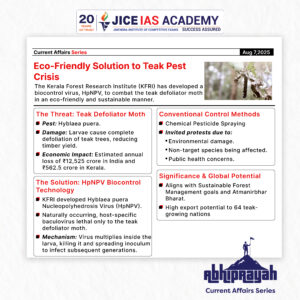
Eco-Friendly Solution to Teak Pest Crisis: KFRI’s HpNPV Technology
UPSC CURRENT AFFAIRS – 07th August 2025 Home / Eco-Friendly Solution to Teak Pest Crisis: KFRI’s HpNPV Technology Why in

New Species of Non-Venomous Rain Snake Discovered in Mizoram
UPSC CURRENT AFFAIRS – 07th August 2025 Home / New Species of Non-Venomous Rain Snake Discovered in Mizoram Why in