UPSC CURRENT AFFAIRS – 20th May 2025
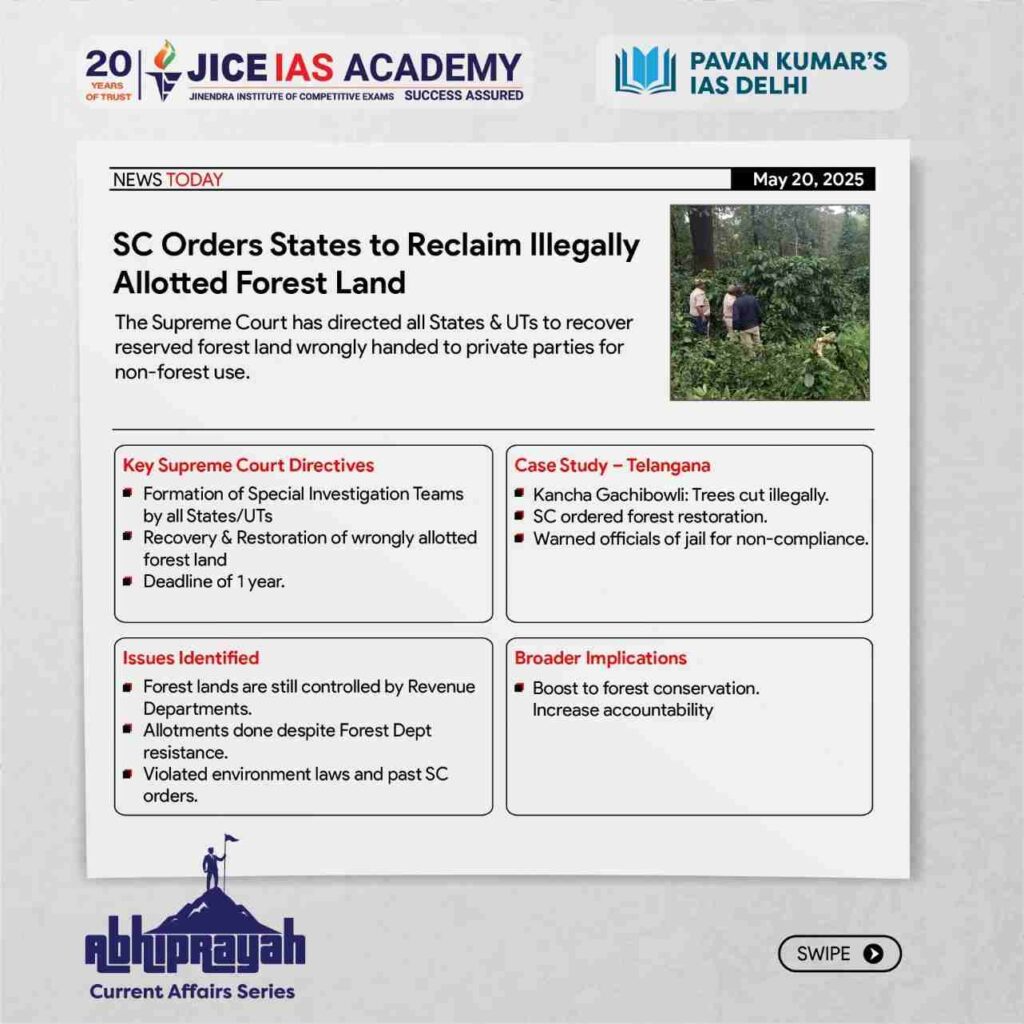
Supreme Court directs States, Union Territories to reclaim reserved forests allotted to private parties
Why in News?
The Supreme Court of India has delivered a landmark judgment concerning the misuse and illegal allotment of forest lands by Revenue Departments across various States and Union Territories (UTs).
Background of the Case
- The case centered on a specific instance of illegal forest land diversion in Kondhwa Budruk, Pune (Maharashtra):
- In 1998, 11.89 hectares of reserved forest land was illegally allotted for agricultural use.
- In 1999, the same land was sold to a builder.
- In 2007, the builder obtained an Environmental Clearance from the Ministry of Environment and Forests to use the land for construction.
- This was challenged and ultimately declared illegal by the Supreme Court.
- This case is seen as a representative example of the broader problem of politician–bureaucrat–builder nexus, resulting in the conversion of forest land into commercial properties.
Key Supreme Court Directives
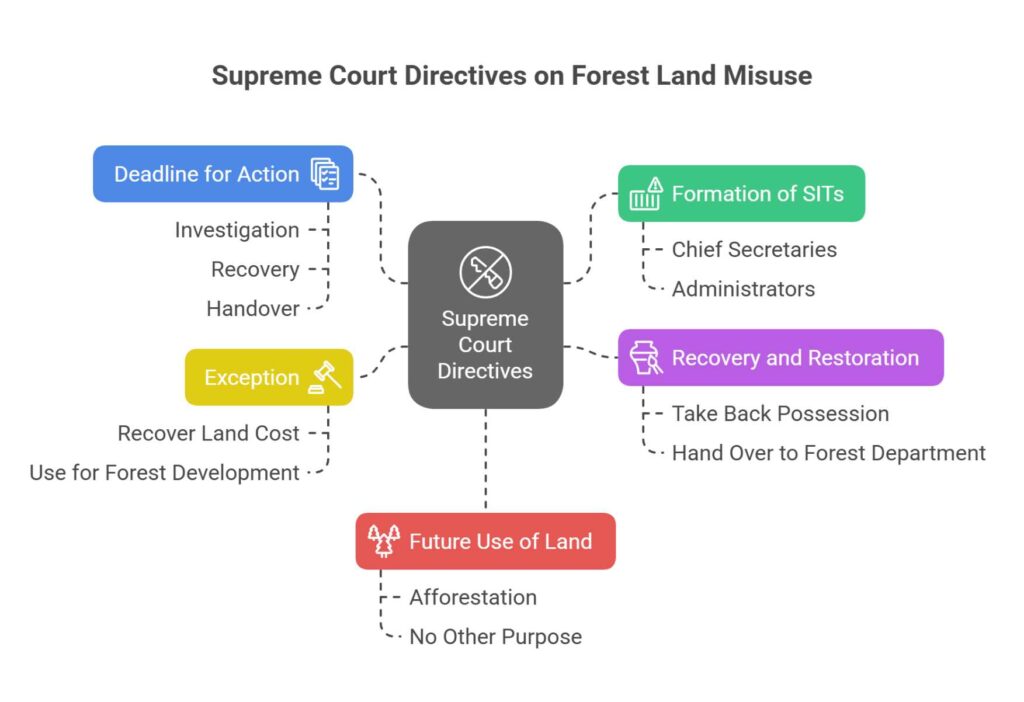
- Formation of Special Investigation Teams (SITs)
- All Chief Secretaries (States) and Administrators (UTs) must constitute SITs.
- Purpose: Examine whether forest lands under Revenue Department control have been illegally allotted to private individuals or institutions for non-forest use.
- Recovery and Restoration of Forest Land
- If forest land is found to have been wrongly allotted:
- Authorities must take back possession from private parties.
- The land must be handed over to the Forest Department.
- Exception – If Restoration is Against Public Interest
- In rare cases where taking back the land is not in larger public interest, the following applies:
- The government must recover the cost of the land from the private party.
- This amount must be used exclusively for forest development (e.g., afforestation).
- Deadline for Action
- All these actions—investigation, recovery, handover—must be completed within one year.
- Future Use of Land
- Hereafter, such forest lands should be used only for afforestation and no other purpose.
Past Illegal Allotments Invalid
- The judgment invalidates any forest land allotments after 12 December 1996 that were made without prior approval from the Central Government.
- This is based on an earlier Supreme Court order (1996), which mandated that:
- “All ongoing activity within any forest in any State throughout the country, without the prior approval of the Central Government, must cease immediately.”
- Thus, any transfer or use of forest land for non-forest purposes after this date is unlawful.
Issues Identified by the Court
- The judgment highlights a systemic problem:
- Large areas of land classified as ‘forest’ are still under the control of Revenue Departments.
- These lands were often allotted despite resistance from Forest Departments.
- Result: Depletion of green cover, violating environmental laws and Supreme Court orders.
- A Central Empowered Committee (CEC) report, presented by amicus curiae K. Parameshwar, showed widespread illegal allotments across India.
Case Study: Telangana – Kancha Gachibowli
- The court warned the Telangana government in a related case involving tree-felling in Kancha Gachibowli.
- The SC ordered restoration of the forest, failing which officials would face jail.
Broader Implications
A significant step towards:
- Conservation of forest resources.
- Holding State officials accountable for illegal transfers.
- Strengthening environmental governance.

3rd UN conference on landlocked countries
UPSC CURRENT AFFAIRS – 08th August 2025 Home / 3rd UN conference on landlocked countries Why in News? At the
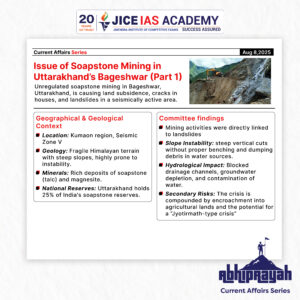
Issue of soapstone mining in Uttarakhand’s Bageshwar
UPSC CURRENT AFFAIRS – 08th August 2025 Home / Issue of soapstone mining in Uttarakhand’s Bageshwar Why in News? Unregulated
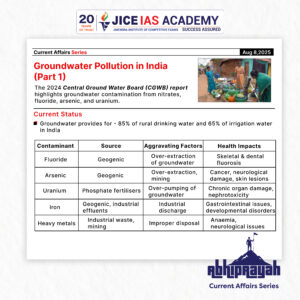
Groundwater Pollution in India – A Silent Public Health Emergency
UPSC CURRENT AFFAIRS – 08th August 2025 Home / Groundwater Pollution in India – A Silent Public Health Emergency Why
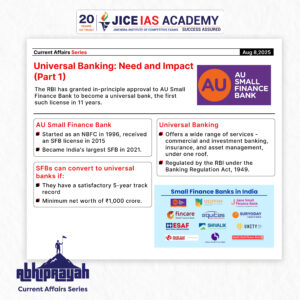
Universal banking- need and impact
UPSC CURRENT AFFAIRS – 08th August 2025 Home / Universal banking- need and impact Why in News? The Reserve Bank
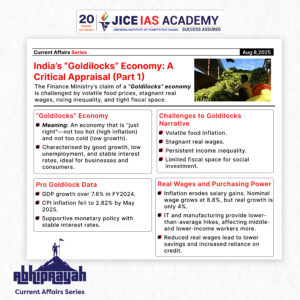
India’s “Goldilocks” Economy: A Critical Appraisal
UPSC CURRENT AFFAIRS – 08th August 2025 Home / India’s “Goldilocks” Economy: A Critical Appraisal Why in News? The Finance
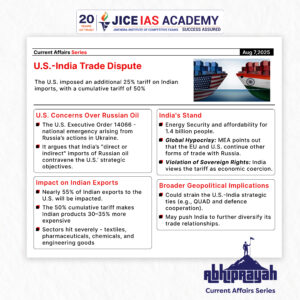
U.S.-India Trade Dispute: Trump’s 50% Tariffs and India’s Oil Imports from Russia
UPSC CURRENT AFFAIRS – 07th August 2025 Home / U.S.-India Trade Dispute: Trump’s 50% Tariffs and India’s Oil Imports from
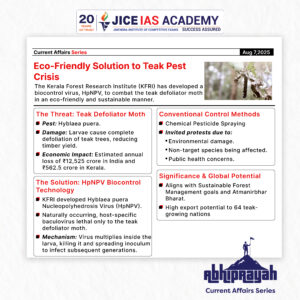
Eco-Friendly Solution to Teak Pest Crisis: KFRI’s HpNPV Technology
UPSC CURRENT AFFAIRS – 07th August 2025 Home / Eco-Friendly Solution to Teak Pest Crisis: KFRI’s HpNPV Technology Why in

New Species of Non-Venomous Rain Snake Discovered in Mizoram
UPSC CURRENT AFFAIRS – 07th August 2025 Home / New Species of Non-Venomous Rain Snake Discovered in Mizoram Why in

- Decreased oxygen-carrying capacity of RBCs.
- Increased fragility and cell stiffness.
- Vascular blockage, causing pain and organ injury.
- Increased susceptibility to infections, anemia, and stroke.