UPSC CURRENT AFFAIRS – 20th May 2025
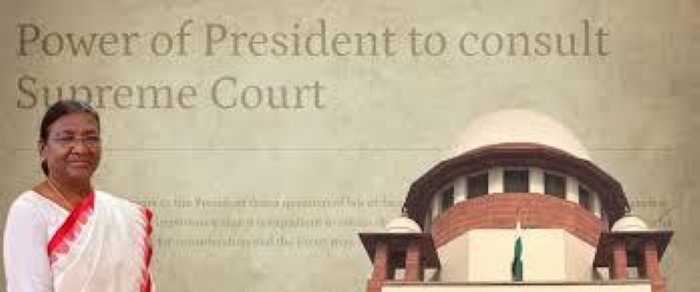
What is a Presidential reference?
Why in News?
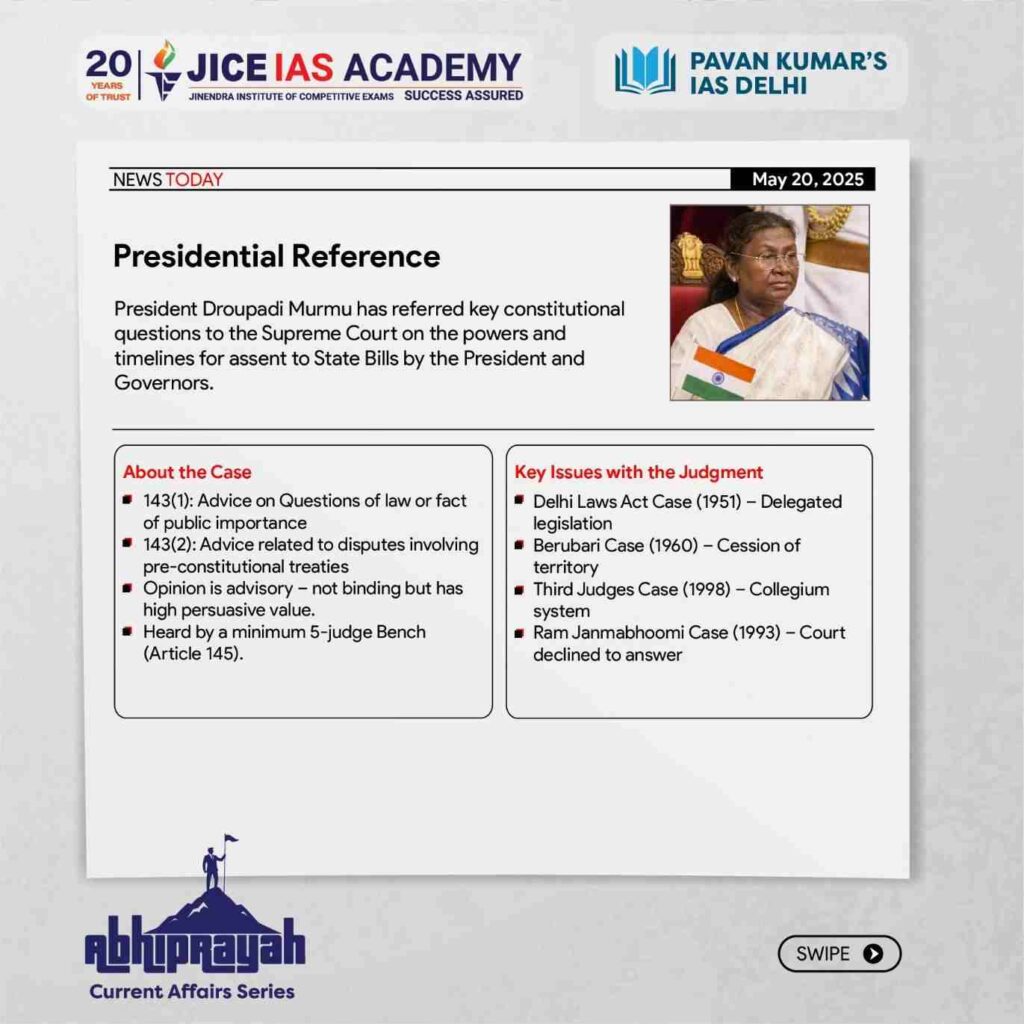
President Droupadi Murmu has referred constitutional questions to the Supreme Court under Article 143 regarding the powers and timelines for Presidential and Gubernatorial assent to State Bills.
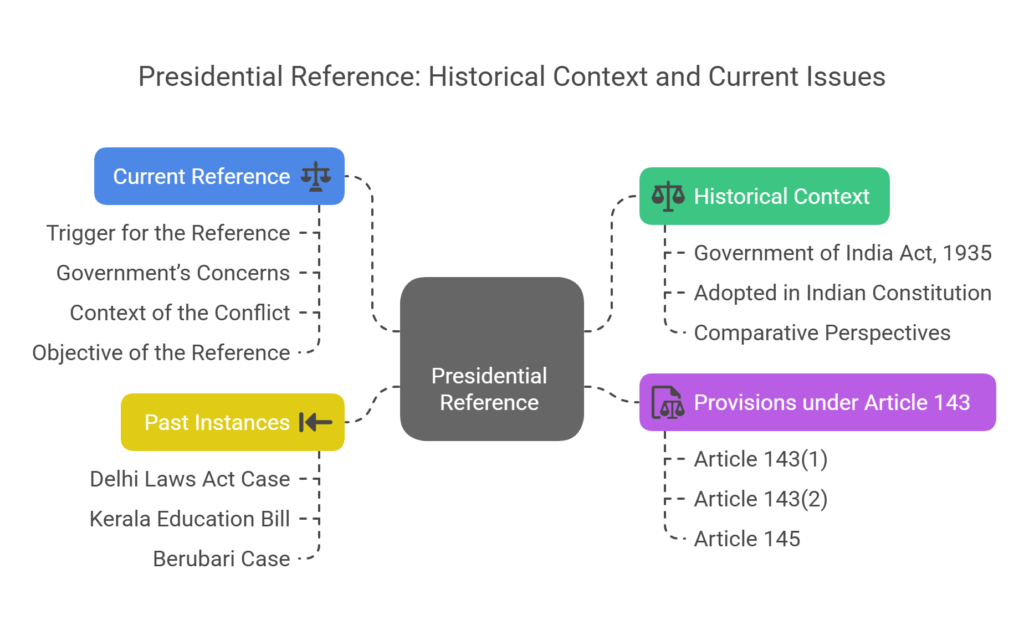
Historical Context of Article 143
The advisory jurisdiction of the Supreme Court under Article 143 is rooted in colonial-era constitutional law:
- Government of India Act, 1935:
- It allowed the Governor-General to refer questions of law to the Federal Court for its opinion.
- This was intended to provide legal clarity on matters of governance and public interest.
- Adopted in Indian Constitution:
- Post-Independence, Article 143 was included to provide a non-binding advisory role to the Supreme Court on matters of law or fact of public importance, as advised by the Council of Ministers.
- Comparative Perspectives:
- Canada: Similar provision exists in the Canadian Constitution. The Supreme Court of Canada can give advisory opinions on legal questions referred by federal or provincial governments.
- USA: The U.S. Supreme Court does not entertain advisory opinions, respecting the doctrine of strict separation of powers. Only actual “cases and controversies” are adjudicated.
- Canada: Similar provision exists in the Canadian Constitution. The Supreme Court of Canada can give advisory opinions on legal questions referred by federal or provincial governments.
Provisions under Article 143
Article 143 – Advisory Jurisdiction
It has two clauses:
- Article 143(1): The President may refer to the Supreme Court any question of law or fact of public importance for its opinion.
- Article 143(2): Specifically applies to disputes arising out of pre-constitutional treaties or agreements, mostly obsolete now.
Article 145:
- Prescribes that a minimum five-judge bench hears such a reference.
Nature of the Opinion:
- The opinion is not binding on the President or the executive.
- It does not create precedent for future cases, unlike judgments under Articles 32 or 136.
- However, it has high persuasive value and is generally respected and followed by both the executive and judiciary.
Past Instances of Presidential References
Since 1950, about 15 Presidential references have been made. Some important ones include:
Case | Year | Significance |
Delhi Laws Act Case | 1951 | Laid down principles of delegated legislation. |
Kerala Education Bill | 1958 | Balanced Fundamental Rights vs Directive Principles; clarified minority rights under Article 30. |
Berubari Case | 1960 | Held that cession of territory requires constitutional amendment under Article 368. |
Keshav Singh Case | 1965 | Explained powers and privileges of State legislatures. |
Presidential Poll Reference | 1974 | Stated that elections can continue despite vacancies in State Assemblies. |
Special Courts Bill | 1978 | Established that the Court may decline vague references and must respect separation of powers. |
Cauvery Water Dispute | 1992 | Held that SC cannot sit in appeal over earlier judgments in advisory capacity. |
Third Judges Case | 1998 | Explained collegium system; laid down procedure for appointment of judges. |
Ram Janmabhoomi Reference | 1993 | Only instance where the Supreme Court declined to answer, citing lack of clarity and political sensitivity. |
The Current Reference (2024-25)
Trigger for the Reference:
- The Supreme Court, in a recent judgment, set timelines for:
- The President and Governors to act on Bills passed by State legislatures.
- Held that their actions are justiciable and can be subject to judicial review.
Government’s Concerns:
The President, acting on the advice of the Union Cabinet, has referred 14 legal questions to the Supreme Court.
These include:
- Can the court prescribe timelines for the President or Governors where the Constitution is silent?
- Is the President’s/Governor’s decision on a Bill justiciable before it becomes law?
- To what extent can the Supreme Court exercise powers under Article 142 (complete justice)?
- Whether the executive action during a pending Bill can be reviewed?
Context of the Conflict:
- Increasing friction between the Union Government and Opposition-ruled State governments.
- Some Governors have delayed action on State Bills.
- SC criticized delays and adopted Home Ministry’s Office Memorandum to set a time limit.
Objective of the Reference:
To seek constitutional clarity on:
- The scope of judicial review over the President/Governor’s discretion.
- Whether courts can mandate timelines when none exist in the Constitution.
- Federal balance and coordination in a constitutional democracy.
Importance of the Current Reference
- Clarification will determine:
- The boundaries of judicial intervention in executive discretion.
- The federal character of Indian polity.
- The principle of constitutional governance and accountability.
- The issue touches upon fundamental principles of:
- Separation of powers
- Democratic decision-making
- Judicial activism vs restraint

3rd UN conference on landlocked countries
UPSC CURRENT AFFAIRS – 08th August 2025 Home / 3rd UN conference on landlocked countries Why in News? At the
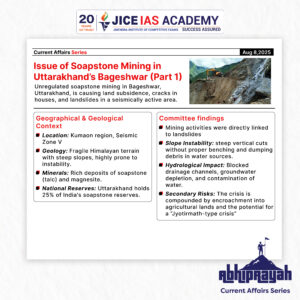
Issue of soapstone mining in Uttarakhand’s Bageshwar
UPSC CURRENT AFFAIRS – 08th August 2025 Home / Issue of soapstone mining in Uttarakhand’s Bageshwar Why in News? Unregulated
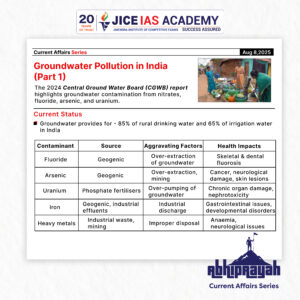
Groundwater Pollution in India – A Silent Public Health Emergency
UPSC CURRENT AFFAIRS – 08th August 2025 Home / Groundwater Pollution in India – A Silent Public Health Emergency Why
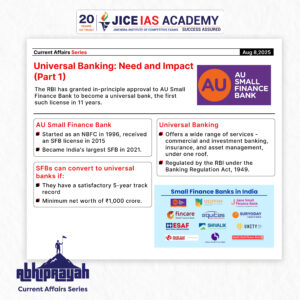
Universal banking- need and impact
UPSC CURRENT AFFAIRS – 08th August 2025 Home / Universal banking- need and impact Why in News? The Reserve Bank
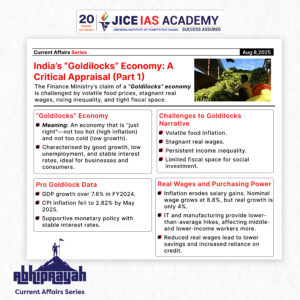
India’s “Goldilocks” Economy: A Critical Appraisal
UPSC CURRENT AFFAIRS – 08th August 2025 Home / India’s “Goldilocks” Economy: A Critical Appraisal Why in News? The Finance

U.S.-India Trade Dispute: Trump’s 50% Tariffs and India’s Oil Imports from Russia
UPSC CURRENT AFFAIRS – 07th August 2025 Home / U.S.-India Trade Dispute: Trump’s 50% Tariffs and India’s Oil Imports from
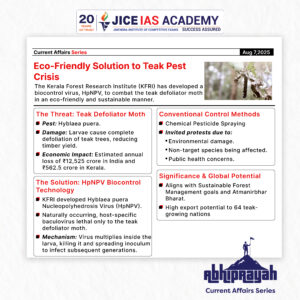
Eco-Friendly Solution to Teak Pest Crisis: KFRI’s HpNPV Technology
UPSC CURRENT AFFAIRS – 07th August 2025 Home / Eco-Friendly Solution to Teak Pest Crisis: KFRI’s HpNPV Technology Why in

New Species of Non-Venomous Rain Snake Discovered in Mizoram
UPSC CURRENT AFFAIRS – 07th August 2025 Home / New Species of Non-Venomous Rain Snake Discovered in Mizoram Why in

- Decreased oxygen-carrying capacity of RBCs.
- Increased fragility and cell stiffness.
- Vascular blockage, causing pain and organ injury.
- Increased susceptibility to infections, anemia, and stroke.