
UPSC CURRENT AFFAIRS – 19th May 2025
Supreme Court struck down the Centre’s orders on retrospective green clearances
Why in News?
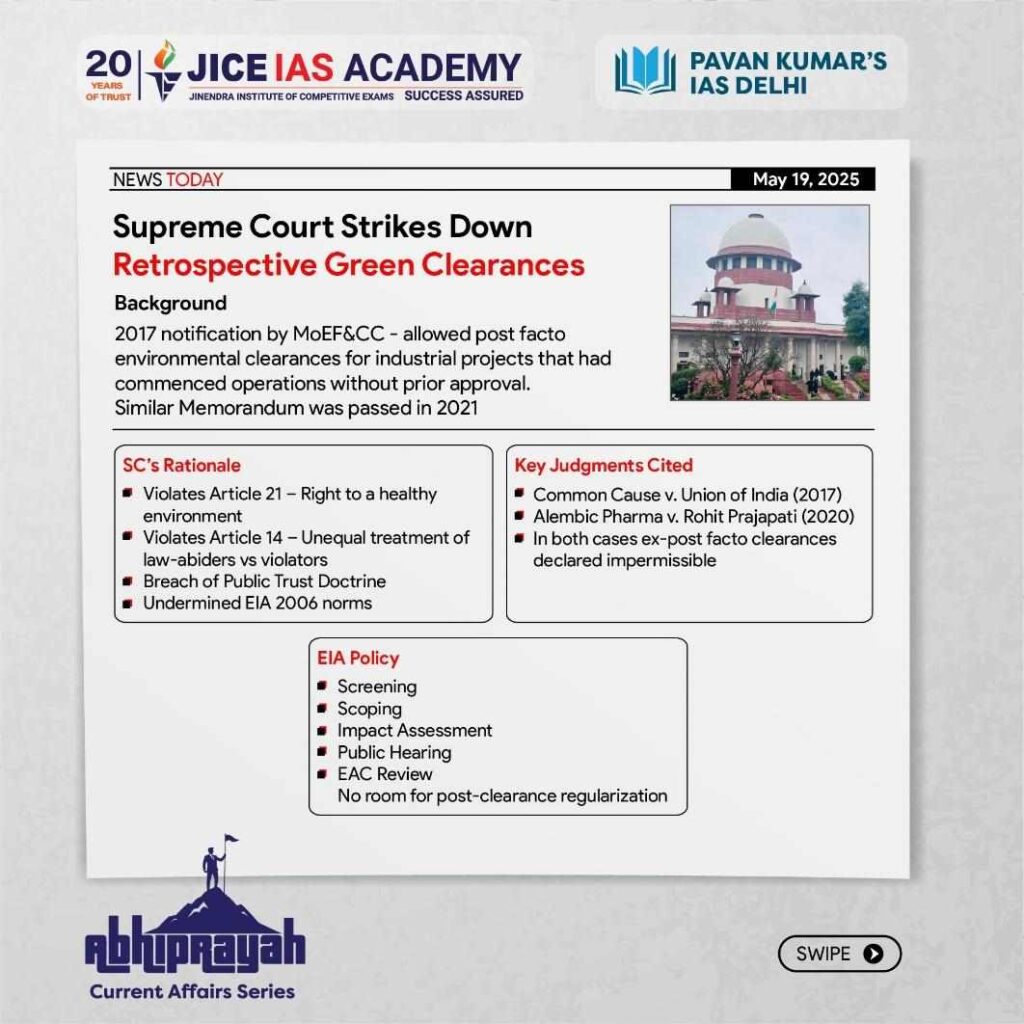
The Supreme Court struck down the 2017 MoEF&CC notification and 2021 SOP allowing post-facto environmental clearances, declaring them unconstitutional for violating the right to a healthy environment under Article 21.
Key Highlights
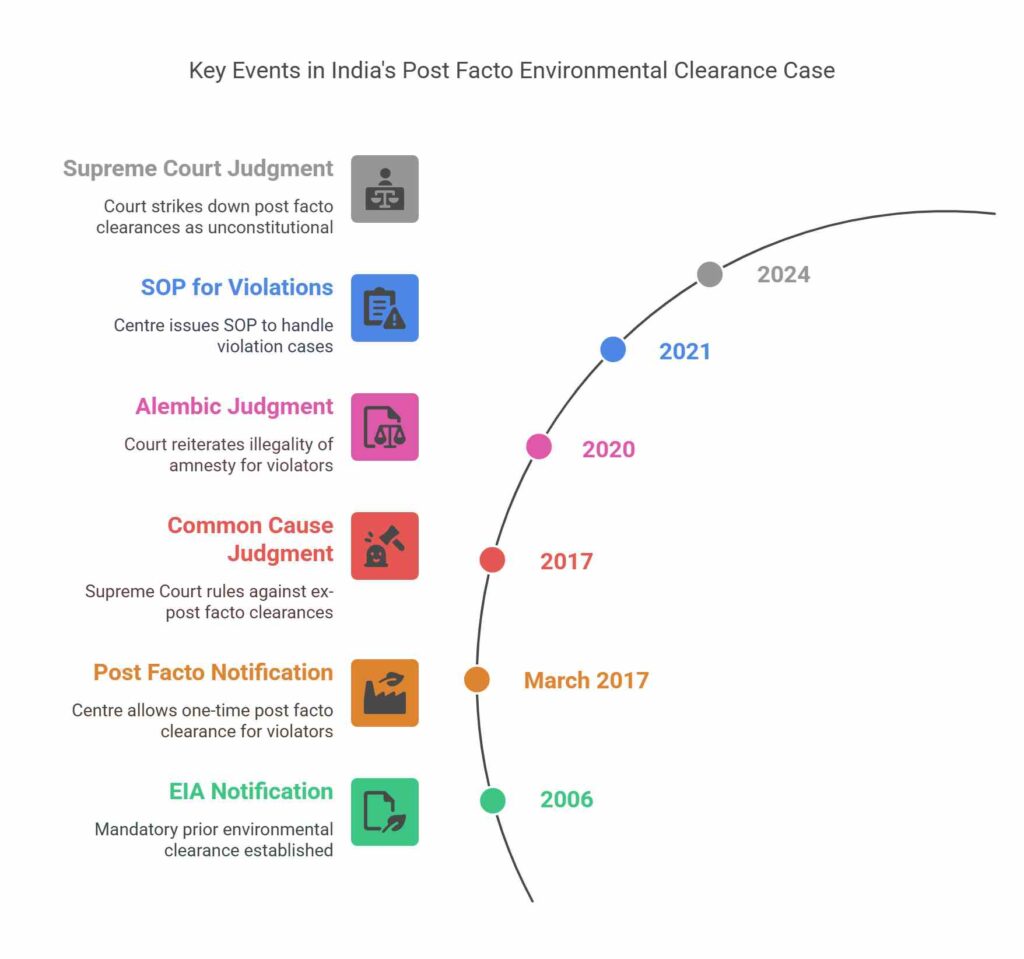
- Recently, the Supreme Court of India struck down a 2017 notification issued by the Ministry of Environment, Forest and Climate Change (MoEF&CC), which allowed post facto environmental clearances for industrial projects that had commenced operations without prior approval.
- The Court also invalidated the 2021 office memorandum (OM) that institutionalized a standard operating procedure (SOP) for handling such cases.
Background:
The Environment Impact Assessment (EIA) Notification, 2006, mandates prior environmental clearance before the commencement of any project with potential environmental impacts. The clearance involves multi-stage scrutiny, including:
- Screening and scoping of the project
- Impact assessment
- Public hearing
- Expert Appraisal Committee (EAC) recommendations
Despite this, in March 2017, the MoEF&CC issued a notification allowing a “one-time” six-month window for industries to obtain post facto clearance, even if they had already violated the EIA norms by beginning operations or modifying existing projects.
Rationale Behind the 2017 Notification:
- Regulatory Compliance: The Centre argued that it was better to bring violators under the environmental regulatory net rather than leaving violations unregulated.
- Remediation Costs: Violators would be compelled to pay for remediation and pollution damage, nullifying any economic advantage gained through non-compliance.
- Centralized Appraisal: All violation cases, regardless of scale, were to be appraised centrally.
- Closure Clause: Only activities permissible at the site would be allowed to proceed; others faced closure.
Supreme Court’s Judgment:
A bench of Justice Abhay S. Oka and Justice Ujjal Bhuyan declared:
- The 2017 notification and 2021 OM are illegal and violative of Articles 14 and 21 of the Constitution.
- The right to a clean and pollution-free environment is part of the right to life under Article 21.
- Post facto clearance undermines environmental law and encourages illegal project execution.
- The Court restrained the Centre from issuing any future notifications or memoranda similar in intent or effect.
Violation of Judicial Precedents:
The Court cited two key judgments:
- Common Cause v. Union of India (2017)
- Alembic Pharmaceuticals v. Rohit Prajapati (2020)
Both judgments held that ex-post facto clearances are contrary to environmental jurisprudence and cannot be allowed as they defeat the preventive intent of EIA norms.
Criticism of the Centre's Approach:
- The Court criticized the Centre for protecting violators instead of upholding environmental laws.
- It noted that in the Alembic case, even a one-time amnesty was considered illegal.
- The 2021 SOP, although not using the term post facto, was seen as an indirect attempt to regularize violations, which the Court found unacceptable.
Key Constitutional Principles Upheld:
- Article 21: Right to life includes the right to a healthy environment.
- Article 14: Equal treatment under law; violators cannot be treated at par with law-abiding project proponents.
- Doctrine of Public Trust: The State has a duty to protect natural resources for present and future generations.
Implications of the Judgment:
- Reinforces the principle of prior environmental clearance as a non-negotiable legal requirement.
- Acts as a deterrent against regulatory bypass and upholds environmental governance.
- Places greater responsibility on the MoEF&CC, State Authorities, and Pollution Control Boards to ensure compliance with EIA norms.
- May affect projects that had earlier obtained post facto clearance between 2017–2021.
Conclusion:
- The Supreme Court’s decision reaffirms India’s commitment to environmental protection and constitutional rights, rejecting a compliance regime that favours industrial interests at the cost of ecological integrity.
- The judgment sets a landmark precedent in Indian environmental jurisprudence, ensuring that development does not override the fundamental right to a clean environment.

3rd UN conference on landlocked countries
UPSC CURRENT AFFAIRS – 08th August 2025 Home / 3rd UN conference on landlocked countries Why in News? At the
Issue of soapstone mining in Uttarakhand’s Bageshwar
UPSC CURRENT AFFAIRS – 08th August 2025 Home / Issue of soapstone mining in Uttarakhand’s Bageshwar Why in News? Unregulated
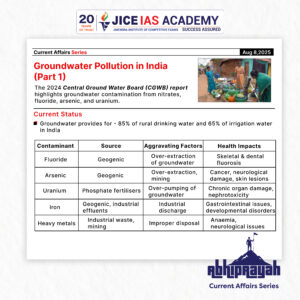
Groundwater Pollution in India – A Silent Public Health Emergency
UPSC CURRENT AFFAIRS – 08th August 2025 Home / Groundwater Pollution in India – A Silent Public Health Emergency Why
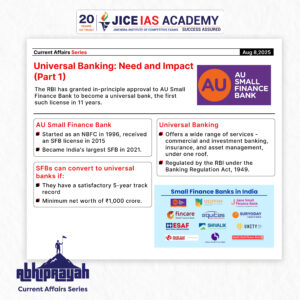
Universal banking- need and impact
UPSC CURRENT AFFAIRS – 08th August 2025 Home / Universal banking- need and impact Why in News? The Reserve Bank
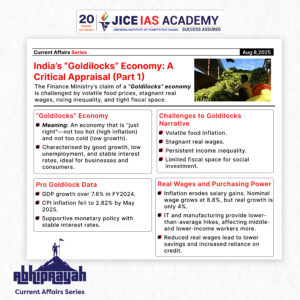
India’s “Goldilocks” Economy: A Critical Appraisal
UPSC CURRENT AFFAIRS – 08th August 2025 Home / India’s “Goldilocks” Economy: A Critical Appraisal Why in News? The Finance

U.S.-India Trade Dispute: Trump’s 50% Tariffs and India’s Oil Imports from Russia
UPSC CURRENT AFFAIRS – 07th August 2025 Home / U.S.-India Trade Dispute: Trump’s 50% Tariffs and India’s Oil Imports from
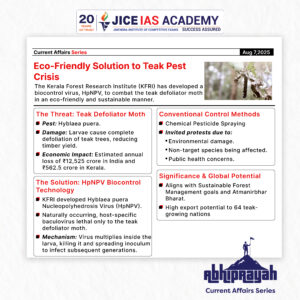
Eco-Friendly Solution to Teak Pest Crisis: KFRI’s HpNPV Technology
UPSC CURRENT AFFAIRS – 07th August 2025 Home / Eco-Friendly Solution to Teak Pest Crisis: KFRI’s HpNPV Technology Why in

New Species of Non-Venomous Rain Snake Discovered in Mizoram
UPSC CURRENT AFFAIRS – 07th August 2025 Home / New Species of Non-Venomous Rain Snake Discovered in Mizoram Why in

- Decreased oxygen-carrying capacity of RBCs.
- Increased fragility and cell stiffness.
- Vascular blockage, causing pain and organ injury.
- Increased susceptibility to infections, anemia, and stroke.