UPSC CURRENT AFFAIRS – 17th May 2025

Home / UPSC / Current Affairs / Drinking to Death: On Illicit Liquor Cases

Drinking to Death: On Illicit Liquor Cases

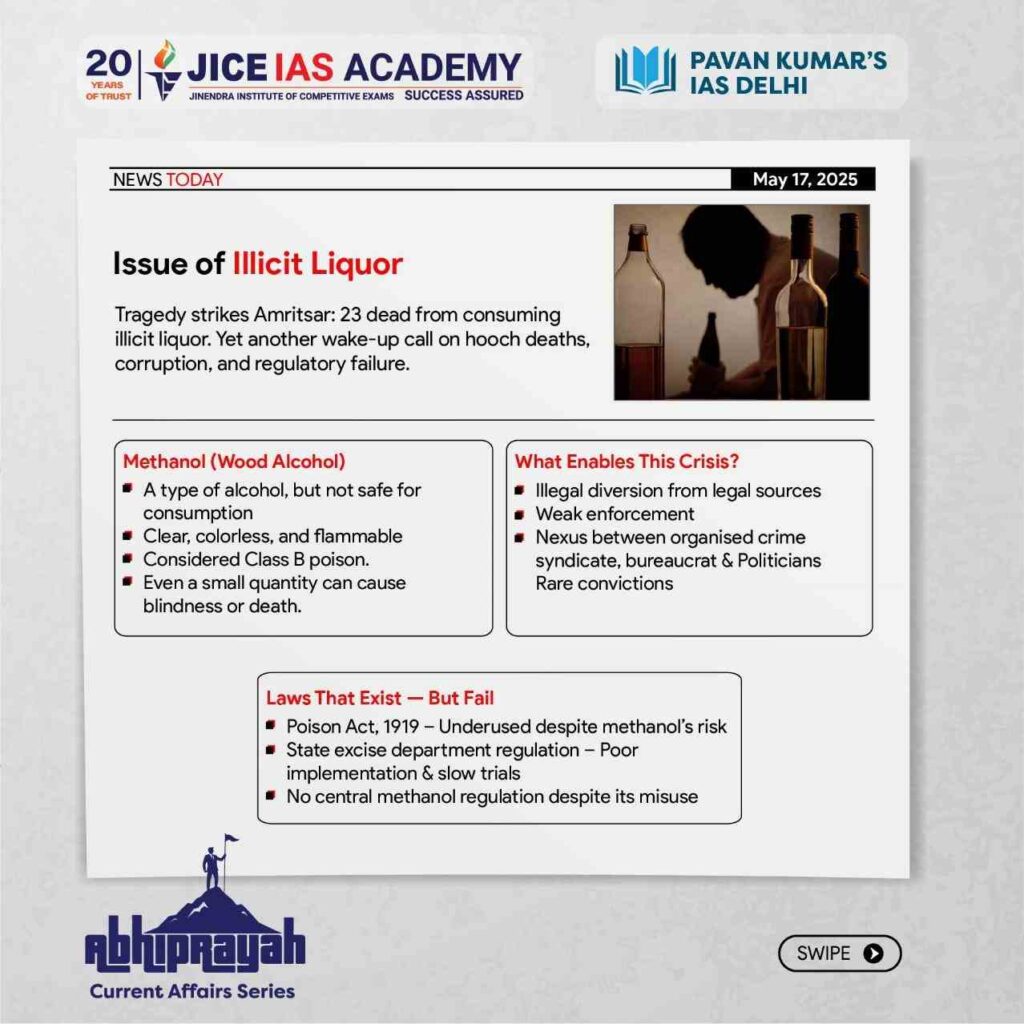
issue of illicit liquor

Why in News?

At least 23 people died in an illicit liquor tragedy near Amritsar, Punjab, reviving national concern over the recurrent hooch incidents linked to regulatory failure, systemic corruption, and socio-economic vulnerability.

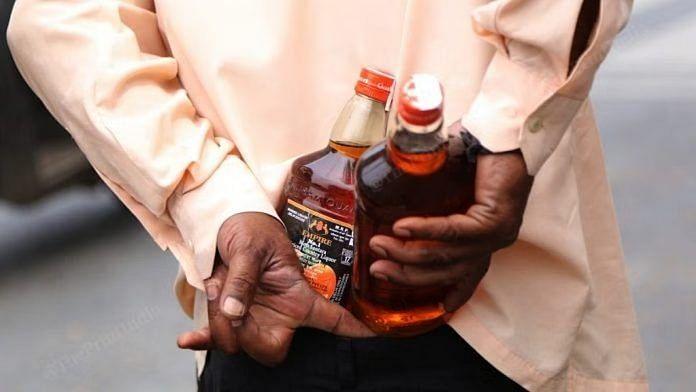
person holding two bottles of alcohol

Key Highlights::

  • Victims were mostly poor, daily-wage earners lured by cheap alcohol.
  • Bootleggers often use methanol, a toxic industrial chemical, misjudging safe dilution.
  • Methanol pilferage from legal supply chains remains rampant.
  • The nexus between bootleggers, local police, and political actors enables such incidents.
  • Prosecutions under prohibition and criminal laws are weak, and convictions remain rare.

Legal and Policy Frameworks Involved:

Poison Act, 1919:

  • Regulates the import, possession, and sale of poisons.
  • Often underused in prosecutions, despite methanol’s classification as a Class B poison.

State Prohibition Laws & IPC:

  • States have their own excise laws; offenses are booked under murder, attempt to murder, or adulteration provisions of the IPC.
  • Enforcement varies widely, often influenced by local corruption.

Interstate Nature of Methanol Supply:

  • Methanol regulation is a central concern due to its production and movement across State borders.

Socio-Economic Impact:

  • Causes avoidable loss of life, particularly among the marginalized and illiterate poor.
  • Triggers public health crises and damages trust in governance and law enforcement.
  • Deepens social inequalities and burdens health and judicial systems.
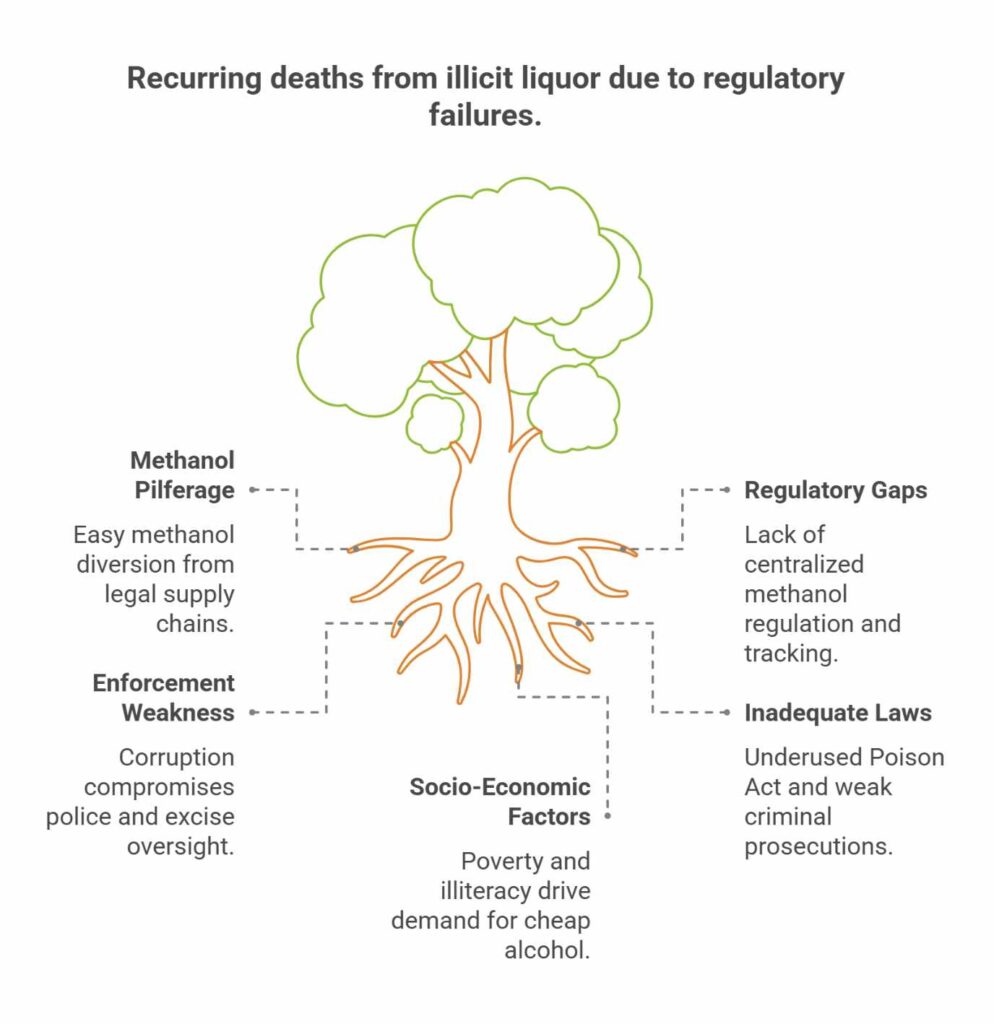
recurring deaths from illicit liquor

Challenges:

  1. There is a complete lack of centralized regulation over the transport and sale of methanol, despite its potential misuse in illicit liquor.
  2. The enforcement mechanism is severely compromised due to the nexus between bootleggers, local police personnel, and lower-level politicians.
  3. The application of the Poison Act remains inadequate, and trials under criminal and excise laws often result in delayed justice or acquittals.
  4. There is no comprehensive tracking mechanism to prevent methanol pilferage from licensed industrial dealers.
  5. The recurring tragedies reflect the failure to address the deeper structural issues of poverty, illiteracy, and social exclusion that create the demand for cheap and unsafe alcohol.

Way Ahead:

  1. Formulate a National Framework on Methanol Regulation:
    • Introduce central rules for methanol transport and storage with GPS tracking, barcoding, and cross-border monitoring.
  2. Revise and Enforce the Poison Act Rigorously:
    • Strengthen penalties and expand its scope to include modern chemical misuse.
  3. Strengthen Police and Excise Oversight:
    • Create independent vigilance units, implement rotation policies, and establish mandatory audits of methanol stock.
  4. Raise Public Awareness and Expand Health Interventions:
    • Promote community-level campaigns and set up de-addiction and alcohol counseling centres.
  5. Address Root Socio-Economic Drivers:
    • Invest in poverty alleviation, rural employment, and universal education to remove the structural demand for spurious liquor.

Conclusion:

Illicit liquor deaths are not isolated law enforcement failures — they are symptoms of a broken governance ecosystem. Without a comprehensive national policy on methanol regulation, corruption-free enforcement, and social empowerment of vulnerable communities, such tragedies will continue to expose the lethal cost of neglect, poverty, and impunity in India’s alcohol regulation framework.

Leave a Reply

Your email address will not be published. Required fields are marked *

Call Us Now !

Copyright © JICE ACADEMY FOR EXCELLENCE PRIVATE LIMITED