3rd UN conference on landlocked countries

UPSC CURRENT AFFAIRS – 08th August 2025 Home / 3rd UN conference on landlocked countries Why in News? At the Third UN Conference on Landlocked Developing Countries (LLDCs) in Turkmenistan, 32 LLDCs formed a formal negotiating bloc under the UNFCCC. Introduction In August 2025, leaders from 32 Landlocked Developing Countries (LLDCs) gathered at the Third UN Conference on LLDCs in Awaza, Turkmenistan, to address their unique vulnerabilities to climate change. The highlight was the historic announcement of the LLDC Group as a formal negotiating bloc under the United Nations Framework Convention on Climate Change (UNFCCC). This development marks a significant shift in climate diplomacy, aimed at securing tailored support for nations disproportionately impacted by climate-related disasters despite contributing minimally to global emissions. The Trigger – Cyclone Freddy and the Malawi Case In 2023, Cyclone Freddy devastated Malawi—a landlocked nation—causing widespread flooding, landslides, and displacement. Despite no sea access, Malawi suffered indirect climate shocks through: Humanitarian crisis (loss of life, homes, and livelihoods) Food insecurity (damaged agriculture) Trade disruption (reliance on fragile corridors via coastal neighbours) The tragedy symbolised the invisible yet severe impacts of climate change on LLDCs. Who Are the LLDCs? Definition: Countries without direct territorial access to the sea, recognised under the UN-OHRLLS framework. Global Profile: Represent 7% of the world’s population Occupy 12% of global land area Account for 18% of people affected by droughts and landslides (2012–2023) 55% population reliant on agriculture (double the global average) Vulnerability of LLDCs 1. Geographic Isolation Dependence on coastal transit nations for imports/exports Long, costly, and fragile trade routes vulnerable to disruptions 2. Economic Fragility Low diversification; heavy dependence on climate-sensitive agriculture Net importers of cereals → vulnerable to global supply shocks 3. Energy Vulnerabilities Hydropower dependence + erratic rainfall patterns = energy insecurity 4. Infrastructure Weakness Limited disaster-resilient infrastructure Poor logistics hamper emergency response The Awaza Programme of Action – Key Outcomes 1. Formalisation of LLDC Group in UNFCCC Recognition as a distinct negotiating bloc in global climate forums Mandate to advocate for LLDC-specific adaptation and mitigation priorities 2. Demands and Proposals Minimum allocations of adaptation financing for LLDCs Streamlined access to climate technology transfer Investment in climate-resilient infrastructure Emergency logistics corridors for rapid disaster response 3. Strategic Approach Data-backed advocacy: satellite imagery, climate modelling, and human impact stories Emphasis on equity in climate negotiations—moving from symbolic vulnerability recognition to operational fairness Significance of the Move For LLDCs Ensures visibility in a negotiation space dominated by coastal and large economies Provides a united platform to press for tailored climate financing Addresses logistical and trade-related barriers to disaster relief For Global Climate Governance Brings nuance to vulnerability discussions (geography-specific challenges) Strengthens climate justice principles under the UNFCCC Could inspire other issue-specific coalitions (e.g., mountain nations, small dryland states) Challenges Ahead Bloc Overlap and Fragmentation Many LLDCs also belong to G77+China, LDC Group, and African Group of Negotiators Risk of diluted bargaining power if agendas diverge Resource Constraints Limited diplomatic capacity to sustain presence in multiple negotiations Dependence on External Support Financial and technical assistance from developed countries remains uncertain Implementation Gap Translating commitments in Awaza into concrete action will require binding mechanisms International Context – Climate Equity Debate LLDCs contribute minimally to global greenhouse gas emissions yet face disproportionate climate impacts (Polluter Pays Principle relevance) The Paris Agreement (2015) recognises “common but differentiated responsibilities” but does not have LLDC-specific provisions The LLDC bloc aims to insert their concerns into discussions on: Global Adaptation Goal Loss and Damage Fund Green Climate Fund allocations Way Forward Institutional Strengthening – LLDC secretariat for climate negotiations Alliances – Strategic partnerships with SIDS (Small Island Developing States) and LDCs for stronger collective bargaining Domestic Preparedness – Invest in disaster-resilient infrastructure and diversify economies Innovative Financing – Use blended finance, climate bonds, and public-private partnerships Knowledge Sharing – Exchange best practices among LLDCs in areas like climate-smart agriculture and renewable energy Conclusion The creation of the LLDC negotiating bloc is both a symbolic and strategic victory in the climate justice movement. For countries like Malawi, Bhutan, and others, this is not merely a diplomatic gesture—it is a lifeline. Whether the world listens will depend on how effectively the LLDC Group can transform geographic isolation into collective strength in the run-up to COP30 and beyond. Introduction Economic Implications For Indian Exporters These reforms reduce transaction costs and compliance hurdles Encourage a more competitive and efficient export environment Promote value addition in key sectors like leather For Tamil Nadu The reforms particularly benefit the state’s leather industry, a major contributor to employment and exports Boost the marketability of GI-tagged E.I. leather, enhancing rural and traditional industries For Trade Policy These decisions indicate a shift from regulatory controls to policy facilitation Reinforce the goals of Make in India, Atmanirbhar Bharat, and India’s ambition to become a leading export power Recently, BVR Subrahmanyam, CEO of NITI Aayog, claimed that India has overtaken Japan to become the fourth-largest economy in the world, citing data from the International Monetary Fund (IMF). India’s rank as the world’s largest economy varies by measure—nominal GDP or purchasing power parity (PPP)—each with key implications for economic analysis. Significance and Applications
Issue of soapstone mining in Uttarakhand’s Bageshwar
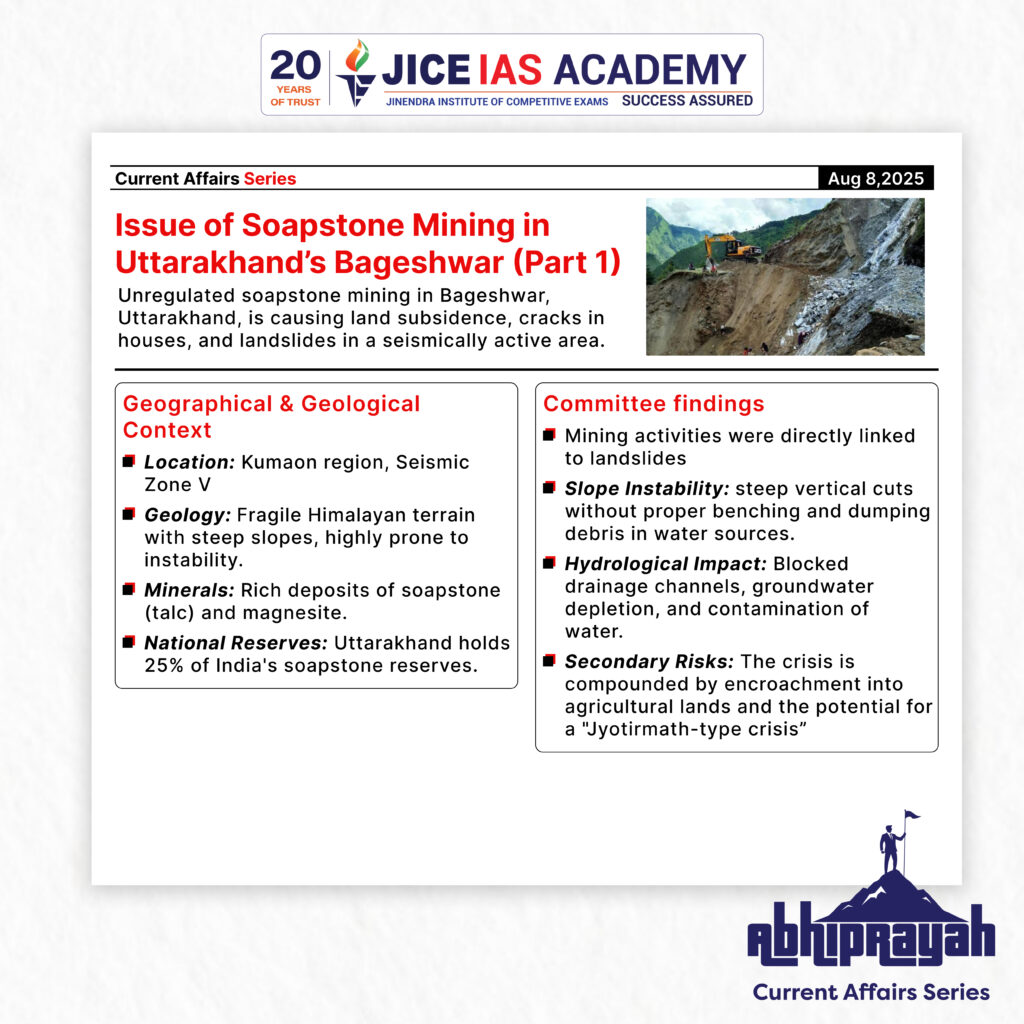
UPSC CURRENT AFFAIRS – 08th August 2025 Home / Issue of soapstone mining in Uttarakhand’s Bageshwar Why in News? Unregulated soapstone mining in Uttarakhand’s Bageshwar has triggered land subsidence, cracks, and landslides in a seismically vulnerable Himalayan zone. Introduction Bageshwar district in Uttarakhand has emerged as a significant site for soapstone and magnesite mining, but unregulated excavation has triggered ground deformation, land subsidence, rockslides, and cracks in habitations. A state government-appointed expert committee has submitted a report to the National Green Tribunal (NGT), linking mining activities to heightened landslide risks in a seismically vulnerable region. Geographical & Geological Context Location – Bageshwar lies in the Kumaon region of Uttarakhand, within Seismic Zone V, indicating the highest earthquake risk. Geological Setting – The region has steep slopes and fragile Himalayan lithology, making it highly susceptible to slope instability. Mineral Profile – Soapstone (talc): A metamorphic rock mainly composed of talc, used for construction, sculptures, countertops, sinks, and industrial talc for cosmetics, pharmaceuticals, ceramics. Magnesite: Used in refractory material and magnesium production. Distribution of Mines: Bageshwar – 169 mines (soapstone & magnesite) Pithoragarh – 28 mines Chamoli – 8 mines (soapstone) Uttarkashi – 1 mine (silica sand) National Reserves – Rajasthan (57%) and Uttarakhand (25%) hold the largest reserves of soapstone in India (Indian Bureau of Mines). Background to the Issue January 10, 2024 – The Uttarakhand High Court banned mining in Bageshwar after reports of: Cracks in houses Drying water sources Land subsidence in nearby villages Committee Formation – Included experts from: Geological Survey of India (GSI) Uttarakhand Landslide Mitigation and Management Centre Indian Institute of Remote Sensing (IIRS) Mandate – Conduct geological surveys of mines in Bageshwar, Kanda, and Dugnakuri tehsils. Assess whether mining is within designated lease boundaries. Recommend measures for a revised mining policy. Key Findings of the Committee Links to Geohazards Landslides – Mining removal of slope material and overburden dumping has triggered retrogressive debris slides. Ground Cracks – Linear cracks up to 50 meters long detected; risk of widening during monsoon or seismic activity. Subsidence – Observed even 100 meters upslope from pits, indicating underground material movement. Specific Incidents Google Earth imagery showed: No mine in August 2014. Post-mining, landslide in March 2019. Retrogression by February 2021 with downslope mine merging into landslide zone. Slope Instability Steep excavation without slope support. Violation of bench height norms (bench height = vertical distance between two mine benches). Dumping in water sources → Blockages, water contamination. Hydrological Impact Dumped overburden blocking surface drainage. Groundwater depletion due to altered aquifers. Risk of flash floods during cloudbursts due to blocked drainage. Secondary Risks Encroachment into agricultural and residential areas. Potential pipeline breaches → water infiltration into subsidence zones → higher landslide risk. Environmental & Socio-economic Implications Ecosystem damage – Siltation of streams, loss of biodiversity. Livelihood impact – Threat to agriculture and tourism. Disaster vulnerability – Increased risk of landslides and floods in already fragile Himalayan terrain. Public safety – Cracks in houses, displacement of communities. Policy and Regulatory Gaps Weak enforcement of mining lease boundaries. Inadequate monitoring of bench heights and slope stability. Absence of a centralized geo-referenced mining database. Poor post-mining reclamation and slope rehabilitation. Recommendations of the Committee Sustainable Mining Practices Limit excavation depth and steepness. Strict adherence to bench height regulations. Geo-referenced Database- Maintain precise mapping of mine lease boundaries for monitoring. Slope Stability Analysis- Scientific determination of safe bench heights and slope angles. On-site and Remote Monitoring- Combine physical inspections with satellite imagery and drone surveys. Drainage and Water Management- Prevent dumping in drainage systems; create silt traps. Policy Revision- Formulate stricter district-level mining policy integrating environmental safeguards. Post-mining Rehabilitation- Stabilize slopes, restore vegetation, and prevent debris flow. Way Forward Given the Himalayan region’s fragile geology, unregulated mining in Bageshwar poses compounded risks due to: Seismic susceptibility (Zone V) High rainfall-induced landslides Human settlement proximity An integrated approach combining scientific mining, strong regulatory enforcement, community involvement, and disaster risk reduction is crucial. A revised Uttarakhand Mining Policy should align with National Mineral Policy 2019 principles of sustainable development and environmental protection. Introduction Economic Implications For Indian Exporters These reforms reduce transaction costs and compliance hurdles Encourage a more competitive and efficient export environment Promote value addition in key sectors like leather For Tamil Nadu The reforms particularly benefit the state’s leather industry, a major contributor to employment and exports Boost the marketability of GI-tagged E.I. leather, enhancing rural and traditional industries For Trade Policy These decisions indicate a shift from regulatory controls to policy facilitation Reinforce the goals of Make in India, Atmanirbhar Bharat, and India’s ambition to become a leading export power Recently, BVR Subrahmanyam, CEO of NITI Aayog, claimed that India has overtaken Japan to become the fourth-largest economy in the world, citing data from the International Monetary Fund (IMF). India’s rank as the world’s largest economy varies by measure—nominal GDP or purchasing power parity (PPP)—each with key implications for economic analysis. Significance and Applications
Groundwater Pollution in India – A Silent Public Health Emergency
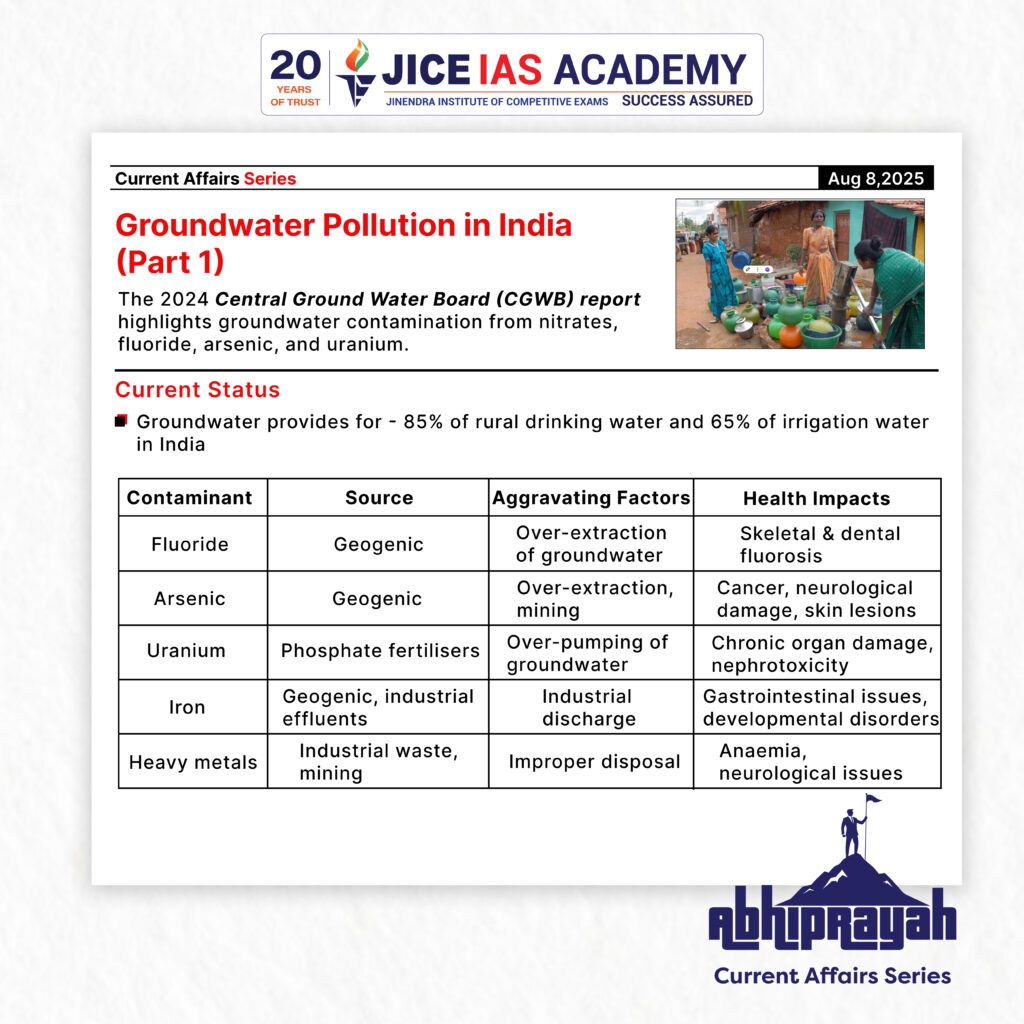
UPSC CURRENT AFFAIRS – 08th August 2025 Home / Groundwater Pollution in India – A Silent Public Health Emergency Why in News? The 2024 Central Ground Water Board (CGWB) report revealed that widespread contamination by nitrates, fluoride, arsenic, uranium, and industrial toxins leading to serious Groundwater contamination in India. Introduction Despite India’s abundant river systems and seasonal monsoons, groundwater remains the primary source of drinking water and irrigation. 85% of rural drinking water 65% of irrigation water However, unregulated extraction, industrial discharge, and agricultural chemical overuse have triggered an invisible crisis—groundwater pollution. Once considered nature’s purest reserve, it is now contaminated with nitrates, heavy metals, arsenic, fluoride, uranium, and pathogenic microbes, posing a grave public health and ecological challenge. Current Status – What the Data Shows Source: 2024 Annual Groundwater Quality Report – Central Ground Water Board (CGWB) Coverage: Samples from 440 districts Nitrates – Caused by overuse of chemical fertilisers and leaching from septic tanks; can lead to Blue Baby Syndrome (methemoglobinemia) in infants. Fluoride – Geogenic in origin, worsened by over-extraction; causes skeletal and dental fluorosis. Arsenic – Geogenic, but aggravated by over-extraction and mining; linked to cancer, neurological damage, and skin lesions. Uranium – Resulting from phosphate fertiliser use and over-pumping; causes chronic organ damage and nephrotoxicity. Iron – From industrial effluents and geogenic sources; leads to gastrointestinal and developmental disorders. Heavy metals – From industrial waste and mining; cause anaemia and neurological issues. Case Studies – ‘Groundwater Death Zones’ Budhpur, Baghpat (U.P.) – 13 deaths in 15 days from kidney failure; linked to paper and sugar mill discharges. Jalaun (U.P.) – Petroleum-like fluids in handpumps from suspected underground fuel leaks. Paikarapur, Bhubaneswar – Faulty sewage plant led to illness in 500+ residents. These incidents reflect weak enforcement, lack of monitoring, and institutional apathy. Health Impacts – Evidence from Studies Fluoride – 230 districts affected; 66 million people with skeletal fluorosis. Rajasthan alone has >11,000 affected villages. Arsenic – In Ballia (U.P.), 200 µg/L recorded—20× WHO limit—linked to >10,000 cancer cases. Nitrate – 56% of districts exceed safe levels; 28% rise in hospital admissions for nitrate toxicity (2018–2023). Uranium – Malwa region study: 66% samples pose health risks for children. Heavy Metals – ICMR-NIREH: high blood lead levels in children near industrial clusters. Why the Crisis Persists – Structural Gaps Institutional Fragmentation – CGWB, CPCB, SPCBs, Ministry of Jal Shakti work in silos. Weak Legal Framework – Water Act, 1974 scarcely covers groundwater; CGWB lacks statutory enforcement powers. Poor Monitoring – No real-time, publicly available data; contamination detected only after health crises. Over-Extraction – Lowers water table, concentrates pollutants, worsens salinity intrusion. Industrial & Urban Waste Mismanagement – Weak Zero Liquid Discharge enforcement, leaky septic systems, inadequate sewage treatment. Way Forward – Multi-Dimensional Strategy 1. Strengthen Legal & Institutional Framework Enact National Groundwater Pollution Control Framework. Empower CGWB with regulatory authority. Integrate efforts of CGWB, CPCB, SPCBs. 2. Modernize Monitoring Install real-time sensors, use remote sensing, maintain open-access platforms. Integrate with Health Management Information System (HMIS) for early outbreak detection. 3. Targeted Health & Remediation Measures Deploy arsenic & fluoride removal units at community level. Ensure piped safe water in high-risk zones. Promote nutritional interventions to reduce toxin absorption. 4. Regulate Agriculture & Industry Encourage organic and balanced nutrient management. Mandate strict compliance with Zero Liquid Discharge norms. Penalise illegal effluent discharges. 5. Community-Centric Water Governance Involve panchayats, water user associations, school programs in testing & awareness. Publicly display water quality data at village/town level. Conclusion India’s groundwater crisis is no longer about availability—it is about safety. With 600+ million people relying on it daily, contamination has become a public health emergency. The damage from pollutants like arsenic, fluoride, and heavy metals is irreversible, making prevention the only viable long-term solution. Introduction Economic Implications For Indian Exporters These reforms reduce transaction costs and compliance hurdles Encourage a more competitive and efficient export environment Promote value addition in key sectors like leather For Tamil Nadu The reforms particularly benefit the state’s leather industry, a major contributor to employment and exports Boost the marketability of GI-tagged E.I. leather, enhancing rural and traditional industries For Trade Policy These decisions indicate a shift from regulatory controls to policy facilitation Reinforce the goals of Make in India, Atmanirbhar Bharat, and India’s ambition to become a leading export power Recently, BVR Subrahmanyam, CEO of NITI Aayog, claimed that India has overtaken Japan to become the fourth-largest economy in the world, citing data from the International Monetary Fund (IMF). India’s rank as the world’s largest economy varies by measure—nominal GDP or purchasing power parity (PPP)—each with key implications for economic analysis. Significance and Applications
Universal banking- need and impact

UPSC CURRENT AFFAIRS – 08th August 2025 Home / Universal banking- need and impact Why in News? The Reserve Bank of India has granted in-principle approval to AU Small Finance Bank to transition into a universal bank. Introduction The Reserve Bank of India (RBI) has granted ‘in-principle’ approval to AU Small Finance Bank Ltd. (AUSFB) for transitioning from a Small Finance Bank (SFB) into a Universal Bank. This marks the first universal banking licence in 11 years, the last being issued in 2014 to Bandhan Bank and IDFC Bank (now IDFC First Bank). Concept of Universal Banking A Universal Bank is a financial institution that offers a wide range of financial services under one roof, including: Commercial banking (deposits, loans, payments) Investment banking (capital markets, advisory) Insurance services Asset management Other allied financial services In India, universal banks are regulated under the Banking Regulation Act, 1949 and supervised by the RBI. Difference Between SFB and Universal Bank Parameter Small Finance Bank (SFB) Universal Bank Target Segment Primarily underserved/unbanked population All customer segments – retail, corporate, institutional Scope of Operations Limited in size & activities; focus on small loans, priority sector Full range – retail, corporate, investment services Capital Requirement ₹200 crore minimum ₹1,000 crore minimum Geographic Spread Often regional, gradual expansion Nationwide operations Regulatory Status More restrictions on products Greater operational flexibility Regulatory Path for Transition 2014 Guidelines for SFBs: Provided an option for SFBs to convert into universal banks if they: Maintain minimum paid-up capital/net worth applicable to universal banks (₹1,000 crore). Have a satisfactory track record as an SFB for at least 5 years. Pass RBI’s due diligence on governance, risk management, and compliance. April 2024 Circular: Gave detailed clarity on eligibility criteria, governance norms, and transition procedures for SFBs aspiring for universal bank status. Need for Universal Banking Transition Broader Financial Inclusion – Allows the bank to serve not only small borrowers but also corporates, large businesses, and high-net-worth clients. Diversified Revenue Streams – Beyond microloans and priority lending, it can enter treasury operations, investment banking, and insurance. Economies of Scale – Nationwide reach with enhanced service portfolio. Increased Competitiveness – Ability to compete with large private banks like HDFC, ICICI, and Axis. Impact of AU SFB Becoming a Universal Bank Positive Impacts Wider Customer Base – Entry into corporate and institutional banking. Enhanced Profitability – Higher-margin products like wealth management, trade finance, and investment advisory. Operational Expansion – Freedom to expand nationwide without restrictions linked to small finance banking. Boost to Financial Sector – Encourages other successful SFBs to aim for universal banking. Investor Confidence – Signals strong governance, compliance, and business viability. Challenges Higher Compliance Burden – More stringent RBI norms on capital adequacy, risk management, and corporate governance. Operational Transition Risks – Integrating new services without affecting existing customer trust. Increased Competition – Facing well-established universal banks. Significance in the Banking Sector Policy Signal: RBI’s move indicates confidence in the maturity of India’s SFB model. Sectoral Evolution: May lead to a wave of SFBs applying for universal bank licences. Financial Inclusion to Financial Diversification: Shows the pathway from serving the unbanked to offering sophisticated banking services. Conclusion The RBI’s approval to AU Small Finance Bank to transition into a universal bank is a landmark development in India’s banking sector. It reflects the successful evolution of SFBs as strong, compliant, and growth-oriented entities. Introduction Economic Implications For Indian Exporters These reforms reduce transaction costs and compliance hurdles Encourage a more competitive and efficient export environment Promote value addition in key sectors like leather For Tamil Nadu The reforms particularly benefit the state’s leather industry, a major contributor to employment and exports Boost the marketability of GI-tagged E.I. leather, enhancing rural and traditional industries For Trade Policy These decisions indicate a shift from regulatory controls to policy facilitation Reinforce the goals of Make in India, Atmanirbhar Bharat, and India’s ambition to become a leading export power Recently, BVR Subrahmanyam, CEO of NITI Aayog, claimed that India has overtaken Japan to become the fourth-largest economy in the world, citing data from the International Monetary Fund (IMF). India’s rank as the world’s largest economy varies by measure—nominal GDP or purchasing power parity (PPP)—each with key implications for economic analysis. Significance and Applications
India’s “Goldilocks” Economy: A Critical Appraisal
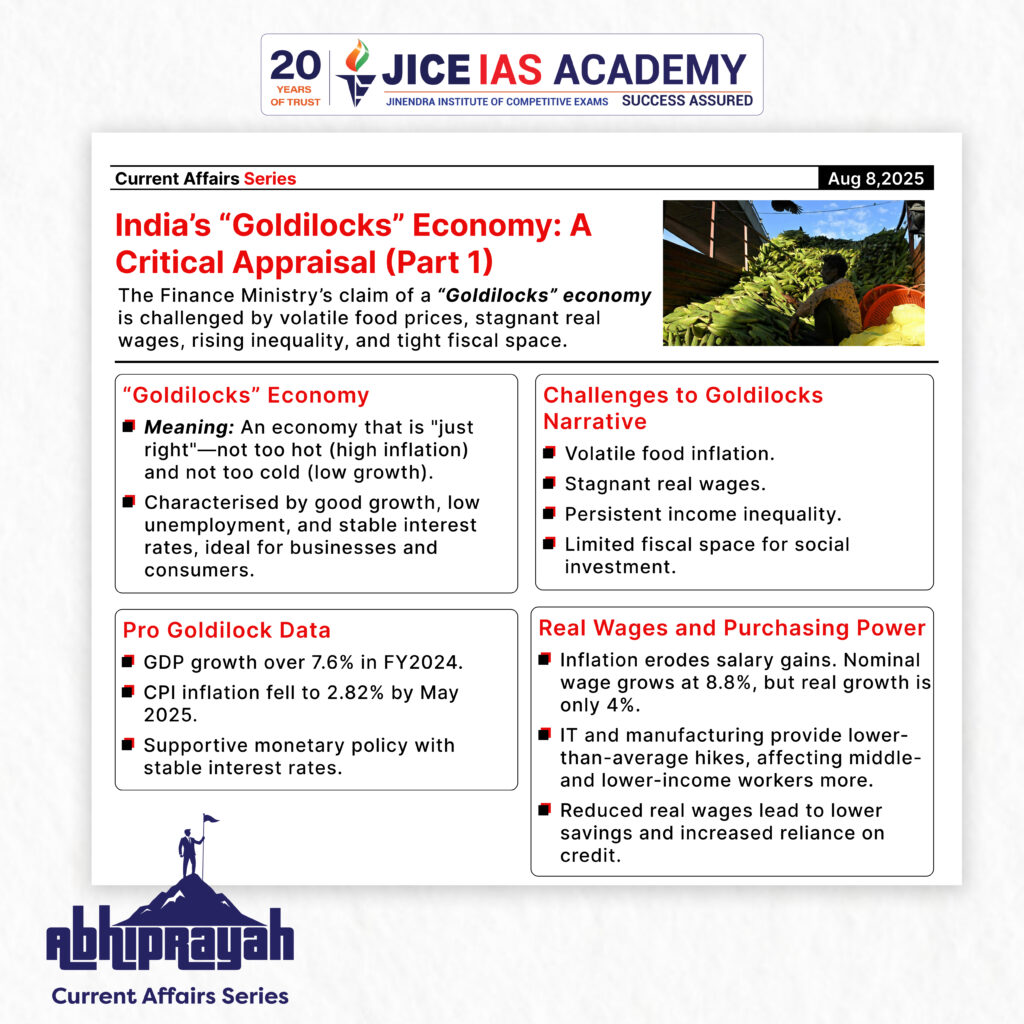
UPSC CURRENT AFFAIRS – 08th August 2025 Home / India’s “Goldilocks” Economy: A Critical Appraisal Why in News? The Finance Ministry’s recent claim of a “Goldilocks” Indian economy is contested due to volatile food prices, stagnant real wages, rising inequality, and limited fiscal space. Introduction A few weeks ago, the Ministry of Finance described the Indian economy as being in a “Goldilocks situation” — a phase of moderate growth, subdued inflation, and supportive monetary conditions. This sentiment was echoed by market analysts who pointed to a “mini-Goldilocks moment” marked by 6% GDP growth, stable corporate earnings, and peaking interest rates. While the macroeconomic backdrop, with India exiting FY2024 as a $3.6 trillion economy, appears buoyant, a deeper examination reveals that beneath the surface lie structural vulnerabilities that challenge the notion of a universally beneficial equilibrium. Understanding the “Goldilocks” Context In economic terms, a Goldilocks situation refers to an economy that is not too hot (high inflation) and not too cold (low growth) — but just right. For India, the headline indicators suggest: High GDP growth – over 7.6% in FY2024. Headline inflation under control – CPI falling from 4.8% (May 2024) to 2.82% (May 2025). Supportive monetary policy – stable interest rates. However, these aggregates may mask distributional inequalities, volatile price trends, and fiscal constraints. Inflation Dynamics: Beyond Headline Stability 1. Divergence between CPI and Food Inflation While CPI declined within RBI’s comfort zone, the Consumer Food Price Index (CFPI) told a different story: Oct 2024 – CPI: 6.21%, CFPI: 10.87%. Aug 2024 – CPI: 3.65%, CFPI: 5.66%. Given that food accounts for nearly 50% of household consumption — especially for lower-income groups — this volatility erodes purchasing power. 2. Impact on Households Persistent high food inflation forces households to: Cut dietary quality. Reduce other essential spending. Increase borrowing. Even though CFPI fell to 99% by May 2025, the preceding spikes created uncertainty, complicating budgeting and savings. 3. Core Inflation Concerns Economists like Pronab Sen argue that policy should focus on core inflation (excluding food and fuel), as it reflects sustained price pressures on housing, education, transport, and personal care — sectors critical to household budgets. Real Wages and Purchasing Power: The “Silent Squeeze” 1. Gap between Nominal and Real Wages 2023 – Nominal wage growth: 9.2%, Real wage growth: 2.5%. 2020 – Nominal: 4.4%, Real: -0.4%. 2025 projection – Nominal: 8.8%, Real: 4%. Inflation erodes half the nominal salary gains, limiting improvement in living standards. 2. Sectoral Variations Industries like IT services, manufacturing, and consumer goods often give lower-than-average hikes, deepening the gap for middle- and lower-income workers. 3. Household Impact Reduced real wages: Lower savings rates. Curtail discretionary spending. Increase dependence on consumer loans and credit cards. Income Inequality: K-Shaped Recovery Gini Coefficient Trends AY13: 0.489 → AY16: 0.435 → AY23 forecast: 0.402. While the decline suggests improvement, taxable income data under-represents the informal sector, where inequality is often worse. 2. Post-Pandemic Divergence – K shaped recovery Social and Economic Risks Persistent inequality: Weakens social cohesion. Limits access to quality education & healthcare. Depresses long-term domestic demand. Fiscal Space and Debt Concerns 1. Fiscal Deficit Trajectory Government aims to reduce: Fiscal deficit: 6.4% (2022–23) → 4.4% (2025–26 BE). Revenue deficit: 4% → 1.5% in same period. Primary deficit: 3% → 0.8%. 2. Risks of High Public Debt Debt-to-GDP: ~81% (2022–23), above FRBM target of 60%. High interest payments crowd out social and infrastructure spending. Potential upward pressure on interest rates → private investment slowdown. 3. Implication for Citizens Future risks include: Reduced public expenditure on welfare. Higher taxation to service debt. Complicating the Goldilocks Narrative While macro indicators present a stable outlook, four interlinked fragilities persist: Volatile food inflation reducing purchasing power. Stagnant real wages for the majority. Persistent income inequality despite GDP growth. Narrow fiscal space limiting social investment. These factors mean that the “sweet spot” is not equally experienced across socio-economic strata. Way Forward Inflation Management Beyond Averages Strengthen agri-supply chains to reduce food price volatility. Targeted subsidies for vulnerable households during food price spikes. Boost Real Wage Growth Labour-intensive manufacturing push. Skill enhancement programmes linked to industry demand. Address Inequality Expand formal sector job creation. Progressive taxation and improved social safety nets. Fiscal Prudence with Social Investment Balance consolidation with growth-supportive spending. Prioritise education, healthcare, and infrastructure. Conclusion The “Goldilocks” description, while appealing, oversimplifies India’s macroeconomic reality. GDP growth and low headline inflation do not automatically translate into broad-based prosperity. True economic equilibrium is achieved when real incomes rise, inequality narrows, inflation remains stable across essentials, and fiscal policy sustains growth without over-leveraging the future. India’s challenge is not to preserve a fleeting “just right” macro moment but to build a durable foundation for inclusive, resilient, and equitable growth. Introduction Economic Implications For Indian Exporters These reforms reduce transaction costs and compliance hurdles Encourage a more competitive and efficient export environment Promote value addition in key sectors like leather For Tamil Nadu The reforms particularly benefit the state’s leather industry, a major contributor to employment and exports Boost the marketability of GI-tagged E.I. leather, enhancing rural and traditional industries For Trade Policy These decisions indicate a shift from regulatory controls to policy facilitation Reinforce the goals of Make in India, Atmanirbhar Bharat, and India’s ambition to become a leading export power Recently, BVR Subrahmanyam, CEO of NITI Aayog, claimed that India has overtaken Japan to become the fourth-largest economy in the world, citing data from the International Monetary Fund (IMF). India’s rank as the world’s largest economy varies by measure—nominal GDP or purchasing power parity (PPP)—each with key implications for economic analysis. Significance and Applications
U.S.-India Trade Dispute: Trump’s 50% Tariffs and India’s Oil Imports from Russia
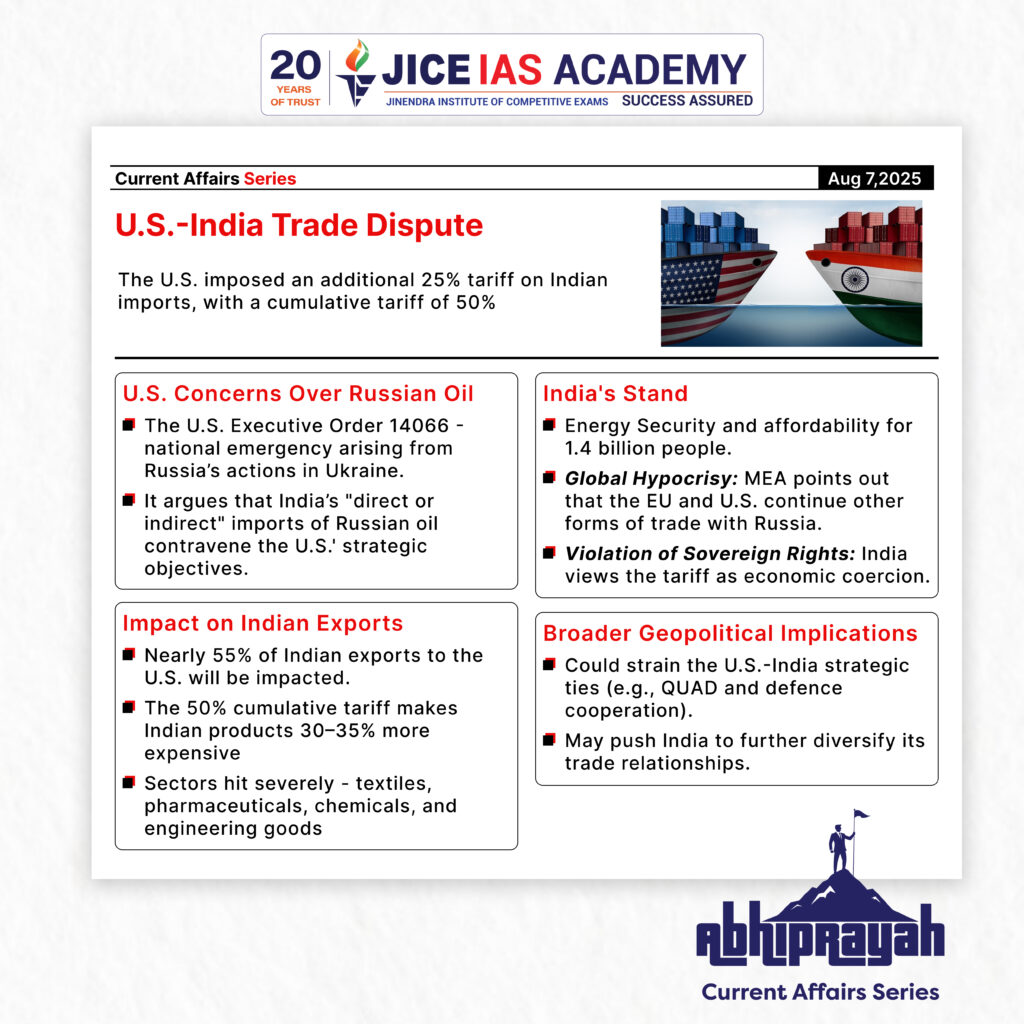
UPSC CURRENT AFFAIRS – 07th August 2025 Home / U.S.-India Trade Dispute: Trump’s 50% Tariffs and India’s Oil Imports from Russia Why in News? U.S. President Donald Trump signed an executive order imposing an additional 25% tariff on Indian imports, citing India’s continued oil trade with Russia. Background In a significant escalation of trade tensions, U.S. President Donald Trump signed an executive order on August 6, 2025, imposing an additional 25% tariff on imports from India. This is in retaliation for India’s continued imports of crude oil from Russia, which the U.S. views as undermining its sanctions regime on Moscow. Combined with an earlier 25% tariff announced on July 31, Indian goods entering the U.S. will now face a total tariff of 50% — a move India calls “unfair, unjustified, and unreasonable.” This development threatens not only India’s export competitiveness but also the prospects of a bilateral trade deal currently under negotiation. Background: U.S. Concerns Over Russian Oil The U.S. executive order cites Executive Order 14066, related to the national emergency arising from Russia’s actions in Ukraine. It argues that India’s “direct or indirect” imports of Russian oil contravene the U.S.’ strategic objectives. While the U.S. has sanctioned Russia heavily since its invasion of Ukraine in 2022, countries like India and China have continued energy trade with Russia, citing economic and energy security reasons. India’s Stand on Russian Oil Imports India’s Ministry of External Affairs (MEA) has strongly objected to the tariff hike, reiterating the following: Energy Security Priority: India imports oil based on market dynamics, with the goal of securing affordable energy for 1.4 billion people. Global Hypocrisy: The MEA pointed out that both the EU and the U.S. continue other forms of trade with Russia, often in greater monetary value than India’s oil imports. Violation of Sovereign Rights: India sees the U.S. tariff move as an attempt at economic coercion, interfering with sovereign decision-making. Impact on Indian Exports According to the Federation of Indian Export Organisations (FIEO): Nearly 55% of Indian exports to the U.S. will be impacted. The 50% cumulative tariff makes Indian products 30–35% more expensive compared to competing countries not facing such duties. This undermines India’s competitive edge, especially in sectors like textiles, pharmaceuticals, chemicals, and engineering goods. Ongoing Trade Negotiations at Risk Both sides are in the process of negotiating the first tranche of a Bilateral Trade Agreement (BTA), expected by fall 2025. The next round of talks is scheduled for August 25 in New Delhi. However, trade experts warn that negotiations cannot succeed under threats or acts of unilateral coercion. Experts say: India should avoid immediate retaliation and adopt a measured approach. It should consider curbing Russian oil imports only if economically viable, not due to U.S. pressure. Broader Geopolitical Implications The move may signal a harder line by the U.S. on non-aligned countries engaging with Russia, even economically. It could strain strategic ties between the U.S. and India, which are currently strengthening through platforms like QUAD and defence cooperation. India might now diversify its trade relationships further, seeking alternative markets and reliable partnerships outside of the West. Introduction Economic Implications For Indian Exporters These reforms reduce transaction costs and compliance hurdles Encourage a more competitive and efficient export environment Promote value addition in key sectors like leather For Tamil Nadu The reforms particularly benefit the state’s leather industry, a major contributor to employment and exports Boost the marketability of GI-tagged E.I. leather, enhancing rural and traditional industries For Trade Policy These decisions indicate a shift from regulatory controls to policy facilitation Reinforce the goals of Make in India, Atmanirbhar Bharat, and India’s ambition to become a leading export power Recently, BVR Subrahmanyam, CEO of NITI Aayog, claimed that India has overtaken Japan to become the fourth-largest economy in the world, citing data from the International Monetary Fund (IMF). India’s rank as the world’s largest economy varies by measure—nominal GDP or purchasing power parity (PPP)—each with key implications for economic analysis. Significance and Applications
Eco-Friendly Solution to Teak Pest Crisis: KFRI’s HpNPV Technology
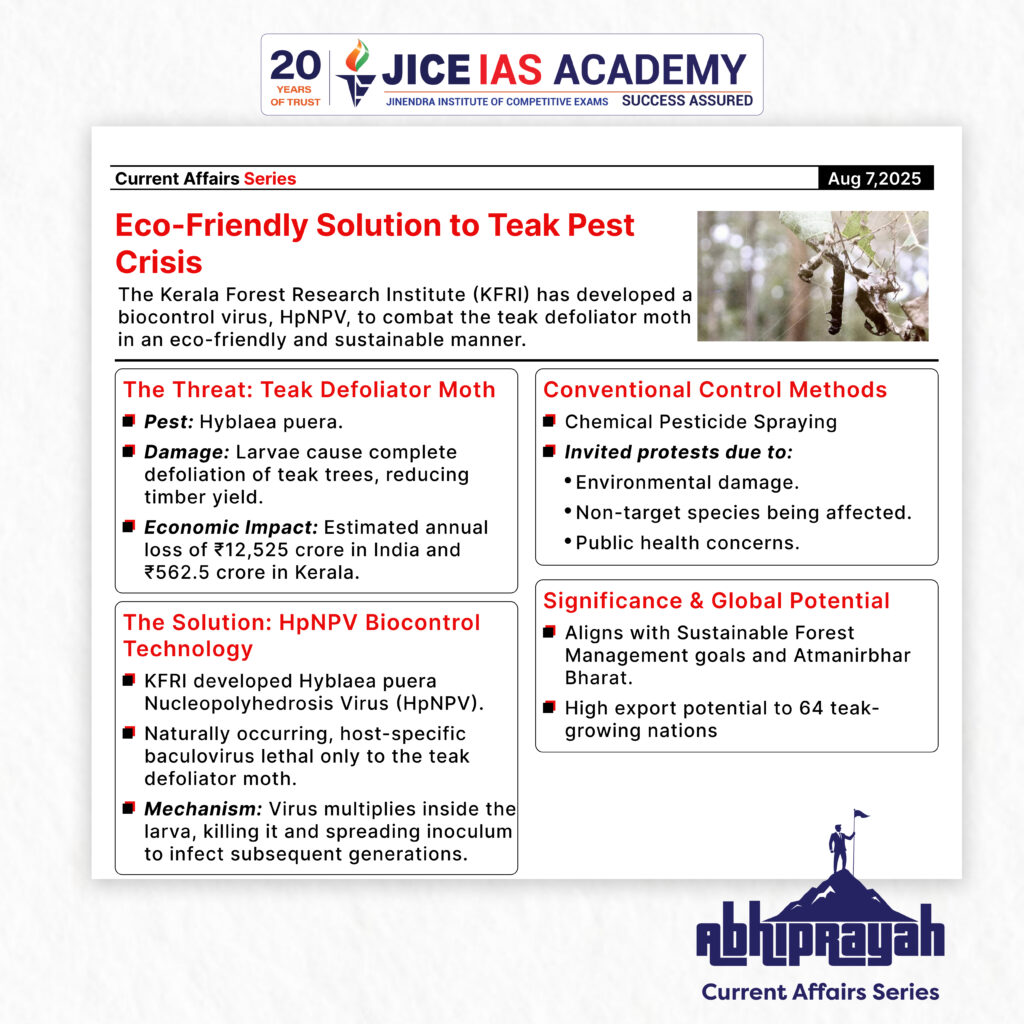
UPSC CURRENT AFFAIRS – 07th August 2025 Home / Eco-Friendly Solution to Teak Pest Crisis: KFRI’s HpNPV Technology Why in News? The Kerala Forest Research Institute (KFRI) has developed a biocontrol virus, HpNPV, to combat the teak defoliator moth in an eco-friendly and sustainable manner. Introduction Teak (Tectona grandis) is one of the most valuable tropical hardwoods in the world. However, teak plantations in India and other countries face a persistent threat from the teak defoliator moth (Hyblaea puera), a pest known for its cyclical mass outbreaks that devastate teak foliage. Conventional chemical pest control methods have proven both environmentally harmful and socially contentious. In a groundbreaking development, the Kerala Forest Research Institute (KFRI) has identified, mass-produced, and patented a host-specific virus, the Hyblaea puera Nucleopolyhedrosis Virus (HpNPV), which can effectively and sustainably control this pest without harming the broader ecosystem. Teak Defoliator Moth (Hyblaea puera) Nature of Damage The larvae of H. puera feed voraciously on teak leaves. Infestation can happen up to six times annually, resulting in: Complete defoliation of trees. Trees diverting energy towards leaf regeneration instead of growth. Resultant reduction in timber yield and weakened plant health. Economic Impact Estimated loss of 3 cubic metres of wood per hectare per year. This translates to: ₹562.5 crore annual loss in Kerala. ₹12,525 crore in India. Conventional Control Methods and Their Limitations Chemical Pesticide Spraying Tried in Konni (Kerala) and Barnavappara (Madhya Pradesh). Invited protests due to: Environmental damage. Non-target species being affected. Public health concerns. KFRI even raised ethical concerns at the 1980 Forestry Conference with a paper titled “The problem of teak defoliator: to spray or not to spray?” HpNPV Biocontrol Technology Hyblaea puera Nucleopolyhedrosis Virus (HpNPV) is: A naturally occurring baculovirus. Highly host-specific – targets only teak defoliator larvae. Lethal to the larvae; causes internal virus multiplication. Eco-friendly and non-toxic to other forest organisms. How it Works The virus multiplies a trillion times inside a single larva. Once the larva dies, its body releases a large quantity of inoculum into the environment. Even sub-lethal infections become lethal in the next generation, due to vertical transmission. Application is most effective in the early larval stage during seasonal outbreaks. Field Validation and Technology Transfer Field Trials Conducted in Nilambur (Malappuram, Kerala) — India’s cradle of teak. Proved successful in preventing large-scale defoliation. Implementation Readiness KFRI has transferred outbreak monitoring and virus application protocols to the Forest Department. Formal adoption awaited at the departmental level. National and Global Significance India-Specific Importance India is a major teak-growing country with a large public-sector forestry base. The technology aligns with: Sustainable forest management goals. National Biodiversity Action Plan. Atmanirbhar Bharat in Biotech and Environment Sectors. Export Potential Out of 64 teak-growing countries, many have banned chemical pesticides. This positions HpNPV as a desirable export product, especially for: Myanmar Laos Thailand African and Latin American nations with new teak plantations. Global Showcasing KFRI will present HpNPV at the KSCSTE R&D Summit 2025, to be held on August 7, Thiruvananthapuram, projecting it as: A scalable model for forest pest management. A biotechnological solution with global relevance. Way Forward Policy Adoption: Forest departments across teak-growing states (Kerala, Madhya Pradesh, Odisha, Andhra Pradesh) should formally adopt the HpNPV protocol. Scale-Up Production: Infrastructure for mass multiplication of the virus should be set up in collaboration with bio-control labs and startups. Global Partnerships: India can leverage this innovation under South-South cooperation, positioning itself as a leader in green biotechnology. Public Awareness: Educating forestry personnel and communities will enhance the adoption of this safe alternative. Regulatory Support: National and state regulatory bodies should expedite approvals for field-level deployment. Introduction Economic Implications For Indian Exporters These reforms reduce transaction costs and compliance hurdles Encourage a more competitive and efficient export environment Promote value addition in key sectors like leather For Tamil Nadu The reforms particularly benefit the state’s leather industry, a major contributor to employment and exports Boost the marketability of GI-tagged E.I. leather, enhancing rural and traditional industries For Trade Policy These decisions indicate a shift from regulatory controls to policy facilitation Reinforce the goals of Make in India, Atmanirbhar Bharat, and India’s ambition to become a leading export power Recently, BVR Subrahmanyam, CEO of NITI Aayog, claimed that India has overtaken Japan to become the fourth-largest economy in the world, citing data from the International Monetary Fund (IMF). India’s rank as the world’s largest economy varies by measure—nominal GDP or purchasing power parity (PPP)—each with key implications for economic analysis. Significance and Applications
New Species of Non-Venomous Rain Snake Discovered in Mizoram

UPSC CURRENT AFFAIRS – 07th August 2025 Home / New Species of Non-Venomous Rain Snake Discovered in Mizoram Why in News? A new species of non-venomous rain-loving snake, Smithophis leptofasciatus (narrow-banded rain snake), has been discovered in Mizoram’s tropical forests. Introduction A team of Indian herpetologists from Mizoram University and Help Earth, a Guwahati-based biodiversity conservation group, has discovered a new species of rain-loving, non-venomous snake from the tropical forests of Mizoram. The discovery was published in the reputed journal Taprobanica: The Journal of Asian Biodiversity. This new species, named the Narrow-banded Rain Snake (Smithophis leptofasciatus), is a significant addition to the genus Smithophis and underlines the ecological importance of Northeast India as a biodiversity hotspot. Key Details of the Discovery 1. Taxonomic Classification Genus: Smithophis Species: leptofasciatus Common Name: Narrow-banded Rain Snake Proposed Mizo Name: ‘Ruahrul’, meaning “rain snake” Etymology: The species name “leptofasciatus” is derived from a hybrid of Greek and Latin words, meaning “narrow-banded,” which refers to its distinct dorsal pattern. 2. Morphological and Genetic Features Appearance: Shiny black body with narrow, incomplete creamish-white or yellowish-lime transverse bands. Size: Small, slender-bodied. Distinction: Initially confused with Smithophis bicolor, but molecular and morphological analyses confirmed it as a separate species. Reproductive Data: A gravid female in captivity laid six eggs, offering rare data on the reproduction of rain snakes. 3. Habitat and Behaviour Location Found: Humid, shaded microhabitats in elevated tropical forests of Mizoram, especially near small streams. Elevation: Between 900 and 1,200 meters above sea level. Behaviour: Semi-aquatic, nocturnal, and active during monsoon season, hence the name “rain snake.” Significance of the Discovery 1. Biodiversity Richness of Northeast India This is the third species of the genus Smithophis discovered in Mizoram: Smithophis atemporalis Smithophis mizoramensis Smithophis leptofasciatus (newly described) Reinforces Mizoram’s role as a center of speciation and endemism, making it a crucial region in the Indo-Myanmar Biodiversity Hotspot. 2. Scientific Contribution Enhances knowledge about the little-known genus Smithophis. Highlights the importance of integrating field observations with genetic research for accurate taxonomy. Provides new reproductive data, previously undocumented in this genus. 3. Conservation Concerns Habitat Specificity: The snake is forest-dependent and occupies a narrow elevational range, making it vulnerable to habitat loss and degradation. The study recommends long-term surveys, ecological monitoring, and habitat protection efforts to conserve the species. The species’ restricted distribution and reliance on monsoonal ecosystems may also render it sensitive to climate change impacts. Policy Implications Encourages scientific institutions and biodiversity groups to conduct microhabitat-level studies in lesser-known ecosystems. May prompt the State and Central governments to declare biodiversity-rich zones as conservation reserves. Conclusion The discovery of the narrow-banded rain snake (Smithophis leptofasciatus) from Mizoram is not just a taxonomic addition but a reminder of the rich but fragile ecosystems of Northeast India. As more such species come to light through field science and molecular taxonomy, it becomes essential to balance developmental activities with ecosystem conservation. Protecting such endemic species requires collaborative efforts among research institutions, local communities, and policy-makers to ensure the long-term sustainability of India’s ecological wealth. Introduction Economic Implications For Indian Exporters These reforms reduce transaction costs and compliance hurdles Encourage a more competitive and efficient export environment Promote value addition in key sectors like leather For Tamil Nadu The reforms particularly benefit the state’s leather industry, a major contributor to employment and exports Boost the marketability of GI-tagged E.I. leather, enhancing rural and traditional industries For Trade Policy These decisions indicate a shift from regulatory controls to policy facilitation Reinforce the goals of Make in India, Atmanirbhar Bharat, and India’s ambition to become a leading export power Recently, BVR Subrahmanyam, CEO of NITI Aayog, claimed that India has overtaken Japan to become the fourth-largest economy in the world, citing data from the International Monetary Fund (IMF). India’s rank as the world’s largest economy varies by measure—nominal GDP or purchasing power parity (PPP)—each with key implications for economic analysis. Significance and Applications
Microplastic Pollution Along India’s Coasts
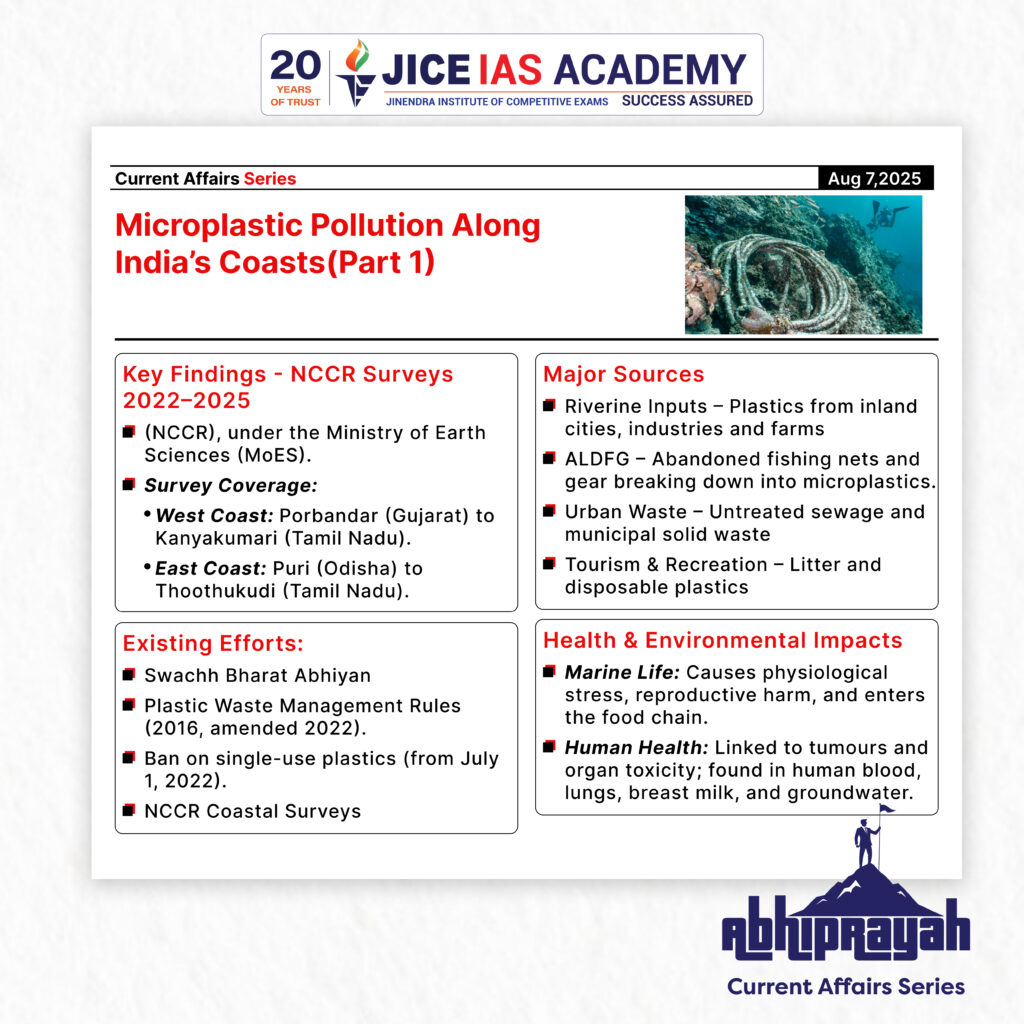
UPSC CURRENT AFFAIRS – 07th August 2025 Home / Microplastic Pollution Along India’s Coasts Why in News? The National Centre for Coastal Research (NCCR) found that riverine inputs and abandoned fishing gear are the major sources of microplastic pollution along India’s coasts. Introduction Microplastic pollution is emerging as a major environmental concern in India, especially along its vast coastline. On August 6, 2025, Union Minister Jitendra Singh informed the Lok Sabha that “riverine inputs” and abandoned, lost, and discarded fishing gear (ALDFG) are the major sources of microplastic pollution along India’s coasts. This statement aligns with the findings of scientific studies and recent surveys conducted by national research institutions. What Are Microplastics? Microplastics are tiny plastic particles ranging in size from 1 micrometre (µm) to 5 millimetres (mm). They are broadly classified into two types: Primary microplastics: Manufactured at a microscopic size for specific uses, such as microbeads found in cosmetics, personal care products, and industrial abrasives. Secondary microplastics: Result from the breakdown of larger plastic items due to exposure to sunlight, wind, wave action, and microbial activity. These particles are pervasive in marine and terrestrial ecosystems and are known to persist for centuries due to their non-biodegradable nature. Findings from Coastal Surveys (2022–2025) Conducted by: National Centre for Coastal Research (NCCR), under the Ministry of Earth Sciences (MoES). Coverage: West Coast: 19 transects surveyed from Porbandar (Gujarat) to Kanyakumari (Tamil Nadu). East Coast: 25 transects sampled from Puri (Odisha) to Thoothukudi (Tamil Nadu). Key Findings: Major Sources: Riverine inputs: Rivers carry microplastics from inland urban, agricultural, and industrial sources to the ocean. ALDFG: Fishing nets, lines, and gear abandoned or lost at sea break down into microplastics. Media surveyed: Both water and sediment samples were analyzed to assess the concentration and types of microplastic particles. Health and Environmental Impacts Marine and Aquatic Life: Microplastics can accumulate in the bodies of marine organisms, leading to physiological stress, reproductive issues, and even death. They can also enter the food chain, impacting larger species including humans. Human Health: Studies have increasingly linked microplastic exposure to tumours, hormonal disruption, and organ toxicity. They have been found in human blood, lungs, breast milk, and now, groundwater and food items. Microplastics in Food and Water 1. Delhi Groundwater Contamination A recent study reported microplastic contamination in Delhi’s groundwater, raising concerns about the spread of microplastics into drinking water sources. 2. FSSAI’s Investigation The Food Safety and Standards Authority of India (FSSAI) commissioned a project in 2024 to: Assess microplastic contamination in food products. Develop detection methods and propose safety standards. 3. Toxics Link Study Environmental group Toxics Link tested 10 salt and sugar samples. Microplastics were found in all samples. Forms identified: fibres, pellets, films, and fragments. Contributing Factors to Coastal Microplastic Pollution Source Description Riverine Inputs Plastics from inland cities, industries, and agricultural runoff enter rivers and eventually the sea. ALDFG Fishing nets and gear, often made of nylon and synthetic polymers, disintegrate and contribute to microplastic pollution. Urban Waste Untreated sewage and municipal solid waste often carry microplastics to water bodies. Tourism and Recreational Activities Plastics used in packaging, disposable products, and tourist litter contribute to local pollution. Policy and Research Interventions Existing Efforts: Swachh Bharat Abhiyan and Plastic Waste Management Rules (2016, amended 2022). Ban on single-use plastics (from July 1, 2022). NCCR Coastal Surveys: Key step in mapping microplastic hotspots. Needed Measures: Stricter enforcement of waste segregation and recycling. Improved fishing gear tracking and retrieval mechanisms. Public awareness campaigns about the dangers of plastic littering. Standards for microplastics in food and water by FSSAI and BIS (Bureau of Indian Standards). Conclusion Microplastic pollution in India is no longer a latent threat—it is visible, measurable, and increasingly harmful. The evidence from the coastal surveys, studies in Delhi’s groundwater, and microplastic traces in daily-use food products paints a grim picture. Effective mitigation will require coordinated action across ministries, scientific innovation, and citizen responsibility. As India progresses towards sustainable development, tackling microplastic pollution must be a national environmental priority. Introduction Economic Implications For Indian Exporters These reforms reduce transaction costs and compliance hurdles Encourage a more competitive and efficient export environment Promote value addition in key sectors like leather For Tamil Nadu The reforms particularly benefit the state’s leather industry, a major contributor to employment and exports Boost the marketability of GI-tagged E.I. leather, enhancing rural and traditional industries For Trade Policy These decisions indicate a shift from regulatory controls to policy facilitation Reinforce the goals of Make in India, Atmanirbhar Bharat, and India’s ambition to become a leading export power Recently, BVR Subrahmanyam, CEO of NITI Aayog, claimed that India has overtaken Japan to become the fourth-largest economy in the world, citing data from the International Monetary Fund (IMF). India’s rank as the world’s largest economy varies by measure—nominal GDP or purchasing power parity (PPP)—each with key implications for economic analysis. Significance and Applications
RBI’s August 2025 Monetary Policy Review
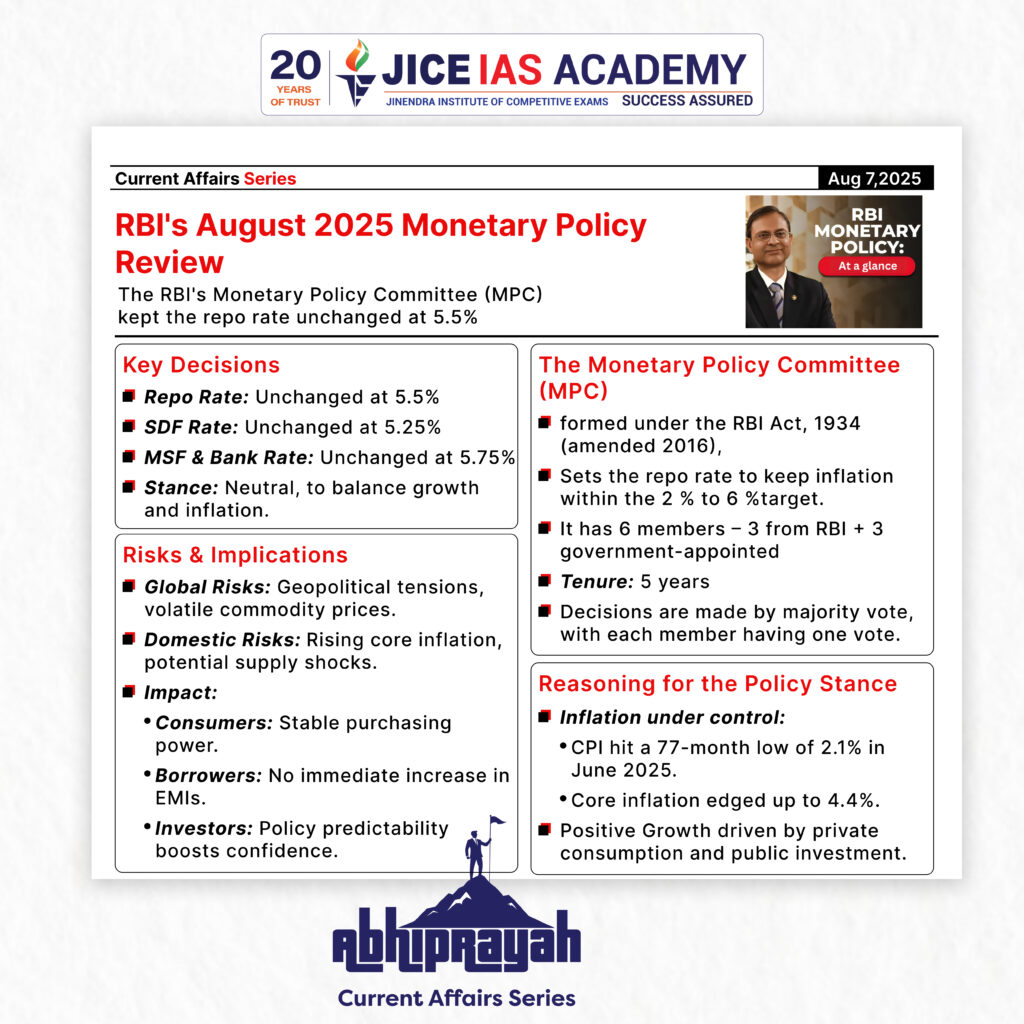
UPSC CURRENT AFFAIRS – 07th August 2025 Home / RBI’s August 2025 Monetary Policy Review Why in News? The RBI’s Monetary Policy Committee (MPC) kept the repo rate unchanged at 5.5% while projecting GDP growth at 6.5% and CPI inflation at 3.1% for 2025-26 amid global uncertainties. About Monetary Policy Committee (MPC) The Monetary Policy Committee (MPC) is a statutory body formed under the RBI Act, 1934 (amended in 2016) to decide the benchmark interest rate (repo rate) required to contain inflation within a target level. Composition: 6 members total 3 from RBI: RBI Governor (Chairperson) Deputy Governor (in charge of monetary policy) One RBI officer nominated by the Central Board 3 appointed by the Government of India Independent members with expertise in economics, banking, or finance Set by Government of India in consultation with RBI for 5-year terms (currently till March 2026) Each member has one vote and Decisions taken by majority Key Decisions of the MPC Recently, the Reserve Bank of India’s (RBI) Monetary Policy Committee (MPC) decided to maintain the repo rate at 5.5%, while continuing its neutral policy stance, indicating a careful balancing act between supporting economic growth and ensuring price stability. Repo Rate: Held steady at 5.5% Standing Deposit Facility (SDF): Unchanged at 5.25% Marginal Standing Facility (MSF) & Bank Rate: Maintained at 5.75% Stance: Neutral, allowing flexibility to respond to evolving macroeconomic conditions Reasoning Behind the MPC’s Decision The decision reflects a data-driven and cautious approach by the RBI, keeping in view the evolving domestic and global economic conditions: 1. Inflation Trends CPI Headline Inflation dropped to a 77-month low of 2.1% (y-o-y) in June 2025, mainly due to: A significant drop in food inflation Improved agricultural output Effective supply-side measures Core inflation, however, inched up slightly to 4.4% in June due to: Rising gold prices Revised CPI Forecast for 2025-26: 3.1% (earlier 3.7%), still within RBI’s target band of 4% ± 2% Q2: 2.1% Q3: 3.1% Q4: 4.4% Q1:2026-27: 4.9% 2. Growth Outlook Domestic growth remains resilient, supported by: Private consumption Public infrastructure investment However, external headwinds continue to pose risks: Geopolitical tensions Trade barriers Volatile global financial markets GDP Growth Projection for 2025-26: 6.5% retained Q1: 6.5% Q2: 6.7% Q3: 6.6% Q4: 6.3% Q1:2026-27 projected at 6.6% Growth risks remain evenly balanced RBI Governor’s Highlights RBI Governor Sanjay Malhotra emphasized the MPC’s dual role: Supporting growth in the face of global uncertainty Ensuring price stability, the primary mandate of monetary policy Monetary Policy Framework: A Balancing Act India’s Flexible Inflation Targeting (FIT) framework mandates the RBI to: Maintain CPI inflation at 4%, with a band of ±2% Support growth while ensuring monetary and financial stability The August 2025 decision reflects: Confidence in the domestic growth momentum Cautious optimism about continued inflation moderation Willingness to act proactively as global dynamics shift Risks and Challenges Global risks: Unresolved geopolitical conflicts Sluggish disinflation in advanced economies Volatile commodity prices Continued trade tensions Domestic concerns: Core inflation creeping up Risk of supply shocks (e.g., monsoon variability, food inflation) Implications for the Indian Economy Area Likely Impact Consumers Lower inflation = stable purchasing power Borrowers Stable repo rate = no rise in EMIs for now Investors Predictability in policy = increased confidence Government Encouragement for continued capital spending Financial Markets Stability in interest rates = reduced volatility Forward Guidance The RBI emphasized: Continued agility and data-dependence Transparent, credible communication Focus on medium-term price stability while nurturing growth. Introduction Economic Implications For Indian Exporters These reforms reduce transaction costs and compliance hurdles Encourage a more competitive and efficient export environment Promote value addition in key sectors like leather For Tamil Nadu The reforms particularly benefit the state’s leather industry, a major contributor to employment and exports Boost the marketability of GI-tagged E.I. leather, enhancing rural and traditional industries For Trade Policy These decisions indicate a shift from regulatory controls to policy facilitation Reinforce the goals of Make in India, Atmanirbhar Bharat, and India’s ambition to become a leading export power Recently, BVR Subrahmanyam, CEO of NITI Aayog, claimed that India has overtaken Japan to become the fourth-largest economy in the world, citing data from the International Monetary Fund (IMF). India’s rank as the world’s largest economy varies by measure—nominal GDP or purchasing power parity (PPP)—each with key implications for economic analysis. Significance and Applications