UPSC CURRENT AFFAIRS – 07th July 2025

Home / UPSC / Current Affairs / Agriculture Can Employ Youth, Boost Global GDP by 1.4% Amid Labour Shortage Risk

Agriculture Can Employ Youth, Boost Global GDP by 1.4% Amid Labour Shortage Risk

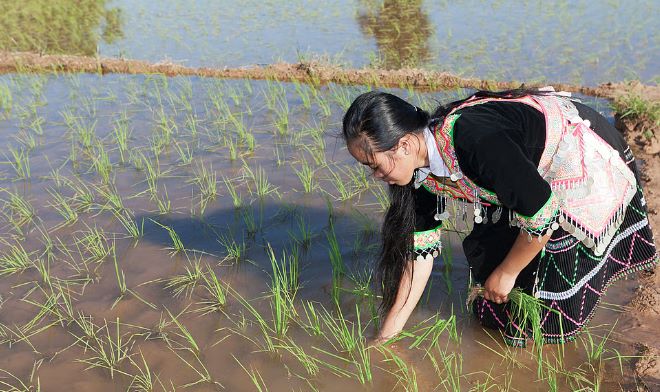
woman kneeling in a flooded rice paddy

Why in News?

  • The FAO’s 2025 report highlights the potential of agrifood systems to address global youth unemployment. 

Introduction

  • The Food and Agriculture Organization (FAO) of the United Nations released its report titled “The Status of Youth in Agrifood Systems” on July 3, 2025. 
  • The report underscores the urgent need to address global youth unemployment by tapping into the transformative potential of agrifood systems. 
  • It highlights how agriculture and allied sectors can be instrumental in generating employment, enhancing food security, and promoting inclusive economic growth.

Key Findings of the Report

Rising Youth Unemployment

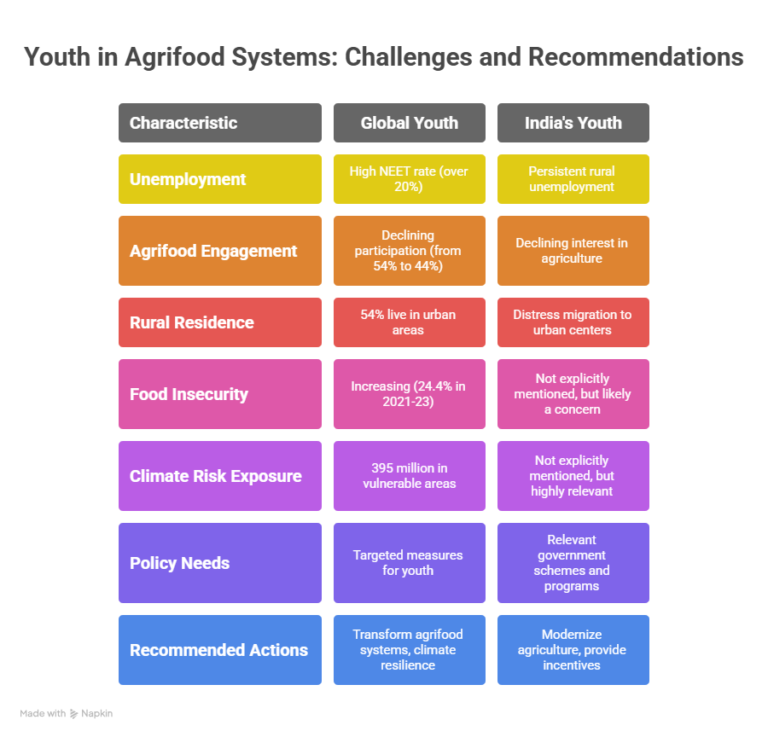
  • According to the report, over 20 percent of the world’s 1.3 billion youth (aged 15–24) are classified as NEET – Not in Employment, Education, or Training. 
  • This issue is particularly acute among youth aged 20 to 24 years, who are transitioning from education into the workforce.

Untapped Potential of Agrifood Systems

  • The FAO estimates that increasing youth engagement in agrifood systems could lead to a 1.4 percent increase in global GDP
  • Notably, about 45 percent of this GDP boost would come directly from increased employment and productivity in agriculture and related food systems.
  • Agrifood systems are defined broadly to include:
    • Crop and livestock production
    • Fisheries and aquaculture
    • Food storage, processing, distribution, and marketing
    • Supporting services such as agri-tech, logistics, and finance

Declining Youth Participation in Agriculture

  • Despite its potential, the share of working youth engaged in agrifood systems has declined from 54 percent in 2005 to 44 percent in 2025
  • Nevertheless, a higher proportion of youth (44 percent) than adults (38 percent) still rely on agrifood systems for their livelihoods.

Major Concerns Raised

Looming Labour Shortage in Rural Agrifood Systems

The report warns of a significant labour shortage in rural agricultural areas. As of 2025:

  • 54 percent of youth live in urban areas, especially in regions such as East Asia.
  • In countries with industrialised agrifood systems, rural youth represent only 5 percent of the population.
  • This demographic shift raises concerns about the future sustainability of agricultural production, especially in developing countries.

High Levels of Youth Food Insecurity

Food insecurity among young people is rising at an alarming rate:

  • It increased from 16.7 percent during 2014–16 to 24.4 percent during 2021–23.
  • Youth living in low- and lower-middle-income countries are the most affected, particularly in sub-Saharan Africa.

Exposure to Climate Risks

The report estimates that 395 million rural youth are living in areas expected to suffer from climate change-induced declines in agricultural productivity. These include:

  • Regions vulnerable to droughts, floods, and heatwaves
  • Economies dependent on traditional and subsistence agriculture
  • Areas in sub-Saharan Africa, South Asia, and Southeast Asia
youth in agrifood systems challenges and recommendations

FAO's Recommendations

1. Transform Agrifood Systems

The report calls for a transformation of agrifood systems from traditional, labour-intensive models to modern, climate-smart, technology-driven systems. This transformation should include:

  • Access to education and vocational training in agriculture
  • Improved land rights and access to productive resources
  • Affordable finance, digital tools, and market linkages

2. Targeted Policy Measures for Youth

Governments are urged to introduce policy incentives that:

  • Make agriculture an attractive career option for youth
  • Support youth entrepreneurship and agri-startups
  • Ensure youth participation in policy-making and decision-making related to food systems

3. Climate Resilience and Green Jobs

To adapt to the worsening climate crisis, youth must be equipped with:

  • Skills in sustainable agriculture and resource management
  • Knowledge of climate-resilient crop varieties and water-efficient techniques
  • Opportunities in green jobs and circular economy models

Implications for India

Youth Demographics and Agrarian Economy

India has one of the largest youth populations in the world, with nearly 50 percent of its population under the age of 25. However, the country also faces:

  • Persistent rural unemployment
  • Declining interest in agriculture among the youth
  • Distress migration from villages to urban centres

Relevant Government Schemes and Programs

Several Indian policies and schemes align with FAO’s recommendations:

  • PM-KUSUM: Promotes solar energy use in agriculture
  • Agri-Clinics and Agri-Business Centres (ACABC): Encourages agri-entrepreneurship
  • Skill India Mission and PMKVY: Provides vocational training
  • Start-up India and Stand-up India: Supports innovation and youth-led agritech ventures
  • National Rural Livelihoods Mission (NRLM): Focuses on youth self-employment in rural areas

Suggested Way Forward

India needs to:

  • Modernize agriculture through digital technologies, AI, drone use, and precision farming
  • Provide targeted subsidies, training, and incentives for young farmers and entrepreneurs
  • Strengthen rural infrastructure and supply chains
  • Promote climate-adaptive and low-carbon agricultural practices

Economic Implications

For Indian Exporters

  • These reforms reduce transaction costs and compliance hurdles
  • Encourage a more competitive and efficient export environment
  • Promote value addition in key sectors like leather

For Tamil Nadu

  • The reforms particularly benefit the state’s leather industry, a major contributor to employment and exports
  • Boost the marketability of GI-tagged E.I. leather, enhancing rural and traditional industries

For Trade Policy

  • These decisions indicate a shift from regulatory controls to policy facilitation

Reinforce the goals of Make in India, Atmanirbhar Bharat, and India’s ambition to become a leading export power

Recently, BVR Subrahmanyam, CEO of NITI Aayog, claimed that India has overtaken Japan to become the fourth-largest economy in the world, citing data from the International Monetary Fund (IMF). 

India’s rank as the world’s largest economy varies by measure—nominal GDP or purchasing power parity (PPP)—each with key implications for economic analysis.

Significance and Applications

Leave a Reply

Your email address will not be published. Required fields are marked *

Call Us Now !

Copyright © JICE ACADEMY FOR EXCELLENCE PRIVATE LIMITED