

UPSC CURRENT AFFAIRS – 03rd August 2025
Bird Mortality Raises Ecological Concerns Amid India's Wind Energy Expansion
Why in News?
- India added 5 GW of wind energy in the first half of 2025, reflecting an 82% year-on-year growth. A recent study by the Wildlife Institute of India (WII) has raised serious concerns about bird mortality due to wind turbines in the Thar Desert, Rajasthan, particularly in biodiversity-rich and migratory zones.
Key Findings from the WII Study
- The study was conducted across 3,000 sq. km in Jaisalmer, home to 900 turbines and 272 bird species.
- Researchers found 124 bird carcasses around 90 wind turbines, estimating 4,464 bird deaths per 1,000 sq. km per year.
- Control sites away from turbines showed no bird carcasses, strengthening the case for direct mortality from turbine structures.
- Raptors and the critically endangered Great Indian Bustard were the most affected groups.
- The Thar Desert lies on the Central Asian Flyway, a major global migratory route.
Ecological Concerns and Patterns
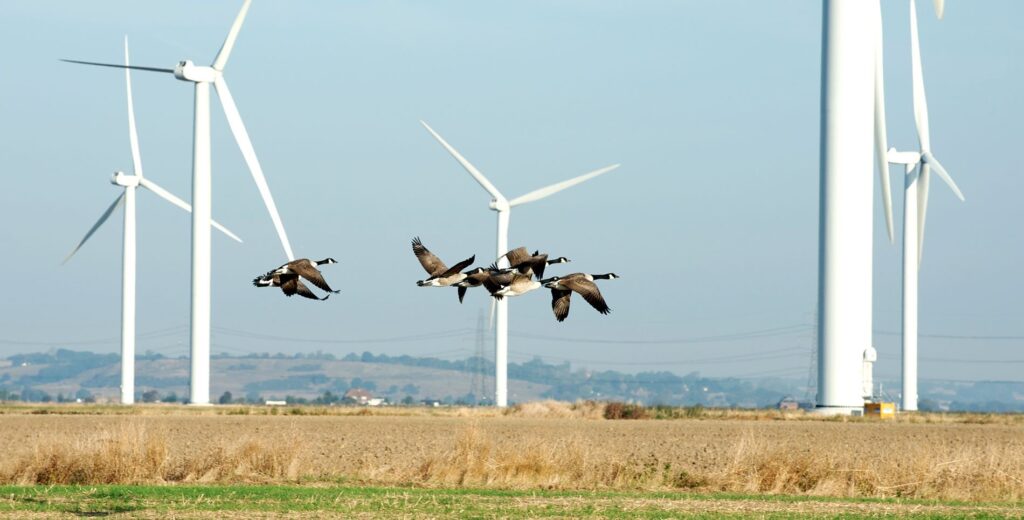
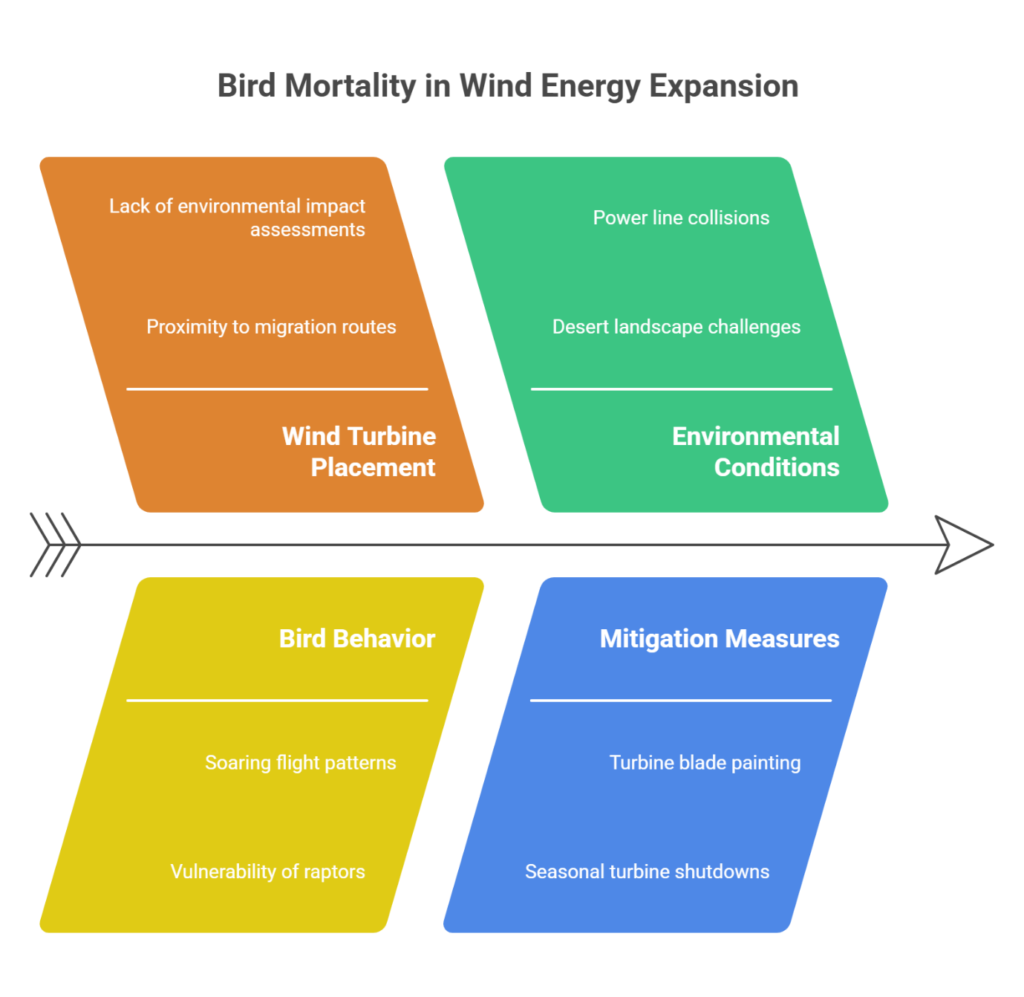
- Bird collisions occur due to the blade rotation and turbine height intersecting with migratory and soaring bird flight paths.
- Raptors are especially at risk due to their long lifespan, low reproduction rate, and soaring behavior.
- Associated infrastructure like power lines adds to mortality, which earlier studies had overlooked.
- The estimate of 1.24 bird deaths per turbine per month in Thar is far higher than previous national averages.
Existing Tools and Mitigation Measures
- AVISTEP (Avian Sensitivity Tool for Energy Planning) maps India’s regions into low to very high avian sensitivity zones.
- Suggested mitigation measures include painting one turbine blade for better visibility, seasonal shutdowns, and avoidance-based siting.
- However, in India, onshore wind projects are not required to conduct Environmental Impact Assessments (EIA), leaving biodiversity impacts unaccounted for.
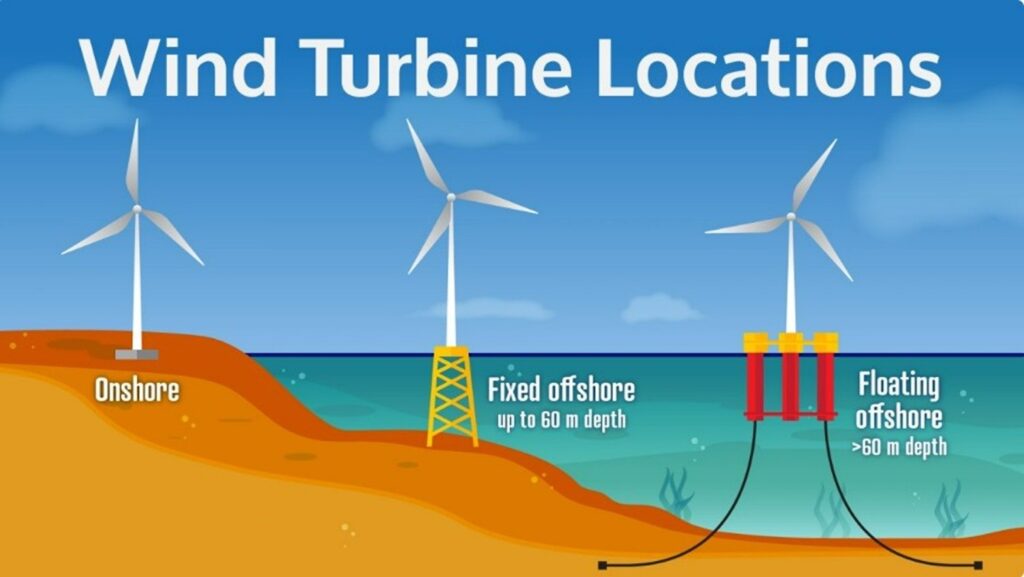
Shift to Offshore Wind Energy
- India aims to install 30 GW of offshore wind capacity by 2030, starting with 4 GW bids in Gujarat and Tamil Nadu.
- Offshore wind is seen as an alternative to land acquisition bottlenecks but brings marine ecological risks, including noise pollution, habitat disruption, and turbidity.
- The National Offshore Wind Energy Policy mandates EIAs for these projects.
National Offshore Wind Energy Policy (2015)
|
- A rapid EIA for the Gulf of Khambhat identified marine mammals and birds in the region but underestimated avian migratory sensitivity, as per experts.
Policy Implications and India’s Balancing Act
- India’s rapid renewable expansion must be aligned with ecological sustainability and biodiversity conservation.
- The findings underscore the need to revise renewable energy regulations, especially for onshore wind, by mandating site-specific ecological assessments.
- With India positioned along major migratory routes, its policies and practices could serve as a model for biodiversity-conscious energy transitions across the Global South.
- A careful balance between energy security and ecological integrity will be key to achieving long-term sustainability goals
Raptors and the Critically Endangered Great Indian Bustard
GIBs are vulnerable to collisions with power lines and wind turbine blades due to poor frontal vision and low flight heights, making wind energy projects in their habitats a major conservation threat. |
AVISTEP – Avian Sensitivity Tool for Energy Planning
Though AVISTEP provides a guiding framework, it is not legally binding, and ground-level ecological studies are still necessary before project approvals |

3rd UN conference on landlocked countries
UPSC CURRENT AFFAIRS – 08th August 2025 Home / 3rd UN conference on landlocked countries Why in News? At the

Issue of soapstone mining in Uttarakhand’s Bageshwar
UPSC CURRENT AFFAIRS – 08th August 2025 Home / Issue of soapstone mining in Uttarakhand’s Bageshwar Why in News? Unregulated

Groundwater Pollution in India – A Silent Public Health Emergency
UPSC CURRENT AFFAIRS – 08th August 2025 Home / Groundwater Pollution in India – A Silent Public Health Emergency Why

Universal banking- need and impact
UPSC CURRENT AFFAIRS – 08th August 2025 Home / Universal banking- need and impact Why in News? The Reserve Bank

India’s “Goldilocks” Economy: A Critical Appraisal
UPSC CURRENT AFFAIRS – 08th August 2025 Home / India’s “Goldilocks” Economy: A Critical Appraisal Why in News? The Finance

U.S.-India Trade Dispute: Trump’s 50% Tariffs and India’s Oil Imports from Russia
UPSC CURRENT AFFAIRS – 07th August 2025 Home / U.S.-India Trade Dispute: Trump’s 50% Tariffs and India’s Oil Imports from

Eco-Friendly Solution to Teak Pest Crisis: KFRI’s HpNPV Technology
UPSC CURRENT AFFAIRS – 07th August 2025 Home / Eco-Friendly Solution to Teak Pest Crisis: KFRI’s HpNPV Technology Why in

New Species of Non-Venomous Rain Snake Discovered in Mizoram
UPSC CURRENT AFFAIRS – 07th August 2025 Home / New Species of Non-Venomous Rain Snake Discovered in Mizoram Why in

Introduction
Economic Implications
For Indian Exporters
- These reforms reduce transaction costs and compliance hurdles
- Encourage a more competitive and efficient export environment
- Promote value addition in key sectors like leather
For Tamil Nadu
- The reforms particularly benefit the state’s leather industry, a major contributor to employment and exports
- Boost the marketability of GI-tagged E.I. leather, enhancing rural and traditional industries
For Trade Policy
- These decisions indicate a shift from regulatory controls to policy facilitation
Reinforce the goals of Make in India, Atmanirbhar Bharat, and India’s ambition to become a leading export power
Recently, BVR Subrahmanyam, CEO of NITI Aayog, claimed that India has overtaken Japan to become the fourth-largest economy in the world, citing data from the International Monetary Fund (IMF).
India’s rank as the world’s largest economy varies by measure—nominal GDP or purchasing power parity (PPP)—each with key implications for economic analysis.