UPSC CURRENT AFFAIRS – 21th June 2025

Home / UPSC / Current Affairs / Expert Panel Formed to Curb Coaching Dependence and Reform Exams

Expert Panel Formed to Curb Coaching Dependence and Reform Exams

Why in News?

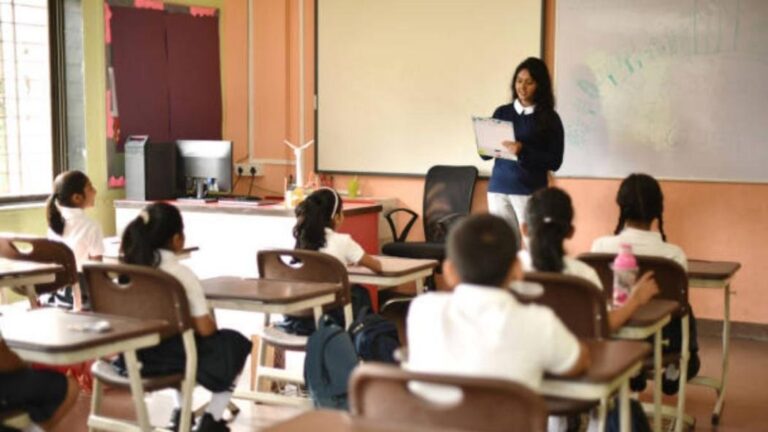
  • The Union Education Ministry has constituted a high-level panel to address students’ overdependence on coaching centres and recommend reforms in entrance examinations and school education.

Background

  • In light of the growing concerns about the excessive dependence of students on private coaching centres, the Union Education Ministry has constituted a high-level panel chaired by Higher Education Secretary Vineet Joshi
  • The committee has been tasked with recommending systemic reforms to reduce the coaching culture, enhance the quality of school education, and evaluate the fairness and impact of competitive entrance examinations.

Key Members of the Committee

The committee is a multidisciplinary body comprising:

  • Chairperson: Vineet Joshi, Secretary, Department of Higher Education
  • Members:
    • Chairman, Central Board of Secondary Education (CBSE)
    • Joint Secretary (Institutions), Department of School Education and Literacy
    • Representatives from premier institutions like IIT Madras, IIT Kanpur, and NIT Trichy
    • Representative from the National Council of Educational Research and Training (NCERT)
    • Three school principals (from Kendriya Vidyalaya, Navodaya Vidyalaya, and a Private School nominated by the Centre)
  • Member Secretary: Joint Secretary from the Department of Higher Education

Terms of Reference (ToR) of the Committee

The committee has been given a broad and crucial mandate to address systemic challenges and recommend reforms across the following areas:

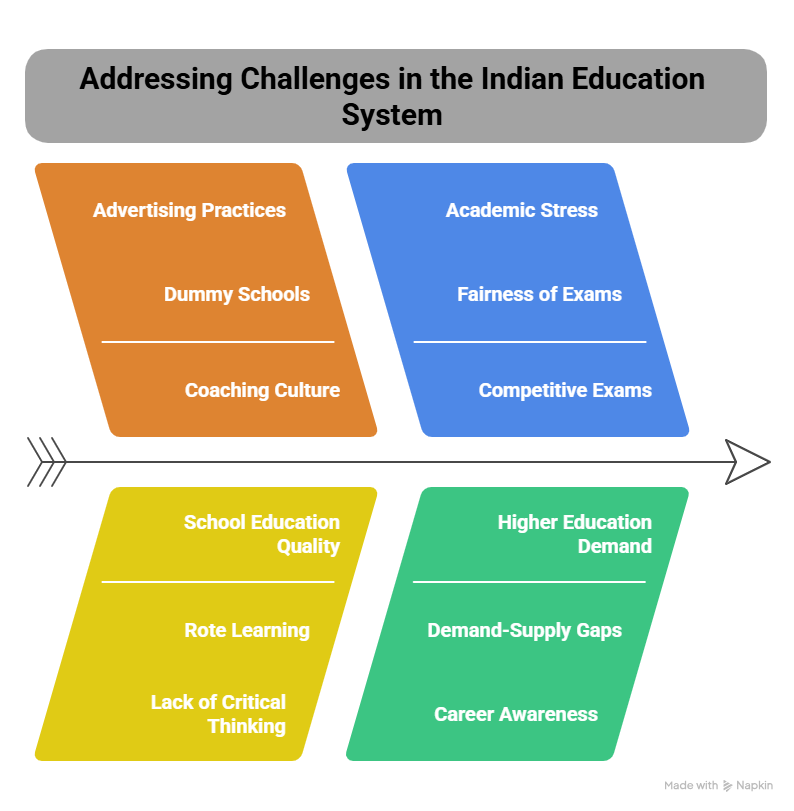
1. Curbing Coaching Centre Dependence

  • Identify root causes behind the rise of private coaching centres.
  • Examine the phenomenon of “dummy schools”, where students enroll formally but attend full-time coaching, bypassing regular schooling.
  • Recommend policy interventions to strengthen formal schooling and reduce coaching dependency.

2. Reforming School Education Pedagogy

  • Address the gaps in critical thinking, logical reasoning, analytical ability, and innovation in current school curricula.
  • Suggest ways to reduce the dominance of rote learning practices.
  • Assess the role and impact of formative assessments in both school and higher education and their influence on conceptual understanding.

3. Review of Competitive Entrance Exams

  • Evaluate the effectiveness and fairness of competitive entrance exams in relation to school education outcomes.
  • Assess their role in promoting the coaching industry and influencing academic stress.

4. Addressing Demand-Supply Gaps in Higher Education

  • Study the rising demand for quality higher education and limited availability of seats in elite institutions such as IITs and NITs.
  • Analyze how this imbalance fuels the growth of coaching centres.

5. Career Awareness and Guidance

  • Evaluate the level of awareness among students and parents about diverse career pathways beyond a few elite institutions.
  • Recommend strategies to strengthen career counselling services in schools and colleges.

6. Regulating EdTech and Coaching Practices

  • Examine the advertising practices of coaching centres, especially:
    • Misleading success claims
    • Selective promotion of toppers
  • Propose a regulatory framework to ensure ethical practices in educational advertising.

Significance of the Panel

This initiative comes at a time when India is witnessing:

  • Surge in mental health issues among aspirants due to academic pressure.
  • Reports of student suicides in coaching hubs like Kota.
  • Rapid commercialisation of education through EdTech platforms and coaching chains.

The panel’s recommendations are expected to have far-reaching implications on:

  • Curriculum reform under NEP 2020
  • Policy regulation of the coaching industry
  • Equitable access to quality education
  • Student well-being and academic integrity

Way Forward

This panel reflects the government’s commitment to restoring the primacy of formal schooling and making education student-centric rather than exam-centric. Its findings and suggestions could lead to:

  • Revamping of entrance exam structure
  • Strengthened schooling system
  • Increased emphasis on holistic development
  • Reduction in the exploitative coaching culture

The committee’s work aligns with the goals of the National Education Policy (NEP) 2020, particularly the emphasis on conceptual learning, equity, and universal access to quality education.

Economic Implications

For Indian Exporters

  • These reforms reduce transaction costs and compliance hurdles
  • Encourage a more competitive and efficient export environment
  • Promote value addition in key sectors like leather

For Tamil Nadu

  • The reforms particularly benefit the state’s leather industry, a major contributor to employment and exports
  • Boost the marketability of GI-tagged E.I. leather, enhancing rural and traditional industries

For Trade Policy

  • These decisions indicate a shift from regulatory controls to policy facilitation

Reinforce the goals of Make in India, Atmanirbhar Bharat, and India’s ambition to become a leading export power

Recently, BVR Subrahmanyam, CEO of NITI Aayog, claimed that India has overtaken Japan to become the fourth-largest economy in the world, citing data from the International Monetary Fund (IMF). 

India’s rank as the world’s largest economy varies by measure—nominal GDP or purchasing power parity (PPP)—each with key implications for economic analysis.

Significance and Applications

Leave a Reply

Your email address will not be published. Required fields are marked *

Call Us Now !

Copyright © JICE ACADEMY FOR EXCELLENCE PRIVATE LIMITED