UPSC CURRENT AFFAIRS – 11th July 2025
Himachal Pradesh floods and their climate change linkage
Why in News?
- The recent floods in Himachal Pradesh illustrate the growing vulnerability of the Himalayan region to climate change-induced extreme weather events like cloudbursts, landslides, and flash floods.
Introduction
- The recent floods in Himachal Pradesh have once again exposed the fragile state of the Himalayan ecosystem.
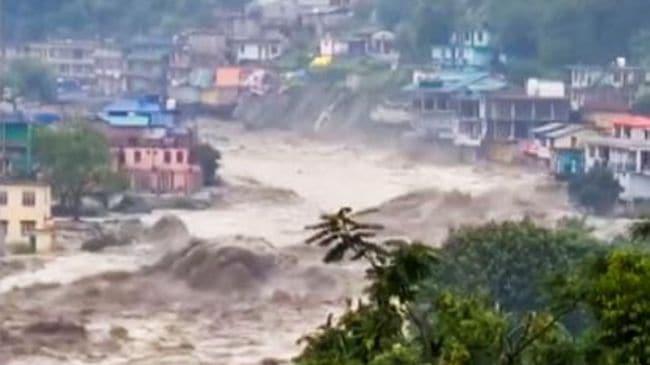
- With cloudbursts, landslides, and flash floods causing widespread devastation across Mandi, Kullu, and Chamba districts, the episode underscores the intensifying impact of climate change on India’s mountainous regions.
- Over ₹700 crore in economic damages and significant human and ecological loss demand urgent policy and adaptive responses.
The Immediate Disaster: Heavy Rainfall and Cloudbursts
During the early phase of the monsoon, Himachal Pradesh received torrential rainfall — over 71 mm within a few hours — triggering multiple cloudbursts. These sudden, localized downpours led to:
- Landslides and road blockages, disrupting connectivity and emergency response.
- Flash floods, sweeping through valleys and settlements.
- Loss of lives, homes, and farmland, displacing thousands and destroying infrastructure.
This event is not isolated but is part of a growing pattern in the Himalayan region.
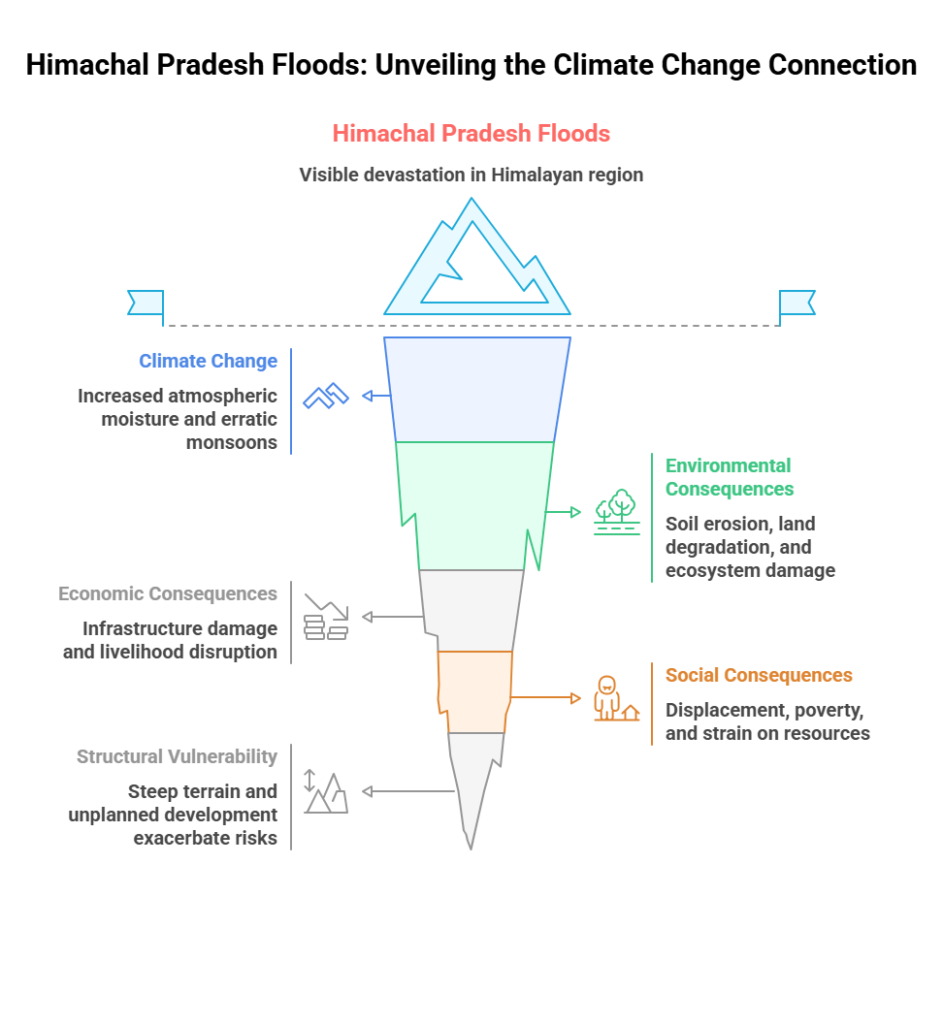
Structural Vulnerability of the Himalayan Region
The Himalayas are particularly sensitive to extreme events due to:
- Steep terrain, which accelerates runoff.
- Unstable slopes, prone to landslides.
- Unplanned development, such as road cutting, hydroelectric projects, and deforestation.
The Climate Connection: Science Behind the Extremes
- Increased Atmospheric Moisture
- A direct effect of global warming is the increase in atmospheric water vapour. For every 1°C rise in temperature, the atmosphere can hold 7% more moisture, leading to heavier rainfall when precipitation occurs.
- Frequent and Severe Cloudbursts
- Cloudbursts — intense rainfall events within a short duration — have become more common. In the Himalayas, steep slopes channel water rapidly into rivers, making even short bursts of rain deadly.
- Glacier Melting and River Swelling
- Glaciers in the Himalayas are melting at an alarming rate, with some losing up to 30 meters of thickness annually. This increases river flow during summers, amplifying the flood risk when coupled with monsoonal rainfall.
- Erratic Monsoons
Climate models show changing monsoon behaviour:
- Earlier onset and uneven distribution.
- Shorter but more intense rainy spells, increasing the risk of both floods and droughts.
Environmental and Economic Consequences
- Environmental Toll
- Soil erosion and sedimentation degrade land quality.
- Agricultural land is inundated, impacting food production.
- Forests and ecosystems suffer irreversible damage due to landslides and debris flow.
- Economic and Livelihood Loss
- Estimated ₹700 crore+ in losses.
- Road and bridge destruction cut off access to remote villages.
- Livelihoods disrupted in tourism, agriculture, and small businesses.
- Social Consequences
- Thousands displaced with food and shelter insecurity.
- Increased poverty and vulnerability in already fragile regions.
- Strain on state disaster management capacity and public finances.
Adaptive Strategies for Climate Resilience
- Climate-Resilient Infrastructure
- Reinforced roads and bridges to withstand flash floods.
- Flood protection structures, like embankments and levees.
- Slope stabilization techniques in landslide-prone areas.
- Community-Based Disaster Preparedness
- Awareness campaigns to educate locals on flood risks.
- Training for emergency response and first aid.
- Local resource mapping for evacuation and relief.
- Early Warning Systems
- Invest in satellite-based forecasting and automated weather stations.
- Disseminate alerts via SMS, radio, and community networks.
- Sustainable Land and Water Management
- Afforestation and reforestation to bind soil and slow runoff.
- Rainwater harvesting to regulate water flow and store excess.
- Avoiding construction in vulnerable flood plains and steep slopes.
- Climate-Smart Agriculture
- Promotion of flood-resistant crop varieties.
- Shifting cropping patterns and schedules to suit changing monsoons.
- Soil conservation techniques, such as contour ploughing and cover cropping.
Broader Policy Imperatives
- Climate Policy Reform
- Integrate climate resilience into state planning and disaster budgeting.
- Encourage renewable energy to mitigate further climate change.
- Ecosystem-Based Adaptation
- Wetland restoration, which absorbs excess rainfall.
- Forest conservation, which stabilizes slopes and reduces runoff.
- Interstate and International Coordination
Given the Himalayan watershed spans India, Nepal, and Bhutan, coordinated planning on:
- River basin management,
- Data sharing on weather and glaciers,
- Joint infrastructure and disaster planning is critical.
Conclusion
- The Himachal Pradesh floods are not merely a natural calamity but a climate emergency warning.
- They highlight the need for systemic adaptation, sustainable development, and community involvement to protect lives, livelihoods, and ecosystems in the Himalayan belt.
- A multi-pronged strategy — combining technology, traditional knowledge, infrastructure upgrades, and ecological preservation — is essential to build long-term resilience in the face of an uncertain climate future.

3rd UN conference on landlocked countries
UPSC CURRENT AFFAIRS – 08th August 2025 Home / 3rd UN conference on landlocked countries Why in News? At the
Issue of soapstone mining in Uttarakhand’s Bageshwar
UPSC CURRENT AFFAIRS – 08th August 2025 Home / Issue of soapstone mining in Uttarakhand’s Bageshwar Why in News? Unregulated
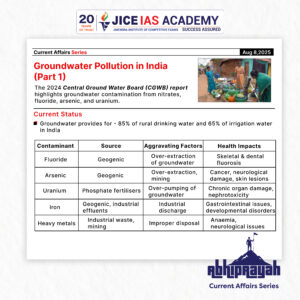
Groundwater Pollution in India – A Silent Public Health Emergency
UPSC CURRENT AFFAIRS – 08th August 2025 Home / Groundwater Pollution in India – A Silent Public Health Emergency Why

Universal banking- need and impact
UPSC CURRENT AFFAIRS – 08th August 2025 Home / Universal banking- need and impact Why in News? The Reserve Bank

India’s “Goldilocks” Economy: A Critical Appraisal
UPSC CURRENT AFFAIRS – 08th August 2025 Home / India’s “Goldilocks” Economy: A Critical Appraisal Why in News? The Finance

U.S.-India Trade Dispute: Trump’s 50% Tariffs and India’s Oil Imports from Russia
UPSC CURRENT AFFAIRS – 07th August 2025 Home / U.S.-India Trade Dispute: Trump’s 50% Tariffs and India’s Oil Imports from
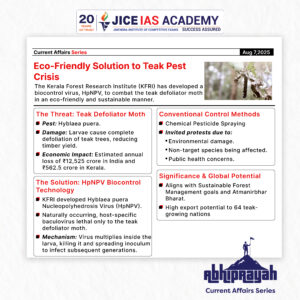
Eco-Friendly Solution to Teak Pest Crisis: KFRI’s HpNPV Technology
UPSC CURRENT AFFAIRS – 07th August 2025 Home / Eco-Friendly Solution to Teak Pest Crisis: KFRI’s HpNPV Technology Why in

New Species of Non-Venomous Rain Snake Discovered in Mizoram
UPSC CURRENT AFFAIRS – 07th August 2025 Home / New Species of Non-Venomous Rain Snake Discovered in Mizoram Why in

Economic Implications
For Indian Exporters
- These reforms reduce transaction costs and compliance hurdles
- Encourage a more competitive and efficient export environment
- Promote value addition in key sectors like leather
For Tamil Nadu
- The reforms particularly benefit the state’s leather industry, a major contributor to employment and exports
- Boost the marketability of GI-tagged E.I. leather, enhancing rural and traditional industries
For Trade Policy
- These decisions indicate a shift from regulatory controls to policy facilitation
Reinforce the goals of Make in India, Atmanirbhar Bharat, and India’s ambition to become a leading export power
Recently, BVR Subrahmanyam, CEO of NITI Aayog, claimed that India has overtaken Japan to become the fourth-largest economy in the world, citing data from the International Monetary Fund (IMF).
India’s rank as the world’s largest economy varies by measure—nominal GDP or purchasing power parity (PPP)—each with key implications for economic analysis.