India ends transshipment facility for Bangladesh exports, cites congestion​

Home / UPSC / Current Affairs / India ends transshipment facility for Bangladesh exports, cites congestion

UPSC CURRENT AFFAIRS – 10th April 2025

Why in News?

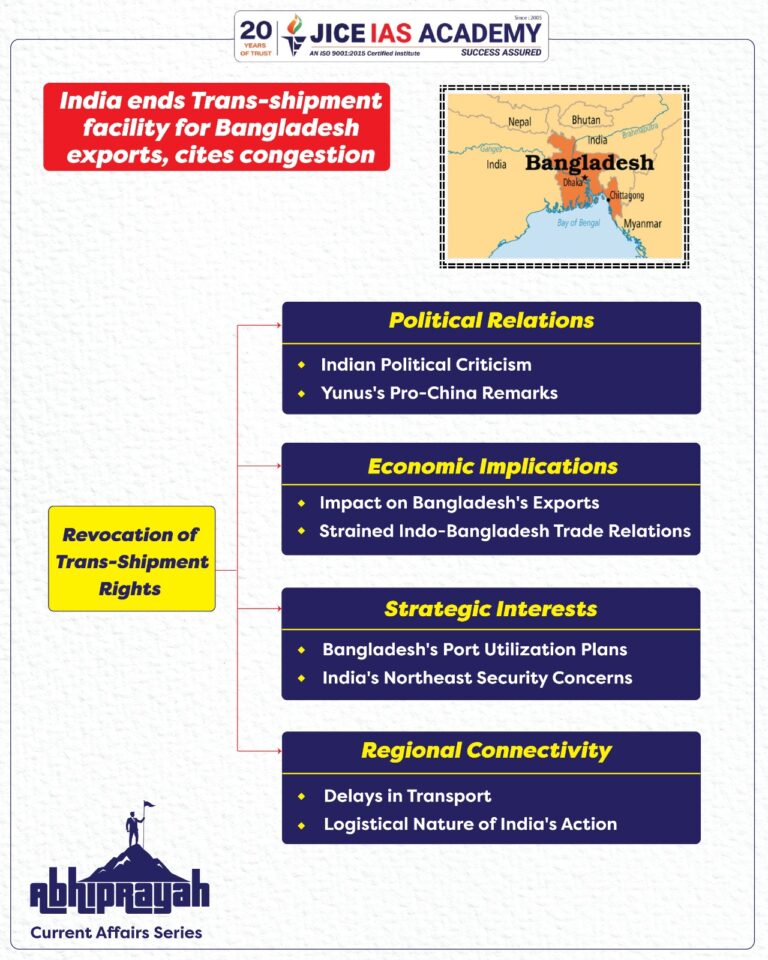
India has withdrawn the transshipment facility it had extended to Bangladesh as it was creating “significant congestion” in Indian airports and ports

Context

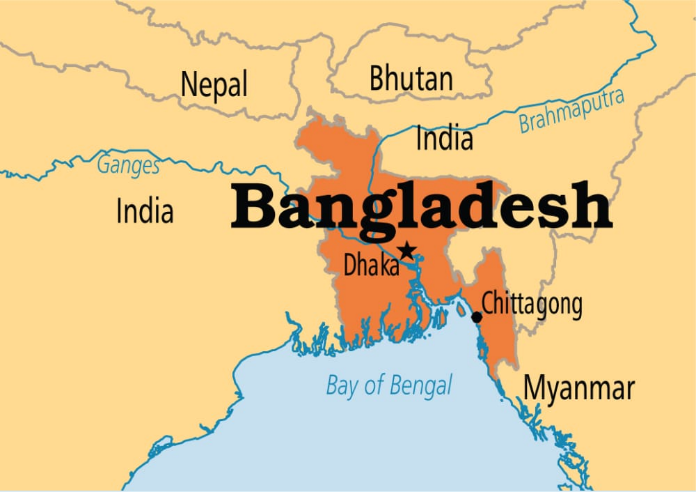
  • India formally withdrew the transshipment facility on April 8, 2025, whereby Bangladesh could use Indian space—airports and ports—on Indian territory for trade with third nations like Bhutan, Nepal, and Myanmar.
  • This was announced by the Ministry of External Affairs (MEA) in light of congestion in logistics and adverse effects on the efficiency of India’s exports.

Background of the Transshipment Arrangement

  • India had granted this facility to Bangladesh in June 2020, which allowed Bangladeshi cargo to be transported through Indian land customs stations to international airports and ports.
  • The system helped export Bangladesh’s goods, especially ready-made garments, to Nepal, Bhutan, and Myanmar on the back of Indian logistical facilities.

Reasons for Withdrawal

  • The transshipment arrangement led to heavy congestion in Indian ports and airports.
  • It caused delays in logistics and increased operational expenses, impacting India’s own exports.
  • As a result, the facility has been revoked with effect from April 8, 2025.

Significantly, the MEA clarified that Bangladesh’s trade with Nepal and Bhutan through trans-shipment by land through India will not be impacted.

Political and Strategic Undercurrents

The move comes against the background of provocative remarks made by Prof. Mohammed Yunus, Chief Adviser to the interim government of Bangladesh:

  • On a trip to Beijing, Prof. Yunus promoted closer Bangladesh-China commercial relations, and proposed the utilization of Bangladesh’s ports to tap India’s northeast region, characterizing the northeast as an “extension of the Chinese economy.”
  • This elicited criticism from Indian political leaders, including Assam Chief Minister Himanta Biswa Sarma, who labeled the remarks “offensive and condemnable.”
  • While Indian authorities have not directly attributed the move to Yunus’s comments, the timing has been seen to fuel speculation of a geostrategic realignment.

Implications for Bilateral Relations

  • The revocation of transshipment rights can affect Bangladesh’s exports, particularly since the country is preparing to celebrate its New Year festivities.
  • The action is also considered a setback to trade relations between Indo-Bangladesh, already strained by visa processing delays for the Bangladeshi business community.
  • India has asserted that the action is solely logistical and not designed to upset regional trade cooperation.

Strategic Takeaway

  • The move underscores the need to reconcile regional connectivity ambitions with national economic efficiency.
  • It also shows India’s delicacy regarding foreign engagement in the Northeast, a geopolitically important region.
  • The incident highlights the intricate dance of diplomacy, infrastructure, and national interest in the changing trade dynamics of South Asia.

Leave a Reply

Your email address will not be published. Required fields are marked *

Call Us Now !

Copyright © JICE ACADEMY FOR EXCELLENCE PRIVATE LIMITED