UPSC CURRENT AFFAIRS – 06th August 2025
India–Philippines Elevate Bilateral Ties to Strategic Partnership
Why in News?
- India and the Philippines elevated their relationship to a Strategic Partnership, focusing on defence cooperation, maritime security, and trade, guided by a new Plan of Action (2025–2029).
Background
- India and the Philippines formally elevated their bilateral relationship to a Strategic Partnership during the state visit of President Ferdinand R. Marcos Jr. to India.
- The visit, held during the 75th anniversary of diplomatic ties between the two nations, marks a significant milestone in regional diplomacy, maritime cooperation, and defence collaboration in the Indo-Pacific region.
- Prime Minister Narendra Modi aptly described the ties as a partnership of “friends by choice and partners by destiny.”
Historical Background
- Diplomatic ties between India and the Philippines were established in 1949, making the Philippines one of the earliest countries to recognize the Republic of India.
- Relations historically focused on non-aligned cooperation, South-South engagement, and people-to-people contacts.
- In recent decades, both nations have expanded cooperation in multilateral fora such as:
- ASEAN and ASEAN-led platforms
- East Asia Summit (EAS)
- Indian Ocean Rim Association (IORA)
Strategic Partnership Announced
- India becomes the fifth strategic partner of the Philippines.
- A Plan of Action (2025–2029) was unveiled to guide cooperation over the next five years across defence, maritime security, trade, space, and people-to-people exchanges.
Nine Agreements Signed
These include:
- Institutional dialogues between armies, navies, and air forces.
- Cooperation in the peaceful use of outer space.
- Frameworks for training exchanges, joint humanitarian and disaster relief, and capacity-building in maritime security.
Defence and Security Cooperation
BrahMos Missile Project
- India delivered the first BrahMos missile system to the Philippines in April 2024—making the Philippines the first international customer of the BrahMos system.
- Marcos acknowledged India as a key partner in the Philippines’ defence modernisation, highlighting BrahMos as a cornerstone of bilateral defence ties.
Naval and Military Engagement
- The two countries conducted their first bilateral naval exercise off the Philippines coast in the South China Sea in August 2025.
- India and the Philippines agreed to:
- Conduct joint service-to-service talks.
- Share information and conduct training exchanges.
- Enhance naval and coast guard interoperability via port calls and maritime domain awareness.
Submarine Infrastructure Cooperation
- Talks are ongoing for developing submarine infrastructure, showcasing India’s growing role as a defence technology partner in the Indo-Pacific.
Indo-Pacific Maritime Cooperation
- Modi reaffirmed India’s commitment to a rules-based Indo-Pacific, supporting freedom of navigation in line with international law, especially in contested waters like the South China Sea.
- The Philippines’ stance on South China Sea sovereignty aligns with India’s consistent view of the region as part of the global commons.
Trade and Economic Cooperation
- Bilateral trade has crossed $3 billion.
- India and the Philippines will begin negotiations on a Preferential Trade Agreement (PTA).
- Both sides expressed interest in reviewing and updating the India-ASEAN Free Trade Agreement (FTA) to enhance regional economic integration.
Connectivity and People-to-People Exchanges
- Direct flights between Delhi and Manila to begin from October 1, 2025.
- Visa facilitation:
- Philippines granted visa-free entry to Indian tourists.
- India introduced a gratis e-visa facility for Filipino citizens.
- Both nations released a commemorative stamp celebrating 75 years of diplomatic relations.
- President Marcos visited Raj Ghat, met President Droupadi Murmu, and was hosted at a state banquet. He will also travel to Bengaluru to explore technology and innovation partnerships.
Counterterrorism Solidarity
- President Marcos condemned the Pahalgam terror attack (2025) and expressed solidarity with India in its fight against terrorism.
India and the Philippines in the Indo-Pacific Strategic Landscape
- As maritime democracies, India and the Philippines share concerns over freedom of navigation, coastal security, and China’s assertiveness in the region.
- The strategic partnership complements:
- India’s Act East Policy
- Philippines’ Build, Build, Build programme
- Joint efforts for peace, prosperity, and a rules-based order in the Indo-Pacific.
Challenges and the Road Ahead
Challenges:
- Balancing relations with other major powers, especially in the context of China’s assertiveness in the South China Sea.
- Need for greater private sector involvement in bilateral trade and technology exchange.
Opportunities:
- Defence exports and joint production (Make in India).
- Cooperation in emerging domains such as:
- Cybersecurity
- Climate change resilience
- Space research
- Digital public infrastructure
Conclusion
- The elevation of India–Philippines relations to a Strategic Partnership signals a deepening of trust and convergence in strategic interests, especially in the Indo-Pacific.
- It reflects India’s growing role as a reliable defence and development partner, while reinforcing shared democratic values and commitment to peaceful multilateralism.
- As the two countries mark 75 years of diplomatic ties, the roadmap ahead looks promising and strategically vital.

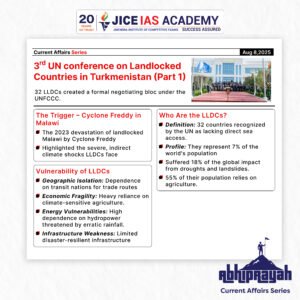
3rd UN conference on landlocked countries
UPSC CURRENT AFFAIRS – 08th August 2025 Home / 3rd UN conference on landlocked countries Why in News? At the

Issue of soapstone mining in Uttarakhand’s Bageshwar
UPSC CURRENT AFFAIRS – 08th August 2025 Home / Issue of soapstone mining in Uttarakhand’s Bageshwar Why in News? Unregulated

Groundwater Pollution in India – A Silent Public Health Emergency
UPSC CURRENT AFFAIRS – 08th August 2025 Home / Groundwater Pollution in India – A Silent Public Health Emergency Why
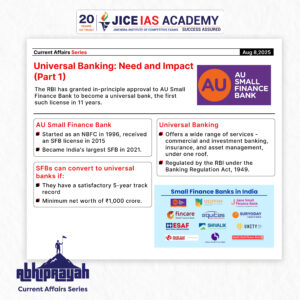
Universal banking- need and impact
UPSC CURRENT AFFAIRS – 08th August 2025 Home / Universal banking- need and impact Why in News? The Reserve Bank
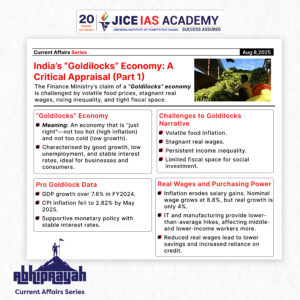
India’s “Goldilocks” Economy: A Critical Appraisal
UPSC CURRENT AFFAIRS – 08th August 2025 Home / India’s “Goldilocks” Economy: A Critical Appraisal Why in News? The Finance
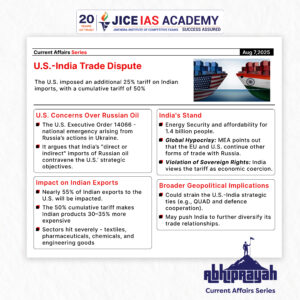
U.S.-India Trade Dispute: Trump’s 50% Tariffs and India’s Oil Imports from Russia
UPSC CURRENT AFFAIRS – 07th August 2025 Home / U.S.-India Trade Dispute: Trump’s 50% Tariffs and India’s Oil Imports from
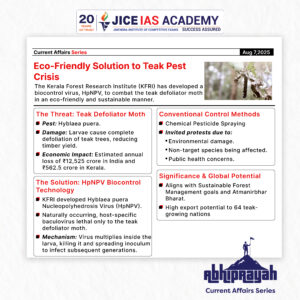
Eco-Friendly Solution to Teak Pest Crisis: KFRI’s HpNPV Technology
UPSC CURRENT AFFAIRS – 07th August 2025 Home / Eco-Friendly Solution to Teak Pest Crisis: KFRI’s HpNPV Technology Why in

New Species of Non-Venomous Rain Snake Discovered in Mizoram
UPSC CURRENT AFFAIRS – 07th August 2025 Home / New Species of Non-Venomous Rain Snake Discovered in Mizoram Why in

Introduction
Economic Implications
For Indian Exporters
- These reforms reduce transaction costs and compliance hurdles
- Encourage a more competitive and efficient export environment
- Promote value addition in key sectors like leather
For Tamil Nadu
- The reforms particularly benefit the state’s leather industry, a major contributor to employment and exports
- Boost the marketability of GI-tagged E.I. leather, enhancing rural and traditional industries
For Trade Policy
- These decisions indicate a shift from regulatory controls to policy facilitation
Reinforce the goals of Make in India, Atmanirbhar Bharat, and India’s ambition to become a leading export power
Recently, BVR Subrahmanyam, CEO of NITI Aayog, claimed that India has overtaken Japan to become the fourth-largest economy in the world, citing data from the International Monetary Fund (IMF).
India’s rank as the world’s largest economy varies by measure—nominal GDP or purchasing power parity (PPP)—each with key implications for economic analysis.