UPSC CURRENT AFFAIRS – 27th March 2025
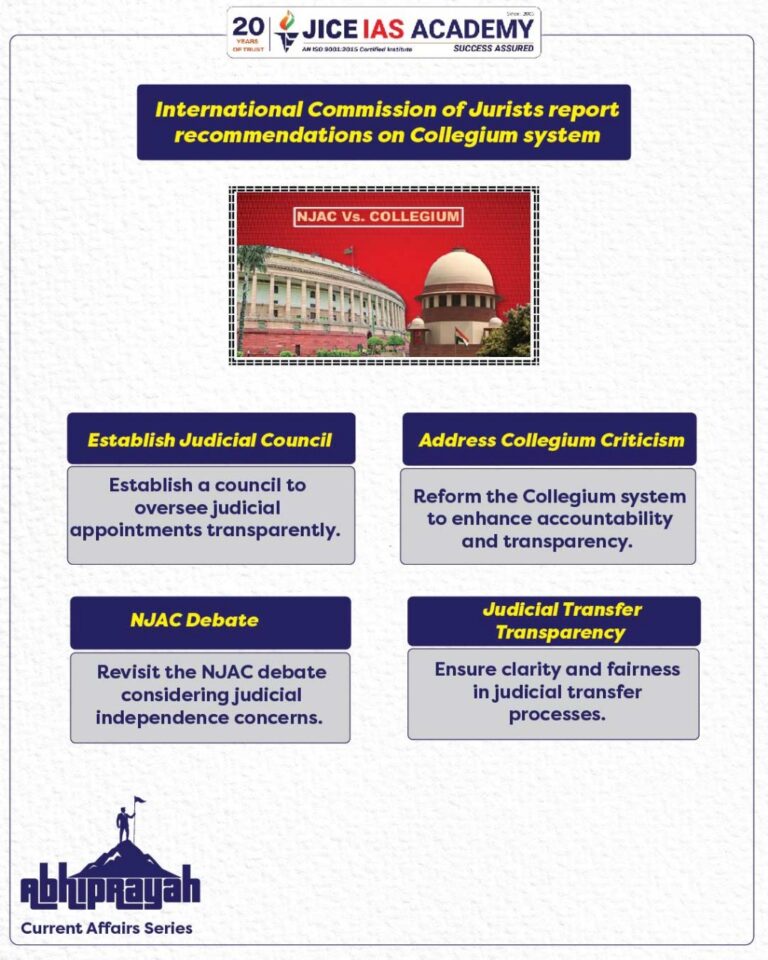
International Commission of Jurists report recommendations on Collegium system
Why in News?
The International Commission of Jurists (ICJ) has recommended establishing a Judicial Council to oversee judicial appointments and transfers with transparency, amid renewed debates over the Collegium system’s lack of accountability.
Background
- The Collegium system of judicial appointments and transfers has once again come under scrutiny, with both the government and the Opposition highlighting concerns over its lack of transparency.
- The issue gained momentum following allegations related to a High Court judge, prompting calls for reforms in the judicial appointment process.
ICJ’s Call for a Judicial Council
A report by the Geneva-based International Commission of Jurists (ICJ) has urged the Indian government and Parliament to enact a law constituting a ‘Judicial Council’ to oversee judicial appointments and transfers. The Judicial Council, according to the report, should:
- Be composed of a majority of judges, in line with international standards of judicial independence.
- Function based on transparent, predetermined, and objective criteria for judicial appointments and transfers.
The report, titled ‘Judicial Independence in India: Tipping the Scale’, was prepared with inputs from former Delhi High Court Chief Justice A.P. Shah, advocate Vrinda Grover, and advocate Ratna Appnender.
Criticism of the Collegium System and Judicial Independence
The ICJ report highlighted several structural weaknesses in the Indian judicial system:
- The judiciary, though constitutionally independent, remains vulnerable to executive influence.
- The lack of a proper self-governance mechanism within the judiciary affects its accountability.
- The in-house inquiry procedure for complaints against sitting judges is not backed by statute and lacks clear rules for determining judicial misconduct.
The NJAC Debate and Supreme Court’s Stance
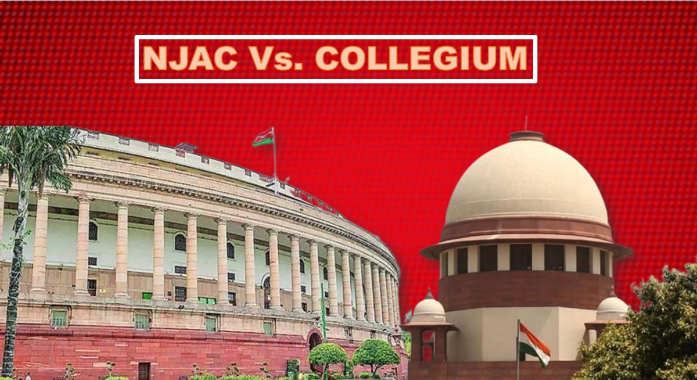
- The current debate comes nearly a decade after the Supreme Court struck down the National Judicial Appointments Commission (NJAC) Act and the 99th Constitutional Amendment in October 2015.
- The Supreme Court had ruled that the NJAC could lead to executive interference, potentially compromising judicial independence.
- However, the ICJ report suggests that judicial accountability in India is insular and ineffective, making meaningful oversight nearly impossible.
Concerns Over Judicial Transfers
The ICJ also raised concerns over judicial transfers, arguing that they:
- Often take place on vague grounds such as ‘public interest’ and ‘better administration of justice’.
- Lack transparency, making it unclear whether transfers serve a disciplinary or punitive purpose.
The report recommended the establishment of a statutory mechanism for handling complaints against judges of the Supreme Court and High Courts. It further stated that redress mechanisms and their outcomes must be subject to judicial review.
Conclusion
- The renewed debate over the Collegium system and judicial independence signals a potential shift in India’s judicial appointment process. With the government, Opposition, and international jurists calling for reforms, discussions on whether to modify or replace the Collegium system are likely to intensify in the coming months.
- The establishment of a Judicial Council with a transparent selection process could be a step toward addressing longstanding concerns about judicial accountability and independence in India.

3rd UN conference on landlocked countries
UPSC CURRENT AFFAIRS – 08th August 2025 Home / 3rd UN conference on landlocked countries Why in News? At the
Issue of soapstone mining in Uttarakhand’s Bageshwar
UPSC CURRENT AFFAIRS – 08th August 2025 Home / Issue of soapstone mining in Uttarakhand’s Bageshwar Why in News? Unregulated

Groundwater Pollution in India – A Silent Public Health Emergency
UPSC CURRENT AFFAIRS – 08th August 2025 Home / Groundwater Pollution in India – A Silent Public Health Emergency Why
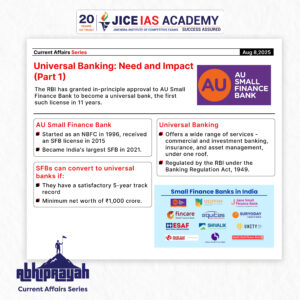
Universal banking- need and impact
UPSC CURRENT AFFAIRS – 08th August 2025 Home / Universal banking- need and impact Why in News? The Reserve Bank
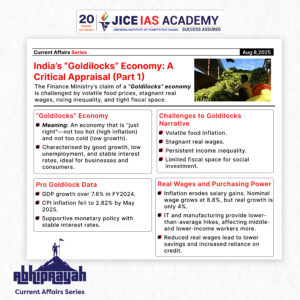
India’s “Goldilocks” Economy: A Critical Appraisal
UPSC CURRENT AFFAIRS – 08th August 2025 Home / India’s “Goldilocks” Economy: A Critical Appraisal Why in News? The Finance

U.S.-India Trade Dispute: Trump’s 50% Tariffs and India’s Oil Imports from Russia
UPSC CURRENT AFFAIRS – 07th August 2025 Home / U.S.-India Trade Dispute: Trump’s 50% Tariffs and India’s Oil Imports from
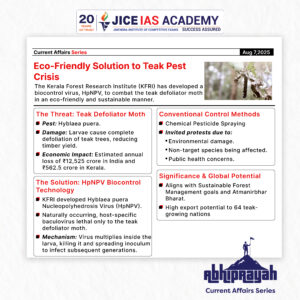
Eco-Friendly Solution to Teak Pest Crisis: KFRI’s HpNPV Technology
UPSC CURRENT AFFAIRS – 07th August 2025 Home / Eco-Friendly Solution to Teak Pest Crisis: KFRI’s HpNPV Technology Why in

New Species of Non-Venomous Rain Snake Discovered in Mizoram
UPSC CURRENT AFFAIRS – 07th August 2025 Home / New Species of Non-Venomous Rain Snake Discovered in Mizoram Why in
