UPSC CURRENT AFFAIRS – 07th August 2025
Microplastic Pollution Along India’s Coasts
Why in News?
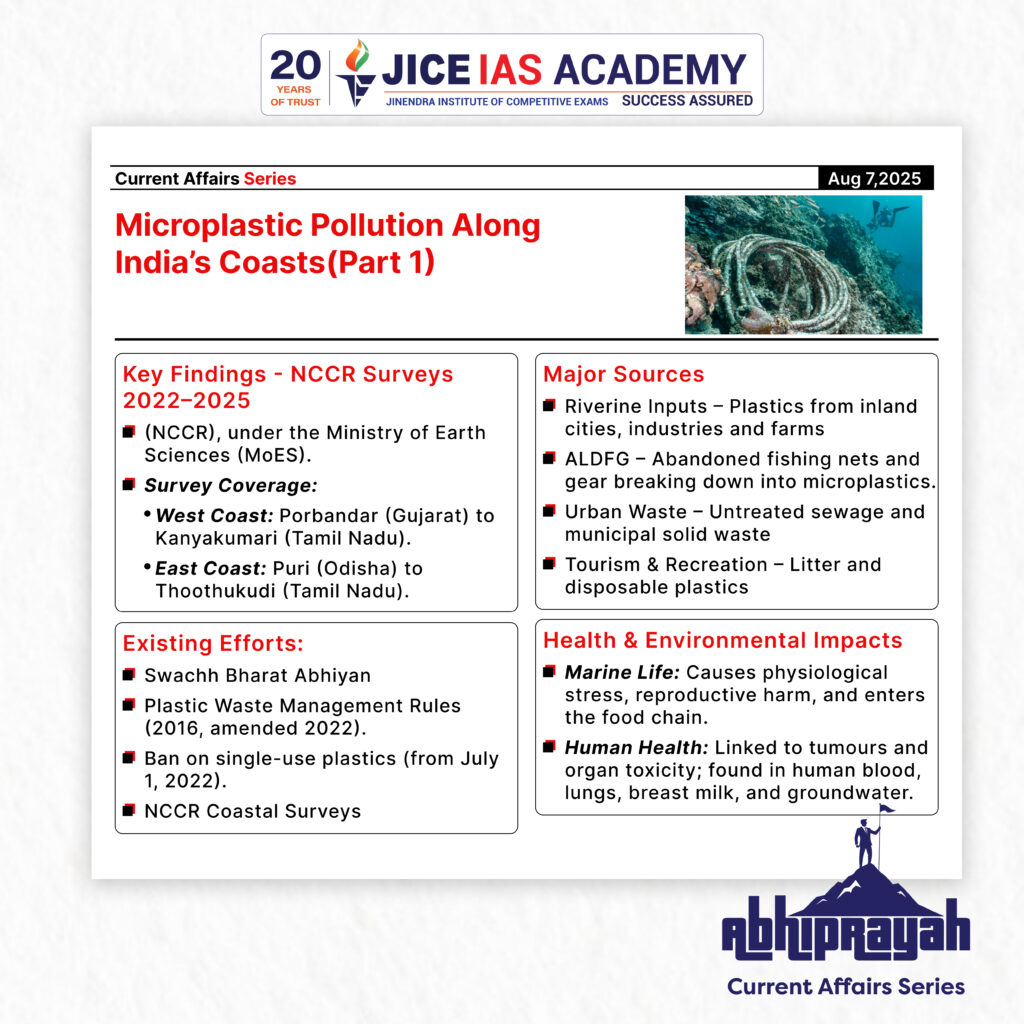
- The National Centre for Coastal Research (NCCR) found that riverine inputs and abandoned fishing gear are the major sources of microplastic pollution along India’s coasts.
Introduction
- Microplastic pollution is emerging as a major environmental concern in India, especially along its vast coastline.
- On August 6, 2025, Union Minister Jitendra Singh informed the Lok Sabha that “riverine inputs” and abandoned, lost, and discarded fishing gear (ALDFG) are the major sources of microplastic pollution along India’s coasts.
- This statement aligns with the findings of scientific studies and recent surveys conducted by national research institutions.
What Are Microplastics?
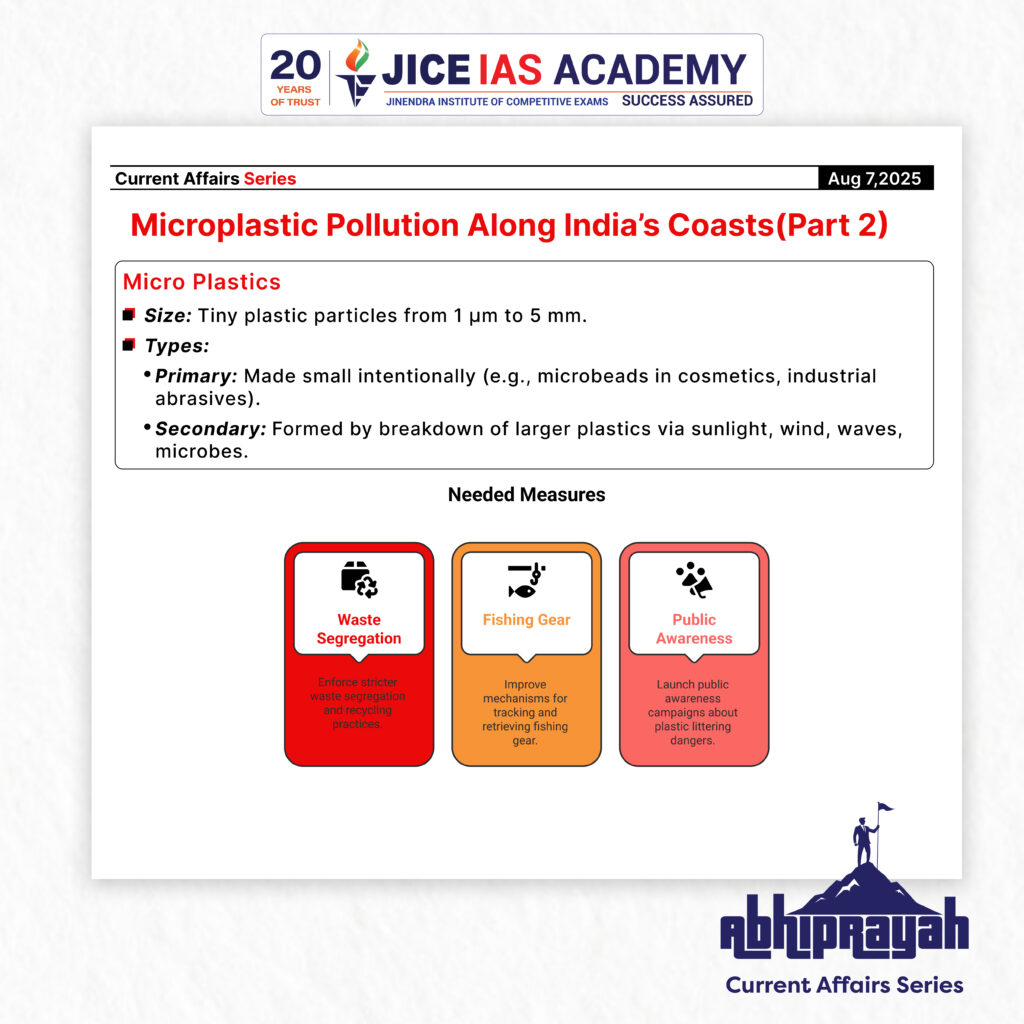
Microplastics are tiny plastic particles ranging in size from 1 micrometre (µm) to 5 millimetres (mm). They are broadly classified into two types:
- Primary microplastics: Manufactured at a microscopic size for specific uses, such as microbeads found in cosmetics, personal care products, and industrial abrasives.
- Secondary microplastics: Result from the breakdown of larger plastic items due to exposure to sunlight, wind, wave action, and microbial activity.
These particles are pervasive in marine and terrestrial ecosystems and are known to persist for centuries due to their non-biodegradable nature.
Findings from Coastal Surveys (2022–2025)
Conducted by:
National Centre for Coastal Research (NCCR), under the Ministry of Earth Sciences (MoES).
Coverage:
- West Coast: 19 transects surveyed from Porbandar (Gujarat) to Kanyakumari (Tamil Nadu).
- East Coast: 25 transects sampled from Puri (Odisha) to Thoothukudi (Tamil Nadu).
Key Findings:
- Major Sources:
- Riverine inputs: Rivers carry microplastics from inland urban, agricultural, and industrial sources to the ocean.
- ALDFG: Fishing nets, lines, and gear abandoned or lost at sea break down into microplastics.
- Media surveyed: Both water and sediment samples were analyzed to assess the concentration and types of microplastic particles.
Health and Environmental Impacts
- Marine and Aquatic Life: Microplastics can accumulate in the bodies of marine organisms, leading to physiological stress, reproductive issues, and even death. They can also enter the food chain, impacting larger species including humans.
- Human Health: Studies have increasingly linked microplastic exposure to tumours, hormonal disruption, and organ toxicity. They have been found in human blood, lungs, breast milk, and now, groundwater and food items.
Microplastics in Food and Water
1. Delhi Groundwater Contamination
- A recent study reported microplastic contamination in Delhi’s groundwater, raising concerns about the spread of microplastics into drinking water sources.
2. FSSAI’s Investigation
- The Food Safety and Standards Authority of India (FSSAI) commissioned a project in 2024 to:
- Assess microplastic contamination in food products.
- Develop detection methods and propose safety standards.
3. Toxics Link Study
- Environmental group Toxics Link tested 10 salt and sugar samples.
- Microplastics were found in all samples.
- Forms identified: fibres, pellets, films, and fragments.
Contributing Factors to Coastal Microplastic Pollution
Source | Description |
Riverine Inputs | Plastics from inland cities, industries, and agricultural runoff enter rivers and eventually the sea. |
ALDFG | Fishing nets and gear, often made of nylon and synthetic polymers, disintegrate and contribute to microplastic pollution. |
Urban Waste | Untreated sewage and municipal solid waste often carry microplastics to water bodies. |
Tourism and Recreational Activities | Plastics used in packaging, disposable products, and tourist litter contribute to local pollution. |
Policy and Research Interventions
Existing Efforts:
- Swachh Bharat Abhiyan and Plastic Waste Management Rules (2016, amended 2022).
- Ban on single-use plastics (from July 1, 2022).
- NCCR Coastal Surveys: Key step in mapping microplastic hotspots.
Needed Measures:
- Stricter enforcement of waste segregation and recycling.
- Improved fishing gear tracking and retrieval mechanisms.
- Public awareness campaigns about the dangers of plastic littering.
Standards for microplastics in food and water by FSSAI and BIS (Bureau of Indian Standards).
Conclusion
- Microplastic pollution in India is no longer a latent threat—it is visible, measurable, and increasingly harmful.
- The evidence from the coastal surveys, studies in Delhi’s groundwater, and microplastic traces in daily-use food products paints a grim picture.
- Effective mitigation will require coordinated action across ministries, scientific innovation, and citizen responsibility.
- As India progresses towards sustainable development, tackling microplastic pollution must be a national environmental priority.

3rd UN conference on landlocked countries
UPSC CURRENT AFFAIRS – 08th August 2025 Home / 3rd UN conference on landlocked countries Why in News? At the
Issue of soapstone mining in Uttarakhand’s Bageshwar
UPSC CURRENT AFFAIRS – 08th August 2025 Home / Issue of soapstone mining in Uttarakhand’s Bageshwar Why in News? Unregulated
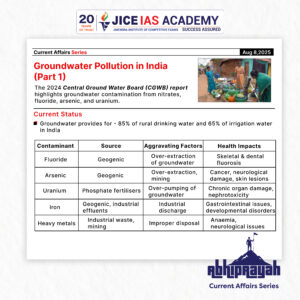
Groundwater Pollution in India – A Silent Public Health Emergency
UPSC CURRENT AFFAIRS – 08th August 2025 Home / Groundwater Pollution in India – A Silent Public Health Emergency Why
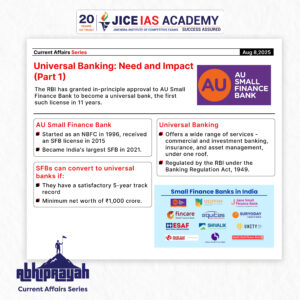
Universal banking- need and impact
UPSC CURRENT AFFAIRS – 08th August 2025 Home / Universal banking- need and impact Why in News? The Reserve Bank
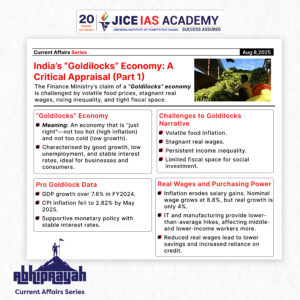
India’s “Goldilocks” Economy: A Critical Appraisal
UPSC CURRENT AFFAIRS – 08th August 2025 Home / India’s “Goldilocks” Economy: A Critical Appraisal Why in News? The Finance
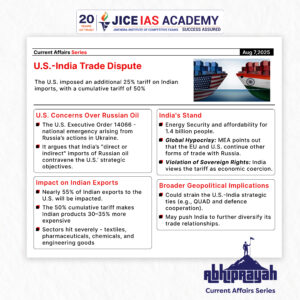
U.S.-India Trade Dispute: Trump’s 50% Tariffs and India’s Oil Imports from Russia
UPSC CURRENT AFFAIRS – 07th August 2025 Home / U.S.-India Trade Dispute: Trump’s 50% Tariffs and India’s Oil Imports from
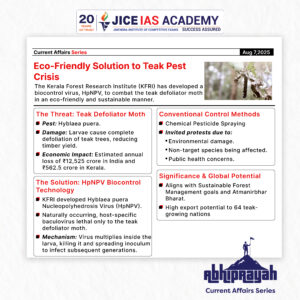
Eco-Friendly Solution to Teak Pest Crisis: KFRI’s HpNPV Technology
UPSC CURRENT AFFAIRS – 07th August 2025 Home / Eco-Friendly Solution to Teak Pest Crisis: KFRI’s HpNPV Technology Why in

New Species of Non-Venomous Rain Snake Discovered in Mizoram
UPSC CURRENT AFFAIRS – 07th August 2025 Home / New Species of Non-Venomous Rain Snake Discovered in Mizoram Why in

Introduction
Economic Implications
For Indian Exporters
- These reforms reduce transaction costs and compliance hurdles
- Encourage a more competitive and efficient export environment
- Promote value addition in key sectors like leather
For Tamil Nadu
- The reforms particularly benefit the state’s leather industry, a major contributor to employment and exports
- Boost the marketability of GI-tagged E.I. leather, enhancing rural and traditional industries
For Trade Policy
- These decisions indicate a shift from regulatory controls to policy facilitation
Reinforce the goals of Make in India, Atmanirbhar Bharat, and India’s ambition to become a leading export power
Recently, BVR Subrahmanyam, CEO of NITI Aayog, claimed that India has overtaken Japan to become the fourth-largest economy in the world, citing data from the International Monetary Fund (IMF).
India’s rank as the world’s largest economy varies by measure—nominal GDP or purchasing power parity (PPP)—each with key implications for economic analysis.
Can you be more specific about the content of your article? After reading it, I still have some doubts. Hope you can help me.