UPSC CURRENT AFFAIRS – 01st August 2025
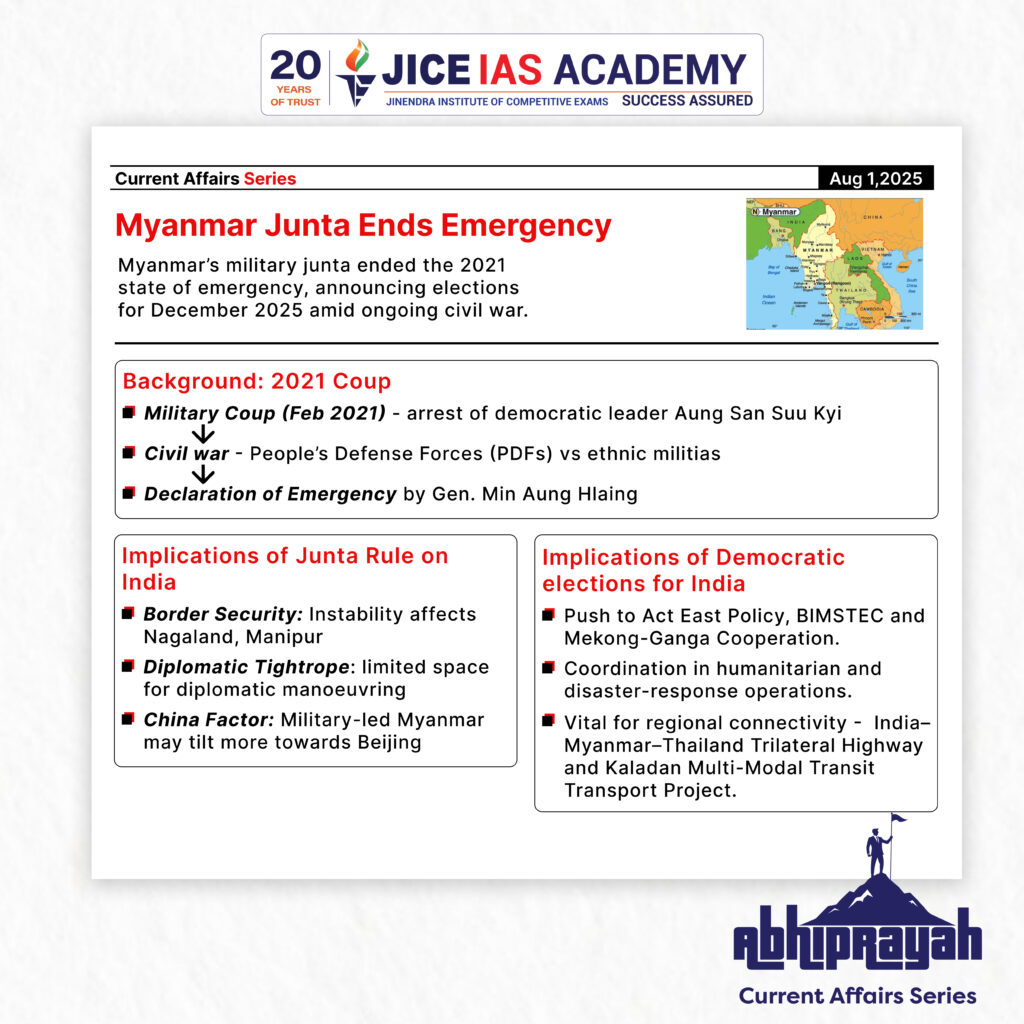
Myanmar Junta Ends Emergency: Elections Announced Amid Ongoing Civil War
Why in News?
- Myanmar’s military junta has ended the state of emergency imposed since the 2021 coup, announcing elections for December 2025 amid an ongoing civil war and international criticism
Background
- Myanmar’s military junta formally ended the state of emergency imposed in February 2021, a move that ostensibly paves the way for national elections in December 2025.
- The declaration comes amid ongoing civil unrest, mass displacement, and widespread international criticism.
- However, the planned elections are being boycotted by opposition groups, including members of the National Unity Government (NUG), and dismissed by global observers as illegitimate.
Background: Military Coup and the State of Emergency
- On February 1, 2021, Myanmar’s military, led by General Min Aung Hlaing, staged a coup, detaining elected leaders including Aung San Suu Kyi and nullifying the results of the 2020 general election.
- A state of emergency was declared, transferring all powers of the legislature, judiciary, and executive to the Commander-in-Chief.
- The coup triggered nationwide protests, escalating into a multi-front civil war between the junta and a coalition of ethnic armed groups and pro-democracy forces, including the People’s Defense Forces (PDFs).
Recent Developments
End of Emergency Rule
- The junta officially lifted the state of emergency on July 31, 2025.
- The move is framed as a step toward multi-party democracy, with elections promised within six months, although no exact date has been declared.
- Junta spokesperson Zaw Min Tun stated that this step marks the beginning of a new phase towards democracy.
Election Preparations
- Political party registration is ongoing.
- Electronic voting machine (EVM) training has been conducted.
- However, a census conducted in 2024 failed to account for over 19 million people, mainly due to security concerns and conflict zones.
- A new law criminalizing election-related dissent imposes up to 10 years in prison for speeches or protests that “destroy a part of the electoral process”.
Security and Humanitarian Challenges
- The civil war has displaced more than 2 million people and led to thousands of civilian deaths, including in airstrikes on civilian infrastructure like monasteries.
- The junta has offered cash rewards to rebels willing to lay down arms and “return to the legal fold,” a move to reduce resistance ahead of the polls.
- Despite such incentives, rebel control of large territories, especially in border regions, may limit the actual conduct and reach of elections.
Geopolitical Implications
- ASEAN’s role has been limited, with its Five-Point Consensus largely ignored by the junta.
- China, Russia, and India maintain pragmatic engagement with the junta, driven by strategic and economic interests.
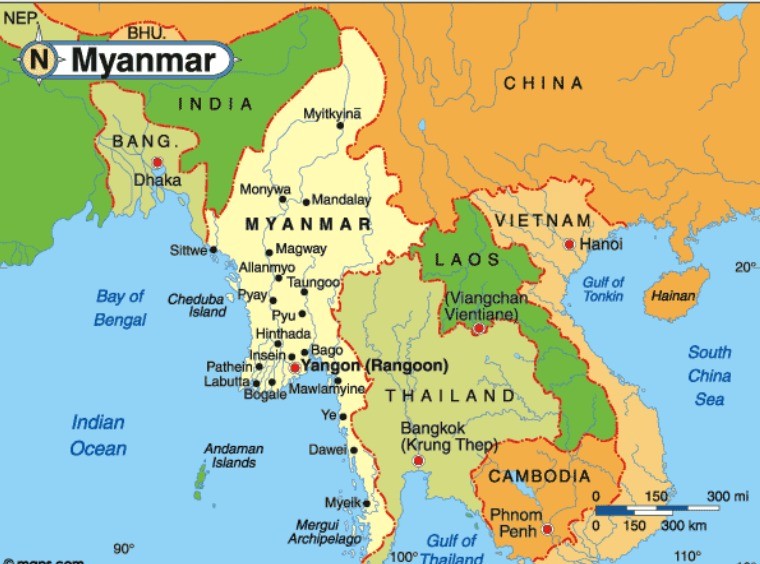
- The unfolding situation affects regional stability, cross-border refugee flows, and insurgency dynamics along the India-Myanmar border (particularly in Nagaland and Manipur).
Implications for India
- Strategic and Border Security
- India shares a 1,643 km porous border with Myanmar, and any instability directly affects the security situation in the northeastern states.
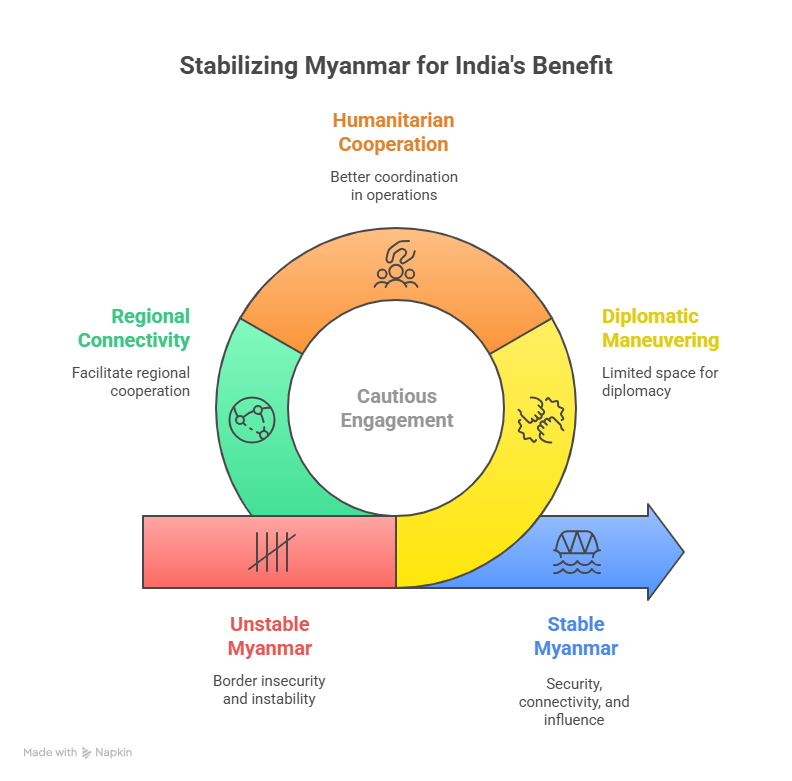
- Stability in Myanmar is essential to contain cross-border militancy.
- Peace and governance in Myanmar are vital for securing ongoing infrastructure projects like the India–Myanmar–Thailand Trilateral Highway and Kaladan Multi-Modal Transit Transport Project.
- Diplomatic Engagement
- India has maintained a cautious policy of engagement with Myanmar’s military regime.
- The lifting of emergency may provide limited space for diplomatic manoeuvring, but India must ensure it does not lend legitimacy to non-democratic processes.
- Humanitarian Cooperation
- A relatively stable governance structure, even under military control, can enable better coordination in such humanitarian and disaster-response operations.
- Regional Connectivity and Act East Policy
- Myanmar is a critical link in India’s Act East Policy and initiatives like BIMSTEC and Mekong-Ganga Cooperation.
- Political normalization in Myanmar, even if superficial, can facilitate regional cooperation and trade corridors essential for India’s strategic connectivity goals.
- Geopolitical Competition
- The geopolitical vacuum in Myanmar is often filled by external powers, especially China. A stable yet military-dominated Myanmar may continue to align more closely with Chinese interests.
- India must cautiously deepen engagement to maintain influence without compromising on democratic principles or regional credibility.

3rd UN conference on landlocked countries
UPSC CURRENT AFFAIRS – 08th August 2025 Home / 3rd UN conference on landlocked countries Why in News? At the
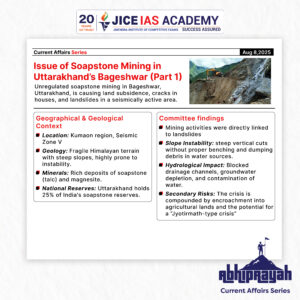
Issue of soapstone mining in Uttarakhand’s Bageshwar
UPSC CURRENT AFFAIRS – 08th August 2025 Home / Issue of soapstone mining in Uttarakhand’s Bageshwar Why in News? Unregulated
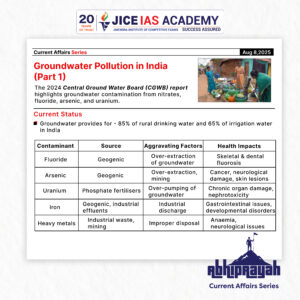
Groundwater Pollution in India – A Silent Public Health Emergency
UPSC CURRENT AFFAIRS – 08th August 2025 Home / Groundwater Pollution in India – A Silent Public Health Emergency Why
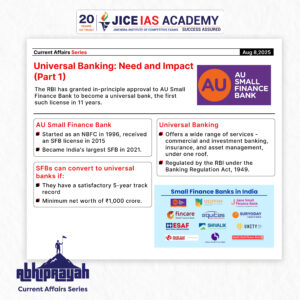
Universal banking- need and impact
UPSC CURRENT AFFAIRS – 08th August 2025 Home / Universal banking- need and impact Why in News? The Reserve Bank
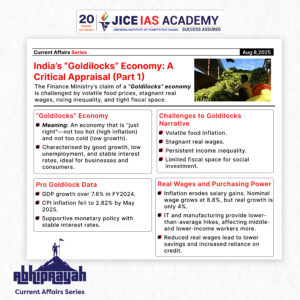
India’s “Goldilocks” Economy: A Critical Appraisal
UPSC CURRENT AFFAIRS – 08th August 2025 Home / India’s “Goldilocks” Economy: A Critical Appraisal Why in News? The Finance
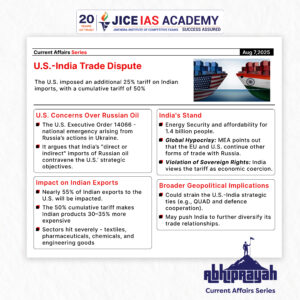
U.S.-India Trade Dispute: Trump’s 50% Tariffs and India’s Oil Imports from Russia
UPSC CURRENT AFFAIRS – 07th August 2025 Home / U.S.-India Trade Dispute: Trump’s 50% Tariffs and India’s Oil Imports from

Eco-Friendly Solution to Teak Pest Crisis: KFRI’s HpNPV Technology
UPSC CURRENT AFFAIRS – 07th August 2025 Home / Eco-Friendly Solution to Teak Pest Crisis: KFRI’s HpNPV Technology Why in

New Species of Non-Venomous Rain Snake Discovered in Mizoram
UPSC CURRENT AFFAIRS – 07th August 2025 Home / New Species of Non-Venomous Rain Snake Discovered in Mizoram Why in

Introduction
Economic Implications
For Indian Exporters
- These reforms reduce transaction costs and compliance hurdles
- Encourage a more competitive and efficient export environment
- Promote value addition in key sectors like leather
For Tamil Nadu
- The reforms particularly benefit the state’s leather industry, a major contributor to employment and exports
- Boost the marketability of GI-tagged E.I. leather, enhancing rural and traditional industries
For Trade Policy
- These decisions indicate a shift from regulatory controls to policy facilitation
Reinforce the goals of Make in India, Atmanirbhar Bharat, and India’s ambition to become a leading export power
Recently, BVR Subrahmanyam, CEO of NITI Aayog, claimed that India has overtaken Japan to become the fourth-largest economy in the world, citing data from the International Monetary Fund (IMF).
India’s rank as the world’s largest economy varies by measure—nominal GDP or purchasing power parity (PPP)—each with key implications for economic analysis.