UPSC CURRENT AFFAIRS – 19th June 2025

Home / UPSC / Current Affairs / Operation Sindhu for Evacuation of Students from Iran Amid Rising Tensions

Operation Sindhu for Evacuation of Students from Iran Amid Rising Tensions

Why in News?

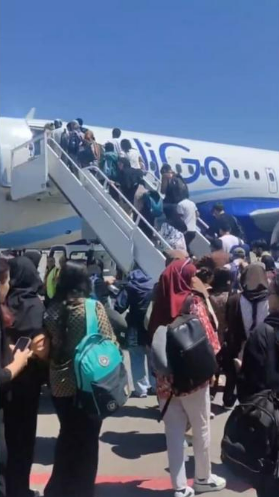
  • Operation Sindhu India’s evacuation mission to safely bring back its nationals, including students and pilgrims, from conflict-hit Iran amid the ongoing Israel-Iran war.

Background:

  • The recent escalation of armed hostilities between Israel and Iran has created a volatile security situation, especially in urban centers like Tehran and Qom.
  • Indian citizens in Iran, including students, medical aspirants, and pilgrims, have found themselves trapped amidst active conflict zones.
  • India has traditionally had significant people-to-people ties with Iran, including a steady outflow of students and religious pilgrims from regions like Jammu & Kashmir and Uttar Pradesh.

Operation Sindhu: India's Evacuation Initiative

  • Launch Date: June 18, 2025
  • Purpose: To evacuate Indian nationals—students, workers, and pilgrims—from war-affected zones in Iran amid the Israel-Iran conflict.
  • Operation Name Significance: Named “Operation Sindhu” after the Indus River, symbolizing the shared cultural and civilizational heritage between India and the broader West Asian region.

Phase-wise Execution and Strategy

Evacuation of Indian Students

  • 110 Indian medical students, mostly from Jammu & Kashmir (90), Uttar Pradesh, and Karnataka, were evacuated.
  • Route taken:
    • Evacuees moved by land from Qom to Yerevan (Armenia).
    • A special flight departed Yerevan at 2:55 p.m. IST on June 18, 2025.
    • Route: Yerevan → Doha → New Delhi (arrival scheduled early June 19).

Diplomatic Coordination:

  • The Indian Embassy in Tehran, in coordination with Iranian authorities, facilitated the border crossing into Armenia.
  • Iran’s Deputy Ambassador to India, Mohammad Javad Hosseini, confirmed full cooperation with India’s evacuation plans.

India’s Evacuation Diplomacy: A Pattern

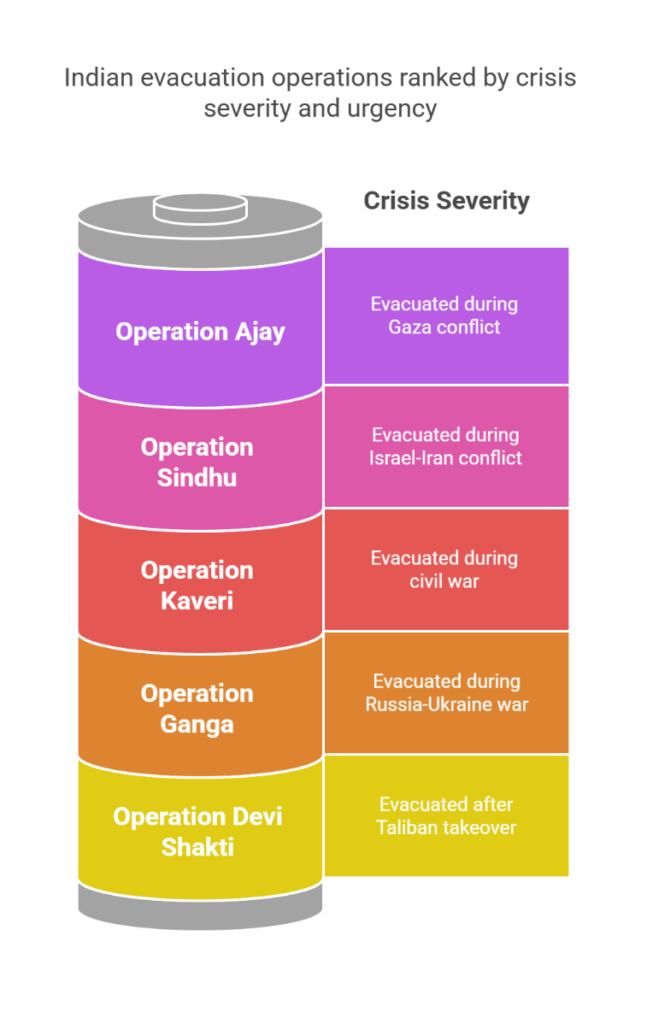
Operation Sindhu joins a growing list of Indian evacuation efforts under crisis:

Operation

Year

Region

Nature of Crisis

Operation Ganga

2022

Ukraine

Russia-Ukraine War

Operation Kaveri

2023

Sudan

Civil War

Operation Ajay

2023

Israel-Palestine

Conflict in Gaza

Operation Dost

2023

Turkey-Syria

Earthquake Relief

Operation Devi Shakti

2021

Afghanistan

Taliban Takeover

Operation Sindhu

2025

Iran

Israel-Iran Conflict

Diplomatic and Strategic Implications for India

  1. Protection of Diaspora: Reflects India’s commitment to the safety of its citizens abroad through proactive diplomacy.
  2. Neutral Positioning: India has maintained non-alignment and balanced ties with both Israel and Iran, vital for its energy security and geopolitical influence in West Asia.
  3. Soft Power Projection: Such operations enhance India’s global image as a responsible democratic state that values human life.

Challenges Faced

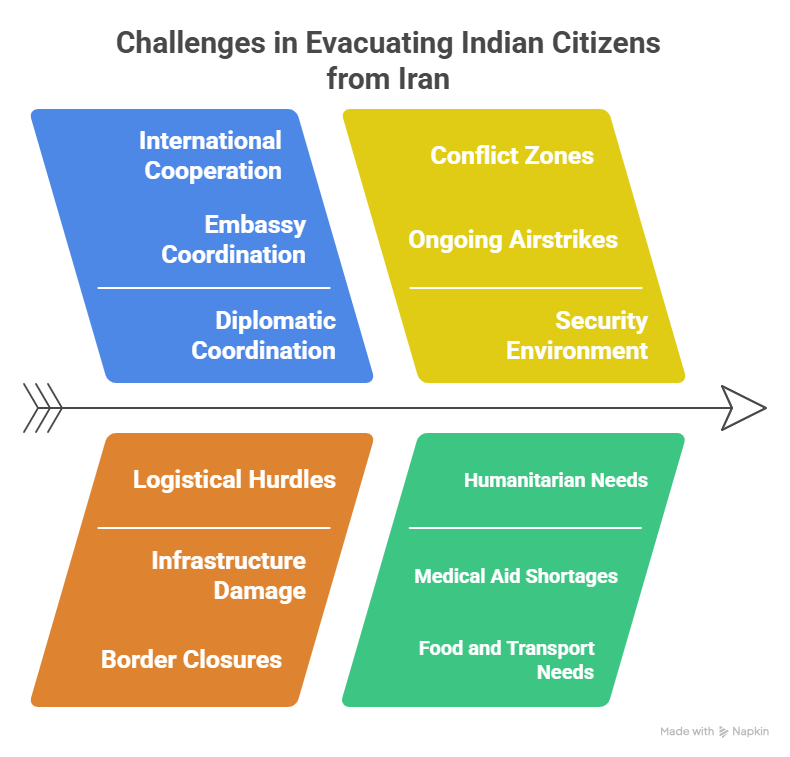
  • Unpredictable security environment with ongoing airstrikes.
  • Logistical hurdles due to damaged infrastructure and border closures.
  • Communication breakdowns affecting coordination with stranded groups.
  • Humanitarian needs (medical aid, transport, food) remain high for those awaiting evacuation.

Conclusion

  • Operation Sindhu is a testimony to India’s evolving capability to conduct complex evacuation missions under conflict scenarios. It also underscores the importance of timely diplomacy, inter-ministerial coordination, and international cooperation during humanitarian crises.

Economic Implications

For Indian Exporters

  • These reforms reduce transaction costs and compliance hurdles
  • Encourage a more competitive and efficient export environment
  • Promote value addition in key sectors like leather

For Tamil Nadu

  • The reforms particularly benefit the state’s leather industry, a major contributor to employment and exports
  • Boost the marketability of GI-tagged E.I. leather, enhancing rural and traditional industries

For Trade Policy

  • These decisions indicate a shift from regulatory controls to policy facilitation

Reinforce the goals of Make in India, Atmanirbhar Bharat, and India’s ambition to become a leading export power

Recently, BVR Subrahmanyam, CEO of NITI Aayog, claimed that India has overtaken Japan to become the fourth-largest economy in the world, citing data from the International Monetary Fund (IMF). 

India’s rank as the world’s largest economy varies by measure—nominal GDP or purchasing power parity (PPP)—each with key implications for economic analysis.

Significance and Applications

Leave a Reply

Your email address will not be published. Required fields are marked *

Call Us Now !

Copyright © JICE ACADEMY FOR EXCELLENCE PRIVATE LIMITED