
UPSC CURRENT AFFAIRS – 4th June 2025
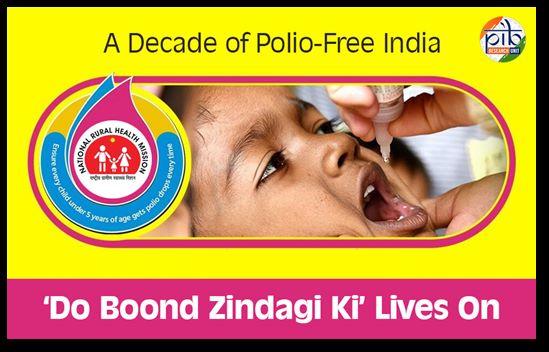
Polio Surveillance Network Faces Closure in India
Why in News?
- The Government of India has proposed to gradually phase out the World Health Organization (WHO)-established National Polio Surveillance Network (NPSN) beginning June 2025.
Introduction
- The Government of India, in collaboration with the World Health Organization (WHO), has initiated a phased plan to scale down the National Polio Surveillance Network (NPSN)—a critical public health infrastructure responsible for tracking and responding to poliovirus transmission across the country.
- The move comes despite global concerns of polio resurgence, raising alarms among public health experts.
About NPSN:
- Established in collaboration with WHO, the NPSN is a nationwide network of over 200 units.
- It played a crucial role in India’s successful polio eradication campaign, which led to India being declared polio-free in 2014.
- Apart from polio, NPSN units currently conduct surveillance for measles, rubella, DPT, and support vaccine rollout and health workforce training.
The Government’s Proposal:
- The NPSN will be phased out in a staggered manner, starting June 2025.
- The number of functional units will be reduced:
- 280 units in 2024–25
- 190 units in 2025–26
- 140 units in 2026–27
- The government plans to integrate polio surveillance into the Integrated Disease Surveillance Programme (IDSP) over time.
- This comes with a corresponding reduction in government financial support to the network.
Rationale Offered:
- WHO’s India representative, Dr. Roderico H. Ofrin, clarified that the transition is gradual and strategic, ensuring:
- Critical surveillance activities are not compromised
- Functions are absorbed into existing government systems
Risk of Resurgence:
- With diluted surveillance, India risks becoming a “sitting duck” for:
- VDPV outbreaks
- Transmission chains going undetected
- Reversal of hard-won polio-free status
- Job Loss and Institutional Knowledge:
- The NPSN employs thousands of skilled public health workers.
- Staff are concerned about job security and loss of institutional expertise vital for disease surveillance and immunization.
Way Forward:
Short-Term Recommendations:
- Pause the drawdown until:
- VDPV is controlled globally.
- IPV coverage is universal.
- State-level disease surveillance systems are robust enough to absorb NPSN functions.
Long-Term Recommendations:
- Gradually integrate NPSN functions into IDSP and Universal Immunisation Programme (UIP).
- Retain surveillance staff by redeploying them for broader vaccine-preventable disease surveillance.
Conclusion:
- While the intent to integrate disease surveillance and rationalize public health infrastructure is understandable, the timing and pace of the proposed transition from NPSN seem premature and risky.
- In light of ongoing global polio threats and India’s geographical proximity to affected countries, experts argue that dismantling NPSN could undermine hard-earned gains in public health.
- A balanced, evidence-based approach is necessary to ensure public health security is not compromised in the process.

3rd UN conference on landlocked countries
UPSC CURRENT AFFAIRS – 08th August 2025 Home / 3rd UN conference on landlocked countries Why in News? At the

Issue of soapstone mining in Uttarakhand’s Bageshwar
UPSC CURRENT AFFAIRS – 08th August 2025 Home / Issue of soapstone mining in Uttarakhand’s Bageshwar Why in News? Unregulated
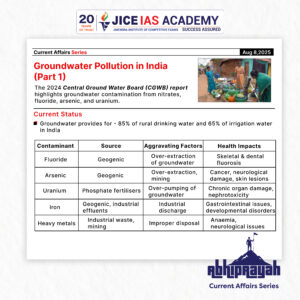
Groundwater Pollution in India – A Silent Public Health Emergency
UPSC CURRENT AFFAIRS – 08th August 2025 Home / Groundwater Pollution in India – A Silent Public Health Emergency Why

Universal banking- need and impact
UPSC CURRENT AFFAIRS – 08th August 2025 Home / Universal banking- need and impact Why in News? The Reserve Bank

India’s “Goldilocks” Economy: A Critical Appraisal
UPSC CURRENT AFFAIRS – 08th August 2025 Home / India’s “Goldilocks” Economy: A Critical Appraisal Why in News? The Finance

U.S.-India Trade Dispute: Trump’s 50% Tariffs and India’s Oil Imports from Russia
UPSC CURRENT AFFAIRS – 07th August 2025 Home / U.S.-India Trade Dispute: Trump’s 50% Tariffs and India’s Oil Imports from
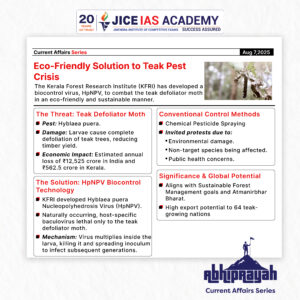
Eco-Friendly Solution to Teak Pest Crisis: KFRI’s HpNPV Technology
UPSC CURRENT AFFAIRS – 07th August 2025 Home / Eco-Friendly Solution to Teak Pest Crisis: KFRI’s HpNPV Technology Why in

New Species of Non-Venomous Rain Snake Discovered in Mizoram
UPSC CURRENT AFFAIRS – 07th August 2025 Home / New Species of Non-Venomous Rain Snake Discovered in Mizoram Why in

Economic Implications
For Indian Exporters
- These reforms reduce transaction costs and compliance hurdles
- Encourage a more competitive and efficient export environment
- Promote value addition in key sectors like leather
For Tamil Nadu
- The reforms particularly benefit the state’s leather industry, a major contributor to employment and exports
- Boost the marketability of GI-tagged E.I. leather, enhancing rural and traditional industries
For Trade Policy
- These decisions indicate a shift from regulatory controls to policy facilitation
Reinforce the goals of Make in India, Atmanirbhar Bharat, and India’s ambition to become a leading export power
Recently, BVR Subrahmanyam, CEO of NITI Aayog, claimed that India has overtaken Japan to become the fourth-largest economy in the world, citing data from the International Monetary Fund (IMF).
India’s rank as the world’s largest economy varies by measure—nominal GDP or purchasing power parity (PPP)—each with key implications for economic analysis.