UPSC CURRENT AFFAIRS – 26th July 2025
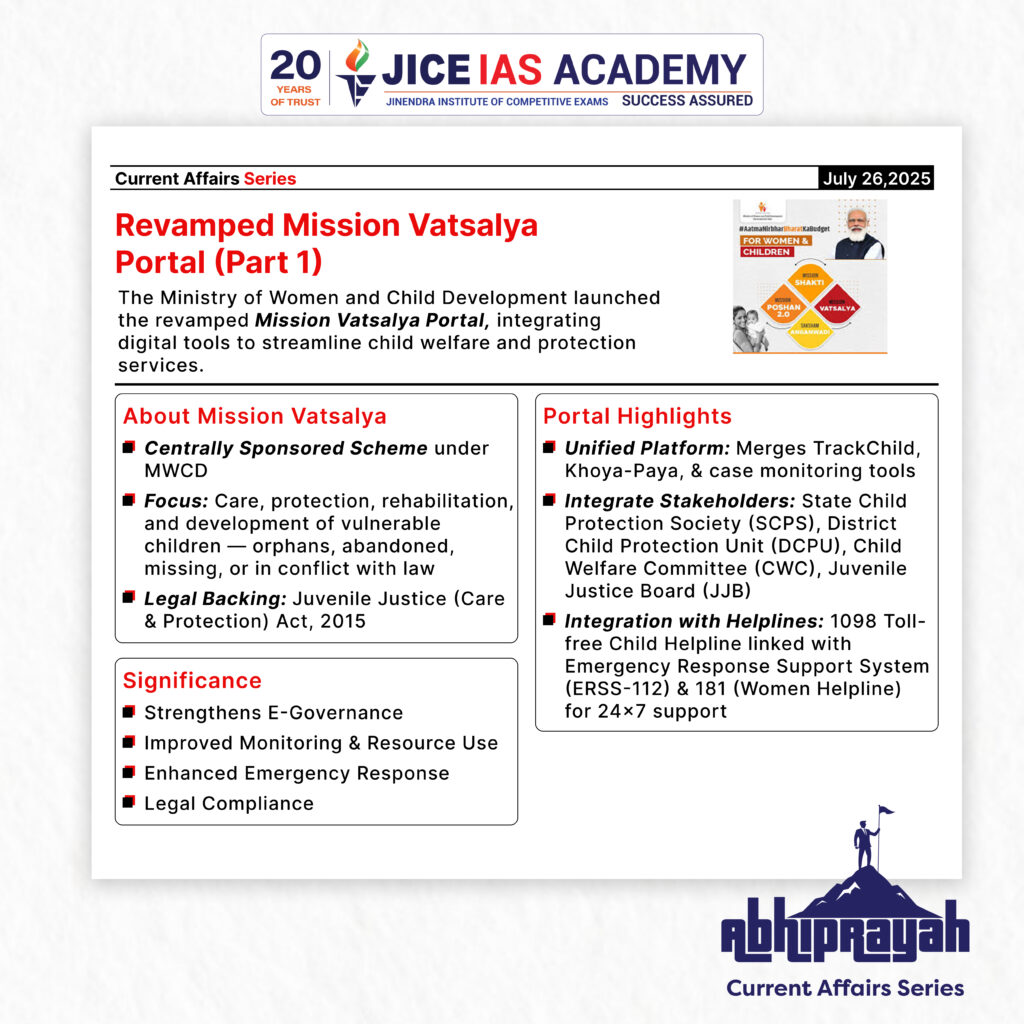
Revamped Mission Vatsalya Portal
Why in News?
The Ministry of Women and Child Development launched the revamped Mission Vatsalya Portal; an integrated and secure digital platform aimed at streamlining and strengthening child protection services in India.
About Mission Vatsalya
- Union Railway Minister Ashwini Vaishnaw announced a significant milestone for Indian Railways — the successful testing of India’s first hydrogen-powered coach, also known as the Driving Power Car, at the Integral Coach Factory (ICF) in Chennai.
- This development places India on the path to becoming a global leader in hydrogen-powered railway technology and supports the nation’s commitment to sustainable and low-carbon transport solutions.
Revamped Mission Vatsalya Portal: Key Highlights
- Unified Digital Platform
- The portal integrates previous systems like Khoya-Paya (missing children tracking) and TrackChild, creating a single, centralized platform.
- It enables real-time coordination among multiple stakeholders involved in the child protection ecosystem.
- Stakeholders Covered
The portal is designed for use by:
- State-level stakeholders:
- State Child Protection Society (SCPS)
- State Adoption Resource Agency (SARA)
- District-level stakeholders:
- District Child Protection Unit (DCPU)
- Child Welfare Committee (CWC)
- Juvenile Justice Board (JJB)
- Special Juvenile Police Unit (SJPU)
- Child Care Institutions (CCIs)
- Digital Efficiency and Transparency
- The portal eliminates duplication of efforts by enabling synchronized digital record-keeping.
- Management Information System (MIS) Dashboards support monitoring, evaluation, and evidence-based planning.
- Integration with Helplines
- The 1098 Toll-free Child Helpline, a 24x7x365 emergency service, is integrated into the portal.
- This helpline is also linked with:
- Emergency Response Support System (ERSS-112) of the Ministry of Home Affairs
- Women Helpline (181)
- Case Reporting and Tracking
- All cases reported via Child Helpline are recorded and monitored through the portal, ensuring transparency and accountability in the system.
- Capacity Building
- In collaboration with Savitribai Phule National Institute of Women and Child Development (SPNIWCD), the Ministry has conducted:
- Training of Master Trainers for effective portal usage across all States and UTs.
- Login credentials are provided to all registered stakeholders, including NGOs working in the child protection space.
Significance of the Revamped Portal
- Strengthening E-Governance in Child Welfare
- Aligns with Digital India and Minimum Government, Maximum Governance.
- Enhances coordination, transparency, and accountability across institutions.
- Improved Resource Utilization
- Enables data-driven decision-making for policy planning and scheme implementation.
- Avoids duplication of work and streamlines monitoring.
- Enhanced Emergency Response
- Integrated helplines create a multi-channel emergency outreach system to rescue and support children in distress.
- Compliance with Juvenile Justice Act
- Facilitates proper documentation and case management as required under the Juvenile Justice (Care and Protection of Children) Act, 2015.
Challenges Ahead
- Ensuring digital literacy and consistent training at the grassroots level.
- Internet connectivity and infrastructure gaps, especially in remote districts.
- Maintaining data privacy and security in a sensitive domain involving children.
Conclusion
The revamped Mission Vatsalya Portal is a landmark step in the digital transformation of India’s child protection framework. By unifying stakeholders on a single platform, it holds the potential to radically improve child safety, rescue, and rehabilitation mechanisms, contributing to the constitutional vision of protection of child rights and inclusive governance.

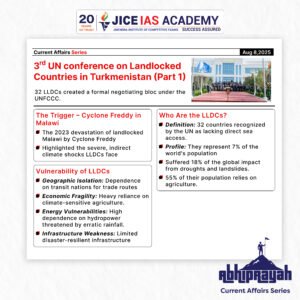
3rd UN conference on landlocked countries
UPSC CURRENT AFFAIRS – 08th August 2025 Home / 3rd UN conference on landlocked countries Why in News? At the
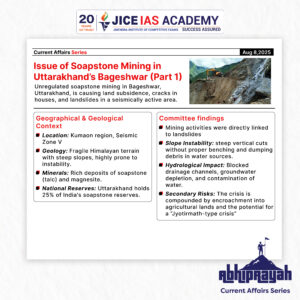
Issue of soapstone mining in Uttarakhand’s Bageshwar
UPSC CURRENT AFFAIRS – 08th August 2025 Home / Issue of soapstone mining in Uttarakhand’s Bageshwar Why in News? Unregulated
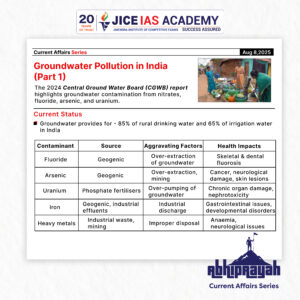
Groundwater Pollution in India – A Silent Public Health Emergency
UPSC CURRENT AFFAIRS – 08th August 2025 Home / Groundwater Pollution in India – A Silent Public Health Emergency Why
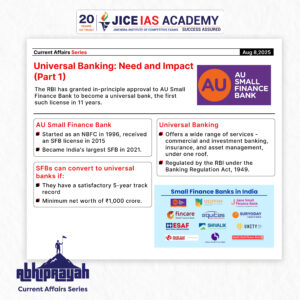
Universal banking- need and impact
UPSC CURRENT AFFAIRS – 08th August 2025 Home / Universal banking- need and impact Why in News? The Reserve Bank
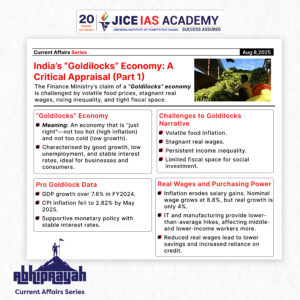
India’s “Goldilocks” Economy: A Critical Appraisal
UPSC CURRENT AFFAIRS – 08th August 2025 Home / India’s “Goldilocks” Economy: A Critical Appraisal Why in News? The Finance
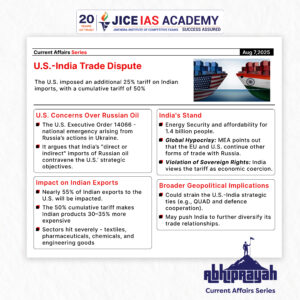
U.S.-India Trade Dispute: Trump’s 50% Tariffs and India’s Oil Imports from Russia
UPSC CURRENT AFFAIRS – 07th August 2025 Home / U.S.-India Trade Dispute: Trump’s 50% Tariffs and India’s Oil Imports from
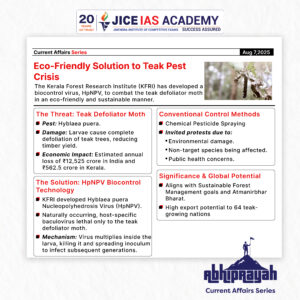
Eco-Friendly Solution to Teak Pest Crisis: KFRI’s HpNPV Technology
UPSC CURRENT AFFAIRS – 07th August 2025 Home / Eco-Friendly Solution to Teak Pest Crisis: KFRI’s HpNPV Technology Why in

New Species of Non-Venomous Rain Snake Discovered in Mizoram
UPSC CURRENT AFFAIRS – 07th August 2025 Home / New Species of Non-Venomous Rain Snake Discovered in Mizoram Why in

Introduction
Economic Implications
For Indian Exporters
- These reforms reduce transaction costs and compliance hurdles
- Encourage a more competitive and efficient export environment
- Promote value addition in key sectors like leather
For Tamil Nadu
- The reforms particularly benefit the state’s leather industry, a major contributor to employment and exports
- Boost the marketability of GI-tagged E.I. leather, enhancing rural and traditional industries
For Trade Policy
- These decisions indicate a shift from regulatory controls to policy facilitation
Reinforce the goals of Make in India, Atmanirbhar Bharat, and India’s ambition to become a leading export power
Recently, BVR Subrahmanyam, CEO of NITI Aayog, claimed that India has overtaken Japan to become the fourth-largest economy in the world, citing data from the International Monetary Fund (IMF).
India’s rank as the world’s largest economy varies by measure—nominal GDP or purchasing power parity (PPP)—each with key implications for economic analysis.