
UPSC CURRENT AFFAIRS – 10th July 2025
Tragedy at Semmankuppam and the Dangers of Non-Interlocked Railway Crossings
Why in News?
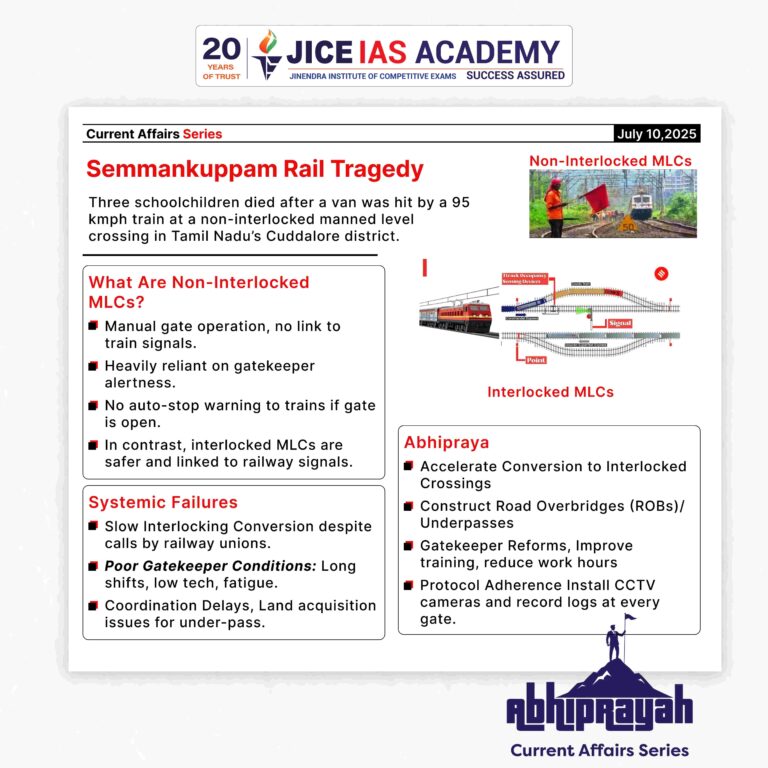
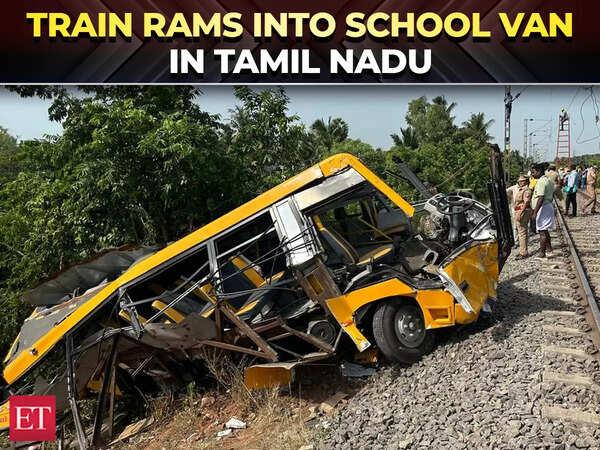
A tragic collision at a non-interlocked manned level crossing in Tamil Nadu’s Cuddalore district on July 8, 2025, exposed serious flaws in India’s railway safety infrastructure, leading to the death of three schoolchildren.
Introduction
- This heartbreaking incident has once again exposed the vulnerabilities in India’s railway safety mechanisms, particularly at non-interlocked level crossings, which continue to depend heavily on human vigilance.
Understanding the Problem: Non-Interlocked vs Interlocked Crossings
- Non-Interlocked Manned Level Crossings (MLCs): These rely solely on the judgment and alertness of the gatekeeper, without automatic coordination with railway signaling systems.
- Gate operation is manual.
- Trains do not receive automatic caution or stop signals if the gate is open.
- Gatekeepers are responsible for both communication and gate operation.
- Interlocked Manned Level Crossings:
- Integrated with railway signaling systems.
- Trains cannot proceed unless the gate is securely locked.
- Considered significantly safer.
As of October 2024, there are 11,053 interlocked MLCs across India, but hundreds remain non-interlocked, especially in the Southern Railway zone, which reportedly still has over 300 such crossings.
Systemic Issues Highlighted
- Overdependence on Human Alertness
- Manual gate operation at non-interlocked crossings leaves room for lapses, especially under pressure from impatient motorists or fatigue due to long shifts.
- Lack of Infrastructure Modernisation
- Despite the clear benefits of interlocked gates and calls from railway unions, the conversion rate remains slow.
- Administrative Delays
- Southern Railway has alleged that the Cuddalore district administration delayed clearance for a railway-funded underpass project for over one year.
- Land acquisition, coordination gaps, and bureaucratic inertia often delay such safety upgrades.
Wider Implications
- This incident exposes a larger issue of safety in Indian rail transport, especially for children, who are among the most vulnerable.
- It questions the accountability of both railway personnel and local administrations in implementing preventive infrastructure.
Way Forward: Multi-Pronged Solutions
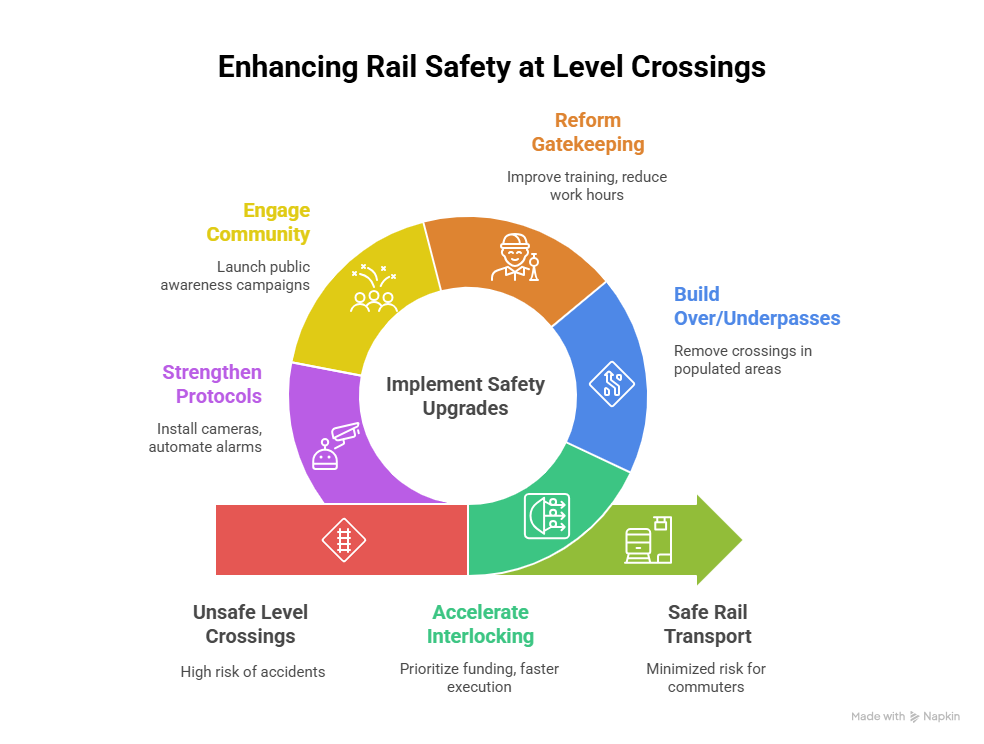
- Accelerate Conversion to Interlocked Crossings
- Prioritise funding and execution of interlocking projects.
- Allocate resources from RRSK (Rashtriya Rail Sanraksha Kosh) or Nirbhaya Fund (for children’s safety where applicable).
- Construct Road Overbridges (ROBs)/Underpasses
- Remove manned level crossings in densely populated or high-traffic areas.
- Ensure inter-ministerial coordination to fast-track land acquisition and approvals.
- Gatekeeper Reforms
- Improve training, reduce work hours, and implement accountability protocols.
- Introduce AI-based fatigue detection systems or biometric alert systems at gate cabins.
- Community Engagement & Awareness
- Launch public campaigns to prevent impatient or negligent road use near crossings.
- Use school education modules to teach children road safety and rail crossing etiquette.
- Strengthen Protocol Adherence
- Install CCTV cameras and record logs at every gate.
- Mandate automated alarms to gatekeepers well ahead of train approach.
Conclusion
- While human error appears to be a proximate cause, the root problem lies in systemic delays in modernising level crossings and implementing foolproof safety mechanisms.
- The Indian Railways, in collaboration with state authorities, must fast-track infrastructure upgrades and ensure that safety is never compromised.

3rd UN conference on landlocked countries
UPSC CURRENT AFFAIRS – 08th August 2025 Home / 3rd UN conference on landlocked countries Why in News? At the

Issue of soapstone mining in Uttarakhand’s Bageshwar
UPSC CURRENT AFFAIRS – 08th August 2025 Home / Issue of soapstone mining in Uttarakhand’s Bageshwar Why in News? Unregulated

Groundwater Pollution in India – A Silent Public Health Emergency
UPSC CURRENT AFFAIRS – 08th August 2025 Home / Groundwater Pollution in India – A Silent Public Health Emergency Why
Universal banking- need and impact
UPSC CURRENT AFFAIRS – 08th August 2025 Home / Universal banking- need and impact Why in News? The Reserve Bank

India’s “Goldilocks” Economy: A Critical Appraisal
UPSC CURRENT AFFAIRS – 08th August 2025 Home / India’s “Goldilocks” Economy: A Critical Appraisal Why in News? The Finance

U.S.-India Trade Dispute: Trump’s 50% Tariffs and India’s Oil Imports from Russia
UPSC CURRENT AFFAIRS – 07th August 2025 Home / U.S.-India Trade Dispute: Trump’s 50% Tariffs and India’s Oil Imports from
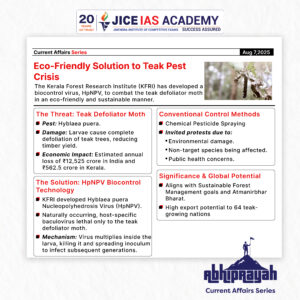
Eco-Friendly Solution to Teak Pest Crisis: KFRI’s HpNPV Technology
UPSC CURRENT AFFAIRS – 07th August 2025 Home / Eco-Friendly Solution to Teak Pest Crisis: KFRI’s HpNPV Technology Why in

New Species of Non-Venomous Rain Snake Discovered in Mizoram
UPSC CURRENT AFFAIRS – 07th August 2025 Home / New Species of Non-Venomous Rain Snake Discovered in Mizoram Why in

Economic Implications
For Indian Exporters
- These reforms reduce transaction costs and compliance hurdles
- Encourage a more competitive and efficient export environment
- Promote value addition in key sectors like leather
For Tamil Nadu
- The reforms particularly benefit the state’s leather industry, a major contributor to employment and exports
- Boost the marketability of GI-tagged E.I. leather, enhancing rural and traditional industries
For Trade Policy
- These decisions indicate a shift from regulatory controls to policy facilitation
Reinforce the goals of Make in India, Atmanirbhar Bharat, and India’s ambition to become a leading export power
Recently, BVR Subrahmanyam, CEO of NITI Aayog, claimed that India has overtaken Japan to become the fourth-largest economy in the world, citing data from the International Monetary Fund (IMF).
India’s rank as the world’s largest economy varies by measure—nominal GDP or purchasing power parity (PPP)—each with key implications for economic analysis.