UPSC CURRENT AFFAIRS – 31st July 2025

Home / UPSC / Current Affairs / U.S. Imposes 25% Tariff on Indian Imports

U.S. Imposes 25% Tariff on Indian Imports

Why in News?

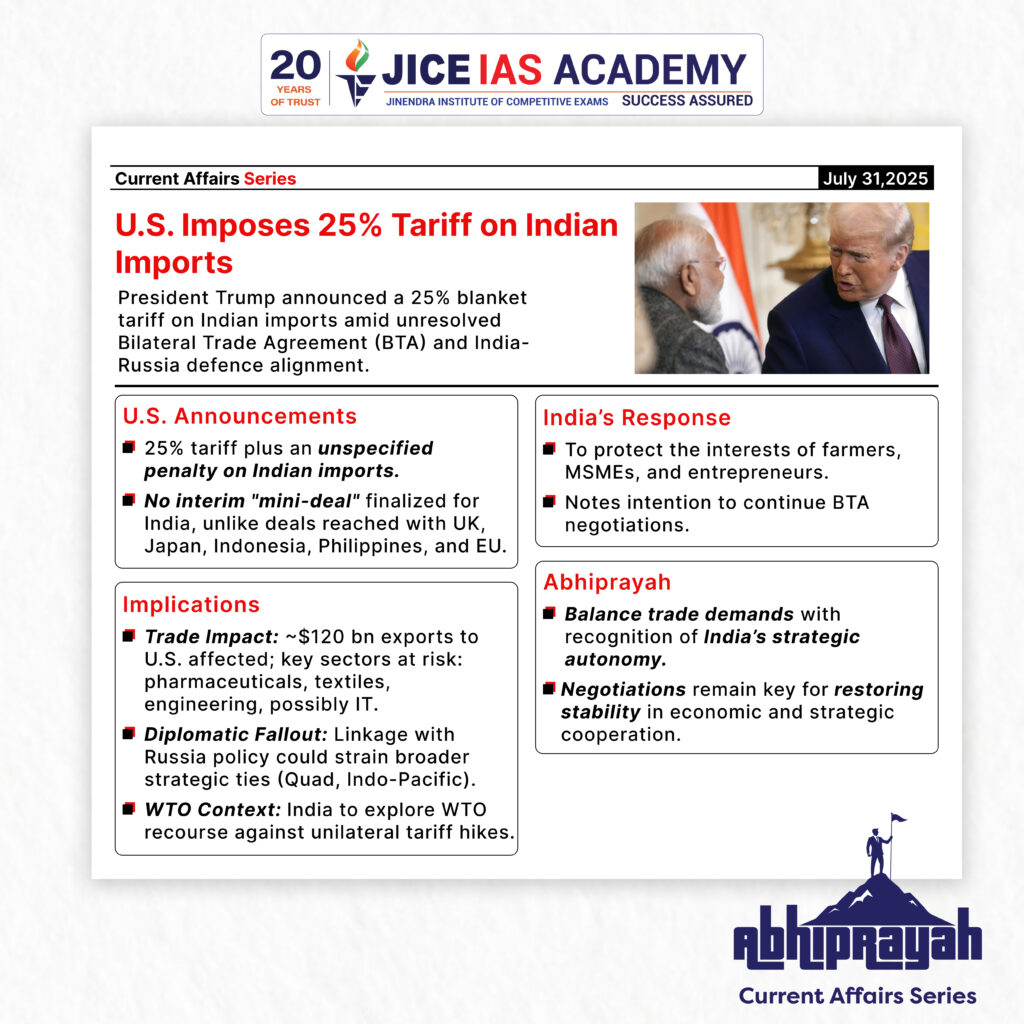
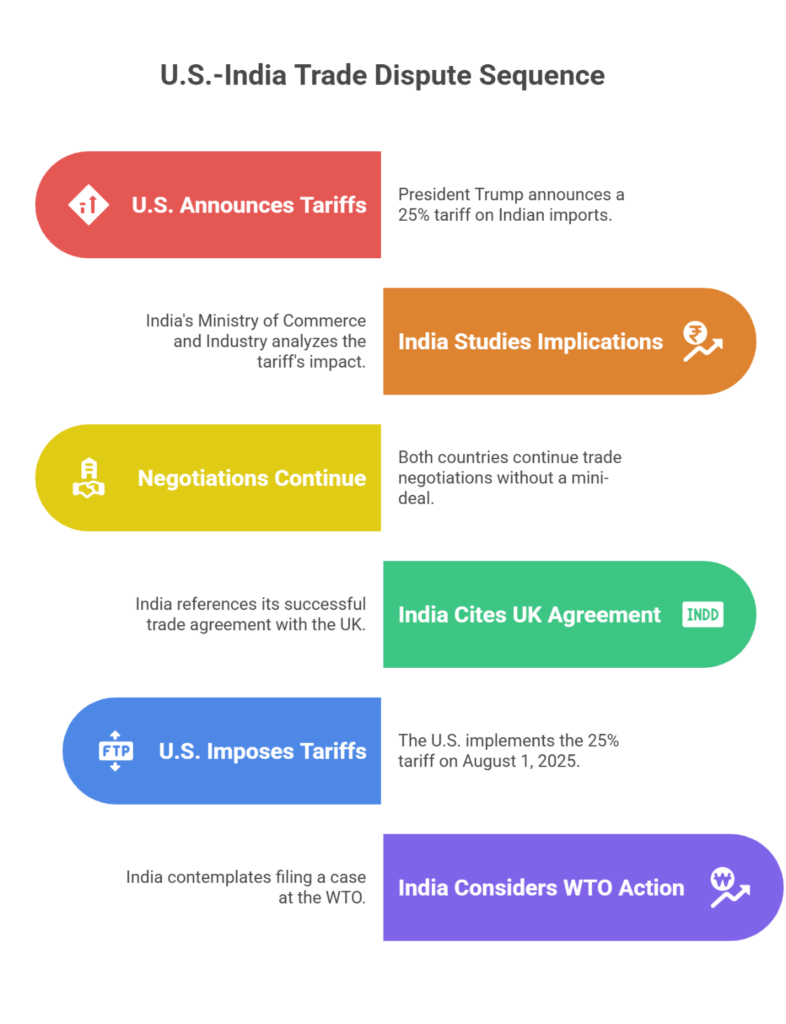
  • The U.S. imposed a 25% tariff on Indian imports from August 1, 2025, citing India’s high trade barriers and defence ties with Russia.

Introduction

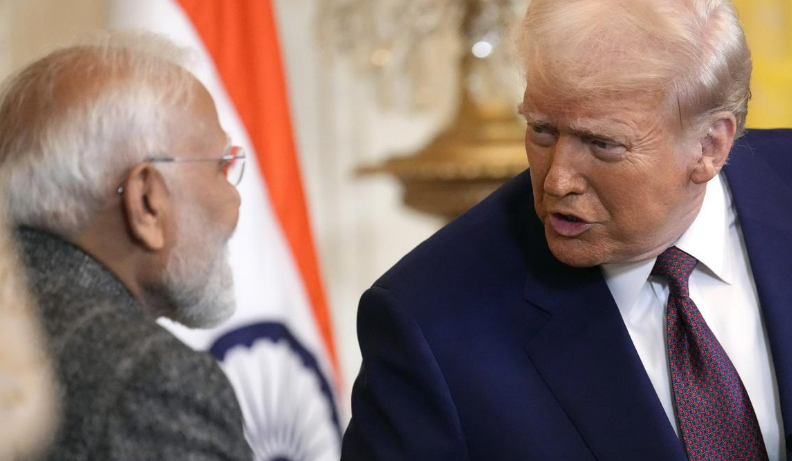
  • On July 30, 2025, U.S. President Donald Trump announced a 25% tariff on all imports from India, citing a range of strategic and trade-related concerns.
  • This decision comes amidst ongoing but unresolved bilateral trade negotiations and follows a series of similar tariff moves against several U.S. trading partners.

Background of U.S.-India Trade Relations

  • Trade Tensions and Tariff Disputes: Trade relations between the two nations have seen fluctuating tensions over tariffs, market access, and regulatory barriers.
  • India has been accused by the U.S. of high tariff rates and non-monetary trade barriers, particularly impacting American agricultural and pharmaceutical exports.
  • Energy and Defence Dealings with Russia: President Trump criticized India’s continued military and energy procurement from Russia, especially at a time when the West is trying to isolate Russia over its actions in Ukraine.
  • Bilateral Trade Agreement (BTA): Negotiations for a comprehensive BTA have been ongoing since February 2025, with leaders indicating a possible conclusion by Fall 2025. However, no mini-deal has been finalized.

Key Announcements by the U.S.

  1. 25% Tariff + Additional Penalty
  • Effective from August 1, 2025.
  • The stated reasons:
    • High Indian tariffs.
    • Non-monetary trade barriers (“strenuous and obnoxious”).
    • India’s major energy and military trade with Russia.
  • The penalty component remains unspecified, adding uncertainty for Indian exporters.
  1. No “Mini-Deal” Finalized
  • Despite negotiations, no interim relief has been agreed upon.
  • Statements by U.S. Trade Representative Jamieson Greer on July 28 indicated that talks may extend beyond the August 1 deadline.

India’s Response

Ministry of Commerce and Industry Statement

  • India is “studying the implications” of the U.S. announcement.
  • Reaffirmed commitment to a balanced and mutually beneficial trade agreement.
  • Stated intention to protect national interests, especially concerning:
    • Farmers
    • MSMEs
    • Entrepreneurs

Reference to UK Agreement

  • Cited India’s successful negotiation of the Comprehensive Economic and Trade Agreement (CETA) with the UK as a model of how India secures its interests in trade pacts.

Retaliatory Tariffs and Global Trade Context

  • In April 2025, Trump had announced “Liberation Day tariffs” on several countries, citing trade imbalances.
  • “Liberation Day Tariffs” is a term coined by U.S. President Donald Trump in April 2025 to describe a retaliatory trade measure taken by the United States.
  • It refers to a blanket tariff policy where the U.S. imposed increased import duties on goods from countries that, according to the U.S., maintained unfair trade practices—especially high tariffs and non-tariff barriers on American products.
  • A 90-day pause was initiated to allow for bilateral deals, later extended to August 1.

Countries That Have Concluded Deals with the U.S.

Country

New Tariff Rate

Earlier Rate

Key Sector Benefits

United Kingdom

10% (Cars)

27.5%

Tariff removal on aerospace exports

Japan

15%

~25%

Broader tariff cuts

Indonesia

19%

~25%

Bilateral deal concluded

Philippines

19%

~25%

Equalized tariffs

European Union

15%

Varied

Sectoral adjustments

  • India is not among the countries that concluded a mini-deal, reflecting ongoing negotiation deadlocks.

Major Issues in India-U.S. Trade Talks

Issue

U.S. Position

Indian Position

Agricultural Market Access

Demands lower tariffs, especially on dairy

Concerns over domestic farmers’ livelihoods

Medical Devices

Wants price de-regulation

India prefers price caps to ensure affordability

ICT Products

Seeks removal of import duties

India imposes duties for domestic production

Defense and Strategic Trade

Critical of India’s Russia ties

India follows strategic autonomy

Implications for India

  1. Trade Impact
  • Indian exports to the U.S. (~$120 billion in 2024–25) may face increased costs and reduced competitiveness.
  • Sectors likely to be affected:
    • Pharmaceuticals
    • Textiles
    • Engineering goods
    • IT services (if included in non-tariff measures)
  1. Diplomatic Fallout
  • Risk of geopolitical tension due to linking tariffs with India’s Russia policy.
  • Could complicate strategic alignment under the Quad or Indo-Pacific cooperation.
  1. WTO and Multilateralism
  • Raises concerns about unilateral tariff actions by the U.S.
  • India may consider filing a case at the WTO if the penalty is seen as violating trade norms.

Way Forward

For India

  • Continue negotiations for a fair trade deal, safeguarding sensitive sectors.
  • Seek clarity on the undefined “penalty”.
  • Diversify export markets to reduce dependence on the U.S.

For the U.S.

  • Recognize India’s strategic autonomy in defense procurement.
  • Balance trade concerns with geopolitical cooperation in Asia-Pacific.

For Both

  • Work towards resolving disputes through dialogue and mutual accommodation.
  • Leverage ongoing strategic engagements to buffer trade tensions.

Conclusion

  • The imposition of a 25% tariff by the U.S. marks a critical moment in Indo-U.S. trade relations, with broader strategic and economic ramifications.
  • While negotiations are expected to continue, both countries must strive to reconcile their economic interests with their strategic partnership to avoid long-term disruption.

Introduction

Economic Implications

For Indian Exporters

  • These reforms reduce transaction costs and compliance hurdles
  • Encourage a more competitive and efficient export environment
  • Promote value addition in key sectors like leather

For Tamil Nadu

  • The reforms particularly benefit the state’s leather industry, a major contributor to employment and exports
  • Boost the marketability of GI-tagged E.I. leather, enhancing rural and traditional industries

For Trade Policy

  • These decisions indicate a shift from regulatory controls to policy facilitation

Reinforce the goals of Make in India, Atmanirbhar Bharat, and India’s ambition to become a leading export power

Recently, BVR Subrahmanyam, CEO of NITI Aayog, claimed that India has overtaken Japan to become the fourth-largest economy in the world, citing data from the International Monetary Fund (IMF). 

India’s rank as the world’s largest economy varies by measure—nominal GDP or purchasing power parity (PPP)—each with key implications for economic analysis.

Significance and Applications

Leave a Reply

Your email address will not be published. Required fields are marked *

Call Us Now !

Copyright © JICE ACADEMY FOR EXCELLENCE PRIVATE LIMITED