India’s Geopolitical Vision Must Expand in a Fragmenting World Order
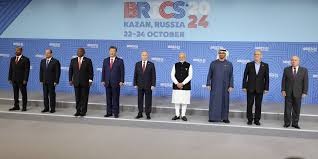
UPSC CURRENT AFFAIRS – 29th March 2025 Home / India’s Geopolitical Vision Must Expand in a Fragmenting World Order Why in News? India must broaden its geopolitical engagement, particularly in a volatile international landscape shaped by the return of Donald Trump (Trump 2.0), growing global conflicts, and rising economic protectionism. India should not treat economic growth and geopolitical assertiveness as mutually exclusive, and must rise to its global expectations. Key Takeaways India’s Current Approach: A Reticent Global Player Despite being the world’s fifth-largest economy, India often chooses restraint in international conflicts. In recent history, India has played decisive roles: Bangladesh (1971): Helped end genocide and create a new nation. Maldives (1988): Stopped a coup attempt. Sri Lanka (2009): Assisted in the defeat of LTTE. Anti-piracy efforts and disaster response in the Indian Ocean region. India’s Contributions to Global Public Goods Vaccine Maitri during the COVID-19 pandemic. Leadership in climate initiatives (e.g., International Solar Alliance). Sharing of digital public infrastructure. First responder in natural disasters (e.g., Turkey, Nepal). Key Concepts Multi-Alignment Policy India maintains strong bilateral relations with diverse powers (U.S., Russia, EU, Gulf nations, etc.). However, unlike Non-Alignment, which was rooted in collective Global South advocacy, multi-alignment today is more inward-looking, focused on Indian interests. Global Expectations from India India aspires for a permanent UNSC seat, and to be seen as a key pole in a multipolar world. Its credibility as a democratic power and neutral actor gives it leverage in major conflicts (e.g., Ukraine–Russia). PM Modi’s statement to Putin — “this is not an era of war” — had global resonance. Challenges if India Remains Passive Ceding geopolitical space to players like: Türkiye: Brokered Russia–Ukraine talks in 2022. Saudi Arabia & Qatar: Hosted ceasefire and mediation efforts in West Asia and Africa. India was excluded from key forums like the Troika Plus talks on Afghanistan. In Bangladesh, India’s influence was bypassed in recent U.S. diplomatic interventions. Global Reset: Opportunities & Risks Shifting World Order U.S. disengagement in Europe and Asia may increase. Trump 2.0 could lead to more isolationism and tariff wars. Rising China–U.S. alignment risks the creation of spheres of influence, potentially sidelining India. India Must Pivot Strategically Strengthen outreach beyond the neighbourhood: Europe, Central Asia, East Asia. Reassess regional groupings: India’s downgraded engagement in the SCO and exit from RCEP have narrowed strategic options. Consider economic reforms to improve trade ties with the U.S., potentially leading to a bilateral trade agreement. Strategic Recommendations Develop regional policies, not just bilateral ties — e.g., a comprehensive West Asia strategy. Proactively signal willingness to engage in conflict resolution, even if not as a mediator. Use India’s historic credibility (e.g., Korean War, UNSC bridge-building in 2021–22) as a foundation for assertive diplomacy. View economic development and geopolitics as complementary, not conflicting. Highlights India’s geopolitical clout is rising, but remains underutilised. Trump 2.0 may force realignment; India should seize the opportunity to be a rule-shaping power, not just a rule-taker. The world expects more from India — credibility, balance, initiative — especially as conflicts and fragmentation grow. Practicing full-spectrum multi-alignment is now a necessity, not a choice.
PAC Report Calls for GST 2.0 & Fiscal Reforms

UPSC CURRENT AFFAIRS – 29th March 2025 Home / PAC Report Calls for GST 2.0 & Fiscal Reforms Why in News? The 19th report of the Public Accounts Committee (PAC) was tabled in Parliament on March 29, 2025. It criticizes the functioning of the GST regime and raises serious concerns about fiscal transparency and state compensation. The PAC has called for a “GST 2.0” reform model to ensure equitable revenue distribution and restored federal balance. Key Highlights from the PAC Report Revenue Drop: Nearly 2% decline in indirect tax revenue between FY18 and FY20 (pre-COVID years). No Audit of Compensation Fund: The States’ Compensation Fund has not been audited or finalized for 6+ years. The Centre did not submit accounts to the CAG, delaying disbursement to States. Revenue Mismatches: Audit of 10,667 cases revealed 2,447 inconsistencies, worth ₹32,577 crore. “Lackadaisical” Audit Approach: The PAC termed the Finance Ministry’s approach inefficient and negligent. Delayed Compensation: Many States have not received dues or faced serious delays, harming governance and development. Key Concepts GST (Goods and Services Tax): A unified indirect tax, destination-based, rolled out in July 2017 to simplify tax compliance. Destination-Based Taxation: Revenue accrues to the state where goods/services are consumed, not produced — hurts manufacturing States. Compensation to States Act, 2017: Promised 14% annual revenue growth (2017–22), based on FY16 as base year. Funded by cess on sin/luxury goods (tobacco, coal, etc.). CAG Audit: The Comptroller and Auditor General is responsible for auditing government accounts — without submission, no certification is possible. Concerns Raised by the PAC Centralisation of GST Regime: Major States feel the Centre dominates tax decisions, eroding State fiscal autonomy. Loss of State Revenues: Manufacturing states report sharp declines in revenue after GST rollout. Vertical Fiscal Imbalance: States have more responsibilities but fewer resources, increasing dependence on the Centre. Demand for Revenue Share Revision: Currently, GST revenue is shared 50:50 between Centre and States. States demand 70–80% share, citing rising expenditure burdens. PAC Recommendations Formal Audit Mechanism: Establish institutional coordination between Centre and CAG for timely audits. Transparency in Fund Management: Ensure regular submission and public availability of Compensation Fund records. Launch of GST 2.0: Comprehensive review of current GST structure. Reforms in compliance, compensation mechanism, revenue sharing, and audit accountability. Restore the spirit of cooperative federalism. Why It Matters Trust Deficit: Delays and opacity have strained Centre–State relations. Federal Principles Undermined: GST was meant to unify, but may now be weakening federal balance. Reform Opportunity: GST 2.0 can offer a more equitable, accountable, and efficient framework if implemented with consensus.
Lok Sabha Passes Carriage of Goods by Sea Bill, 2024
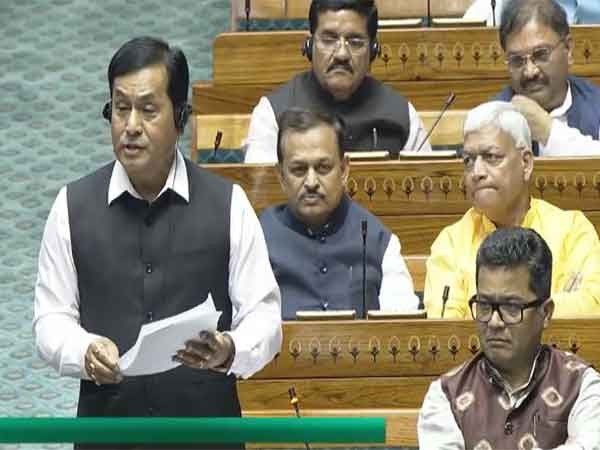
UPSC CURRENT AFFAIRS – 29th March 2025 Home / Lok Sabha Passes Carriage of Goods by Sea Bill, 2024 Why in News? On March 28, 2025, the Lok Sabha passed the Carriage of Goods by Sea Bill, 2024, which aims to modernise India’s maritime shipping laws by replacing the century-old Indian Carriage of Goods by Sea Act, 1925. The new Bill aligns Indian maritime law with international conventions and introduces clear provisions for responsibilities, liabilities, rights, and immunities of carriers involved in sea transport. What the New Law Proposes Replaces the outdated 1925 Act, which was based on British-era maritime practices. Brings Indian legislation in line with international maritime conventions such as the Hague Rules, Hague-Visby Rules, and other global standards on the carriage of goods by sea. The law applies to goods transported: From an Indian port to a foreign port Between two Indian ports (coastal shipping) Key Features of the Bill Provision Description Legal Clarity for Carriers Defines responsibilities, liabilities, rights, and immunities of shipping companies. Simplified Maritime Regulation Focuses on ease of doing business and clarity in legal procedures. Applies to both foreign and domestic routes Enhances regulatory scope to both international and coastal shipping. Stakeholder Consultations Minister stated the law was developed with inputs from key maritime stakeholders. Important Terms Carrier: A person or company that undertakes the transport of goods by sea. Consignee: The person or party to whom the goods are delivered. Immunities of Carriers: Legal protections from certain liabilities, like those caused by natural perils. International Conventions: Agreements between countries that set common rules (e.g., Hague-Visby Rules) for maritime transport and liability. Debate in Parliament: Support vs Criticism Government’s Stand The bill simplifies legal framework, making India’s shipping industry more globally competitive. Replacing colonial-era laws is part of ongoing efforts to modernise India’s legal architecture. Will help support India’s goal to become a shipping and logistics hub. Concerns Raised by Opposition Centralisation of power: Several MPs alleged the Bill grants excessive control to the Union government, sidelining state governments and local players. Privatisation worries: Critics claimed it promotes privatisation of ports and shipping under the garb of reform. Trader & farmer impact: MPs from Maharashtra and Bihar flagged lack of safeguards for fishermen, farmers, and small traders. Transparency issues: Allegations of benefiting select private companies and undermining public accountability. Federalism concerns: TMC’s Pratima Mondal said the Bill weakens the federal structure and marginalises states and small logistics firms. Why This Bill is Significant Maritime transport handles over 90% of India’s international trade by volume. India’s shipping and port infrastructure is crucial for ‘Make in India’, export growth, and logistics cost reduction. Modern laws improve investor confidence, dispute resolution, and compliance with international obligations. The Bill complements the government’s broader strategy to revamp colonial-era laws across sectors.
Cabinet Clears ₹22,919-Cr Scheme to Boost Electronics Components Manufacturing
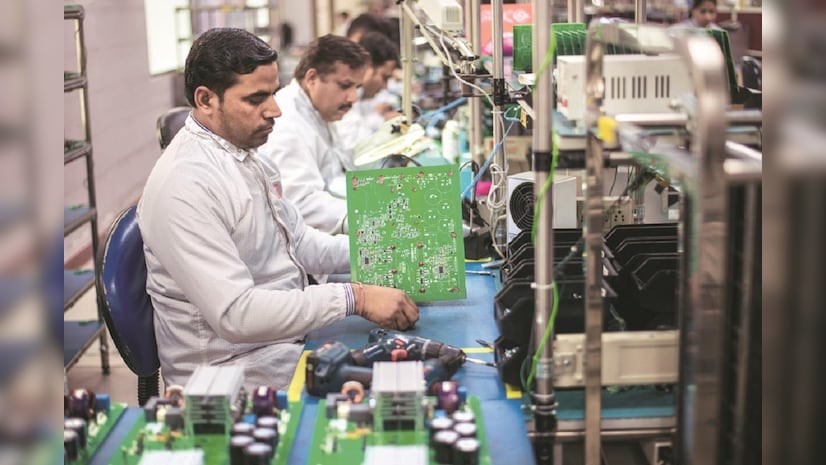
UPSC CURRENT AFFAIRS – 29th March 2025 Home / Cabinet Clears ₹22,919-Cr Scheme to Boost Electronics Components Manufacturing Why in News? On March 28, 2025, the Union Cabinet approved a new incentive scheme worth ₹22,919 crore for the domestic manufacturing of electronic components. Spread over six years, the scheme is expected to: Generate ₹4.56 lakh crore worth of production, Attract ₹59,350 crore in fresh investments, Create 91,600 direct jobs, with incentives directly linked to job creation. What the Scheme Aims to Do This scheme is part of a strategic push to build a self-reliant electronics ecosystem in India — a sector historically dominated by China and East Asia. Objectives: Strengthen domestic value chains in electronics. Reduce dependency on imported components. Enable export competitiveness through scale and quality. Encourage large-scale job creation. Targeted Components: Display modules Sub-assembly camera modules PCB (Printed Circuit Board) assemblies Lithium cell enclosures Resistors, capacitors, ferrites These are core components for devices like smartphones, laptops, TVs, microwave ovens, and other appliances. Key Concepts Domestic Value Addition Refers to the portion of value created within the country during the production of goods. India’s value addition in electronics is currently just 15–20%. The goal is to push this to 30–40%, by producing core components in-house, not just assembling imported parts. By contrast, China’s domestic value addition stands at around 38%. Import Substitution vs Export Orientation Import Substitution: Making at home what we currently import — a defensive approach. Export-Led Growth: Producing at scale for global markets — a proactive and sustainable strategy. Minister Ashwini Vaishnaw emphasized a shift away from import substitution and towards export promotion, as viability improves with scale. Investment-to-Turnover Ratio In smartphone assembly: ₹1 invested returns ₹20 in production. In component manufacturing: ₹1 invested yields only ₹2–₹4. Hence, component manufacturing is riskier and slower to yield profits, which is why government intervention is necessary to de-risk private investment. Why This Scheme is Crucial Now? India’s Heavy Import Dependency Electronics is India’s second-largest import category after oil. Imports of key components like integrated circuits rose from $29 billion (FY21) to $46.5 billion (FY23). In 2022–23, India’s component production was just $10.75 billion, while demand is expected to hit $160 billion by 2028–29. The Demand-Supply Gap Internal estimates show a $100 billion+ gap in domestic demand. To plug this, India needs component production growth of over 50% CAGR — not achievable without a structured incentive program. Policy Differentiation from Previous Schemes This is not a simple repeat of the earlier PLI (Production Linked Incentive) scheme. Here’s how it’s different: Feature PLI Scheme New Components Scheme Focus Finished products (e.g. phones) Core components Incentive Linkage Based on production/output Based on jobs, capex, production Value Addition Achieved 15–20% Targeting 30–40% Export Orientation Moderate Strong push towards exports Global Context and Geostrategic Relevance China dominates global component manufacturing but is facing pushback due to supply chain concerns, tariffs, and geopolitical tensions. Countries like the US, Japan, and EU are looking to diversify supply chains. India has a rare window of opportunity to position itself as a trusted alternative — but this requires scale, skill, and policy continuity.
Partial Solar Eclipse 2025

UPSC CURRENT AFFAIRS – 29th March 2025 Home / Partial Solar Eclipse 2025 Why in News? A partial solar eclipse occurred on Saturday, March 29, 2025, visible in parts of the US, Canada, Europe, Russia, and Africa. Although not visible in India, it provides an excellent opportunity to understand astronomical phenomena. What is a Partial Solar Eclipse? A solar eclipse takes place when the Moon moves between the Earth and the Sun, blocking the Sun’s light partially or completely, and casting a shadow on Earth. Depending on the degree of alignment between the three celestial bodies — the Sun, Moon, and Earth — different types of eclipses occur. In the case of a partial solar eclipse: The alignment is not perfect, so only a part of the Sun is obscured. The Moon’s shadow covers only a portion of the Sun, creating a “crescent” appearance of the Sun at the maximum phase of the eclipse. Unlike a total eclipse, the Sun’s corona is not visible, and daylight is not significantly dimmed. Types of Solar Eclipses There are four major types of solar eclipses, each depending on the position and distance of the Moon in its orbit: Partial Solar Eclipse Most common type of eclipse. Only a segment of the Sun is covered by the Moon. No corona is visible; safe viewing still requires special protection. Total Solar Eclipse Occurs when the Moon completely covers the Sun, as seen from Earth. The Sun’s corona (outer atmosphere) becomes visible. Causes dramatic dimming of daylight, resembling twilight. Annular Solar Eclipse Happens when the Moon is farther from Earth in its elliptical orbit. As a result, it appears smaller and doesn’t cover the Sun completely. A “ring of fire” or glowing ring of sunlight remains visible around the Moon. Hybrid Solar Eclipse Rarest type, occurring approximately once every 10 years. The eclipse shifts between total and annular depending on the observer’s location on Earth. The last hybrid eclipse occurred in April 2023. How Often Do Solar Eclipses Occur? Solar eclipses happen two to five times a year, but not all are visible from the same location. Total solar eclipses are rarer — visible from a specific location roughly once every 375 years. Solar and lunar eclipses often occur in pairs, separated by about two weeks, due to the Moon’s orbital cycle around the Earth. Key Terms and Concepts Umbra The darkest part of the Moon’s shadow. Observers in the umbra experience a total eclipse. Corona The outermost layer of the Sun’s atmosphere. Only visible during a total solar eclipse, appearing as a glowing halo. Annularity Refers to the phase during an annular eclipse when the rim of the Sun remains visible, forming a bright ring. Pinhole Projector A safe, indirect method to observe solar eclipses. Made using cardboard, aluminum foil, and paper. Projects an image of the Sun through a small hole onto a surface without directly viewing the Sun
India’s Nuclear Energy Push: 100 GW Target By 2047 With Private Sector Entry
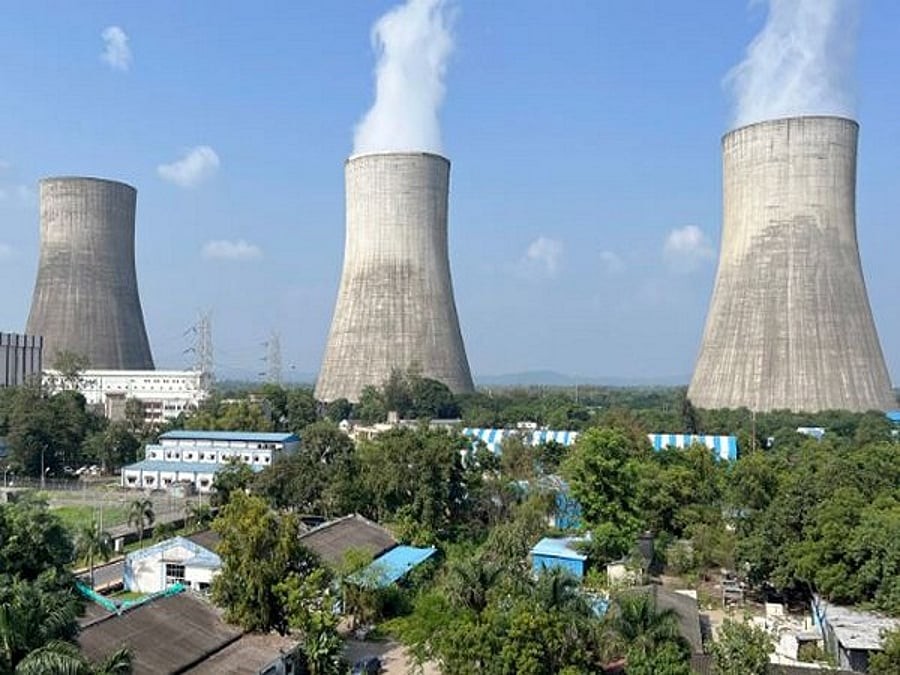
UPSC CURRENT AFFAIRS – 28th March 2025 Home / India’s Nuclear Energy Push: 100 GW Target By 2047 With Private Sector Entry Why in News? India has unveiled an ambitious plan to generate 100 GW (gigawatts) of nuclear energy by 2047, signaling a significant shift in its energy strategy. A key aspect of this initiative is the decision to open the nuclear sector to private players, a move that was previously unprecedented. Government Commitment and Policy Initiatives Union Minister of State for Science and Technology, Dr. Jitendra Singh, highlighted the strategic importance of nuclear mission in the Rajya Sabha. He emphasized that nuclear energy is projected to contribute 10% of India’s total energy needs by 2047. To support this goal, the government has significantly increased budgetary allocations for nuclear power, with a 170% rise in funding for the Department of Atomic Energy since 2014. The 2024-25 budget allocated ₹20,000 crore for the indigenous development of at least five Bharat Small Modular Reactors (SMRs). Role of Small Modular Reactors (SMRs) A crucial component of India’s nuclear energy expansion is the development of Small Modular Reactors (SMRs) with capacities ranging from 16 MW to 300 MW. These reactors offer several advantages, including: Suitability for remote and industrial areas Reduced construction time and cost Enhanced safety features compared to conventional reactors Lower environmental footprint By integrating SMRs into India’s energy infrastructure, the government aims to provide reliable and clean electricity to underserved regions while making significant strides toward the country’s net-zero carbon emissions target by 2070. International Collaborations and Indigenous Development India is strengthening its nuclear capabilities through strategic collaborations with countries like France and the United States. These partnerships aim to advance nuclear technology while ensuring a strong focus on indigenous research and development. The National Research Foundation, which receives 60-70% of its funding from non-government sources, is expected to play a pivotal role in accelerating nuclear research and innovation in the country. Thorium Utilization and Revitalization of Projects India holds 21% of the world’s thorium reserves, a resource that could significantly boost the country’s long-term nuclear energy potential. The government is actively working on: Expediting projects like the Bhavini reactor and Kudankulam nuclear plant Reviving stalled nuclear energy initiatives Promoting advanced research on thorium-based reactors These efforts reflect India’s commitment to enhancing energy security while leveraging indigenous resources for sustainable power generation. Private Sector Participation: A Paradigm Shift The decision to allow private sector involvement in nuclear energy marks a major departure from past policies. Historically, India’s nuclear program was tightly controlled by the government due to security and regulatory concerns. The inclusion of private players is expected to: Accelerate technological advancements Attract investments in nuclear infrastructure Foster competition and efficiency in the sector This transformation aligns with global trends where private enterprises contribute significantly to nuclear energy development. Conclusion India’s nuclear energy mission is set to play a transformative role in ensuring a stable and sustainable power supply for the future. With strong government backing, increased funding, strategic international collaborations, and private sector participation, the country is poised to achieve its 100 GW nuclear energy target by 2047. This initiative not only reinforces India’s position as a leader in clean energy solutions but also addresses the growing electricity demand in an environmentally responsible manner.
Bangladesh National Day: ‘Mutual sensitivity to each other’s interests and concerns’

UPSC CURRENT AFFAIRS – 28th March 2025 Home / Bangladesh National Day: ‘Mutual sensitivity to each other’s interests and concerns’ Why in News? Amid the chill in Delhi-Dhaka ties over violence against minorities, Prime Minister Narendra Modi wrote to Bangladesh Chief Adviser Mohammad Yunus on March 26, the country’s National Day, and called for taking forward bilateral ties based on sensitivity to each others’ concerns. India and Bangladesh Relations Recent events have placed the traditionally strong relationship between India and Bangladesh under a degree of scrutiny. While both nations acknowledge their shared history and the sacrifices made during Bangladesh’s Liberation War, recent developments within Bangladesh have prompted India to express concerns. A Call for Mutual Sensitivity On the occasion of Bangladesh’s National Day (March 26th), Prime Minister Narendra Modi sent a letter to Muhammad Yunus, the Chief Advisor of Bangladesh’s interim government. The letter emphasized the importance of “mutual sensitivity to each other’s interests and concerns” in maintaining a strong bilateral relationship. Key Concerns for India: Violence Against Minorities: Following the ouster of Sheikh Hasina in August 2024, there have been reports of increased violence against Hindu minorities in Bangladesh. India has repeatedly condemned this violence and urged the Bangladeshi government to ensure the safety and security of its minority populations. Rise of Islamic Fundamentalism: Alongside the violence, there are concerns about the growing influence of hardline Islamist forces in Bangladesh. India is closely monitoring the situation and seeking assurances regarding border stability and the protection of minorities. Bangladesh-China Relations: Muhammad Yunus’s recent visit to China, coinciding with strains in India-Bangladesh ties, is seen as a significant development. China is seeking to increase its involvement in Bangladesh’s infrastructure and strategic projects, which could be a concern for India given Beijing’s expanding influence in the region. India’s Response and Future Outlook: India has engaged with the Bangladeshi government at various levels to address its concerns. While reaffirming its commitment to a democratic, stable, peaceful, and progressive Bangladesh, India is also closely watching developments within the country and its external engagements. The emphasis on “mutual sensitivity” highlights India’s desire to maintain a strong and stable relationship, but also its expectation that Bangladesh will address the concerns regarding minority safety and regional stability. The upcoming BIMSTEC summit in Bangkok, where both Modi and Yunus are expected to be present, could provide an opportunity for further dialogue and a potential reset in the relationship.
EU Unveils €800 Billion Defense Plan to Strengthen Military Preparedness

UPSC CURRENT AFFAIRS – 28th March 2025 Home / EU Unveils €800 Billion Defense Plan to Strengthen Military Preparedness Why in News? The EU’s €800 billion defence plan aims to strengthen European military preparedness by 2030, reduce reliance on the US, boost domestic defence industries, and counter Russian security threats. Introduction The European Union (EU) has unveiled an ambitious €800 billion defence initiative aimed at reducing reliance on the US and strengthening military capabilities to counter security threats, particularly from Russia. With a target of 2030 for military readiness, the plan focuses on enhancing Europe’s defence industry, strategic autonomy, and rapid response mechanisms. Key Components of the EU Defence Plan Increased Defence Spending & Loan Scheme €150 billion defence loan scheme to finance defence procurement, with strict conditions on sourcing. €650 billion in fiscal flexibility allowing EU nations to borrow for defence without breaching EU fiscal rules. At least 65% of defence funds must be spent on EU, Norwegian, or Ukrainian suppliers. Boosting Europe’s Defence Industry Prioritizing “Buy European” to support domestic manufacturers. Enhancing joint procurement of weapons, drones, and ammunition to ensure strategic self-reliance. Centralized EU-led defence procurement body proposed, similar to the COVID-19 vaccine procurement model. Addressing NATO and Geopolitical Concerns Growing skepticism over NATO’s ability to deter threats amid shifting US foreign policy. Danish intelligence warns that Russia could launch a large-scale war in Europe within five years if NATO appears weak. UK, US, and Turkey excluded from the EU defence fund unless they sign security agreements with the bloc. Challenges and Political Divisions Funding and Fiscal Constraints Wealthier EU nations like Germany and the Netherlands hesitant to back EU-wide defence loans. Southern European nations wary of accumulating more debt. Exclusion of Key Allies The UK, a major European defence partner, is not part of the EU scheme, raising concerns about interoperability. Uncertainty over the US’s commitment to European security amid changing political leadership. Balancing Industry Protection & Open Procurement Parliament pushes for an 80% European-sourced defence production rule (up from 65%). Restrictions on using components from third countries that do not align with EU security interests. Implications for Global Defence Strategy Shift towards European strategic autonomy, reducing over-dependence on US military support. Potential restructuring of NATO dynamics, with EU taking greater responsibility for its own defence. Strengthened EU-Ukraine defence cooperation, with Ukraine benefiting from EU-backed procurement. Conclusion The EU’s 2030 defence strategy aims to create a self-reliant military-industrial complex and enhance rapid response capabilities. However, political divisions over funding, industrial protection, and NATO’s role remain key challenges. The success of this initiative will determine Europe’s ability to independently counter future security threats while maintaining strong transatlantic alliances.
India needs to develop its deep-sea capabilities

UPSC CURRENT AFFAIRS – 28th March 2025 Home / India needs to develop its deep-sea capabilities Why in News? India’s deep-sea exploration efforts, led by the Deep Ocean Mission (DOM) and Samudrayaan Project, are crucial for economic growth, strategic security, and scientific advancements, especially in light of global deep-sea developments. Introduction India’s focus on developing deep-sea capabilities has gained momentum with the Matsya-6000 submersible under the Samudrayaan Project, part of the Deep Ocean Mission (DOM). As deep-sea exploration becomes crucial for economic, strategic, and security reasons, India must enhance its underwater technology to compete with global leaders like China, the US, and Japan. Deep-Sea Exploration: Why It Matters Economic Potential The deep sea holds vast mineral resources, including polymetallic nodules, gas hydrates, and rare earth elements. These resources can fuel India’s blue economy, reducing dependence on imports. Strategic Importance Undersea cables carry 95% of the world’s internet and financial data. Securing them is vital for national security. The Exclusive Economic Zone (EEZ) extends 200 nautical miles (370 km) from India’s coastline, requiring surveillance and resource protection. China’s deep-sea fleet and cable-cutting technology pose potential threats to undersea infrastructure. Scientific Advancements Deep-sea mapping aids in climate change research and disaster prediction. Enhancing underwater domain awareness (UDA) helps in maritime security and exploration. Challenges in Deep-Sea Development Technological Constraints Extreme water pressure (380 times atmospheric pressure in India’s EEZ) necessitates advanced materials and submersible design. Low-frequency sound technologies like VLF and ELF require extensive research and funding. Financial and Institutional Gaps Unlike China, India lacks dedicated deep-sea research institutions and large-scale funding. Dependence on foreign technology hampers self-reliance in deep-sea exploration. Security and Infrastructure Challenges India lacks advanced submarine rescue and deep-sea combat capabilities. Underwater cable maintenance and protection mechanisms are still underdeveloped. India’s Deep-Sea Initiatives Deep Ocean Mission (DOM) Launched in 2018 under the Ministry of Earth Sciences. Focuses on resource exploration, biodiversity studies, and undersea infrastructure development. Samudrayaan Project Development of Matsya-6000, India’s first manned deep-sea submersible. Capable of diving 6,000 meters for mineral and biodiversity research. Strengthening Ocean Research and Defence Plans to upgrade the Department of Ocean Development to a full-fledged ministry. Need for a mission-mode approach with quick approvals and high accountability. Way Forward Boost R&D and Funding: Establish centres of excellence in deep-sea science and engineering. Strengthen Security Measures: Develop anti-submarine capabilities and real-time monitoring of deep-sea activities. Enhance Global Collaboration: Partner with France, Japan, and the US for technological expertise. Conclusion India’s deep-sea ambitions are vital for its economic security, scientific progress, and strategic defence. A well-funded, mission-driven approach will ensure India emerges as a global leader in underwater exploration and security.
Europe’s space agency retires Gaia, the cartographer of the cosmos: Its mission & significance

UPSC CURRENT AFFAIRS – 28th March 2025 Home / Europe’s space agency retires Gaia, the cartographer of the cosmos: Its mission & significance Why in News? The Gaia Mission (2013-2025) by the European Space Agency (ESA) revolutionized astrometry, creating a 3D map of the Milky Way. Introduction The European Space Agency’s (ESA) Gaia mission, launched in December 2013, was one of the most ambitious space observatories dedicated to astrometry—the precise measurement of celestial bodies. Over the past decade, Gaia revolutionized the understanding of the Milky Way, mapping its structure, motion, and evolution. The mission was officially shut down on March 27, 2025, after providing unprecedented astronomical data that will continue to shape scientific research for years to come. Gaia Mission: Objectives and Achievements Primary Goal: To create the most precise three-dimensional map of the Milky Way galaxy. Observational Data: Recorded 3 trillion observations of over 2 billion stars and celestial objects. Contributed to 13,000+ scientific publications. Provided insights into the shape, motion, and history of the galaxy. Position and Instruments Lagrange Point 2 (L2): Gaia was placed 1.5 million km behind Earth, away from planetary and solar interference, ensuring unobstructed cosmic observation. Twin Telescopes and Billion-Pixel Camera: Used a photometer, spectrometer, and astrometer to precisely analyze star positions and motions. Largest digital camera in space with nearly a billion pixels. Major Discoveries by Gaia Mapping the Milky Way’s Structure and Evolution Confirmed that the Milky Way has a central bar and spiral arms. Revealed that the galactic disc is warped and wobbles, likely due to collisions with smaller satellite galaxies. Helped reconstruct the past interactions and future evolution of the galaxy. Discovery of a New Type of Black Hole Unlike traditional black holes detected via radiation, Gaia identified “truly black” holes using gravitational effects. One of the black holes detected is the closest to Earth discovered so far. Tracking Asteroids and Planetary Defense Mapped the orbits of 150,000+ asteroids, including those potentially hazardous to Earth. Gaia’s End-of-Mission and Legacy On March 27, 2025, ESA deactivated Gaia by draining its energy sources and moving it into a retirement orbit around the Sun. A bulk of its data is still being processed and will be released in phases: First five-and-a-half years’ data will be published in 2026. Final dataset expected by the end of the decade. Future Prospects in Space Astrometry Despite its vast scope, Gaia mapped only about 2% of the estimated 100 billion stars in the Milky Way, highlighting the need for future missions. The data collected will aid upcoming astronomical projects and space missions focused on dark matter, exoplanet discovery, and galactic evolution. Conclusion Gaia’s contributions have transformed modern astronomy, setting new standards in precision space mapping. Its legacy will continue to drive scientific advancements, shaping humanity’s understanding of the cosmos and our place within it.