Army conducts tri-service Ex Prachand Prahaar in Arunachal

UPSC CURRENT AFFAIRS – 28th March 2025 Home / Army conducts Tri-service Ex Prachand Prahaar in Arunachal Why in News? Exercise Prachand Prahar was a tri-service integrated multi-domain military exercise conducted from 25-27 March 2025 in Arunachal Pradesh. Exercise Prachand Prahar The Indian Armed Forces conducted Exercise Prachand Prahar from 25-27 March 2025 in Arunachal Pradesh, under the Eastern Command of the Indian Army, to test joint warfighting capabilities. It was a continuation of Exercise Poorvi Prahar (November 2024) but expanded to multi-domain operations, integrating land, air, space, and electronic warfare. Key Objectives & Strategic Importance Enhancing Jointness: Synchronizing operations across the Army, Navy, and Air Force. Multi-Domain Warfare: Validating high-altitude combat in an electronically contested environment. Counter-Strike Capabilities: Simulating enemy aggression and retaliatory strikes using advanced weaponry. Surveillance & Reconnaissance: Deploying drones, space-based assets, and surveillance aircraft. Strategic Significance Strengthens India’s defensive preparedness along the India-China border. Enhances interoperability between the three services. Validates modern warfare techniques including electronic and drone warfare. Reinforces Eastern Command’s operational readiness in the LAC region. Other Tri-service military Exercise India conducts several tri-service military exercises to enhance joint operational capabilities across land, air, and maritime domains. Here are some notable ones: Exercise Kavach Conducted By: Indian Army, Navy, Air Force, and Coast Guard Location: Andaman and Nicobar Islands Objective: Enhancing joint warfighting capabilities in island territories and coastal defense strategies. Exercise Paschim Lehar Conducted By: Indian Army, Navy, and Air Force Location: Western Seaboard of India Objective: Strengthening joint operational preparedness in maritime warfare and coastal defense. Exercise Vayu Shakti Conducted By: Indian Army, Navy, and Air Force Location: Rajasthan Objective: Showcasing integrated strike capabilities, air dominance, and precision targeting in desert warfare. Exercise INDRA (Bilateral with Russia, but includes tri-service operations) Conducted By: Indian Army, Navy, and Air Force (in coordination with Russian forces) Location: India/Russia (alternating) Objective: Enhancing inter-service and bilateral coordination for counter-terrorism and large-scale combat operations. Exercise AMPHEX Conducted By: Indian Army, Navy, and Air Force Location: Andaman and Nicobar Islands Objective: Testing amphibious warfare capabilities, beach landings, and joint assault operations. Exercise Poorvi Prahar Conducted By: Indian Army, Navy, and Air Force Location: Eastern Sector (along the India-China border) Objective: Strengthening integrated application of aviation assets and countering threats in high-altitude areas. Conclusion Exercise Prachand Prahar stands as a testament to the Indian Armed Forces’ commitment to technological superiority, jointness, and operational readiness. By integrating land, air, and naval forces in a real-time combat scenario, the exercise enhanced India’s strategic posture along the LAC.
Mathematician Masaki Kashiwara awarded Abel Prize 2024
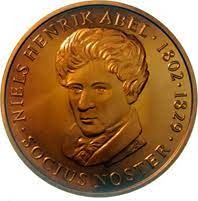
UPSC CURRENT AFFAIRS – 28th March 2025 Home / Mathematician Masaki Kashiwara awarded Abel Prize 2024 Why in News? DNA fingerprinting uniquely identifies individuals by analyzing genetic patterns inherited from both parents, making it a powerful tool for forensic investigations, paternity testing, and biological research. About the Abel Prize Established in 2002 by the Norwegian Parliament to honour pioneering achievements in mathematics. Named after Norwegian mathematician Niels Henrik Abel (1802-1829). First awarded in 2003, often considered the Nobel Prize equivalent in mathematics. Includes a monetary reward of 7.5 million Norwegian kroner (approx. $720,000) and a glass plaque designed by Henrik Haugan. Administered by the Norwegian Academy of Science and Letters, with winners selected by an expert committee advised by the International Mathematical Union (IMU) and the European Mathematical Society (EMS). Legacy of Niels Henrik Abel Best known for proving the impossibility of solving the general quintic equation in radicals, an open problem for over 250 years. Made groundbreaking contributions to elliptic functions and introduced the concept of Abelian functions. Worked under extreme poverty and died of tuberculosis at the age of 26. His work was so influential that French mathematician Charles Hermite remarked, “Abel has left mathematicians enough to keep them busy for five hundred years.” Masaki Kashiwara’s Contributions Recognized for reshaping and enriching the fields of representation theory and algebraic analysis. Developed the theory of D-modules, which provides a bridge between differential equations and algebraic geometry. Discovered crystal bases, simplifying complex mathematical calculations by replacing them with graphical representations of vertices and connections. His research has helped solve longstanding mathematical challenges and opened new avenues for interdisciplinary study. Significance of the Award Kashiwara’s recognition underscores the global impact of mathematical research, highlighting its role in advancing pure and applied sciences. The Abel Prize continues to celebrate mathematicians who pioneer fundamental theories, further strengthening the legacy of Niels Henrik Abel in modern mathematics.
Cubism the art movement in India

UPSC CURRENT AFFAIRS – 28th March 2025 Home / Cubism the art movement in India Why in News? Cubism in India evolved from its European origins, blending geometric abstraction with Indian artistic traditions, pioneered by artists like Gaganendranath Tagore, Ramkinkar Baij, and MF Husain. Background Cubism, one of the most influential art movements of the early 20th century, emerged as a radical departure from traditional artistic conventions. It emphasized geometric abstraction, multiple perspectives, and fragmentation of form, challenging the notion that art must realistically depict nature. While European artists Pablo Picasso and Georges Braque pioneered the movement, Cubism found a distinct identity in India, blending its avant-garde approach with Indian artistic traditions. Emergence and Global Influence of Cubism Origin: Developed in early 20th-century Europe, Cubism moved away from linear perspective and realistic depiction. Key Figures: Picasso and Braque formally established the style, inspired by Paul Cézanne’s geometric simplification and African tribal masks. Characteristics: Deconstructed forms, multiple viewpoints, and abstract representation of three-dimensional reality. Phases: Analytic Cubism (1907-1912) – Monochromatic color palette and fragmented forms. Synthetic Cubism (1912-1914) – Brighter colors, collage elements, and stylized textures. Arrival of Cubism in India Introduced in the 1910s, gaining prominence through the 1922 Indian Society of Oriental Art exhibition in Calcutta. Early Influences: Exposure to Bauhaus school artists like Wassily Kandinsky and Paul Klee. Artistic Discourse: American art historian Stella Kramrisch analyzed Indian Cubism, differentiating it from its European counterpart. Pioneers of Indian Cubism Gaganendranath Tagore (1867-1938) First Indian artist to experiment with Cubism; referred to his work as “Indian Cubism”. His paintings featured diagonal compositions, translucent cubes, and decorative abstraction. Art historian R Siva Kumar notes that Gaganendranath identified himself as a Cubist, as seen in his painted postcard to Roopkrishna (Victoria & Albert Museum, London). Ramkinkar Baij (1906-1980) and NS Bendre (1910-1992) Baij blended Cubist abstraction with Indian folk traditions, especially in sculpture. Bendre introduced Cubism in Baroda’s Faculty of Fine Arts (MS University) in 1950, shaping the next generation of artists. Progressive Artists’ Group (PAG) FN Souza (1924-2002), MF Husain (1915-2011), and Paritosh Sen (1918-2008) integrated Cubism into Indian modernist movements. Paritosh Sen studied under Andre Lhote in Paris and incorporated two-dimensional planes in his work. MF Husain earned the title “Picasso of India”, using bold brushstrokes, fractured forms, and dynamic color contrasts. Adaptation and Evolution of Indian Cubism Fluidity in Style: Indian Cubism retained lyricism and elegance, blending ancient aesthetics with avant-garde principles. Diverse Expressions: Rabin Mondal – Totemic abstraction, symbolizing collective memory. Devayani Krishna – Fractured geometries infused with lyrical textures. SK Bakre – Geometric abstraction with a focus on structural formality. Legacy: Unlike Western Cubism’s strict formalism, Indian artists used it as a tool for emotional depth and storytelling. Conclusion Cubism in India evolved beyond its European origins, adapting to regional traditions, folk motifs, and cultural expressions. The movement not only redefined modern Indian art but also influenced multiple generations of artists. As exhibitions like “Deconstructed Realms: India’s Tryst with Cubism” at DAG Art Gallery continue to celebrate its legacy, Indian Cubism remains a testament to artistic innovation and cross-cultural exchange.
What is DNA fingerprinting?

UPSC CURRENT AFFAIRS – 27th March 2025 Home / What is DNA fingerprinting? Why in News? DNA fingerprinting uniquely identifies individuals by analyzing genetic patterns inherited from both parents, making it a powerful tool for forensic investigations, paternity testing, and biological research. Introduction DNA Fingerprinting, also known as DNA profiling, is a scientific technique used to identify individuals based on their unique genetic patterns. Developed in 1984 by British geneticist Sir Alec Jeffreys, it examines specific regions of DNA that vary from person to person, making it a powerful tool in forensic science, paternity testing, and genetic research. Principle Behind DNA Fingerprinting Human DNA is 99.9% identical across all individuals, but certain Variable Number Tandem Repeats (VNTRs) and Short Tandem Repeats (STRs) are highly unique. These repeated DNA segments form the basis of DNA fingerprinting, allowing for personal identification. Polymerase Chain Reaction (PCR) is used to amplify these sequences, enabling scientists to generate a genetic profile. Process of DNA Fingerprinting Sample Collection – DNA is extracted from sources like blood, hair, bone, semen, or buccal swabs. DNA Extraction – The DNA is purified using chemical processes. PCR Amplification – Targeted STR regions are amplified for analysis. Separation – DNA fragments are sorted using gel electrophoresis based on size. Detection – DNA bands are visualized using fluorescent dyes. Profile Generation – The pattern of bands is analyzed to create a unique DNA profile. Matching – The DNA profile is compared with existing databases for identification. Applications of DNA Fingerprinting Forensic Investigations – Helps match crime scene evidence to suspects (e.g., Shraddha Walkar murder case). Paternity & Relationship Testing – Establishes biological relationships for legal and personal purposes. Disaster Victim Identification – Used in identifying remains from accidents, wars, and natural disasters. Wildlife Forensics – Assists in tracking poachers and conserving endangered species. Anthropology & Human Migration Studies – Traces ancient human lineages and genetic migrations. Agriculture & Livestock Breeding – Determines pedigree, disease resistance, and genetic modifications. Medical Diagnosis – Detects inherited disorders like Huntington’s disease, sickle cell anemia, thalassemia, and cystic fibrosis. Limitations of DNA Fingerprinting Not 100% Conclusive – While highly accurate, it requires corroborative evidence in legal cases. Risk of Contamination – DNA samples can be compromised at crime scenes or laboratories. Difficulty in Mixed Samples – Separating DNA from multiple individuals is challenging. High Cost & Infrastructure Requirements – Requires advanced lab equipment and trained personnel. Degradation of DNA – Environmental factors can damage DNA, leading to incomplete profiles. Government Initiatives in India To harness DNA technology, India has established various institutions and legal frameworks: Centre for DNA Fingerprinting & Diagnostics (CDFD), Hyderabad Central Forensic Science Laboratory (CFSL), Kolkata & Chandigarh Centre for Cellular and Molecular Biology (CCMB), Hyderabad National Bureau of Plant Genetic Resources (NBPGR), New Delhi Legislation & Policies DNA Technology (Use and Application) Regulation Bill, 2019 Aimed to regulate DNA usage for personal identification and forensic investigations. Proposed DNA Regulatory Board & DNA Data Banks at national and regional levels. Withdrawn by the government as its provisions were covered under The Criminal Procedure (Identification) Act, 2022. Faced opposition over privacy concerns related to DNA databases. Conclusion DNA Fingerprinting has revolutionized forensic science, criminal investigations, and medical research. Despite its challenges, continuous advancements and government initiatives are enhancing its accuracy and accessibility, making it a vital tool in ensuring justice, security, and scientific progress.
New data keeps search for rare subatomic mystery going

UPSC CURRENT AFFAIRS – 27th March 2025 Home / New data keeps search for rare subatomic mystery going Why in News? The AMoRE experiment in South Korea found no evidence of neutrinoless double beta decay (0νββ), reinforcing limits on neutrino mass and its potential as a Majorana particle. Introduction A recent experiment, AMoRE (Advanced Mo-based Rare Process Experiment) in South Korea, has reported no evidence of neutrinoless double beta decay (0νββ). While this result does not disprove the phenomenon’s existence, it has imposed stringent limits on its possibility, continuing the scientific quest for understanding neutrinos. Understanding Neutrinos Second-most abundant subatomic particle after photons. Produced in massive quantities during the Big Bang, radioactive decay, stellar explosions, and nuclear fusion (e.g., in the Sun). Hard to detect due to weak interactions with matter. Have three types (“flavours”), but their exact masses remain unknown. What is Neutrinoless Double Beta Decay (0νββ)? In normal beta decay, a nucleus sheds excess energy by converting a neutron into a proton, emitting an electron and an anti-neutrino. In rare double beta decay, two neutrons convert into protons simultaneously, releasing two electrons and two anti-neutrinos. 0νββ Hypothesis: If neutrinos are Majorana particles (i.e., their own anti-particles), the emitted anti-neutrino from one neutron could be absorbed by the second neutron—leading to a decay that emits only electrons and no neutrinos. Why is 0νββ Important? Proves whether neutrinos are Majorana particles. Helps determine neutrino mass. AMoRE estimated it to be less than 0.22-0.65 billionths of a proton—suggesting an extremely low mass. Challenges the Standard Model of Particle Physics. The current model assumes neutrinos are massless, so detecting 0νββ could expose theoretical gaps. Findings of the AMoRE Experiment Used molybdenum-100 (Mo-100) nuclei cooled to near absolute zero to detect 0νββ. No evidence was found, but physicists estimated that Mo-100 would take at least 10²⁴ years for half its atoms to decay via 0νββ. Future experiments will analyze 100 kg of Mo-100 to improve sensitivity. Conclusion The non-detection of 0νββ in AMoRE does not mean the phenomenon does not exist—it simply reinforces the rarity of the event. The pursuit of 0νββ remains crucial for understanding neutrino mass, matter-antimatter asymmetry, and potential beyond-Standard-Model physics.
After delays, GE Aerospace announces delivery of jet engines for Tejas LCA-Mk1A

UPSC CURRENT AFFAIRS – 27th March 2025 Home / After delays, GE Aerospace announces delivery of jet engines for Tejas LCA-Mk1A Why in News? American defence major GE Aerospace has delivered the first of 99 F404-IN20 aircraft engines to Hindustan Aeronautics Limited (HAL) for India’s Tejas Light Combat Aircraft (LCA) Mk-1A programme. Background: Tejas Mk-1A and Engine Procurement Tejas LCA is an indigenously developed, fourth-generation multirole fighter aircraft designed for the Indian Air Force (IAF). In February 2021, the Defence Ministry signed a ₹48,000 crore contract with HAL for 83 Tejas Mk-1A jets. The F404-IN20 engine, part of GE Aerospace’s F404 family, is tailored for India’s single-engine fighter programme, featuring higher thrust, a high-flow fan, and advanced turbine blades. Reasons for Delay in Tejas Mk-1A Deliveries The first Tejas Mk-1A jets were due in March 2023, but engine supply delays from GE Aerospace affected HAL’s schedule. Production Restart Challenges: The F404-IN20 production line, shut down in 2016, had to be revived amid COVID-19 supply chain disruptions. Supply Chain Bottlenecks: GE had to rebuild its global network, optimize manufacturing, and address delays. Strategic Importance of Tejas for India’s Defence Future of IAF’s Combat Fleet: With 97 more Tejas jets approved for procurement in November 2024, Tejas is set to become a cornerstone of the IAF’s fleet in the coming years. Multi-role Capabilities: The Tejas is designed for air combat, offensive support, reconnaissance, and anti-ship operations. Indigenous Defence Boost: Strengthening India’s self-reliance in defence manufacturing aligns with the Aatmanirbhar Bharat initiative. GE Aerospace’s Commitment and Future Outlook The delivery of the first F404-IN20 engine marks the revival of its production line after five years. GE Aerospace is ramping up production with suppliers to ensure timely deliveries of the remaining 98 engines. The company emphasizes safety, quality, and efficiency, working closely with HAL to enhance India’s fighter jet capabilities. India’s Fighter Jet Fleet Rafale Jets: India has inducted 36 Dassault Rafale fighters for air superiority missions. Sukhoi Su-30MKI: Backbone of IAF’s fleet, with over 270 jets in service. Indigenous Fighter Roadmap: Focus on reducing dependency on foreign aircraft and strengthening Make in India. Conclusion As India moves toward fifth-generation fighter jet development with projects like AMCA (Advanced Medium Combat Aircraft), the success of Tejas and global collaborations will play a crucial role in shaping India’s defence future.
Parliamentary panel flags issues faced by MSMEs, exporters under GST
UPSC CURRENT AFFAIRS – 27th March 2025 Home / Parliamentary panel flags issues faced by MSMEs, exporters under GST Why in News? The Parliamentary Public Accounts Committee (PAC) has recommended simplified GST compliance for MSMEs and exporters, fast-track refund processing, AI-driven revenue projections, and enhanced GST portal functionality to address administrative challenges. Also Read: Govt notifies revisions to investment, turnover criteria for MSMEs Background The Parliamentary Public Accounts Committee (PAC) has highlighted various challenges faced by Micro, Small, and Medium Enterprises (MSMEs) and exporters under the Goods and Services Tax (GST) regime. In its report presented to Parliament, the Committee urged the Ministry of Finance to introduce a simplified compliance framework for smaller businesses. Key Recommendations by the Committee Simplified Compliance Framework for MSMEs The PAC has emphasized the need to reduce the compliance burden on MSMEs by: Fast-tracking return filing and refund processing Reducing the frequency of return filings Implementing a more straightforward online reporting process Fast-Track Refund Processing for Exporters The Committee has underlined the importance of ensuring that Input Tax Credit (ITC) claims related to exports are processed efficiently. It has recommended the creation of a dedicated refund processing system with: Prioritization of ITC claims for exports Strict timelines for refund disbursal Regular updates to taxpayers on refund status AI-Based Data Analytics for Revenue Projections The report notes a decline in the share of indirect taxes in total revenue receipts, from 38.76% in FY18 to 36.92% in FY20. The Ministry of Finance attributed this decline to macroeconomic factors, including: Fluctuations in import volumes Global economic conditions Tax policy changes under Free Trade Agreements (FTAs) The Committee, however, criticized the Ministry for not formulating a comprehensive strategy to mitigate these influences. It recommended the use of AI tools and data analytics for: More accurate revenue projections Timely assessment of macroeconomic impacts on tax collection Developing a proactive tax revenue growth strategy Addressing Issues Related to Multiple Registrations Businesses operating across multiple states currently face administrative burdens due to multiple GST registrations. The Committee noted that the existing procedural validations are inadequate, leading to: Instances of non-compliance Complexity in tax administration To resolve this, the Committee suggested: Enhancing GST portal functionalities to allow businesses to easily manage multiple registrations Creating a Unique Business ID to track all registrations of a business entity across states Conducting regular consultations with industry stakeholders to address challenges Conclusion The Parliamentary Public Accounts Committee has urged the Ministry of Finance to adopt a business-friendly GST regime, ensuring ease of compliance for MSMEs and exporters. It stressed the need for technology-driven solutions, including AI-based revenue forecasting and simplified tax administration, to improve the overall effectiveness of the GST framework in India.
International Commission of Jurists report recommendations on Collegium system
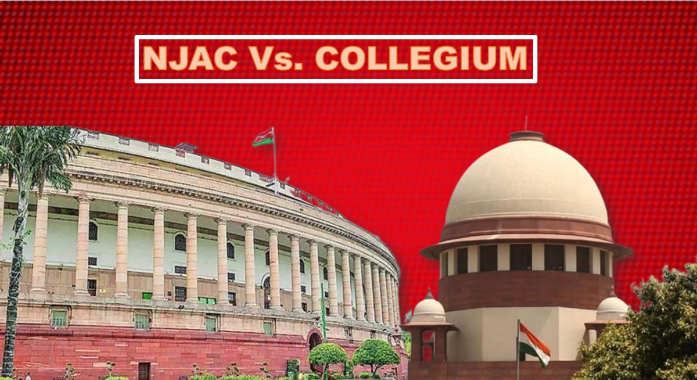
UPSC CURRENT AFFAIRS – 27th March 2025 Home / International Commission of Jurists report recommendations on Collegium system Why in News? The International Commission of Jurists (ICJ) has recommended establishing a Judicial Council to oversee judicial appointments and transfers with transparency, amid renewed debates over the Collegium system’s lack of accountability. Background The Collegium system of judicial appointments and transfers has once again come under scrutiny, with both the government and the Opposition highlighting concerns over its lack of transparency. The issue gained momentum following allegations related to a High Court judge, prompting calls for reforms in the judicial appointment process. ICJ’s Call for a Judicial Council A report by the Geneva-based International Commission of Jurists (ICJ) has urged the Indian government and Parliament to enact a law constituting a ‘Judicial Council’ to oversee judicial appointments and transfers. The Judicial Council, according to the report, should: Be composed of a majority of judges, in line with international standards of judicial independence. Function based on transparent, predetermined, and objective criteria for judicial appointments and transfers. The report, titled ‘Judicial Independence in India: Tipping the Scale’, was prepared with inputs from former Delhi High Court Chief Justice A.P. Shah, advocate Vrinda Grover, and advocate Ratna Appnender. Criticism of the Collegium System and Judicial Independence The ICJ report highlighted several structural weaknesses in the Indian judicial system: The judiciary, though constitutionally independent, remains vulnerable to executive influence. The lack of a proper self-governance mechanism within the judiciary affects its accountability. The in-house inquiry procedure for complaints against sitting judges is not backed by statute and lacks clear rules for determining judicial misconduct. The NJAC Debate and Supreme Court’s Stance The current debate comes nearly a decade after the Supreme Court struck down the National Judicial Appointments Commission (NJAC) Act and the 99th Constitutional Amendment in October 2015. The Supreme Court had ruled that the NJAC could lead to executive interference, potentially compromising judicial independence. However, the ICJ report suggests that judicial accountability in India is insular and ineffective, making meaningful oversight nearly impossible. Concerns Over Judicial Transfers The ICJ also raised concerns over judicial transfers, arguing that they: Often take place on vague grounds such as ‘public interest’ and ‘better administration of justice’. Lack transparency, making it unclear whether transfers serve a disciplinary or punitive purpose. The report recommended the establishment of a statutory mechanism for handling complaints against judges of the Supreme Court and High Courts. It further stated that redress mechanisms and their outcomes must be subject to judicial review. Conclusion The renewed debate over the Collegium system and judicial independence signals a potential shift in India’s judicial appointment process. With the government, Opposition, and international jurists calling for reforms, discussions on whether to modify or replace the Collegium system are likely to intensify in the coming months. The establishment of a Judicial Council with a transparent selection process could be a step toward addressing longstanding concerns about judicial accountability and independence in India.
Russia–Ukraine Agree to Black Sea Ceasefire – Strategic Breakthrough

UPSC CURRENT AFFAIRS – 26th March 2025 Home / Russia–Ukraine Agree to Black Sea Ceasefire – Strategic Breakthrough Why in News? On March 25, 2025, the White House confirmed that Russia and Ukraine have agreed to a ceasefire in the Black Sea, halting military action along key shipping lanes and energy infrastructure. The agreement was brokered after negotiations hosted in Saudi Arabia, with US facilitation including involvement from President Donald Trump. Background The Russia–Ukraine war, ongoing since February 2022, has significantly disrupted global energy and food supply chains. The Black Sea has been a flashpoint due to its role in: Grain exports from Ukraine. Oil and energy routes. Strategic military positioning for both countries. Earlier initiatives like the UN–Turkey grain corridor deal were fragile and failed to bring lasting stability. Key Highlights of the Ceasefire Agreement Ceasefire at Sea: Halts naval hostilities and guarantees safe passage for civilian cargo ships in the Black Sea. Designed to protect trade routes and humanitarian shipments, particularly food and energy. Energy Infrastructure Protection: Both sides agreed to stop attacks on power grids, oil refineries, and civilian energy installations. Aims to prevent humanitarian crises during winter and reduce collateral damage. Reopening Diplomatic Channels: The deal lays the foundation for future peace talks. Marks the re-entry of the US and Saudi Arabia as key mediators in the conflict, signaling a shift from previous UN/Turkey-led initiatives. Global and Strategic Relevance For India: India imports grain and fertilizers from both Ukraine and Russia via Black Sea routes. Stability in the region may: Lower food and fertilizer prices, reducing inflationary pressure. Ease import bills, especially for oil and food products. Enhance India’s diplomatic options due to its non-aligned stance, potentially allowing a role in reconstruction or peace efforts. For Global Economy: Black Sea is a crucial corridor for grain, oil, and fertilizer exports. Ceasefire may: Reduce shipping insurance premiums. Stabilize commodity prices. Restore supply chains disrupted by the conflict. For Global Geopolitics: Signals a fragile but significant de-escalation in hostilities. US and Saudi Arabia’s mediation underscores a shift toward multipolar diplomacy, with emerging regional powers playing key roles. Could shape future norms around conflict resolution and maritime security. Conclusion The Russia–Ukraine Black Sea ceasefire represents a rare breakthrough in a prolonged and destructive conflict. While fragile, it offers a window of opportunity for diplomatic engagement, humanitarian relief, and economic stabilization. For India and the global community, the agreement could mark the beginning of rebuilding trust, restoring supply chains, and reimagining multilateral peace efforts in a shifting world order.
IMF Asks Indian Banks to Adopt Global Norms for Credit Risk Management
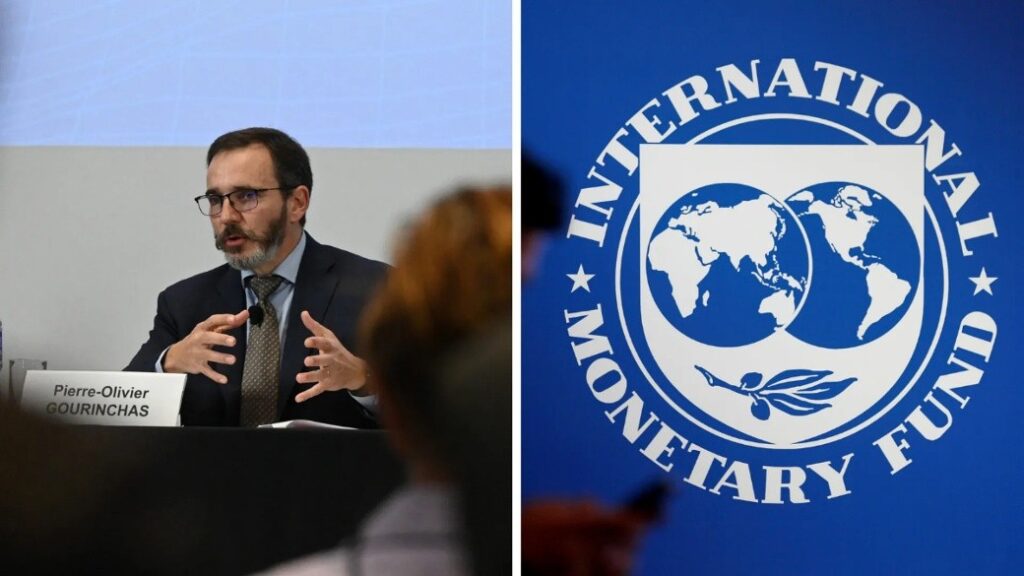
UPSC CURRENT AFFAIRS – 26th March 2025 Home / IMF Asks Indian Banks to Adopt Global Norms for Credit Risk Management Why in News? In March 2025, the International Monetary Fund (IMF) released its Financial System Stability Assessment (FSSA) report for India as part of the Financial Sector Assessment Program (FSAP). The report, released by the Reserve Bank of India (RBI), highlights India’s financial sector progress since 2017 while recommending adoption of global risk norms like IFRS 9, and enhanced oversight in credit risk, insurance, and cybersecurity. Key Highlights of the IMF’s FSSA Report Credit Risk Management: Indian banks are advised to adopt International Financial Reporting Standards (IFRS 9) to improve credit provisioning and risk classification. IMF recommends tighter supervision of: Individual loans Collateral valuation Connected borrower groups Resilience of the Financial Sector: Since 2017, India’s financial system has become more diverse and resilient. Banks and NBFCs have sufficient capital buffers to withstand moderate financial shocks. The sector has recovered from past NPAs, IL&FS crisis, and the COVID-19 pandemic. Inclusion and Digital Infrastructure: Public Digital Infrastructure (PDI) like UPI, Aadhaar, and Jan Dhan has deepened retail financial inclusion. Financial Inclusion Index improved from 43.4 in 2017 to 64.2 in 2024. Over 548 million Jan Dhan accounts have been opened with a collective balance of ₹2.45 trillion. NBFC and Insurance Sector Evolution: The NBFC sector is now more interconnected with the banking sector. The insurance sector has remained stable due to better regulation and digital innovation. The IMF urges adoption of risk-based solvency frameworks and stronger group supervision in insurance. Credit Access to Underserved Sectors: IMF calls for legal, tax, and information infrastructure reforms to promote digital and asset-based lending for underserved sectors, including MSMEs. Emerging Risks Identified by IMF Cybersecurity: RBI has improved cybersecurity oversight, but the IMF recommends: Expanded crisis simulations Market-wide stress testing Cross-sectoral resilience analysis Climate Change Risks: Climate-related financial risks are manageable for now, but: Granular data and climate risk mapping are needed. Scenario-based stress testing should be introduced. Systemic Contagion: Interconnectedness of financial entities could pose systemic risks. Requires continuous macroprudential monitoring. Relevance for India’s Financial Sector Governance Aligning with Global Norms: Adoption of IFRS 9 and risk-based supervision will: Improve transparency and global investor confidence Enhance India’s integration into global financial markets Deepening Financial Inclusion: India’s digital financial ecosystem has expanded rapidly. Targeted reforms can further improve access to formal credit, especially for rural populations, women, and MSMEs. Strengthening Regulatory Architecture: The report underscores the need for: Cross-sectoral coordination between RBI, SEBI, IRDAI Upgradation of regulatory and supervisory frameworks Real-time credit monitoring and risk analytics Way Forward Phased adoption of IFRS 9 across public and private sector banks. Upgrade credit risk models, particularly in NBFCs and cooperative banks. Strengthen data infrastructure for climate and cybersecurity risk analysis. Create integrated supervision units across financial regulators for systemic risk monitoring. Enhance financial literacy and grievance redressal to ensure inclusive access. Conclusion The IMF’s FSSA report provides both validation of India’s financial sector resilience and a roadmap for future reforms. As India aspires to become a $5 trillion economy, aligning with global risk management norms, enhancing credit infrastructure, and ensuring systemic resilience will be critical for sustainable and inclusive financial sector growth.