Govt proposes to abolish Equalisation Levy on online advertisements
UPSC CURRENT AFFAIRS – 25th March 2025 Home / Govt proposes to abolish Equalisation Levy on online advertisements Why in News? Recently, the Indian government proposed the abolition of the Equalisation Levy (digital tax) on online advertisements, effective from April 1, 2025. What is Equalisation Levy? The Equalisation Levy, introduced in 2016, initially imposed a 6% tax on payments exceeding Rs 1 lakh annually to non-resident service providers for online advertisements. This levy was introduced to address the growing digital economy and ensure that foreign digital companies contributing to India’s advertising market were appropriately taxed, despite not having a physical presence in the country. Background Introduced in Finance Act 2016, the 6% Equalisation Levy taxed payments made for online advertisement services by non-resident companies. In 2020, the levy was extended to e-commerce services, but the 2% e-commerce levy was abolished in August 2024. The latest proposal removes the 6% tax on online ads, simplifying the digital advertising tax framework. Expansion of Scope (2020 Amendments) In 2020, the Finance Act broadened the scope of the Equalisation Levy to include e-commerce companies. The tax, now at 2%, applies to non-resident operators involved in online sales of goods and provision of services through platforms like Amazon and Google. This expansion aims to target foreign e-commerce companies generating revenue from Indian customers without a tangible presence in the country. Key Amendments and Impact The amendment to Section 163 of the Finance Act, 2016 will take effect on April 1, 2025, eliminating the tax on digital ads. This change will lower the cost for advertisers and platforms, boosting India’s digital economy. Diplomatic Context The abolition comes amid tensions with the United States, which had threatened reciprocal tariffs due to India’s digital taxes. Experts suggest that this step is an attempt to ease diplomatic concerns and avoid trade friction, noting it as part of India’s accommodative stance. Broader Reforms The Finance Bill 2025 also includes measures to ease offshore fund investments and refine search and seizure tax assessments, introducing the term Total Undisclosed Income to clarify tax proceedings. Key Points The 6% Equalisation Levy applies to advertising payments exceeding Rs 1 lakh annually to non-resident service providers like Google, if their ads target Indian customers. The 2% levy was introduced for e-commerce transactions starting April 1, 2020, targeting global platforms like Amazon and Google that source revenue from Indian customers, but do not have a physical presence in India. Conclusion By abolishing the Equalisation Levy, India is aligning its tax policies with international norms, promoting clarity for digital advertisers, and potentially improving diplomatic relations with the U.S. The move reflects ongoing efforts to simplify India’s tax system and encourage business growth.
How to bridge the increasing water gap in India?
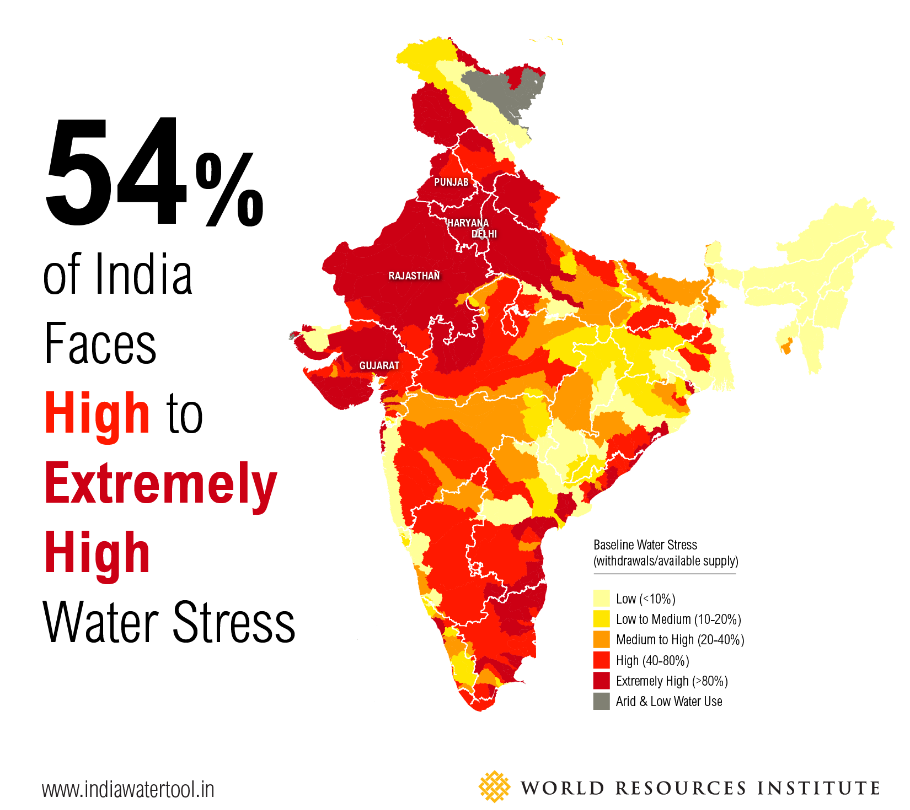
UPSC CURRENT AFFAIRS – 24th March 2025 Home / How to bridge the increasing water gap in India? Why in News? India faces severe water stress due to climate change, with rising water gaps under future warming scenarios, making wastewater reuse and a circular economy approach essential for sustainable water management. Introduction India is projected to face severe water shortages due to rising global temperatures, with increasing water gaps under different warming scenarios. According to climate projections: A 1.5°C rise in temperature will lead to an additional 11.1 km³/year water gap. A 3°C warming scenario will further increase this deficit to 17.2 km³/year. The Ganga-Brahmaputra (56.1 km³/year) and Sabarmati (52.6 km³/year) basins already experience the highest water gaps under baseline climate conditions. This highlights the urgent need for sustainable water management strategies to address the growing crisis. Projected Water Stress in India Climate Change Impact: Rising temperatures lead to increased evaporation, altered rainfall patterns, and declining groundwater levels, exacerbating water shortages. Regional Water Gaps: Major river basins such as the Ganga-Brahmaputra and Sabarmati are expected to experience worsening water deficits, putting stress on agriculture, industry, and domestic water supply. Growing Demand vs. Limited Supply: With rapid urbanization, industrial expansion, and population growth, India’s water demand is increasing, while climate variability is reducing water availability. Wastewater Reuse: A Circular Economy Approach The Centre for Science and Environment’s (CSE) December 2024 report, ‘Waste to Worth’, emphasizes wastewater reuse as a sustainable solution to bridge India’s widening water gap. Key Strategies for Wastewater Management Treatment and Reuse: Recycling wastewater for agriculture, industry, and urban non-potable uses can reduce freshwater demand. Decentralized Wastewater Systems: Promoting localized sewage treatment plants to treat and reuse water efficiently. Urban Water Recycling: Implementing rainwater harvesting and greywater recycling in urban infrastructure. Industrial Water Conservation: Encouraging industries to adopt zero-liquid discharge (ZLD) systems to minimize wastewater generation. The circular economy approach ensures that water is reused, conserved, and sustainably managed, reducing dependence on freshwater sources. Way Forward: Sustainable Water Management in India To address the looming water crisis, India needs a multi-pronged strategy that integrates: Climate-Resilient Water Policies – Strengthening water conservation efforts through policy interventions and efficient governance. Technological Innovations – Expanding wastewater treatment facilities, desalination plants, and smart irrigation techniques. Community Participation – Encouraging local water conservation initiatives, such as water budgeting and watershed management. Interstate Water Management – Promoting cooperative water-sharing frameworks to manage inter-basin water stress. Conclusion India’s water security is increasingly at risk due to climate change, rising demand, and inefficient water use. With projected water gaps worsening under future warming scenarios, sustainable water management and wastewater reuse must be prioritized. The circular economy approach, as highlighted in the CSE’s ‘Waste to Worth’ report, offers a viable pathway to mitigate water stress, ensuring long-term resilience and sustainability in India’s water sector.
India receives Mahatma Gandhi artefacts from South Africa
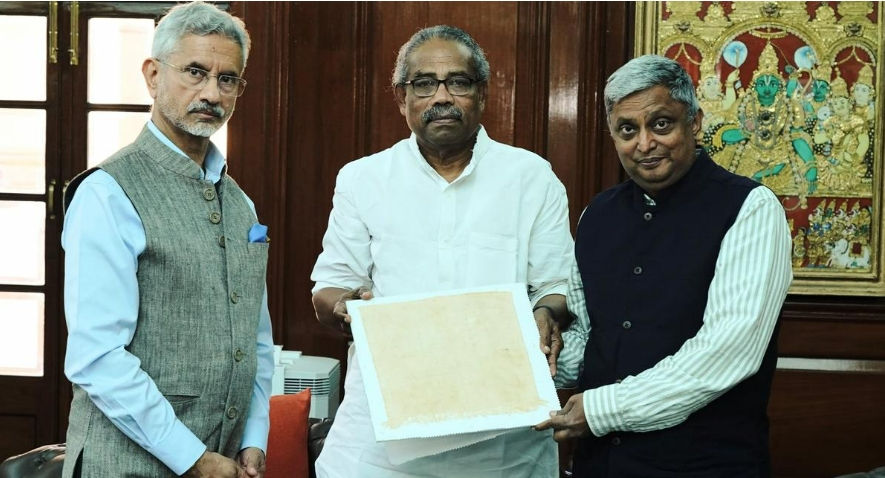
UPSC CURRENT AFFAIRS – 24th March 2025 Home / India receives Mahatma Gandhi artefacts from South Africa Why in News? India received artefacts and documents related to Mahatma Gandhi from the Phoenix Settlement Trust in South Africa. Introduction Recently External Affairs Minister received artefacts and documents related to Mahatma Gandhi from the Phoenix Settlement Trust-Gandhi Development Trust (PST-GDT) in South Africa. These items were handed over to the National Gandhi Museum, New Delhi, signifying the enduring legacy of Gandhi’s philosophy and his contributions to India’s freedom movement. Establishment of the Phoenix Settlement (1904) Mahatma Gandhi founded the Phoenix Settlement in 1904 in Inanda, near Durban, South Africa. This ashram-like community was designed to promote self-sufficiency, education, and non-violent resistance. The settlement became a center for community living and training in passive resistance, laying the foundation for Gandhi’s future campaigns against colonial oppression. Influence on Satyagraha During his time in South Africa between 1893 and 1914, Gandhi encountered severe racial discrimination, which profoundly influenced his ideology. His philosophy of Satyagraha, based on truth and non-violent resistance, emerged in response to these injustices. Gandhi’s experiences in South Africa played a crucial role in shaping his later strategies for India’s independence movement. Champaran and Kheda Satyagraha (1917-1918) Gandhi led the Champaran movement in Bihar and the Kheda movement in Gujarat to support peasants against unjust taxation policies imposed by British landlords. These movements marked his first major involvement in Indian politics and established his leadership in mass civil resistance. Non-Cooperation Movement (1920-1922) In response to British repression, Gandhi launched the Non-Cooperation Movement, urging Indians to boycott British institutions, return British honors, and reject foreign-made goods. This movement mobilized millions and signaled a shift toward mass political participation in India’s struggle for independence. Quit India Movement (1942) During World War II, Gandhi launched the Quit India Movement, calling for immediate independence from British rule. The movement led to mass arrests and violent crackdowns, but it ultimately strengthened India’s resolve for freedom. The British recognized the growing demand for self-rule, which contributed to India’s eventual independence in 1947. Assassination and Martyrs’ Day On January 30, 1948, Mahatma Gandhi was assassinated by Nathuram Godse at Gandhi Smriti in New Delhi. His death was a profound loss for the nation, and India observes January 30 as Martyrs’ Day to honor his contributions to the freedom movement. Global Influence Gandhi’s principles of non-violence, truth, and civil disobedience continue to inspire global movements for justice, equality, and human rights. Leaders such as Martin Luther King Jr., Nelson Mandela, and the Dalai Lama have drawn inspiration from his philosophy in their struggles for civil rights and social justice. Conclusion The return of Mahatma Gandhi’s artefacts from the Phoenix Settlement Trust in South Africa underscores his enduring legacy and the deep historical ties between India and South Africa. His principles of truth and non-violence remain relevant in contemporary struggles for justice, freedom, and human rights worldwide. Gandhi’s life and teachings continue to guide movements for peace and equality, reinforcing his status as one of the most influential figures in modern history.
India needs pulmonary rehabilitation in primary healthcare centres to combat post-tuberculosis lung sequelae
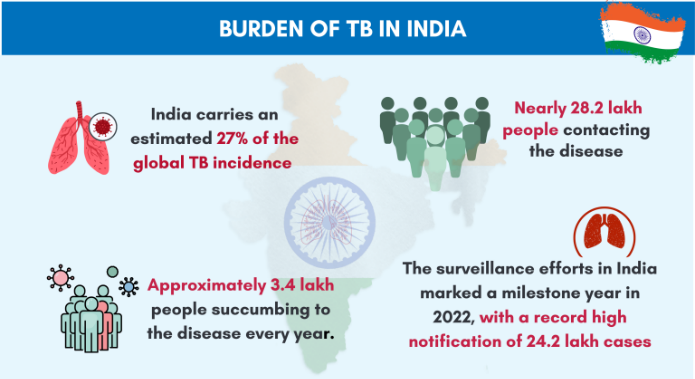
UPSC CURRENT AFFAIRS – 24th March 2025 Home / India needs pulmonary rehabilitation in primary healthcare centres to combat post-tuberculosis lung sequelae Why in News? India, which accounts for 26% of global TB cases and deaths, faces challenges in post-TB care, with pulmonary rehabilitation (PR) and long-term follow-ups remaining inadequate despite guidelines under the National Tuberculosis Elimination Programme (NTEP). Introduction Tuberculosis (TB) remains a major global health challenge, with 1.25 million deaths reported in 2023 (WHO). India, bearing 26% of global TB cases and TB-related deaths, faces the additional burden of post-TB complications, including lung fibrosis, cavitation, and airflow obstruction, which severely impact survivors’ quality of life. Despite India’s National Tuberculosis Elimination Programme (NTEP) aligning with the WHO’s End TB Strategy (2030), gaps in post-TB rehabilitation and care persist. The 2023 UN High-Level Meeting on TB recognized the need to address long-term complications of TB, emphasizing palliative care and rehabilitation. Understanding Pulmonary Rehabilitation (PR) Defined by the American Thoracic Society (ATS) and European Respiratory Society (ERS) as a multidisciplinary intervention, PR enhances lung function, physical endurance, and mental well-being in chronic respiratory disease patients. Studies highlight PR as the most cost-effective strategy to manage post-TB sequelae, preventing further morbidity and mortality. Key Components of Pulmonary Rehabilitation According to Dr. Sanjeev Nair, PR incorporates: Physical Exercise – Strengthening limbs, treadmill exercises, and respiratory muscle training. Breathing Techniques – Diaphragmatic and pursed-lip breathing to reduce airflow limitation. Medication Adherence – Preventing further complications due to irregular drug intake. Psychosocial Support – Addressing mental health concerns, stigma, anxiety, and depression among TB survivors. Nutritional Counseling – Boosting immunity and recovery through balanced diets. Oxygen Therapy – Benefiting patients with severe lung damage. Occupational Rehabilitation – Vocational training, as implemented at Tambaram Sanatorium, Chennai, to ensure financial independence. Challenges in Implementation of PR in India Lack of Dedicated PR Centers – PR remains in the research phase rather than being widely implemented. Institutions such as Vallabhbhai Patel Chest Institute (Delhi) and Rajan Babu Institute (Delhi) offer PR programs, but their reach remains limited. Inconsistent Follow-up Protocols – X-ray-based monitoring and pulmonary function tests are critical for early detection of lung damage. The Government of India mandates a two-year follow-up for TB survivors, but adherence remains inconsistent across healthcare facilities. Decentralized TB Care and Accessibility Issues – TB treatment is largely delivered through primary healthcare centers (PHCs), which lack PR infrastructure. Rural areas face greater difficulties in accessing specialized post-TB care. Lack of Awareness and Mental Health Support – TB survivors frequently experience stigma, anxiety, and depression but lack integrated mental health services within TB care programs. The syndemic of TB and mental health issues remains an under-addressed area in India’s public health framework. Early Detection in Post-TB Lung Care Dr. Shibu Vijayan (Cure.ai, Global Health) emphasizes the critical role of early detection in preventing severe lung sequelae. Studies, including one in Ernakulam, Kerala, found that 25% of TB patients died within seven years due to untreated post-TB complications. Regular X-ray-based monitoring and spirometry tests are crucial for assessing lung function and preventing the progression to Chronic Obstructive Pulmonary Disease (COPD). Community Concerns and Patient Struggles TB survivors like Ganesh Acharya highlight the lack of structured post-TB care and inaccessible rehabilitation services in hospitals. Many patients struggle to find specialized pulmonologists and continue suffering from respiratory issues despite completing TB treatment. Post-TB care must be as structured as active TB treatment, ensuring long-term medical support for survivors. Expanding Post-TB Care Access in India To bridge the gap in post-TB rehabilitation, experts advocate for scaling up PR programs within primary healthcare settings. Kerala’s SWAAS Model as a Best Practice – The Stepwise Approach to Airway Diseases (SWAAS) program integrates COPD and TB care, providing: Mini spirometers for lung function testing. Locally available essential medications. Trained nurses and community healthcare workers to guide breathing exercises and nutrition. Panchayat-level financial and social support for TB survivors. Recommendations for Nationwide Expansion – Integrate PR into primary healthcare centers to improve accessibility. Strengthen follow-up protocols, ensuring consistent X-ray monitoring and lung function assessments. Enhance mental health support within TB care frameworks. Encourage public-private partnerships to establish specialized PR facilities across India. Conclusion Despite India’s efforts to eliminate TB by 2030, post-TB complications remain largely unaddressed in healthcare policies. Pulmonary rehabilitation, early detection, and community-based interventions must be prioritized to improve long-term health outcomes for TB survivors. Strengthening structured post-TB care through scalable models like Kerala’s SWAAS program can ensure better recovery, reduced mortality rates, and enhanced quality of life for TB survivors.
Jnanpith Award
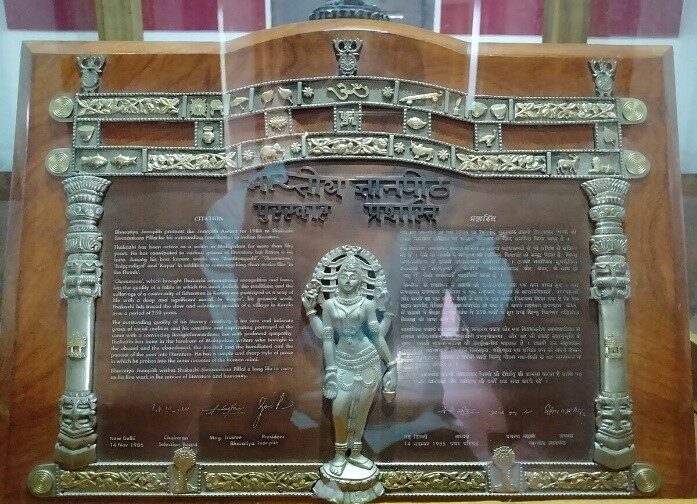
UPSC CURRENT AFFAIRS – 24th March 2025 Home / Vinod Kumar Shukla named for 59th Jnanapith Award Why in News? Renowned Hindi writer Vinod Kumar Shukla has been awarded the 59th Jnanpith Award for his realistic portrayal of ordinary lives, poetic sensitivity, and contribution to modern Hindi literature. Introduction Eminent Hindi writer Vinod Kumar Shukla has been conferred the 59th Jnanpith Award, India’s highest literary honor, in recognition of his simplicity and sensitivity in writing. Shukla, known for his realistic portrayal of ordinary lives, is the 12th Hindi writer and the first from Chhattisgarh to receive this prestigious award. Life and Literary Journey Born in 1937, Shukla was deeply influenced by his mother, who read aloud Bengali literature at home. His journey into literature began after he failed his Hindi exam in Class 12, which changed his career path. He was mentored by renowned Hindi writer Gajanan Madhav Muktibodh, who encouraged him to pursue writing. Shukla’s literary career flourished as his works were published in prestigious magazines like Pustak Kriti. Despite holding a master’s degree in agriculture, he dedicated his life to writing. Major Works and Literary Style Shukla’s works focus on the struggles of ordinary people, their aspirations, and the subtle beauty of everyday life. His notable works include: Naukar ki Kameez – A novel about a clerk navigating workplace hierarchies. Khilega Toh Dekhenge – Explores the experiences of a teacher in a remote village. Deewar Mein Ek Khirki Rehti Thi – A story of young love, widely regarded as one of his finest works. Sab Kucch Hona Bacha Rahega (Poem, 1992) – A celebrated poem that reflects the universal need for hope. Shukla’s poetic style revolutionized modern Hindi literature, focusing on language, emotions, and humanistic themes rather than political ideologies. Recognition and Literary Impact His writing is known for its ease, realism, and deep philosophical undertones, making his works accessible yet profound. Literary scholars like Avinash Mishra and Ambuj Kumar highlight his contribution to reshaping modern Hindi literature. His works have inspired readers and writers across generations, with publishers like Hind Yugm recognizing his impact on contemporary Hindi literature. About the Jnanpith Award The Jnanpith Award is India’s oldest and most prestigious literary award, given annually to an author for their outstanding contribution to literature. Established in 1961 by Bharatiya Jnanpith, the first award was presented in 1965. It considers works in English and other Indian languages but is only awarded to Indian citizens. The award is not given posthumously. Bharatiya Jnanpith: The Presenting Organization Founded in 1944 by Sahu Shanti Prasad Jain and Rama Jain. Headquartered in New Delhi, it promotes literature, research, and culture through awards, publications, fellowships, and literary research. Cash Prize and Recognition Awardees receive: ₹11 lakh cash prize. A statue of Vagdevi (Goddess of learning and wisdom). A citation honoring their literary achievements.
Sangita Kalanidhi Award

UPSC CURRENT AFFAIRS – 24th March 2025 Home / Sangita Kalanidhi Award Why in News? Violinist R.K. Shriramkumar has been conferred the Sangita Kalanidhi award 2025 by the Music Academy. Introduction The prestigious Sangita Kalanidhi award of the Music Academy for 2025 has been conferred upon violinist R.K. Shriramkumar in recognition of his exceptional contributions to Carnatic music. Known for his deep knowledge of Sangita Sampradaya Pradarsani and his expertise in accompanying legendary musicians, Shriramkumar has played a pivotal role in preserving and promoting the tradition of Carnatic violin. R.K. Shriramkumar: A Legacy of Excellence K. Shriramkumar hails from the renowned Rudrapatnam family of musicians in Karnataka. His grandfather, violinist R.K. Venkatarama Shastry, was instrumental in conducting the Tyagaraja Aradhana at Thiruvaiyaru for nearly four decades. Shriramkumar’s musical lineage includes his granduncle, Sangita Kalanidhi R.K. Srikantan, and his uncles, the Rudrapatnam Brothers—R.N. Thyagarajan and R.N. Tharanathan. His training in violin and vocal music was shaped by: Initial lessons from Savitri Satyamurthy Advanced violin training under V.V. Subrahmanyam Vocal music guidance from Sangita Kalanidhi D.K. Jayaraman Recognition and Significance of the Award The Sangita Kalanidhi award is considered the highest honor in Carnatic music and is awarded by the Music Academy, Chennai. Shriramkumar’s selection is particularly symbolic in 2025, as it marks the 250th birth anniversary of Muthuswami Dikshitar, whose compositions he has extensively researched and performed. The awardee will preside over the 99th annual conference and concerts of the Music Academy from December 15, 2025, to January 1, 2026. Other Awardees Announced by the Music Academy Along with the Sangita Kalanidhi award, the Music Academy has announced recipients for other distinguished honors: Nritya Kalanidhi Award Awarded to Bharatanatyam dancer Urmila Satyanarayana. She will receive the award at the 19th annual dance festival on January 3, 2026. Sangita Kala Acharya Awards Vocalist Shymala Venkateswaran and Thavil maestro T.R. Govindarajan. These awards honor musicians for their dedication to teaching and propagating Carnatic music. TTK Awards Kathakali artiste Madambi Subramania Namboothiri. Veena players J.T. Jeyaraaj Krishnan and Jayasri Jeyaraaj Krishnan. The Sangita Kala Acharya and TTK awards will be presented alongside the Sangita Kalanidhi award at the Sadas on January 1, 2026.
Production Linked Incentive (PLI) Schemes
UPSC CURRENT AFFAIRS – 24th March 2025 Home / Production Linked Incentive (PLI) Schemes Why in News? The PLI Scheme aims to boost domestic manufacturing, attract investments, enhance exports, and reduce import dependence across 14 key sectors, strengthening India’s self-reliance and global competitiveness. Introduction The Production Linked Incentive (PLI) Scheme is a key initiative under India’s vision of ‘Atmanirbhar Bharat’, aimed at enhancing domestic manufacturing capabilities, attracting investments, and boosting exports. Covering 14 key sectors, the scheme seeks to reduce import dependency, create employment, and integrate India into global value chains. Implementation and Impact of PLI Scheme 764 applications approved across 14 sectors, with 176 MSMEs as beneficiaries. Reported investment of ₹1.61 lakh crore (~US$ 18.72 billion) till November 2024. Generated production/sales worth ₹14 lakh crore (~US$ 162.84 billion) against the FY 2024-25 target of ₹15.52 lakh crore. Created 11.5 lakh jobs (direct & indirect) across various industries. Exports under PLI schemes have surpassed ₹5.31 lakh crore (~US$ 61.76 billion), with major contributions from electronics, pharmaceuticals, food processing, and telecom & networking products. ₹14,020 crore disbursed as incentives in 10 sectors, including large-scale electronics, IT hardware, bulk drugs, medical devices, telecom, white goods, automobiles, and drones. Sector-Wise Achievements of PLI Scheme Specialty Steel ₹20,000 crore investment out of the committed ₹27,106 crore. 9000 direct jobs created. ₹48 crore incentives disbursed; ₹2,000 crore to be disbursed by the end of the scheme. 35 companies have applied in Round-2, committing ₹25,200 crore investment. Food Processing 171 active beneficiaries under the PLI Scheme. ₹474 crore disbursed for FY 2022-23; ₹700 crore targeted for FY 2023-24. Filing deadlines: November 30 (Millets), December 31 (Other categories). Large-Scale Electronics & IT Hardware India has transitioned from a net importer to a net exporter of mobile phones. Increased exports of telecom equipment (4G & 5G), reducing import dependency by 60%. Medical Devices 19 greenfield projects commissioned; production of 44 high-end medical devices (MRI, CT-Scans, Ultrasound machines) started. White Goods (ACs & LED Lights) 84 companies investing ₹10,478 crore. Domestic production of compressors, copper tubes, LED chips, drivers, and metallized films initiated. Drone & Drone Components Seven-fold increase in industry turnover. Attracted significant investments and job creation, positioning India as a global drone manufacturing hub. Pharmaceuticals & Bulk Drugs India is now the third-largest pharmaceutical producer globally, with 50% of production being exported. Manufacturing of key bulk drugs like Penicillin G, reducing import dependence. Significance of PLI Scheme Strengthening India’s Position in Global Value Chains Encouraging self-reliance in critical manufacturing sectors. Attracting global technology firms to set up operations in India. Promoting Domestic Industry & Job Creation Encouraging MSMEs and startups in advanced technology sectors. Employment generation across key industries such as electronics, steel, telecom, and medical devices. Boosting Exports & Reducing Imports India has emerged as a leading mobile phone exporter. Enhanced self-sufficiency in critical manufacturing sectors like telecom and pharmaceuticals. Way Forward The PLI Scheme is a foundational initiative aimed at creating a robust manufacturing ecosystem in India. Approved sectors align with India’s strategic goals of technological advancement, employment generation, and global competitiveness. As implementation progresses, India is poised to emerge as a global manufacturing powerhouse, driving long-term economic growth and self-reliance.
What is the ‘Mar-a-Lago Accord’ and dollar devaluation plan
UPSC CURRENT AFFAIRS – 24th March 2025 Home / What is the ‘Mar-a-Lago Accord’ and dollar devaluation plan Why in News? The Trump administration’s economic strategy aims to transform the US into a global manufacturing powerhouse by addressing trade deficits through tariffs and potential dollar devaluation, reminiscent of the 1985 Plaza Accord. Introduction President Trump’s overarching economic objective is to transform the US into a global manufacturing powerhouse and address the persistent trade imbalance. In 2024, the US recorded a trade deficit exceeding $1 trillion, marking the fourth consecutive year of trillion-dollar deficits. This chronic trade imbalance suggests that the US manufactures relatively fewer goods domestically, leading to lower levels of job creation. Despite these trade deficits, the US has historically maintained low unemployment rates. Therefore, Trump’s focus is less on job creation and more on boosting domestic manufacturing and reducing trade deficits. The Role of the Dollar’s Exchange Rate A primary reason Americans prefer imported goods is their affordability, a direct consequence of the US dollar’s strong purchasing power. The dollar’s strength stems from the global trust it enjoys as both a store of value and a medium of exchange. Several factors contribute to this trust, including the US economy’s strength, the independence of the Federal Reserve, and its commitment to maintaining price stability. As a result, central banks worldwide hold US dollars as foreign exchange reserves, and about 50% of all international transactions are conducted in dollars. The continuous demand for US dollars increases its exchange rate, further enhancing its purchasing power. This, in turn, makes imported goods cheaper for Americans, discouraging domestic production and contributing to trade deficits. Approaches to Boosting Manufacturing and Reducing Trade Deficits To counter the negative impact of a strong dollar, the Trump administration has two main policy options: Imposing Tariffs on Trade Partners Trump’s administration has aggressively implemented tariffs, aiming to: Reduce demand for imports by making them more expensive. Encourage foreign firms to establish manufacturing operations in the US. However, this strategy carries risks: Higher import prices burden US consumers rather than foreign businesses. Retaliatory tariffs from other countries can trigger full-scale trade wars, disrupting supply chains and escalating costs. Some countries may counter tariffs by devaluing their own currencies, effectively negating the tariff impact. Devaluing the US Dollar An alternative approach involves lowering the value of the US dollar relative to other currencies. If other nations were to sell off their dollar reserves and buy their own currencies, the increased supply of dollars in the market would weaken its value. A weaker dollar would enhance the competitiveness of US exports, encouraging domestic manufacturing. Historical Precedent: The Plaza Accord of 1985 In response to a similar situation, the US signed the Plaza Accord in 1985 with Japan, Germany, France, and the UK. The agreement successfully devalued the dollar, reducing trade deficits in the short term. However, its long-term impact varied. Japan, in particular, suffered as the rising yen hurt its export-driven economy, contributing to an economic bubble and subsequent stagnation. Challenges in Implementing a Modern-Day ‘Mar-a-Lago Accord’ A contemporary Plaza Accord-like agreement—sometimes referred to as a Mar-a-Lago Accord—would be much harder to achieve due to several factors: Japan’s Cautionary Tale: Countries may resist repeating Japan’s experience of economic downturn following a currency revaluation. Complex Global Trade Dynamics: Unlike 1985’s G-5, today’s global trade involves the G20, complicating coordination efforts. China’s Role: Unlike previous trade adversaries (Germany and Japan), China is both a trade and military rival to the US, making negotiations politically sensitive. Massive Currency Markets: Currency markets today handle an estimated $7.5 trillion in daily transactions—five times the volume of the late 1980s—making any meaningful dollar devaluation a monumental task. Trump’s Aggressive Tactics: Convincing global leaders to accept a weaker dollar would require diplomacy, yet Trump’s confrontational approach through tariffs may alienate potential allies. Conclusion The devaluation of the US dollar remains a complex and controversial policy option. While it could enhance US export competitiveness and reduce trade deficits, the geopolitical and economic implications make it difficult to execute. Whether Trump can orchestrate a currency devaluation through global negotiations remains to be seen, but his aggressive tariff strategy suggests a willingness to push the global economic order toward such a shift.
India–New Zealand Relations: Navigating Strategic Potential and Diplomatic Sensitivities
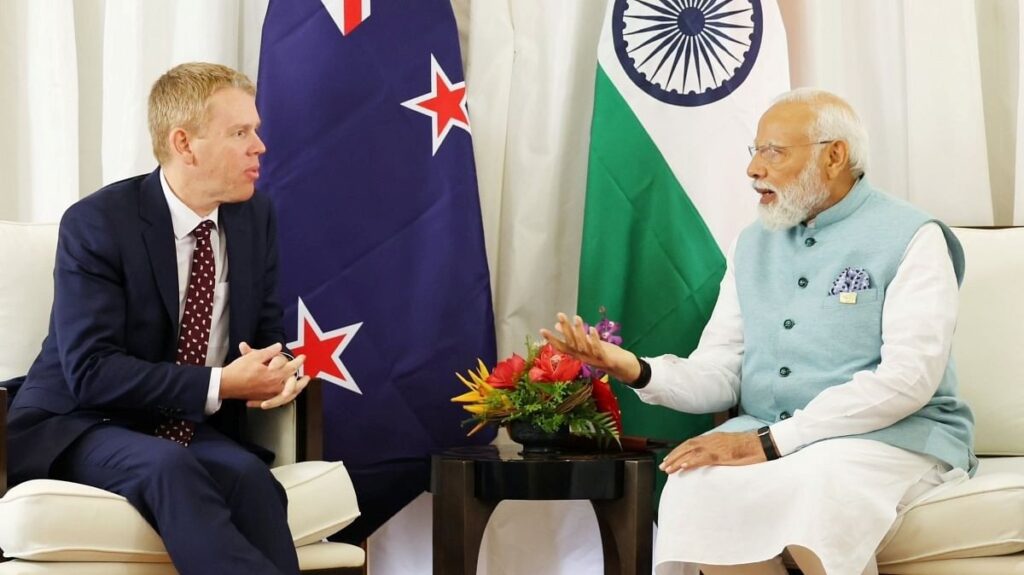
UPSC CURRENT AFFAIRS – 23rd March 2025 Home / India–New Zealand Relations: Navigating Strategic Potential and Diplomatic Sensitivities Why in News? The recent visit of New Zealand Prime Minister Christopher Luxon to India for the 10th Raisina Dialogue (2025) highlighted a shared strategic understanding of the evolving global order. Introduction India and New Zealand, two democratic nations located on opposite ends of the Indo-Pacific, are witnessing a quiet yet significant deepening of bilateral relations. From defense cooperation to trade talks and people-to-people ties, the relationship is gaining renewed traction despite existing challenges. Raisina Dialogue 2025: New Zealand’s Geostrategic Perspective At the 10th edition of the Raisina Dialogue, Prime Minister Christopher Luxon identified three major global shifts: The replacement of rules with power, Security overtaking economic priorities, and The rise of protectionism and resilient supply chains over trade efficiency. In this context, he underscored the potential for India–New Zealand cooperation, particularly as democracies committed to regional peace and rule-based maritime order. While New Zealand does not seek Quad membership, it is actively engaging with Australia, Japan, and South Korea, reinforcing its Indo-Pacific presence. His participation signified growing political will to upgrade bilateral engagement with India. Strategic and Bilateral Engagements Indo-Pacific Vision Alignment: Both countries support a free, open, and inclusive Indo-Pacific. New Zealand’s regional engagement complements India’s SAGAR doctrine and Indo-Pacific Oceans Initiative. Defence Cooperation: A 2025 MoU enables staff college exchanges, naval port calls, and defence collaboration, marking a new phase in bilateral strategic engagement. Trade and Connectivity: Bilateral trade stands at only ~$2 billion, limited by India’s protection of agricultural and dairy sectors. Renewed efforts on a Free Trade Agreement (FTA) signal intent to overcome past roadblocks, especially India’s exit from RCEP. Air India–Air New Zealand codeshare may lead to direct flights by 2028, enhancing tourism and diaspora connections. Challenges in the Relationship: Specific Aspects Trade Asymmetry and Sectoral Sensitivities: India’s reluctance to open dairy markets—a core New Zealand export—was a key reason for its RCEP withdrawal. New Zealand’s demand for greater agricultural access continues to face resistance from Indian farmer lobbies and MSMEs. Diaspora and Political Sensitivities: The ‘Sikhs for Justice’ (SFJ) referendum held in Auckland in 2024 prompted India to raise concerns about anti-India separatist activities. New Zealand views such events through the lens of free speech protections, leading to a clash of perspectives on national security vs. civil liberties. Limited Institutional Architecture: No dedicated 2+2 dialogue, defence coordination cell, or trade facilitation mechanism exists. Engagement remains episodic and leader-driven, lacking sustained bureaucratic follow-up. Strategic Hesitations: New Zealand has historically pursued a neutral foreign policy, particularly in the Pacific, avoiding overt alignment with Quad or security blocs. It maintains a strong economic dependence on China, with $24 billion in bilateral trade, making it cautious in overtly confronting Beijing. Low Public and Strategic Visibility: India–New Zealand relations are often overshadowed by India’s ties with Australia, the US, and ASEAN. Lack of public awareness, cultural diplomacy, and academic exchanges has limited the “strategic imagination” of the relationship. Way Forward Institutionalised Strategic Dialogue: Establish a Track 1.5 or 2+2 mechanism to deepen defence and economic cooperation. Balanced FTA Framework: Identify non-contentious sectors like pharmaceuticals, renewable energy, IT, and education for early harvest trade outcomes. Diaspora Protocols: Create diplomatic channels to manage diaspora-related sensitivities quietly and constructively. Maritime and Climate Collaboration: Expand cooperation on blue economy, ocean health, disaster response, and sustainable infrastructure. People-to-People Engagement: Promote educational partnerships, cultural festivals, and research fellowships to build mutual familiarity. Conclusion India and New Zealand, though geographically distant and economically asymmetrical, are natural partners in the evolving Indo-Pacific architecture. Their shared democratic values, commitment to multilateralism, and interest in regional peace and stability form a strong foundation. By addressing trade concerns, respecting political sensitivities, and institutionalising engagement, the two countries can build a resilient and future-ready partnership for the 21st century.
India’s Heatwave Challenge — Towards a Comprehensive Heat Strategy
UPSC CURRENT AFFAIRS – 23rd March 2025 Home / India’s Heatwave Challenge — Towards a Comprehensive Heat Strategy Why in News? February 2025 saw early onset of heatwaves in Goa and Maharashtra, with Odisha and Telangana exceeding 40°C — unprecedented for a winter month. Night temperatures were 3–5°C above normal in 22 States/UTs. These trends reflect shifting climate baselines, with clear implications for public health, labour productivity, and urban resilience. Also Read: Gaps in India’s Heat Action Plans (HAPs) Rising Heat Stress in India: A Structural Challenge India is among the most heat-vulnerable countries globally. According to the Lancet Countdown Report (2023), India saw a 55% increase in heat-related deaths between 2000 and 2020. The IMD (India Meteorological Department) has warned that heatwaves are becoming more frequent (5–6 events/year) and longer in duration, especially in central and northwest India. The World Bank (2023) report “Climate Investment Opportunities in India’s Cooling Sector” notes that over 160–200 million people in India may be exposed to lethal heatwaves annually by 2030 without mitigation. Current Preparedness Gaps (Based on Sustainable Futures Collaborative, 2024) A study across nine Indian cities found: No long-term urban heat management strategy in place. Responses are emergency-focused, not systemic. Short-Term Measures (Reactive): Water kiosks, shifting school/work timings, hospital preparedness. Missing Long-Term Interventions: Cooling for vulnerable groups (slum dwellers, outdoor workers). Heat-linked social insurance schemes for wage loss. Heat-resilient urban planning (green cover, water bodies, building codes). Mapping Urban Heat Islands (UHIs) and expanding local weather stations. Training municipal staff for localised heatwave management. Cooling Dilemma: Energy vs Environment India is implementing the National Cooling Action Plan (NCAP, 2019) to provide sustainable thermal comfort. However, the use of hydrofluorocarbons (HFCs) in ACs raises concern over ozone depletion and GHG emissions. The Kigali Amendment (to the Montreal Protocol) mandates phasedown of HFCs — India has ratified it (2021), aiming for a 85% cut by 2047. The challenge lies in promoting passive cooling (ventilation, shade, green roofs) and sustainable urban design. Reports and Indices to Quote National Disaster Management Authority (NDMA) Guidelines (2016) on Heatwave Management: India is the first country with a dedicated framework for city/state heat action plans. IPCC Sixth Assessment Report (AR6, 2023): South Asia will face longer heatwaves and wet-bulb temperatures breaching human survivability. World Bank (2022): “South Asia’s Hotspots” — India may lose 2.8% of GDP due to productivity loss from heat stress by 2050. IHD-UNDP Report (2021): Poor urban households spend 20–30% of income on cooling; access remains deeply unequal. Policy Recommendations National Heat Strategy: Embed within the National Adaptation Plan under India’s NDCs. Align with COP30 (Brazil, November 2025) commitments. Recognise Heatwaves as Disasters: Under Disaster Management Act, 2005, to ensure formal budgetary allocation and compensation mechanisms. City-Specific Heat Action Plans (HAPs): Mandate mapping of Urban Heat Islands, revise zoning laws, and integrate cooling provisions into Smart Cities Mission and AMRUT 2.0. Equity in Cooling Access: Promote low-cost, energy-efficient cooling devices. Provide occupational safety provisions for informal workers (construction, street vendors). Resilient Urban Design: Expand green cover (aim for 33% per National Forest Policy) and permeable open spaces. Encourage solar rooftops, green buildings, and cool roofing programmes (as initiated in Ahmedabad and Hyderabad). Conclusion India’s heatwave vulnerability is no longer a seasonal inconvenience — it is a recurring public health emergency. As COP30 nears, India must demonstrate climate leadership by institutionalising a comprehensive national heat strategy that balances adaptation, equity, and environmental sustainability. Proactive planning today will save millions of lives, livelihoods, and public resources tomorrow.