Supreme Court Ruling on participation of elephants in festivals
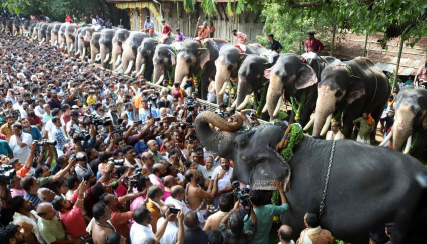
UPSC CURRENT AFFAIRS – 19 March 2025 Home / Supreme Court Ruling on participation of elephants in festivals Why in News: The Supreme Court of India observed that the use of elephants in temple festivals is a cultural tradition while balancing concerns over animal welfare under the Captive Elephant (Management and Maintenance) Rules, 2012. Introduction The Supreme Court of India observed that the use of elephants in festivals is an integral part of the country’s culture. A Bench comprising Justices B.V. Nagarathna and Satish Chandra Sharma made this observation while hearing a petition filed by the NGO Vishwa Gaja Seva Samithi, which challenged a Kerala High Court judgment on January 13 concerning the treatment of captive elephants in religious festivals, particularly in Kerala temples. Petitioners’ Concerns and Allegations The NGO, represented by senior advocate Vikas Singh and advocate Narender Kumar Verma, sought the Supreme Court’s intervention to review what it termed “impractical directions and biased observations” made by a Special Bench of the High Court. The petition stressed the need to safeguard Kerala’s traditional temple festivals, including Ezhunnellippu, within the bounds of constitutional protections. The NGO further alleged that several animal rights activists and NGOs, particularly those receiving foreign funding, were attempting to disrupt Hindu temple rituals under the pretext of animal welfare. It requested an inquiry into the foreign funding of these organizations, asserting that they were working to undermine religious traditions. Cultural Significance of Elephants in Kerala The petitioners emphasized that elephants hold a sacred status in Kerala’s Hindu religious traditions, symbolizing strength, divinity, and prosperity. They highlighted that many temples own elephants, often donated by devotees, and that elephants play a crucial role in temple rituals and processions. Additionally, the petition pointed out that Kerala’s state emblem features two elephants facing each other, reinforcing their deep-rooted cultural significance. Category Details India’s Elephant Population 29,964 (as per 2017 census by Project Elephant) Global Population Share ~60% of the world’s wild Asian elephants States with Highest Population 1. Karnataka 2. Assam 3. Kerala IUCN Red List Status Asian Elephant: Endangered African Forest Elephant: Critically Endangered African Savanna Elephant: Endangered Convention on Migratory Species (CMS) Asian Elephant: Appendix I African Forest Elephant: Appendix II Wildlife (Protection) Act, 1972 Asian Elephant: Schedule I CITES (Convention on International Trade in Endangered Species of Wild Fauna and Flora) Asian Elephant: Appendix I African Savanna Elephant: Appendix II Court’s Observations and Response Justice Nagarathna acknowledged the concerns raised by the petitioners and remarked that “the use of elephants in festivals is part of our culture.” Despite the concerns raised, the Supreme Court refused to transfer the case from the Kerala High Court, stating that the High Court was already handling the matter under the guidelines of the Captive Elephant (Management and Maintenance) Rules, 2012. The Bench also questioned whether the transfer petition was merely an attempt to shift the case outside Kerala. Consequently, the devaswoms chose to withdraw their plea. Balancing Tradition and Animal Welfare The Supreme Court has previously sought to balance cultural practices with animal rights. In December 2024, it directed temple authorities to strictly comply with the 2012 Rules while staying any conflicting directions issued by the Kerala High Court. However, the High Court, in its January 13 judgment, reiterated that festival organizers must ensure “sufficient space” between elephants during processions to comply with the Rules. As the legal proceedings continue, the case highlights the ongoing debate between preserving religious traditions and ensuring the ethical treatment of captive elephants, particularly in Kerala’s grand temple festivals.
National Quantum Mission: India’s Quantum Leap
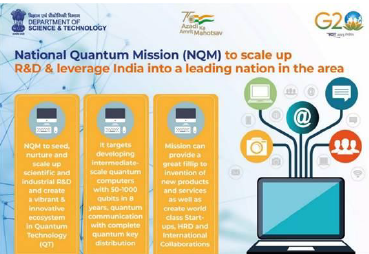
UPSC CURRENT AFFAIRS – 19 March 2025 Home / National Quantum Mission: India’s Quantum Leap Why in News: The National Quantum Mission (NQM) is a transformative initiative by the Government of India aimed at advancing quantum technologies in the country. Approved by the Union Cabinet on April 19, 2023, the mission will span from 2023–24 to 2030–31 with a budget allocation of ₹6,003.65 crore. By leveraging quantum computing, cryptography, communication, and sensing technologies, India aspires to position itself as a global leader in this cutting-edge domain. Introduction The National Quantum Mission (NQM) is a transformative initiative by the Government of India aimed at advancing quantum technologies in the country. Approved by the Union Cabinet on April 19, 2023, the mission will span from 2023–24 to 2030–31 with a budget allocation of ₹6,003.65 crore. By leveraging quantum computing, cryptography, communication, and sensing technologies, India aspires to position itself as a global leader in this cutting-edge domain. Objectives of the National Quantum Mission The mission aims to develop indigenous quantum technologies to bolster multiple sectors such as communication, computing, cryptography, defense, and healthcare. The key objectives include: Quantum Computing Evolution Development of intermediate-scale quantum computers with 20–50 physical qubits (3 years), 50–100 qubits (5 years), and 50–1000 qubits (8 years). Platforms such as superconducting and photonic technologies will be explored to enhance computational capabilities. Satellite-Based Quantum Communication Establishing quantum-secured communication between two ground stations over a 2000 km range within India. Enabling secure quantum communication with other nations. Inter-City Quantum Key Distribution (QKD) Implementing QKD over a 2000 km span using trusted nodes and wavelength division multiplexing (WDM) on optical fiber infrastructure. Advanced Quantum Sensing & Clocks Designing high-sensitivity magnetometers, gravity sensors, and atomic clocks for secure communication, precision navigation, and metrology applications. Quantum Materials & Devices Research on next-generation superconductors, novel semiconductor structures, and topological materials to fabricate qubits and quantum sensors. Implementation Strategy: Thematic Hubs (T-Hubs) The mission will be implemented through four Thematic Hubs (T-Hubs) set up across premier institutions in India. These hubs will drive research, skill development, entrepreneurship, and international collaborations. The institutions hosting these T-Hubs include: Indian Institute of Science (IISc), Bengaluru Indian Institute of Technology (IIT), Madras (in collaboration with the Centre for Development of Telematics, New Delhi) Indian Institute of Technology (IIT), Bombay Indian Institute of Technology (IIT), Delhi Each T-Hub will specialize in a key domain: Quantum Computing Quantum Communication Quantum Sensing & Metrology Quantum Materials & Devices These hubs will operate under a Hub-Spoke-Spike Model, wherein research projects (Spokes) and individual research groups (Spikes) will collaborate under a central hub. Key Initiatives Under NQM Quantum-Safe Ecosystem Framework: Development of post-quantum cryptography (PQC) frameworks to secure India’s critical database systems against quantum-era threats. DRDO Initiatives: The Defence Research and Development Organization (DRDO) is leading projects to design and test quantum-resilient encryption techniques. SETS Contributions: The Society for Electronic Transactions and Security (SETS) is researching PQC algorithms for applications such as FIDO authentication and IoT security. C-DoT Innovations: The Centre for Development of Telematics (C-DoT) has developed solutions including Quantum Key Distribution (QKD), PQC, and Quantum Secure Video IP Phones. Strategic Impact and Global Competitiveness The NQM is set to revolutionize multiple sectors, including: Telecommunications – Enhanced secure data transmission. Defense & Security – Strengthened cryptographic systems. Finance – Safer banking and financial transactions. Healthcare – Improved drug discovery through quantum simulations. Energy – Development of quantum-based clean energy solutions. Furthermore, the mission aligns with India’s national initiatives such as Digital India, Make in India, Skill India, Start-up India, and Self-Reliant India, contributing to global competitiveness and economic resilience. Conclusion The National Quantum Mission (NQM) is a landmark initiative that underscores India’s commitment to becoming a global leader in quantum technology. By fostering cutting-edge research, securing digital infrastructure, and promoting industry collaborations, the mission is poised to reshape India’s technological landscape. With significant investments and strategic planning, the NQM will not only bolster national security and economic growth but also pave the way for scientific breakthroughs with far-reaching societal impacts.
India’s recalibration with the Taliban

UPSC CURRENT AFFAIRS – 19 March 2025 Home / India’s recalibration with the Taliban Why in News: India’s increasing engagement with the Taliban, including the possibility of accepting a Taliban-appointed envoy, marks a strategic shift in its Afghanistan policy. While this move could counter Chinese and Pakistani influence, it also poses risks, including security concerns and human rights issues. Introduction India’s approach toward Afghanistan is witnessing a significant shift, with reports indicating that Prime Minister Narendra Modi may allow the Taliban to appoint an envoy for its embassy in New Delhi. This development follows India’s first high-level meeting with the Taliban in January 2024, where Foreign Secretary Vikram Misri met with Taliban ‘Foreign Minister’ Amir Khan Muttaqi in Dubai to discuss political and economic ties along with humanitarian aid. Strategic Calculations Behind India’s Shift Geopolitical Considerations India sees an opportunity to increase its influence in Afghanistan, a country of strategic importance due to its location at the crossroads of South and Central Asia. Engaging with the Taliban aligns with India’s broader regional interests, particularly in countering the growing influence of China and Pakistan. China’s Rapid Expansion in Afghanistan China was the first country to accept a Taliban envoy. Beijing has initiated infrastructure projects and is considering Afghanistan’s inclusion in the Belt and Road Initiative (BRI). This has brought the Taliban into China’s strategic orbit. Pakistan-Taliban Relationship Breakdown Once natural allies, relations between Pakistan and the Taliban have soured. The Taliban has sought independence from Islamabad, forging ties with China, Russia, and Central Asian states. Pakistan’s diminishing influence in Kabul creates space for India to establish its presence. India’s engagement with the Taliban could provide a counterweight to Chinese expansion and undermine Pakistan’s regional leverage. Challenges and Risks of Engaging with the Taliban Afghanistan as a Terrorism Hotbed One of the biggest risks in engaging with the Taliban is Afghanistan’s status as a hub for terrorism. Islamic State’s Growing Threat The Islamic State (IS) has carried out deadly terror attacks in Afghanistan, targeting Taliban officials and foreign interests. In December 2023, IS assassinated Taliban ‘Minister’ Khalil Ur-Rahman Haqqani. The group has also attacked foreign embassies and business interests in Afghanistan. Taliban’s Alleged Support for Terror Groups The Tehrik-e-Taliban Pakistan (TTP), an ally of the Afghan Taliban, has been accused of launching terror attacks on Pakistan. In February 2024, the TTP claimed to have carried out 147 attacks, killing 180 Pakistani soldiers. Pakistan responded with airstrikes on Afghan territory, worsening relations with the Taliban. Direct Threats to India India has already been targeted by the IS, which claimed responsibility for an attack on the Indian consulate in Jalalabad. A UN report in 2023 warned that IS is attempting to recruit ‘lone actors’ to conduct attacks in India. India must carefully evaluate whether closer engagement with the Taliban will increase its exposure to terrorism. The Human Rights Concern: Gender Apartheid in Afghanistan The Taliban’s repressive policies against women and minorities have led to international condemnation. 1.4 million school-age girls have been denied education. Women are banned from most jobs, beauty parlors, and public spaces like parks. The UN has described the situation as “gender apartheid”. India has traditionally championed human rights and women’s empowerment. Aligning with the Taliban could undermine India’s global image and invite domestic and international criticism. Need for a Cautious Approach Given Afghanistan’s history of political instability, terrorism, and human rights violations, India must weigh its strategic interests against the potential risks of engaging with the Taliban.Key Considerations for India: Terrorism Control as a Precondition India must demand that the Taliban actively combat IS and distance itself from terror groups like the TTP. Regional counterterrorism cooperation with Iran, Russia, and Central Asian nations should be strengthened. Engagement Without Recognition India can continue diplomatic and economic engagement without officially recognizing the Taliban regime. This approach aligns with global best practices while maintaining strategic flexibility. Balancing Geopolitical Interests India must ensure that its engagement in Afghanistan does not lead to overdependence on the Taliban, similar to China and Pakistan’s failed experiences. Investment in infrastructure and humanitarian aid can be pursued cautiously, with strict monitoring of funds. Conclusion Afghanistan remains a volatile and high-risk region, and India must carefully assess the benefits and drawbacks of engaging with the Taliban. While there are strategic advantages, including countering China and Pakistan, the risks of terrorism, instability, and human rights concerns cannot be ignored. New Delhi must adopt a measured, pragmatic, and security-conscious approach that safeguards India’s interests while avoiding overcommitment in a country fraught with dangers.
National Wildlife Health Policy Draft Highlights

UPSC CURRENT AFFAIRS – 19 March 2025 Home / National Wildlife Health Policy Draft Highlights Why in News: Five years after the Covid-19 pandemic, caused by the SARS-CoV-2 virus, highlighted the risks of zoonotic diseases, the Indian government is reviewing an interim draft of the National Wildlife Health Policy (NWHP). Proposed National Wildlife Health Policy The policy aims to establish integrated wildlife disease surveillance, research mechanisms, and new diagnostic laboratories. It aligns with the National One Health Mission, which promotes a holistic approach to human, animal, and environmental health. The Central Zoo Authority (CZA), under the Ministry of Environment, Forest and Climate Change (MoEF&CC), organized a consultative workshop involving government agencies, NGOs, academic institutions, zoological parks, and veterinary universities to develop the National Wildlife Health Policy. The policy formulation is being supported by the GISE Hub at IIT Bombay and the Office of the Principal Scientific Adviser to the Government of India. Objectives The policy aligns with India’s National Wildlife Action Plan (2017-31) and the One Health framework, emphasizing human, animal, and environmental health interconnectivity. Key initiatives include: Current Wildlife Health Challenges Indian wildlife faces multiple threats, including infectious diseases like Canine Distemper Virus, habitat degradation, climate change, and illegal activities. With over 91,000 species and more than 1,000 protected areas—including national parks, wildlife sanctuaries, and biosphere reserves—a comprehensive wildlife health policy is essential for effective conservation and disease management. Need for a National Wildlife Health Policy According to government data, over 60% of emerging infectious diseases affecting humans originate from animals. India’s 1,014 protected areas—including 106 national parks, 573 wildlife sanctuaries, 115 conservation reserves, and 220 community reserves—harbor diverse terrestrial, avian, and marine species, making wildlife health monitoring crucial for preventing zoonotic outbreaks. The Central Zoo Authority (CZA), under the Ministry of Environment, is leading policy drafting efforts, while the Principal Scientific Adviser’s office is coordinating consultations with experts. The Indian Institute of Technology, Bombay and private consultancy firm Ernst & Young are supporting the formulation process. Key Features and Recommendations of the Policy The policy framework is being shaped by seven working groups, focusing on disease surveillance, research, capacity building, and regulatory measures. Key recommendations include: Establishing a Wildlife Disease Surveillance System Aims to monitor and report diseases affecting terrestrial, marine, and avian ecosystems. Encourages data sharing between the Ministry of Environment, Ministry of Agriculture, and Department of Animal Husbandry. Setting Up the National Wildlife Health Database & Information System The National Wildlife Health Database will serve as a central repository for real-time and historical disease surveillance data. The Wildlife Health Information System will streamline facility-level reporting, spatial-temporal data analysis, and disease monitoring. Role of the National Referral Centre for Wildlife (NRC-W) Located in Junagadh, Gujarat, the NRC-W—whose foundation stone was laid by Prime Minister Narendra Modi on March 3, 2025—will function as a nodal center for investigating wildlife mortalities, disease outbreaks, and diagnostics. Satellite Diagnostic Labs for Wildlife Health Proposed near critical forest habitats to enhance early disease detection and wildlife health management. Community Engagement for Disease Prevention Focus on vaccination programs for cattle near national parks to prevent the spread of diseases between livestock and wildlife. Way Forward The National Wildlife Health Policy aims to bridge existing gaps in wildlife disease surveillance by integrating efforts across environmental, agricultural, and veterinary sectors. Strengthening diagnostic infrastructure, improving cross-sectoral collaboration, and enhancing real-time data collection will be critical to ensuring effective wildlife health management and pandemic preparedness. The final policy draft is expected to undergo inter-ministerial consultations before implementation.
PM Internship Scheme in news- Key Highlights

UPSC CURRENT AFFAIRS – 19 March 2025 Home / PM Internship Scheme in news- Key Highlights Why in News: Union Finance and Corporate Affairs Minister Nirmala Sitharaman has urged more companies to participate in the PM Internship Scheme (PMIS), emphasizing its national importance. Introduction Audible enclaves are localized pockets of sound that remain unaffected by external noise. These technological innovations enable sound delivery to a specific individual even in a crowded environment. Researchers have developed these enclaves using parametric array loudspeakers and high-frequency sound waves, creating a new frontier in personalized auditory experiences. About the PM Internship Scheme The scheme aims to tackle youth unemployment by providing internship opportunities to one crore young individuals over the next five years. Participants will receive: A monthly stipend of ₹4,500 from the government. An additional ₹500 from companies under their Corporate Social Responsibility (CSR) initiatives for a one-year internship. A one-time grant of ₹6,000 upon enrollment. Insurance coverage under the PM Jeevan Jyoti Bima Yojana and PM Suraksha Bima Yojana. Eligibility Criteria Age: 21-24 years. Education: Minimum Class 10 qualification; however, graduates from premier institutions (IITs, IIMs) and professionals like Chartered Accountants (CAs) are excluded. Employment Status: Must be unemployed and not engaged in full-time work. Income Limit: Annual family income should not exceed ₹8 lakh; families with government employees are not eligible. Benefits of the Scheme The PM Internship Scheme enhances employability by providing real-world industry experience, similar to Singapore’s Skills Future Internship Programme, which prepares students for high-demand jobs. It promotes social mobility by offering opportunities to students from diverse economic backgrounds, much like Germany’s Vocational Training System, which supports young professionals through paid apprenticeships. The scheme helps develop essential workplace skills like communication, teamwork, and problem-solving, making interns more job-ready. By creating a skilled workforce, it contributes to national economic growth and reduces unemployment. Strengthening public-private partnerships, the initiative ensures a steady flow of industry-ready professionals, similar to Canada’s Mitacs Internship Program, which connects students with industry leaders. Key Features of the PM Internship Scheme The Government of India provides ₹4,500 per month to selected interns through Direct Benefit Transfer (DBT). An additional ₹500 is contributed by companies through their Corporate Social Responsibility (CSR) funds. Interns also receive a one-time grant of ₹6,000 per annum to cover incidental expenses. Companies have complete autonomy in selecting candidates from a shortlist, ensuring transparency and flexibility. The PM Internship Scheme is part of the Prime Minister’s Package for Employment and Skilling, introduced in Budget 2024-25 with a total allocation of ₹2 lakh crore. Enhancements in the Second Phase To improve accessibility and efficiency, the government has introduced: PMIS Mobile App – allowing candidates to track applications and access opportunities. Referral Program – enabling registered candidates to refer others and earn rewards. Improved Dashboard – making the PMIS portal more user-friendly with detailed role descriptions. Outreach Events – conducted in 80+ educational institutions and Rozgar Melas to increase awareness. Conclusion The PM Internship Scheme is a crucial step in leveraging India’s demographic dividend by equipping youth with practical industry experience. While industry participation has increased, greater engagement from top companies is essential for the scheme’s success. The government remains committed to ensuring transparency, accessibility, and inclusivity, aiming to make the program a cornerstone of employment generation and skill development in India.
Why is the euro rising against the US dollar?

UPSC CURRENT AFFAIRS – 19 March 2025 Home / Why is the euro rising against the US dollar? Why in News: The euro-dollar exchange rate fluctuations after Donald Trump’s election in 2024 highlight the impact of economic policies, investor sentiment, and global financial trends on currency valuation. Introduction Recently, the day of the U.S. Presidential election, the euro-dollar exchange rate stood at 1.0933. Following Donald Trump’s victory, the euro weakened, and by January 20, 2025 (his inauguration day), the exchange rate had fallen to 1.0277. However, by March 17, 2025, the euro had rebounded to 1.0919, nearly its pre-election level. This currency fluctuation highlights the impact of economic policies, investor sentiment, and global financial trends on exchange rates. Understanding Currency Exchange Rates Exchange rates reflect the relative demand for two currencies. Demand arises from: Investments in stocks or bonds. Tourism and spending in foreign economies. Trade in goods and services. If demand for euros exceeds demand for dollars, the euro appreciates (gains value), making it stronger against the dollar. Conversely, if the demand for dollars rises, the euro depreciates (loses value). Why Did the Euro Depreciate After Trump’s Election? Following Trump’s victory, markets anticipated that his policies would boost U.S. economic growth, making the U.S. dollar more attractive to investors. Key expectations included: Tax Cuts & Deregulation – Increased corporate profits and economic productivity. Business-Friendly Policies – Strengthened investor confidence in the U.S. economy. Weak EU Economic Outlook – The Eurozone struggled with slow growth, political instability, and uncertain fiscal policies in key economies like Germany and France. As a result, investors moved capital into the U.S., increasing demand for dollars, leading to the euro’s depreciation against the dollar. What Led to the Euro’s Recovery? By March 2025, two major factors contributed to the euro regaining strength: Worsening U.S. Economic Outlook Instead of pro-growth policies, Trump focused on tariffs and federal budget cuts, which negatively impacted the economy. Trade tensions created uncertainty, discouraging investment. The OECD projected U.S. GDP growth to slow from 2.8% in 2024 to 2.2% in 2025 and 1.6% in 2026. Weaker economic prospects led investors to withdraw funds from the U.S., reducing dollar demand. Improving Eurozone Growth Prospects European governments, led by Germany and France, shifted away from fiscal austerity to stimulus-driven policies. The OECD projected EU GDP growth to rise from 0.7% in 2024 to 1.2% by 2026. Investor confidence in Europe’s recovery led to increased capital inflows, strengthening the euro. Future Outlook and Uncertainties Despite the euro’s rebound, its future trajectory remains uncertain: Will Europe sustain its economic momentum? Will Trump’s trade policies stabilize or further weaken the U.S. economy? Upcoming policy decisions, including: March 19: U.S. Federal Reserve’s monetary policy announcement. April 2: Trump’s expected announcement on reciprocal tariffs. Impact on India The euro-dollar fluctuations also influence the Indian rupee (INR): Rupee vs. Dollar: As the dollar weakened, the rupee appreciated from ₹87.5/USD on February 6 to ₹86.5/USD on March 18. A stronger rupee lowers import costs, especially for crude oil, helping reduce inflation. Rupee vs. Euro: As the euro strengthened, the rupee depreciated from ₹87.4/EUR on January 5 to ₹94.5/EUR on March 18. A weaker rupee benefits Indian exports to Europe, making them more competitive. Conclusion The euro’s recent fluctuations highlight the interplay of economic policies, investor sentiment, and global market trends in determining exchange rates. While a stronger dollar initially weakened the euro, the reversal in economic outlooks shifted investor preferences, leading to a euro recovery. The U.S. Federal Reserve’s monetary policy and Trump’s trade strategies will be crucial in shaping future trends, with global implications, including for India’s exchange rates, inflation, and trade balance.
Necessity of electoral reforms
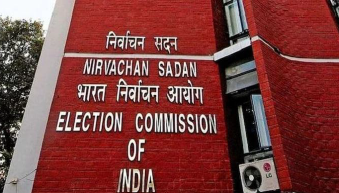
UPSC CURRENT AFFAIRS – 19 March 2025 Home / Necessity of electoral reforms Why in News: The Election Commission of India’s (ECI) recent invitation to political parties for discussions on strengthening the electoral process underscores the critical need for continuous refinement of India’s democracy. Introduction The Election Commission of India (ECI) is actively engaged in discussions regarding reforms to enhance the integrity and transparency of the electoral process. This initiative comes amidst rising concerns regarding electoral roll manipulation, duplicate Electoral Photo Identity Card (EPIC) numbers, and broader issues affecting the integrity of elections. The imperative to address these challenges stems from the fundamental principle that free and fair elections are the bedrock of a robust democracy, a principle enshrined in the basic structure of the Indian Constitution. Legal Framework and Evolution of the Electoral Process Article 324 of the Constitution vests the ECI with the superintendence, direction, and control of elections to Parliament and State legislatures, including the preparation of electoral rolls. The Representation of the People Act, 1950, and the Registration of Electors Rules, 1960, provide the legal framework for electoral roll management. Since the first general election in 1952, India’s electoral process has undergone significant transformations, moving from ballot boxes to ballot papers, and ultimately to Electronic Voting Machines (EVMs) with 100% Voter Verifiable Paper Audit Trail (VVPAT) verification since 2019. This evolution reflects the nation’s commitment to modernizing and enhancing the efficiency and transparency of its electoral system. Contemporary Challenges to Electoral Integrity Despite these advancements, several issues persist, threatening the integrity of the electoral process. These include: EVM and VVPAT Concerns: Demands for a return to paper ballots and 100% VVPAT matching have been raised, though dismissed by the Supreme Court. The current system of verifying five VVPATs per assembly segment has been questioned for its statistical significance. The current system of 5% EVM micro controller verification is only accessible by the second or third place candidate, and after a written request. Electoral Roll Manipulation: Allegations of bogus voter inclusion and duplicate EPIC numbers across states, raising concerns about electoral roll integrity. The ECI’s explanation regarding the transition to a centralized database on ERONET, while valid, highlights the need for robust mechanisms to prevent such discrepancies. Campaign Process Deficiencies: Instances of “Star Campaigners” using abusive language and engaging in divisive rhetoric. Breaches of election expenditure limits by candidates and unregulated spending by political parties. The increasing criminalization of politics, with a significant proportion of elected representatives facing criminal charges. Necessary Reforms for a More Robust Electoral System To address these challenges and strengthen the electoral process, the following reforms are crucial: Enhancing EVM and VVPAT Verification: Implement a scientifically determined sample size for VVPAT matching, considering regional variations. Introduce “totaliser” machines to aggregate votes, enhancing voter anonymity at the booth level. Ensure that the 5% EVM verification process is more accessible, and that clear procedures are in place to address any discovered issues. Strengthening Electoral Roll Integrity: Consider linking Aadhaar numbers with EPIC cards after addressing privacy concerns and engaging in thorough stakeholder consultations. Implement robust mechanisms to eliminate duplicate voter IDs and ensure unique EPIC numbers across states. Reforming the Campaign Process: Empower the ECI to revoke “Star Campaigner” status for serious violations of the Model Code of Conduct (MCC). Amend election expenditure laws to include financial assistance provided by political parties to candidates. Establish a ceiling on political party spending during elections. Strictly enforce the Supreme Court’s directives regarding the disclosure of criminal antecedents by candidates and political parties. Increased Transparency and Accountability: Increase the public access to electoral role data, while protecting privacy. Increase the speed and transparency of the handling of electoral complaints. The Way Forward The ECI’s initiative to engage political parties in discussions on electoral reforms is a welcome step. A collaborative approach, involving all stakeholders, is essential to address the challenges facing India’s electoral system. By implementing the necessary reforms, India can further strengthen its democratic foundations and ensure that elections remain free, fair, and credible, reflecting the true will of the people.
Concept of audible enclaves in news
UPSC CURRENT AFFAIRS – 19 March 2025 Home / Concept of audible enclaves in news Why in News: Researchers at Pennsylvania State University have developed a method using ultrasonic transducers and acoustic metasurfaces to create localized sound zones, or “audible enclaves,” where only the intended listener can hear the audio, while it remains inaudible to others nearby. Introduction Audible enclaves are localized pockets of sound that remain unaffected by external noise. These technological innovations enable sound delivery to a specific individual even in a crowded environment. Researchers have developed these enclaves using parametric array loudspeakers and high-frequency sound waves, creating a new frontier in personalized auditory experiences. Understanding Sound Propagation Sound travels in waves through a medium, causing particles to vibrate back and forth. The frequency of these waves—how fast particles move—determines the pitch of the sound. Lower frequencies travel farther and are less directional. Higher frequencies spread out more due to diffraction but can be manipulated to form focused sound beams. How Audible Enclaves Work Traditional parametric array loudspeakers focus sound by emitting high-frequency waves modulated with an audio signal. As they travel, they self-demodulate, producing a narrow, directional sound beam that only people in its path can hear. A recent study, published on March 17 in the Proceedings of the National Academy of Sciences, introduces an advanced approach to creating audible enclaves. This method uses two high-frequency waves of different frequencies. These waves are inaudible individually, but where they intersect, non-linear interactions generate a sound wave, making it audible only at that specific point. This enables sound to be localized to a precise location without disturbing the surrounding area. Potential Applications The ability to target sound precisely has various applications: Personalized communication in crowded spaces like airports or train stations. Augmented reality (AR) and virtual reality (VR) experiences with immersive audio. Medical applications, such as assisting the hearing-impaired with directional sound cues. Advertising and entertainment, where specific individuals can receive customized audio messages. Conclusion Audible enclaves represent a significant advancement in sound technology, allowing for personalized, non-intrusive audio experiences. As research progresses, this innovation has the potential to revolutionize communication, entertainment, and assistive technologies, offering greater control over sound environments in various domains.
First Sighting of Endangered Caracal in Mukundra Hills Tiger Reserve

UPSC CURRENT AFFAIRS – 18 March 2025 Home / First Sighting of Endangered Caracal in Mukundra Hills Tiger Reserve Why in News: Recent sighting of a caracal in Mukundra Hills Tiger Reserve underscores the importance of strong conservation measures About Caracal The caracal (Caracal caracal) is a medium-sized, primarily nocturnal wild cat known for its distinctive black-tipped, pointy ears. The name ‘caracal’ originates from the Turkish word karakulak, meaning ‘black ears’. Caracals are small wild cats characterized by their long, tufted ears and reddish-tan or sandy-brown fur. Known as Siya Gosh in India, these nocturnal predators primarily hunt small mammals, birds, and rodents. They are naturally found in northwestern India, as well as in regions across Africa, the Middle East, and Central Asia. Their preferred habitats include the Aravalli hill range, semi-deserts, savannahs, scrublands, and dry forests. Although caracals once thrived across Central India and the Indo-Gangetic plains, they have not been sighted in these regions for the past four decades. Distribution and Population Decline in India Historically, caracals inhabited 13 Indian states across nine of the 26 biotic provinces. However, their population has suffered a sharp decline, with the current estimate being fewer than 50 individuals. Native to Africa, the Middle East, Central Asia, and South Asia, these agile hunters were historically valued in medieval India for their ability to catch birds mid-flight. Descriptions of caracals appear in historical texts such as Khamsa-e-Nizami, Shahnameh, and Tutinama. Their presence is now restricted mainly to Rajasthan and Gujarat, with their known habitat covering only 16,709 sq km—less than 5% of the area they occupied between 1948 and 2000. Pre-1947 to 2000: Population declined by 50%. 2001 to 2020: Over 95% decline observed. 2021: Declared ‘Critically Endangered’ by the National Board for Wildlife and the Union Ministry of Environment, Forest and Climate Change. Conservation Status Globally, caracals are classified as ‘Least Concern’ on the IUCN Red List due to their widespread presence in Africa and parts of Asia. In India, they are categorized as ‘Near Threatened’, reflecting their declining population and restricted habitat. Under Indian law, caracals are protected under Schedule-I of the Wildlife (Protection) Act, 1972, granting them the highest level of legal protection. Protection Efforts In 2021, the National Board for Wildlife (NBWL) and the Ministry of Environment, Forest and Climate Change (MoEFCC) initiated a species recovery program targeting 22 endangered species, including the caracal. Potential habitats for conservation have been identified in Kutch, the Aravalli mountain range, the Malwa plateau, and the Bundelkhand region. The Ranthambore-Kuno Landscape has been recognized as a critical conservation site to support caracal population recovery. Threats to Caracal Population Several factors have contributed to the dramatic decline of caracals in India: Habitat Loss: Rapid urbanization and land-use changes have severely impacted the caracal’s ability to find prey, such as small ungulates and rodents. Wasteland Classification: The Chambal ravines, a key natural habitat, have been designated as wastelands, leading to ecological neglect and degradation. Illegal Trade: Increasing cases of caracals being captured for sale as exotic pets further threaten their survival. Conservation Efforts and the Role of Mukundra Hills Tiger Reserve The recent sighting of a caracal in Mukundra Hills Tiger Reserve underscores the importance of strong conservation measures. The reserve’s protection regime serves as an umbrella to safeguard not only tigers but also lesser-known species like the caracal. Continued monitoring, habitat restoration, and anti-poaching efforts are critical to preventing further decline.
Study of CAR T-Cell therapy trial in India, in Leukaemia Patients

UPSC CURRENT AFFAIRS – 18 March 2025 Home / Study of CAR T-Cell therapy trial in India, in Leukaemia Patients Why in News: A recent study on India’s CAR T-cell therapy, developed by IIT Bombay and Tata Memorial Hospital, reported a 73% response rate for B-cell blood cancers, offering a cost-effective alternative to global treatments. Introduction Chimeric Antigen Receptor (CAR) T-cell therapy has emerged as a transformative approach in cancer treatment, particularly for blood cancers such as B-cell leukaemia and lymphoma. A recent study published in The Lancet Haematology has reported a remarkable 73% response rate among patients undergoing this therapy. The clinical trials, conducted by researchers from the Indian Institute of Technology (IIT) Bombay and Tata Memorial Hospital, Mumbai, mark a significant milestone in India’s cancer treatment landscape. CAR-T Cell Therapy CAR-T cell therapy (Chimeric Antigen Receptor T-cell therapy) is an advanced immunotherapy that harnesses a patient’s own immune cells to fight cancer. CAR T-cell therapy involves genetically modifying a patient’s T-cells, a type of immune cell, to target and destroy cancer cells. CAR T-cell therapy offers a targeted approach, minimizing damage to healthy cells while enhancing the immune system’s response against malignancies. It is approved for treating leukemias and lymphomas and is often called a “living drug.” Procedure: T-Cell Collection – T cells (a type of white blood cell) are extracted from the patient’s blood via apheresis. Genetic Modification – These cells are engineered in a lab to express CAR proteins, enabling them to recognize and bind to cancer-specific antigens. Expansion & Infusion – The modified T cells are multiplied and infused back into the patient, where they target and destroy cancer cells. Addressing Treatment Gaps For patients with relapsed or refractory B-cell malignancies—where standard treatments fail—options have been limited. B-cells play a crucial role in the immune system, and their uncontrolled proliferation can lead to severe complications. The clinical trials of CAR T-cell therapy in India provide an additional treatment avenue, offering hope to patients who previously had limited alternatives. Clinical Trials and Observations The study involved two phases: Phase-1: Included 14 patients with relapsed or refractory B-cell lymphoma. Phase-2: Expanded to 50 patients aged 15 and above, diagnosed with B-cell leukaemia or lymphoma. Among the 51 patients analyzed, 73% responded positively to the therapy. However, some side effects were noted, including neutropenia (low neutrophil count) in 55 out of 57 patients, thrombocytopenia (low platelet count) in 37 patients, and anaemia in 35 patients. Despite two treatment-related fatalities, the overall safety profile was deemed manageable. About T Cells T cells, or T lymphocytes, are a type of white blood cell essential for the immune system. They are responsible for cell-mediated immunity, enabling the body to detect and combat pathogens like viruses, bacteria, and cancer cells. There are two main types: Helper T cells – Support and activate other immune cells. Cytotoxic T cells – Directly destroy infected or cancerous cells. Benefits of CAR-T Cell Therapy High Effectiveness – CAR-T therapy has shown remarkable success in treating blood cancers like leukemias and lymphomas, leading to long-term remission in some patients. Personalized Treatment – Since CAR-T cells are derived from the patient’s own immune system, there is a lower risk of rejection compared to traditional therapies. Long-Lasting Immunity – The modified T cells can persist in the body, offering continued surveillance against cancer recurrence. Reduced Need for Chemotherapy – CAR-T therapy directly targets cancer cells, potentially eliminating the need for extensive chemotherapy and radiation. Challenges of CAR-T Cell Therapy Limited Success in Solid Tumors – Unlike blood cancers, CAR-T therapy faces challenges in treating solid tumors due to the tumor’s protective environment. Severe Side Effects – Patients may develop Cytokine Release Syndrome (CRS) and Neurotoxicity, which can cause life-threatening immune reactions. High Cost & Limited Accessibility – The therapy is extremely expensive, costing hundreds of thousands of dollars, making it inaccessible to many patients. Time-Consuming Process – The treatment involves extracting, modifying, and multiplying T cells, which can take several weeks, delaying treatment for critically ill patients. Potential for Relapse – If cancer cells mutate or stop expressing the targeted antigen, CAR-T cells may become ineffective. Future Prospects and Research The researchers at Tata Memorial Centre and IIT Bombay are now exploring the possibility of testing CAR T-cell therapy in earlier stages of treatment and in combination with other immunotherapies. Ongoing trials aim to refine the therapy and expand its applicability to a broader patient population. Indian Government’s Initiatives for Cancer Control Initiative Key Features Objective National Programme for Prevention and Control of Cancer, Diabetes, Cardiovascular Diseases, and Stroke (NPCDCS) Focuses on cancer prevention, screening, early detection, and treatment; strengthens healthcare infrastructure Reduce cancer burden through early diagnosis and improved healthcare access National Cancer Grid (NCG) A network of 270+ cancer centers ensuring standardized and affordable treatment; promotes research and training Improve quality and uniformity in cancer care across India Cervical Cancer Vaccination Initiative (Interim Budget 2024-25) Encourages vaccination for girls (9–14 years) to prevent HPV-related cervical cancer Reduce cervical cancer incidence through early immunization Conclusion The development of CAR T-cell therapy in India is a groundbreaking achievement in the field of oncology. With its high efficacy, manageable safety profile, and significantly reduced cost compared to global counterparts, this innovation addresses a crucial unmet need for cancer patients in India. Continued research and trials will further determine its long-term impact, paving the way for more accessible and effective cancer treatments in the country.