International Day of Forests 2025

UPSC CURRENT AFFAIRS – 21st March 2025 Home / International Day of Forests 2025 Why in News: On International Day of Forests 2025, India reaffirms its commitment to forest conservation, sustainable agriculture, and climate resilience through initiatives like the Green India Mission, National Agroforestry Policy, and Van Dhan Yojana. Introduction Forests are essential for ecological balance, providing oxygen, food, medicine, and livelihoods to millions. They play a crucial role in global food security, supporting indigenous and rural communities with natural resources like fruits, seeds, and roots. Recognizing their importance, the United Nations (UN) declared March 21 as the International Day of Forests (IDF) in 2012, with a new theme each year. The 2025 theme, “Forests and Food,” highlights the deep connection between forests and sustainable agriculture, nutrition, and rural economies. In India, forests are intertwined with cultural, economic, and biodiversity aspects, making their protection an environmental and national priority. To promote forest conservation and sustainable use, the Ministry of Environment, Forest, and Climate Change (MoEF&CC) has implemented several initiatives linking forests to food security, livelihoods, and climate resilience. National Agroforestry Policy (2014) Agroforestry integrates trees and crops to enhance soil fertility, increase farm productivity, and generate additional income for farmers. The National Agroforestry Policy (NAP), launched in 2014, aims to promote tree plantation on farmlands to support climate resilience and economic sustainability. Objectives: Encourage farmers to adopt agroforestry for climate adaptation. Promote tree-based farming to improve biodiversity and carbon sequestration. Implementation Strategy: Establishment of Quality Planting Material (QPM) nurseries for farmers. Technical support provided by the ICAR-Central Agroforestry Research Institute (CAFRI). Collaboration with ICFRE, CSIR, ICRAF, and state agricultural universities. Economic Support: Price guarantees and buy-back options for farm-grown trees. Private sector involvement in marketing and value addition of agroforestry products. Integration with millet promotion to enhance food security. Green India Mission (GIM) – A Climate Action Strategy The Green India Mission (GIM) is a critical component of India’s National Action Plan on Climate Change (NAPCC). Launched in 2015-16, GIM aims to expand forest cover, restore ecosystems, and mitigate climate change impacts. Mission Goals: Expand forest/tree cover by 5 million hectares (mha). Improve the quality of another 5 mha of forests. Enhance biodiversity and carbon storage. Improve livelihoods of 3 million forest-dependent households. Sub-Missions: Enhancing Forest Cover – Improving forest quality and ecosystem services. Ecosystem Restoration – Reforesting degraded lands. Urban Greening – Increasing tree cover in cities. Agroforestry & Social Forestry – Promoting carbon sequestration. Wetland Restoration – Revitalizing critical wetlands. Funding and Implementation: ₹909.82 crores allocated to 17 states and 1 Union Territory for forest restoration. Ecosystem Services Improvement Project (ESIP), a World Bank-funded initiative, is being implemented in Chhattisgarh and Madhya Pradesh. Forest Fire Prevention & Management Scheme Forest fires pose a significant threat to biodiversity, climate, and livelihoods. The Forest Fire Prevention & Management Scheme (FFPM) is a Centrally Sponsored Scheme aimed at preventing and controlling forest fires. Objectives: Reduce forest fire incidents through community participation. Develop early warning systems using Remote Sensing, GPS, and GIS technology. Strengthen forest fire detection with satellite-based monitoring. Implementation Strategy: Forest Survey of India (FSI) provides real-time fire alerts via SMS and email. A Crisis Management Group under MoEF&CC coordinates fire response. Development of a National Action Plan on Forest Fire in consultation with State Forest Departments and the National Disaster Management Authority (NDMA). Van Dhan Yojana – Empowering Tribal Communities Launched in 2018 by the Ministry of Tribal Affairs and TRIFED, the Pradhan Mantri Van Dhan Yojana (PMVDY) promotes sustainable livelihoods for tribal communities by enhancing the value of Minor Forest Produce (MFPs). Key Features: Establishment of Van Dhan Vikas Kendras (VDVKs) for processing and marketing forest products. Each VDVK consists of 300 tribal members from 15 Self-Help Groups (SHGs). Financial Support: ₹15 lakh allocated per Kendra. Tribal members contribute ₹1,000 each to ensure ownership and sustainability. Two-Stage Implementation: Stage I: Establish 6,000 Kendras across tribal districts. Stage II: Scale up successful Kendras with better storage and processing infrastructure. Impact: Enhances tribal income and reduces migration. Promotes sustainable forest management and biodiversity conservation. Conclusion India’s commitment to forest conservation and sustainable development is reflected in initiatives like the National Agroforestry Policy, Green India Mission, Forest Fire Prevention Scheme, and Van Dhan Yojana. These programs restore ecosystems, support livelihoods, and combat climate change, aligning with global sustainability goals.
What are the different risks and rewards of using UAVs?

UPSC CURRENT AFFAIRS – 21st March 2025 Home / What are the different risks and rewards of using UAVs? Why in News: The increasing use of UAVs for surveillance and cross-border activities necessitates a strategic response from India to balance national security with cost-effective countermeasures. Introduction The recent sighting of two Chinese Unmanned Aerial Vehicles (UAVs) near Okinawa and Japan’s measured response highlights the evolving dynamics of aerial security. Unlike piloted aircraft, UAVs are often perceived as a lesser threat due to their unmanned nature and limited offensive capabilities. However, this perception also emboldens states to deploy UAVs for reconnaissance and covert operations without significant fear of escalation. For India, UAV incursions—especially from Pakistan and Bangladesh—pose unique security challenges, requiring a strategic response that balances deterrence with cost-effectiveness. Why Are UAVs Seen as Less of a Threat? Several factors contribute to UAVs being perceived as a lower threat compared to piloted fighter jets: Limited Offensive Capabilities: While some UAVs can carry weapons, they are generally less capable than fighter jets. Many UAVs serve non-combat roles such as reconnaissance and surveillance. Absence of Human Presence: The lack of a pilot reduces the political and military costs of losing an aircraft. Shooting down a UAV does not lead to the loss of human life, making states less hesitant to deploy them near foreign airspace. Lower Economic Costs: UAVs are more expendable than piloted aircraft. Countries may use them for intelligence-gathering missions or low-risk provocations without risking expensive military assets. Minimal Retaliatory Consequences: Past incidents, such as Iran’s downing of a U.S. surveillance drone in 2019 and Russia’s destruction of an American MQ-9 Reaper in 2023, did not lead to major military escalations, reinforcing the notion that UAVs can be intercepted without severe repercussions. The Dual-Edged Nature of UAV Operations While the lower perceived threat of UAVs prevents immediate escalation, it also incentivizes risk-taking behavior by states. Countries are more likely to conduct UAV missions near contested borders or within adversarial airspace, knowing that the response will likely be restrained. This creates challenges for national security and aerial defense. India’s UAV Challenge Pakistan’s Use of UAVs for Cross-Border Activities Pakistan has frequently used small, propeller-powered UAVs for illegal activities such as smuggling arms and drugs across the border. Since the Pakistani government does not take accountability for these incursions, India must address the issue through cost-effective countermeasures. In 2019, India used an expensive air-to-air missile launched from a Su-30 fighter jet to shoot down a UAV—a financially unsustainable approach for routine UAV threats. Instead, India must explore cheaper alternatives such as: Jamming and electronic warfare (EW) systems to disable UAV communications. Dedicated counter-drone technology like anti-drone lasers and drone-hunting UAVs. Ground-based air defense systems optimized for low-cost interception. Bangladesh’s Deployment of UAVs Near the Indian Border Recently, Bangladesh deployed Turkish Bayraktar TB-2 UAVs for surveillance near the Indian border. The TB-2, a large fixed-wing UAV, has endurance and size comparable to piloted aircraft. In the unlikely event of such UAVs entering Indian airspace, India must assess the risk level and respond proportionally to prevent escalation. Potential responses could include: Diplomatic Engagement: Raising concerns through diplomatic channels before resorting to military action. Non-Lethal Interception: Deploying UAVs to shadow and warn intruding drones rather than shooting them down immediately. Layered Defense Strategies: Utilizing radars and surface-to-air missiles (SAMs) for selective engagement based on the threat level. Strategic Evolution: Integrating UAVs into India’s Defense Doctrine As UAVs become an integral part of modern warfare, India must enhance its drone warfare capabilities. Steps to strengthen UAV strategy include: Indigenous UAV Development: Investing in domestic UAV programs to reduce dependence on foreign technology. Advanced Surveillance Networks: Deploying high-resolution radar and AI-based tracking systems for improved UAV detection. Offensive Drone Capabilities: Developing armed UAVs for deterrence and retaliatory strikes if needed. Collaboration with Allies: Strengthening UAV-based intelligence-sharing with strategic partners. Conclusion The increasing use of UAVs in military and security operations necessitates a well-calibrated approach from India. While UAVs present a lower risk of direct military escalation, their use for surveillance, smuggling, and cross-border provocations poses strategic challenges. A balanced response combining technological innovation, cost-effective defense systems, and diplomatic engagement will be crucial in securing India’s airspace while avoiding unnecessary conflicts.
Human Evolution- Modern humans likely descended from two ancient populations

UPSC CURRENT AFFAIRS – 20 March 2025 Home / Human Evolution- Modern humans likely descended from two ancient populations Why in News: Recent research published in Nature Genetics challenges the conventional belief that modern humans originated from a single ancestral population. Instead, the study suggests that Homo sapiens evolved from two distinct ancient populations, which intermingled approximately 300,000 years ago. This finding has significant implications for understanding human evolutionary history and the genetic contributions of early hominins. Key Findings of the Study Two Ancestral Populations: One group contributed 80% and another 20% of the modern human genome. These populations coexisted and later merged, shaping the genetic diversity seen today. Use of Advanced Genetic Models: The study utilized data from the 1000 Genomes Project, which includes DNA sequences from populations across Africa, Asia, Europe, and the Americas. A computational model called COBRAA was used to analyze genetic mutations and reconstruct ancestral population dynamics. Evolutionary Implications: The larger ancestral group was likely the common ancestor of Neanderthals and Denisovans, who later diverged. Genetic mixing was more extensive than previously believed, with modern humans receiving ten times more genetic material from these early populations than from Neanderthals and Denisovans. Fossil evidence suggests that Homo erectus and Homo heidelbergensis may have been the primary ancestors of Homo sapiens. Significance of the Research Challenges the “Single-Origin” Hypothesis: Earlier models suggested that modern humans arose from a single African population. This study indicates that human evolution was more complex, involving multiple interacting populations. Reinforces the Role of Genetic Mixing: Previous studies found 2-5% Neanderthal DNA in non-African modern humans. This new research shows that earlier interbreeding events contributed a much higher proportion of genetic material to modern humans. Fossil Evidence and Further Research: Homo erectus and Homo heidelbergensis lived in Africa and other regions during this period, but their exact role in human ancestry remains uncertain. Further ancient DNA analysis and fossil discoveries are needed to confirm these findings. Conclusion The study presents a new paradigm in human evolutionary history, suggesting that modern humans emerged through genetic contributions from multiple ancestral populations rather than a single lineage. This research highlights the need for further investigations into ancient DNA, fossil records, and advanced genetic modeling to refine our understanding of human origins.
Rare Earths: Indispensable to Modern Tech, A Geopolitical Quandary

UPSC CURRENT AFFAIRS – 20 March 2025 Home / Rare Earths: Indispensable to Modern Tech, A Geopolitical Quandary Why in News: Rare Earth Elements (REEs) are 17 critical metals essential for electronics, renewable energy, defence, and high-tech industries, with India holding the fifth-largest global reserves but facing extraction and processing challenges. Introduction Rare Earth Elements (REEs) are a group of 17 chemically similar elements comprising 15 lanthanides along with scandium and yttrium. Despite being moderately abundant in the Earth’s crust, their economic extraction is challenging due to their low concentration in ores. REEs play a crucial role in high-tech industries, renewable energy, defence, and electronics, making them strategically significant for global economies. Types and Characteristics of Rare Earth Elements Classification of REEs: REEs are categorized into two groups based on their atomic numbers and chemical properties: Light Rare Earth Elements (LREEs) (Atomic Numbers 57-63): Examples: Lanthanum (La), Cerium (Ce), Praseodymium (Pr), Neodymium (Nd), Promethium (Pm), Samarium (Sm), Europium (Eu) More abundant and easier to extract Heavy Rare Earth Elements (HREEs) (Atomic Numbers 64-71): Examples: Gadolinium (Gd), Terbium (Tb), Dysprosium (Dy), Holmium (Ho), Erbium (Er), Thulium (Tm), Ytterbium (Yb), Lutetium (Lu) Scarcer but critical for advanced technologies Scandium (Sc) and Yttrium (Y): Classified with HREEs due to similar chemical and physical properties Key Properties: High density, high melting points, and excellent thermal conductivity Strong magnetic, catalytic, and luminescent properties Trivalent charge (+3) and similar ionic radii, leading to comparable chemical behavior Principal Sources of REEs: Monazite (Phosphate-based, contains thorium & uranium) – Found in India’s coastal sands Bastnaesite (Fluorocarbonate) – Major source in China & USA Xenotime (Yttrium Phosphate) – Found in mineral sand deposits Loparite (Titanate-based, found in igneous rocks) Global Distribution and India’s Position China holds the largest reserves (37%) and dominates REE production (~90% of global supply). India ranks fifth globally in REE resources, with deposits mainly found in monazite-rich beach sands of Kerala, Odisha, Tamil Nadu, and Andhra Pradesh. Other major reserve holders include Brazil (18%), Vietnam (18%), and Russia (10%). Strategic Importance and Applications of REEs Electronics & High-Tech Devices Used in smartphones, laptops, hard disks, cameras, and LED displays Lanthanum contributes to 50% of digital camera lenses Erbium is essential for fiber-optic communication Green Technologies Neodymium-Iron-Boron (Nd-Fe-B) magnets for wind turbines and electric vehicles (EVs) Lanthanum-based alloys in Nickel-metal hydride batteries used in hybrid cars Cerium-based catalysts in automobile catalytic converters Defence & Space Technologies Critical in radar systems, missile guidance, satellite communications, and fighter jets Samarium-cobalt magnets for high-temperature resistance in military applications Energy & Nuclear Sector Cerium-based catalysts in petroleum refining Thorium-based nuclear reactors, leveraging India’s monazite reserves Healthcare & Medical Devices Used in MRI machines, laser scalpels, antiseptic dressings, and cancer drugs Steel & Glass Industry Lanthanum, neodymium, praseodymium in special steel alloys Cerium-based polishing agents in glass manufacturing Challenges and Concerns Environmental Impact (Rare Earth Dilemma) Toxic waste generation – For every 1 ton of REE extraction, 2,000 tons of hazardous waste is produced Water and soil contamination due to radioactive elements like thorium and uranium Monopoly of China China controls 90-95% of global REE supply, affecting geopolitical stability Increasing efforts by Australia, USA, Brazil, and Russia to counter China’s dominance Extraction & Processing Challenges India lacks advanced refining technology, leading to dependence on imports High capital costs for REE separation and processing Way Forward: Strengthening India’s REE Capabilities Policy & Strategic Initiatives National Rare Earth Policy: Develop a strategic roadmap for sustainable REE mining Public-Private Partnerships (PPP): Encourage private investment in REE processing infrastructure Sustainable Mining & Recycling Develop eco-friendly extraction technologies to minimize environmental damage REE recycling initiatives from e-waste and industrial byproducts Strengthening Indigenous Research & Manufacturing Establish Centres of Excellence for REE research under CSIR and ISRO Promote domestic processing units to reduce import dependence Enhancing Global Cooperation Collaborate with Japan, USA, Australia, and EU nations for technology-sharing Secure long-term REE supply agreements with resource-rich nations Conclusion Rare Earth Elements (REEs) are indispensable for modern technology, driving advancements in renewable energy, electronics, defence, and healthcare. While India holds vast REE reserves, challenges like environmental risks, China’s monopoly, and lack of refining capabilities need urgent policy attention. Strategic investments in sustainable mining, recycling, and global partnerships will be crucial for India’s self-reliance in critical mineral resources and its vision of Atmanirbhar Bharat.
PEPSU Muzhara Movement- a review

UPSC CURRENT AFFAIRS – 20 March 2025 Home / PEPSU Muzhara Movement- a review Why in News: The Muzhara Movement was an agrarian struggle in Punjab where tenant farmers (muzharas) fought for land ownership rights, leading to land reforms in 1952 and marking March 19 as a symbol of resistance. Introduction The Muzhara Movement was a significant agrarian struggle in Punjab, marking the fight of landless tenant farmers (muzharas) for ownership rights over the land they had cultivated for generations. It played a crucial role in shaping land reforms in post-independence India, ultimately leading to the redistribution of land to tenant farmers. Historical Background The movement originated in the 1930s in the princely state of Patiala and continued after independence when princely states were reorganized into the Patiala and East Punjab States Union (PEPSU). It was later renamed the PEPSU Muzhara Movement, gaining widespread participation from 784 villages across modern-day Patiala, Barnala, Mansa, Sangrur, Bathinda, Mohali, Fatehgarh Sahib, Faridkot, and Jind (now in Haryana). Muzharas, who were tenant farmers, worked under the oppressive feudal system of biswedars (landlords), who took a share of their produce while paying revenue to the ruling kings and the British. Even after independence, landlords continued to demand their share, leading to intensified protests by tenant farmers. Significance of March 19 The turning point in the movement occurred in March 1949, when biswedars attempted to reclaim land from the muzharas in Kishangarh village (Mansa district, Punjab). The tenant farmers resisted, leading to violent confrontations. March 17, 1949: A standoff with Patiala police resulted in the death of a police officer, leading to the arrest of 35 muzharas, who were later acquitted in February 1950. March 19, 1949: The army surrounded Kishangarh village, leading to the death of four muzharas in a violent clash. Since 1953, March 19 has been observed annually as a symbol of resistance and martyrdom in Punjab’s agrarian struggles. Key Leaders of the Muzhara Movement Several prominent figures played a crucial role in mobilizing tenant farmers and leading the resistance: Jagir Singh Joga – A key organizer who mobilized tenant farmers against landlords. Buta Singh – A prominent activist advocating for land rights and redistribution. Teja Singh Sutantar – A revolutionary associated with multiple peasant movements, supporting the Muzhara struggle. Sewa Singh Thikriwala – A leader whose anti-princely rule ideology influenced the movement. Bhai Jodh Singh – A grassroots activist who helped strengthen the movement through awareness campaigns. Impact of the Muzhara Movement Land Reforms: The movement led to land ownership rights being granted to tenant farmers by 1952, ending feudal exploitation in Punjab. Farmers’ Resistance Legacy: It inspired later agrarian movements, including the recent farmer protests against agricultural reforms. Commemoration: The village Kishangarh has a memorial dedicated to Muzhara martyrs, symbolizing their contribution to Punjab’s agrarian history. Observance of the Movement Traditionally, a three-day conference was held annually in Kishangarh, attended by farmers traveling on bicycles and carts to participate in speeches and discussions. Over the years, it has been reduced to a one-day event, organized by farmers’ unions and political groups, including BKU Dakaunda, Jamhoori Kisan Sabha, and CPI-affiliated organizations. The entry gate of Kishangarh village bears an inscription dedicated to the martyrs of the Muzhara Movement, and a memorial hall was constructed on land formerly occupied by a landlord’s haveli. Conclusion The Muzhara Movement remains a landmark in India’s agrarian history, demonstrating farmers’ resilience against feudal oppression. Its legacy continues to inspire contemporary struggles for farmers’ rights and land reforms, reinforcing the importance of grassroots movements in shaping socio-economic policies.
Revised Rashtriya Gokul Mission- Key Highlights
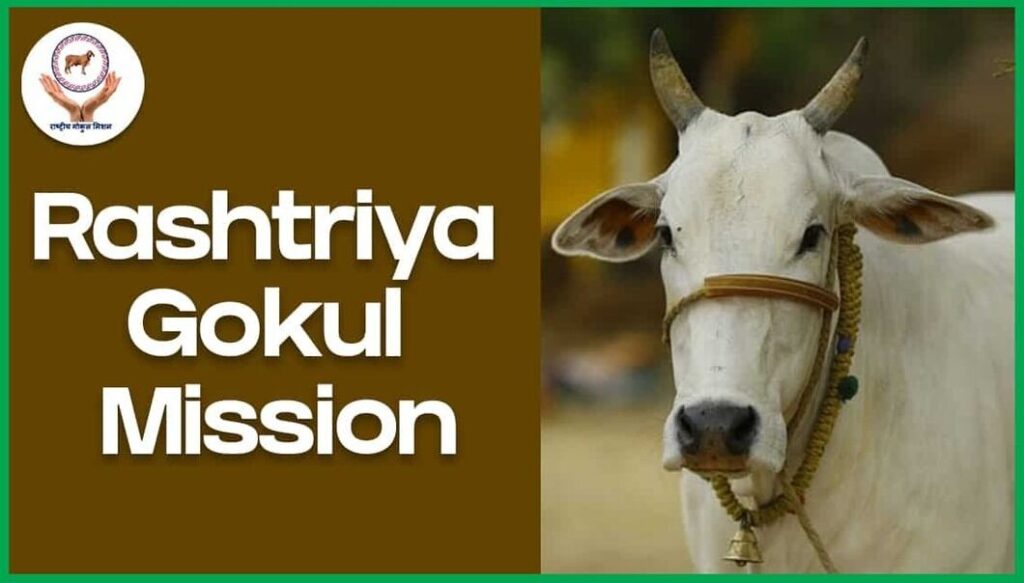
UPSC CURRENT AFFAIRS – 20 March 2025 Home / Revised Rashtriya Gokul Mission- Key Highlights Why in News: The Revised Rashtriya Gokul Mission (RGM), approved with an outlay of ₹3,400 crore (2021-26), aims to enhance milk production, genetic improvement, and indigenous bovine breeding through AI, IVF, and financial incentives for farmers. Introduction The Union Cabinet, chaired by Prime Minister Shri Narendra Modi, has approved the Revised Rashtriya Gokul Mission (RGM) under the Central Sector component of the Development Programmes scheme. The revised scheme aims to enhance milk production, productivity, and genetic improvement of indigenous bovine breeds while ensuring sustainable growth in the livestock sector. Financial Allocation and Revised Outlay The total outlay for the revised RGM during the 15th Finance Commission cycle (2021-22 to 2025-26) has been increased to ₹3,400 crore, with an additional allocation of ₹1,000 crore. Key New Initiatives under Revised RGM Heifer Rearing Centres: A one-time assistance of 35% of the capital cost will be provided to Implementing Agencies for establishing 30 housing facilities for 15,000 heifers. This initiative will help in systematic rearing of high-yielding heifers for enhanced productivity. Interest Subvention for Farmers: To encourage farmers to purchase High Genetic Merit (HGM) IVF heifers, a 3% interest subvention will be provided on loans taken from milk unions, financial institutions, or banks. This will promote the systematic induction of high-yielding breeds, boosting overall dairy production. Continuing Components of Rashtriya Gokul Mission The revised RGM retains all ongoing activities, including: Strengthening of Semen Stations and the Artificial Insemination (AI) network. Bull Production Programme and Accelerated Breed Improvement Programme using sex-sorted semen. Skill Development and Farmer Awareness Programs. Support for Innovative Technologies, including Centre of Excellence for Bovine Breeding. Strengthening of Central Cattle Breeding Farms (CCBFs). Impact on Dairy Production and Farmers Increase in Milk Production and Availability Milk production has grown by 55% over the past decade. Per capita milk availability has increased from 307 grams per day in 2013-14 to 471 grams per day in 2023-24. Productivity has improved by 26.34% over the last ten years. Nationwide Artificial Insemination Programme (NAIP) Free Artificial Insemination (AI) at farmers’ doorsteps in 605 districts where AI coverage was below 50%. Over 8.39 crore animals have been covered, benefiting 21 crore farmers. Technological Advancements in Bovine Breeding Establishment of 22 In Vitro Fertilization (IVF) labs across India under State Livestock Boards (SLBs) and Universities. Over 2,541 High Genetic Merit (HGM) calves have been born through IVF technology. Development of Gau Chip and Mahish Chip, genomic chips for indigenous bovines, by NDDB and ICAR-NBAGR. Gau Sort—India’s indigenous sex-sorted semen production technology—developed by NDDB. Enhancing Farmers’ Livelihoods 5 crore farmers engaged in dairy farming will benefit from improved productivity and higher incomes. The scientific conservation of indigenous bovine breeds will contribute to Atmanirbhar Bharat in the livestock sector. The promotion of IVF technology will ensure the sustainable enhancement of high-yielding cattle population. Conclusion The Revised Rashtriya Gokul Mission is a transformational step in India’s dairy and livestock sector. By integrating technological advancements, genetic improvement, and financial incentives, the scheme will enhance milk production, improve farmers’ incomes, and strengthen India’s position as the world’s largest dairy producer.
Factors influencing women’s political participation in India- a study

UPSC CURRENT AFFAIRS – 20 March 2025 Home / Factors influencing women’s political participation in India- a study Why in News: The study by Rajeshwari Deshpande analyzes National Election Studies (NES) data to examine the increasing voter turnout among women in India and the complexities of their political participation beyond voting, influenced by caste, class, and regional identities. Introduction The participation of women in Indian politics has been a subject of extensive discourse. While India has witnessed the rise of influential women leaders, overall political engagement among women remains constrained by structural and societal factors. Unlike many countries where the gender gap in political participation began narrowing in the 1990s, India saw this shift only in the 2010s. The study by Rajeshwari Deshpande, based on National Election Studies (NES) data, examines the emerging trends in women’s electoral participation, their voting patterns, and the challenges in shaping a distinct women’s constituency in Indian elections. Women as Political Participants: From Beneficiaries to Agents The 2010s marked a significant rise in women’s voter turnout, prompting political parties to introduce women-centric policies such as Ujjwala Yojana, Pradhan Mantri Awas Yojana, Ladli Behna, and Ladli Laxmi. However, these initiatives primarily positioned women as beneficiaries rather than active political agents. Deshpande’s study highlights that despite higher turnout, women’s political participation beyond voting—such as involvement in rallies, campaigns, and policy advocacy—remains limited. Agency in Decision-Making: NES data show that 14% of women seek advice from their spouses on voting decisions, a decline from previous years but still higher than men. Economic Independence and Voter Turnout: Despite increased literacy, women’s workforce participation remains low, questioning whether economic empowerment drives higher voter turnout. Migration and Women’s Electoral Participation: In some regions, large-scale male migration has contributed to higher turnout among women, particularly in economically disadvantaged States. Intersectionality in Women’s Voting Behaviour Women’s electoral choices in India are shaped not only by gender but also by regional, caste, and class identities. Regional Variations: In States like Tamil Nadu, Kerala, and West Bengal, women’s electoral preferences align with regional political movements rather than pan-Indian gender trends. Caste and Class Influence: The BJP’s voter base has traditionally been upper-caste and urban, whereas the Congress and Left have drawn support from marginalized communities and lower-income groups. However, women’s voting choices remain largely aligned with their communities rather than gender-specific concerns. Women’s Support for Political Parties NES data indicate significant trends in women’s political support: Congress and Left Parties: Historically, Congress has had a gender advantage, receiving more support from women than men. This trend continued in 2024, except in 2014, when the party suffered a nationwide decline. The Left parties also had higher female support but their influence has waned. BJP’s Gender Gap: The BJP has traditionally faced a gender disadvantage, with fewer women supporting the party compared to men. However, this gap has narrowed from over 20% to 7% in 2024, driven by welfare schemes targeting women. State-Level Variations: In some non-BJP ruled States, more women than men voted for the BJP, despite no increase in female voter turnout. Conversely, in other States, women preferred opposition parties, creating an uneven gender dynamic. Key Takeaways and Future Implications Increased Voter Turnout ≠ Greater Political Power: Women’s rising electoral participation has not translated into proportional representation in decision-making or political leadership. Voting Patterns are Shaped by Multiple Identities: Gender is not the sole determinant of women’s electoral choices; caste, class, and regional influences remain dominant factors. No Unified Women’s Constituency: Despite increasing outreach, Indian elections have yet to witness the emergence of a distinct women’s voting bloc. The study underscores that while women’s participation in elections has increased, their political agency remains constrained by socio-economic structures. Achieving true gender parity in political engagement requires moving beyond welfare-based outreach to fostering active political participation, leadership, and representation.
Cabinet approves UPI incentive of ₹1,500 crore to banks

UPSC CURRENT AFFAIRS – 20 March 2025 Home / Cabinet approves UPI incentive of ₹1,500 crore to banks Why in News: The Election Commission of India (ECI) is actively engaged in discussions regarding reforms to enhance the integrity and transparency of the electoral process. Introduction The Union Cabinet has approved an incentive scheme for Unified Payments Interface (UPI) transactions below ₹2,000 for the financial year 2024–25, with an outlay of ₹1,500 crore. The scheme aims to promote digital transactions among small merchants and enhance the adoption of UPI as a preferred mode of payment. Key Features of the UPI Incentive Scheme (2024–25) Applicable to transactions below ₹2,000: The government will provide an incentive of 0.15% to banks for small-value UPI transactions. Performance-based payout: One-fifth of the incentive is linked to the banks’ infrastructure performance, ensuring a robust and efficient digital payment system. No incentive for transactions above ₹2,000: The focus remains on encouraging micro-transactions, particularly benefiting small merchants. Support for small merchants: Unlike debit and credit card transactions, UPI does not charge merchant fees, making it a cost-effective digital payment mode. Rationale Behind the Initiative Promoting digital transactions: The scheme is part of the government’s ongoing efforts to boost financial inclusion and encourage digital payments in rural and semi-urban areas. Reducing financial burden: The government has gradually reduced the outlay for UPI incentives, balancing growth with fiscal responsibility. Strengthening UPI infrastructure: Banks are incentivized to maintain efficient payment processing systems, ensuring seamless transaction experiences. UPI Growth and Government’s Target for FY 2024–25 ₹3,631 crore incentive was disbursed in FY 2023–24, surpassing the combined amount from the previous two years. The government targets 20,000 crore in UPI transactions for FY 2024–25, reflecting the rapid expansion of digital payments in India. The incentive scheme also includes support for RuPay debit card transactions, strengthening India’s domestic payment ecosystem and reducing reliance on global networks like Visa and Mastercard. What is UPI? Unified Payments Interface (UPI) is a real-time payment system developed by the National Payments Corporation of India (NPCI) that allows users to link multiple bank accounts in a single mobile application and conduct seamless transactions. It enables instant money transfers 24/7 using a mobile number, UPI ID, or QR code, eliminating the need for traditional bank details like account numbers and IFSC codes. Key Features of UPI Instant Fund Transfer – Enables real-time transactions without requiring bank details. Interoperability – Works across multiple banks and payment platforms. Multiple Payment Modes – Supports peer-to-peer (P2P) and merchant transactions via mobile numbers, UPI IDs, or QR codes. No Merchant Fees – Unlike card transactions, merchants do not incur transaction charges, making it cost-effective. Secure and Convenient – Uses two-factor authentication (UPI PIN and mobile verification) to ensure safe transactions. Recurring Payments – Supports features like AutoPay for subscriptions, EMI payments, and bill payments. UPI Lite & UPI 123Pay – UPI Lite allows small transactions without a PIN, while UPI 123Pay enables payments without an internet connection. Growth and Adoption of UPI Introduced in 2016, UPI has grown exponentially, becoming the most widely used digital payment method in India. In February 2024, UPI processed over 12 billion transactions, reinforcing India’s position as a global leader in digital payments. International Expansion: UPI has been adopted in countries like UAE, Singapore, France, Nepal, Bhutan, and Sri Lanka for cross-border payments. Government Initiatives to Boost UPI UPI Incentive Scheme (2024-25) – ₹1,500 crore allocated to encourage UPI transactions below ₹2,000. Linking UPI with RuPay Credit Cards – Enables direct UPI payments via credit card accounts. Global UPI Expansion – NPCI is collaborating with other nations to integrate UPI with their financial systems. UPI for Feature Phones (UPI 123Pay) – Aims to extend digital payments to rural users without smartphones. Conclusion The ₹1,500 crore UPI incentive scheme underscores the government’s commitment to promoting cashless transactions, supporting small businesses, and enhancing India’s digital economy. By reducing transaction costs for merchants and strengthening banking infrastructure, the initiative is expected to accelerate UPI adoption, ensuring seamless and inclusive financial transactions across the country.
NASA astronauts Butch Wilmore and Sunita Williams return to Earth after nine months in space

UPSC CURRENT AFFAIRS – 20 March 2025 Home / NASA astronauts Butch Wilmore and Sunita Williams return to Earth after nine months in space Why in News: NASA astronauts Butch Wilmore and Sunita Williams returned to Earth on March 18, 2025 eventually returning aboard a SpaceX Crew Dragon capsule. Introduction ASA astronauts Butch Wilmore and Sunita Williams successfully returned to Earth on March 18, 2025, after an unexpectedly prolonged mission aboard the International Space Station (ISS). Their SpaceX Crew Dragon capsule splashed down in the Gulf of Mexico off the coast of Tallahassee, Florida, bringing an end to a mission that lasted 286 days—significantly longer than their originally planned one-week stay. Mission Overview and Unexpected Delays Wilmore and Williams were launched aboard Boeing’s Starliner crew capsule on June 5, 2024, for what was initially planned as a short-duration test flight. However, multiple technical failures in the Starliner forced NASA to return the capsule empty, leaving the astronauts stranded on the ISS. Their return was further delayed when issues with SpaceX’s replacement capsule postponed their departure by an additional month. NASA finally cleared their return after the arrival of a relief crew, comprising NASA’s Nick Hague and Russian cosmonaut Alexander Gorbunov, who had reached the ISS in a separate SpaceX capsule last fall. To expedite their homecoming, SpaceX substituted a used capsule for their return, allowing them to depart before unfavorable weather conditions set in. Accomplishments During the Extended Stay Despite the uncertainty surrounding their return, Wilmore and Williams transitioned from test crew members to full-fledged ISS astronauts. Their contributions included: Conducting scientific experiments Performing maintenance and equipment repairs Engaging in spacewalks, with Williams setting a record of 62 hours across nine spacewalks, the highest by any female astronaut Assuming leadership roles, with Williams serving as ISS commander for three months By the time of their return, they had completed 4,576 orbits around Earth and traveled approximately 195 million kilometers (121 million miles). Return to Earth and Recovery Upon splashdown, divers secured the capsule, and the astronauts were assisted out, appearing in good spirits. They were placed in reclining stretchers for routine medical examinations. Dolphins were spotted circling the capsule as recovery teams worked to hoist it aboard the recovery vessel. Their return was widely celebrated, with Prime Minister Narendra Modi welcoming Sunita Williams and her crew, highlighting their contributions to space exploration. Williams’ ancestral village in Gujarat also expressed joy at her safe return. Political and Strategic Implications The prolonged mission drew attention at the highest political levels. In January 2025, former U.S. President Donald Trump urged SpaceX to accelerate their return, attributing the delay to inefficiencies under the Biden administration. This led to an expedited return plan using a pre-flown capsule. NASA had commissioned both Boeing and SpaceX to develop independent crew transportation systems following the retirement of the Space Shuttle program. While SpaceX has completed multiple successful missions, Boeing’s Starliner faced repeated challenges, raising concerns over its reliability. The ISS is scheduled for decommissioning in 2030, after which NASA plans to transition to privately operated space stations while focusing on Moon and Mars exploration. Personal Impact and Religious Support The prolonged mission had personal consequences for the astronauts and their families. Wilmore, 62, missed key milestones in his daughter’s senior year of high school, while Williams, 59, remained connected with her husband and mother via space-based internet calls. Their return was accompanied by significant religious support: 21 Hindu temples across the U.S. held special prayers for Williams’ safe return, acknowledging her Indian heritage. Wilmore’s Baptist church in Houston also offered prayers for his safe journey home. Both astronauts will now undergo medical evaluations in Houston before reuniting with their families. Conclusion The return of Butch Wilmore and Sunita Williams marks the end of an unforeseen yet historic mission. Their resilience and adaptability under challenging circumstances underscore the evolving nature of human spaceflight. The episode also highlights the need for reliable and redundant space transport systems as NASA and private entities prepare for future interplanetary missions.
Vigyan Dhara Scheme- Budget Allocation enhanced
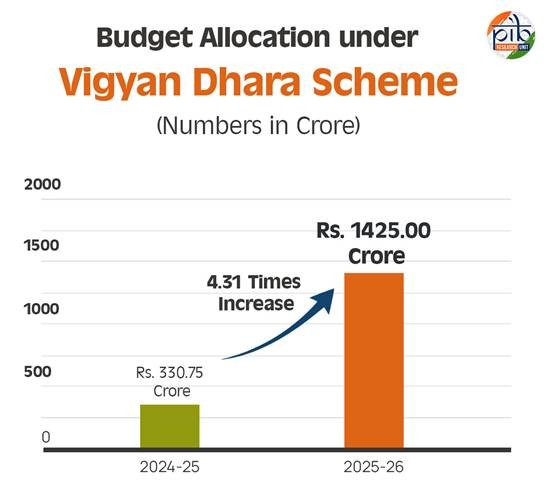
UPSC CURRENT AFFAIRS – 20 March 2025 Home / Vigyan Dhara Scheme- Budget Allocation enhanced Why in News: The Vigyan Dhara scheme, launched in 2025, integrates research, innovation, and capacity-building initiatives to strengthen India’s scientific and technological ecosystem, with a budget allocation of ₹10,579.84 crore for 2021-26. Introduction The Government of India has significantly increased the budget allocation for the Vigyan Dhara scheme, reaffirming its commitment to fostering scientific research, innovation, and technological advancement. The budget has risen from ₹330.75 crore in 2024-25 to ₹1425 crore in 2025-26, with a total outlay of ₹10,579.84 crore for 2021-26 under the 15th Finance Commission. This enhanced funding highlights the government’s vision of leveraging science and technology for national development. Genesis of Vigyan Dhara Launched on January 16, 2025, Vigyan Dhara integrates three major schemes into a unified framework to enhance efficiency in fund utilization and synchronize various programs. The scheme focuses on: Science & Technology (S&T) Institutional and Human Capacity Building Strengthening research infrastructure in academic institutions. Enhancing faculty development and student research opportunities. Encouraging international collaborations in scientific research. Research and Development (R&D) Supporting basic and applied research in sustainable energy, water resources, and advanced materials. Promoting translational research and access to international mega research facilities. Expanding India’s R&D workforce and improving Full-Time Equivalent (FTE) researcher count. Innovation, Technology Development & Deployment Encouraging startups and entrepreneurship in science and technology. Strengthening technology transfer mechanisms and commercialization. Developing indigenous technologies to reduce reliance on imports. Key Focus Areas Capacity Building Establishing advanced research laboratories in academic institutions. Training faculty and students to improve research output. Enhancing scientific collaboration at national and international levels. Research & Development Expanding basic and translational research in strategic areas. Promoting bilateral and multilateral international cooperation. Ensuring India’s research aligns with national priorities and global standards. Innovation & Technology Development Providing financial and technical support to startups and MSMEs. Strengthening academia-industry-government collaboration. Encouraging technology commercialization and indigenous innovations. Gender Parity in Science & Technology Increasing women’s participation in STEM fields. Implementing strategic programs to ensure gender equality in research. International Scientific Collaboration Promoting joint research projects with global institutions. Facilitating exchange programs for Indian researchers. Enhancing India’s role in global scientific leadership. Impact of Vigyan Dhara Strengthened Academia-Industry-Government Collaboration: Enhancing partnerships for scientific research and industrial applications. Increased Women’s Participation: Encouraging women scientists and researchers in STEM fields. Boosted R&D Capabilities: Improving India’s position in global research rankings. Aligned with the Department of Science and Technology’s (DST) five-year goals, Vigyan Dhara contributes to the vision of Viksit Bharat 2047 and complements the Anusandhan National Research Foundation (ANRF), ensuring that India’s research ecosystem aligns with international standards. Fostering a Culture of Innovation As of March 2025, 57,869 beneficiaries have availed of the scheme, including students under INSPIRE-MANAK (Million Minds Augmenting National Aspiration and Knowledge), which promotes a scientific mindset. In Telangana, 4,002 beneficiaries have benefited, with ₹3.3 crore utilized as of March 10, 2025. The increased budget will further strengthen state-level initiatives, expanding the reach of scientific programs. Nationwide Implementation & Awareness Being a central sector scheme, Vigyan Dhara operates nationwide. The Department of Science and Technology (DST) has undertaken extensive awareness programs, including: Media Outreach: Coverage through print, digital, and social media. Dedicated Web Portal: Providing comprehensive details about the scheme. Stakeholder Engagement: Active collaboration with research institutions and universities. Rising Scientific Publications & Research Initiatives India has shown consistent growth in scientific publications, as highlighted by the Science & Engineering Indicators report of the National Science Foundation (USA). Government Initiatives to Strengthen Research Increased R&D Budget Allocation. Establishment of ANRF under the ANRF Act, 2023. Creation of Centres of Excellence in critical areas. Expansion of fellowship programs for researchers. Encouraging private sector and industry participation in research. Research funding focuses on clean energy, water management, quantum technology, biotech, cybersecurity, and advanced materials, leading to patents, technology transfers, and industrial innovations.