

UPSC CURRENT AFFAIRS – 23rd July 2025

Home / UPSC / Current Affairs / Army gets first batch of Apache helicopters from U.S.

Army gets first batch of Apache helicopters from U.S.

Why in News?

  • The Indian Army inducted the first batch of Apache AH-64E attack helicopters from the U.S. in 2025.

Introduction

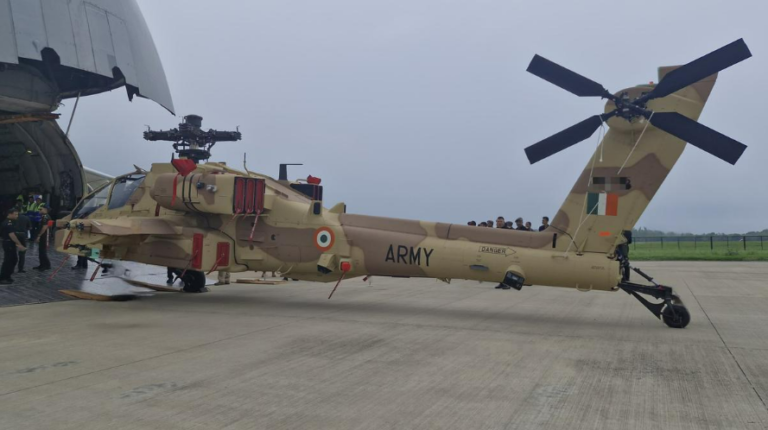
  • The Indian Army Aviation Corps formally received the first batch of three Apache AH-64E attack helicopters from the United States on July 22, 2025.
  • The delivery took place at the Hindon Airbase and marks a significant milestone in enhancing India’s offensive aerial capabilities.
  • These helicopters are part of a $600 million defence deal signed in 2020 for the procurement of six Apache helicopters exclusively for the Indian Army.
  • This is the first time the Indian Army—rather than the Air Force—is inducting Apache helicopters, marking an important shift in the operational capabilities of the Army Aviation Corps.

About Apache AH-64E Helicopters

  • The Apache AH-64E is one of the most advanced multi-role attack helicopters in the world, developed by Boeing. It is known for its battlefield survivability, lethality, and network-centric capabilities.
  • The Indian Air Force already operates 22 Apache helicopters, and this addition to the Indian Army’s fleet signifies a broader adoption of advanced aerial platforms.

Key Features

  1. Weapon Systems Equipped with a 30 mm M230 chain gun, AGM-114 Hellfire missiles, and Hydra 70 rockets, the Apache is designed for precision strikes and high-impact operations.
  2. Avionics and Night Capabilities Features advanced Target Acquisition and Designation System (TADS) and Pilot Night Vision System (PNVS), enabling effective operations in day and night conditions.
  3. Crew and Design Operated by a two-person crew (pilot and co-pilot/gunner) and built with crash-resistant components and redundant systems for battlefield survivability.
  4. Communication and Networking Integrated with advanced communication systems for real-time battlefield coordination and interoperability with unmanned systems and ground forces.

Deployment and Strategic Importance

Deployment Site

  • The helicopters will be deployed in Jodhpur, Rajasthan, under the Army Aviation Corps.
  • Their positioning along the western border will enhance India’s response capabilities in the desert and border regions, particularly against conventional threats from Pakistan.

Operational Role

  • The Apache helicopters are ideal for anti-armor operations, close air support, precision strikes, and reconnaissance missions.
  • Their deployment significantly strengthens the Army’s ability to operate in high-threat and high-altitude environments.

India–United States Defence Cooperation

This induction reflects the deepening defence ties between India and the United States. In recent years, both countries have strengthened their strategic alignment through:

  • LEMOA (Logistics Exchange Memorandum of Agreement): This agreement allows the militaries of India and the US to use each other’s bases for logistical support, such as refuelling, replenishment, and repair facilities, on a reimbursable basis.
  • COMCASA (Communications Compatibility and Security Agreement): This pact enables India to procure and use encrypted communication equipment from the US, facilitating secure and interoperable communication between the armed forces of both nations.
  • BECA (Basic Exchange and Cooperation Agreement): This agreement provides a framework for sharing high-end geospatial intelligence, including satellite and topographical data, with India, enhancing the accuracy of its automated systems and guided weapons
  • Regular joint military exercises including Yudh Abhyas and Vajra Prahar.
  • Major defence procurements including C-17 Globemaster aircraft, MH-60 Romeo helicopters, and M777 howitzers.

The Apache deal is another indicator of India’s transition toward modern, interoperable, and technologically advanced armed forces.

Significance for India’s National Security

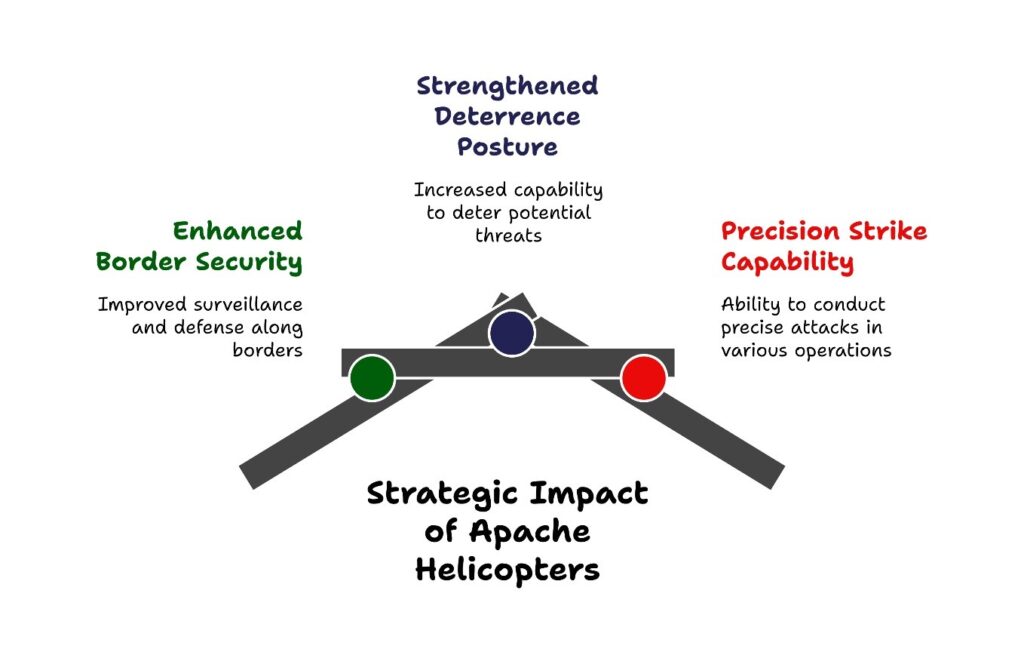
The deployment of Apache AH-64E helicopters directly contributes to:

  • Enhanced border security along the western frontier.
  • Strengthened deterrence posture against adversaries.
  • Increased ability to conduct precision strikes in conventional and counter-insurgency operations.
  • Independent aviation capabilities for the Indian Army, enabling faster, localized, and coordinated ground-air operations.

Economic Implications

For Indian Exporters

  • These reforms reduce transaction costs and compliance hurdles
  • Encourage a more competitive and efficient export environment
  • Promote value addition in key sectors like leather

For Tamil Nadu

  • The reforms particularly benefit the state’s leather industry, a major contributor to employment and exports
  • Boost the marketability of GI-tagged E.I. leather, enhancing rural and traditional industries

For Trade Policy

  • These decisions indicate a shift from regulatory controls to policy facilitation

Reinforce the goals of Make in India, Atmanirbhar Bharat, and India’s ambition to become a leading export power

Recently, BVR Subrahmanyam, CEO of NITI Aayog, claimed that India has overtaken Japan to become the fourth-largest economy in the world, citing data from the International Monetary Fund (IMF). 

India’s rank as the world’s largest economy varies by measure—nominal GDP or purchasing power parity (PPP)—each with key implications for economic analysis.

Significance and Applications

Leave a Reply

Your email address will not be published. Required fields are marked *

Call Us Now !

Copyright © JICE ACADEMY FOR EXCELLENCE PRIVATE LIMITED