UPSC CURRENT AFFAIRS – 30th July 2025
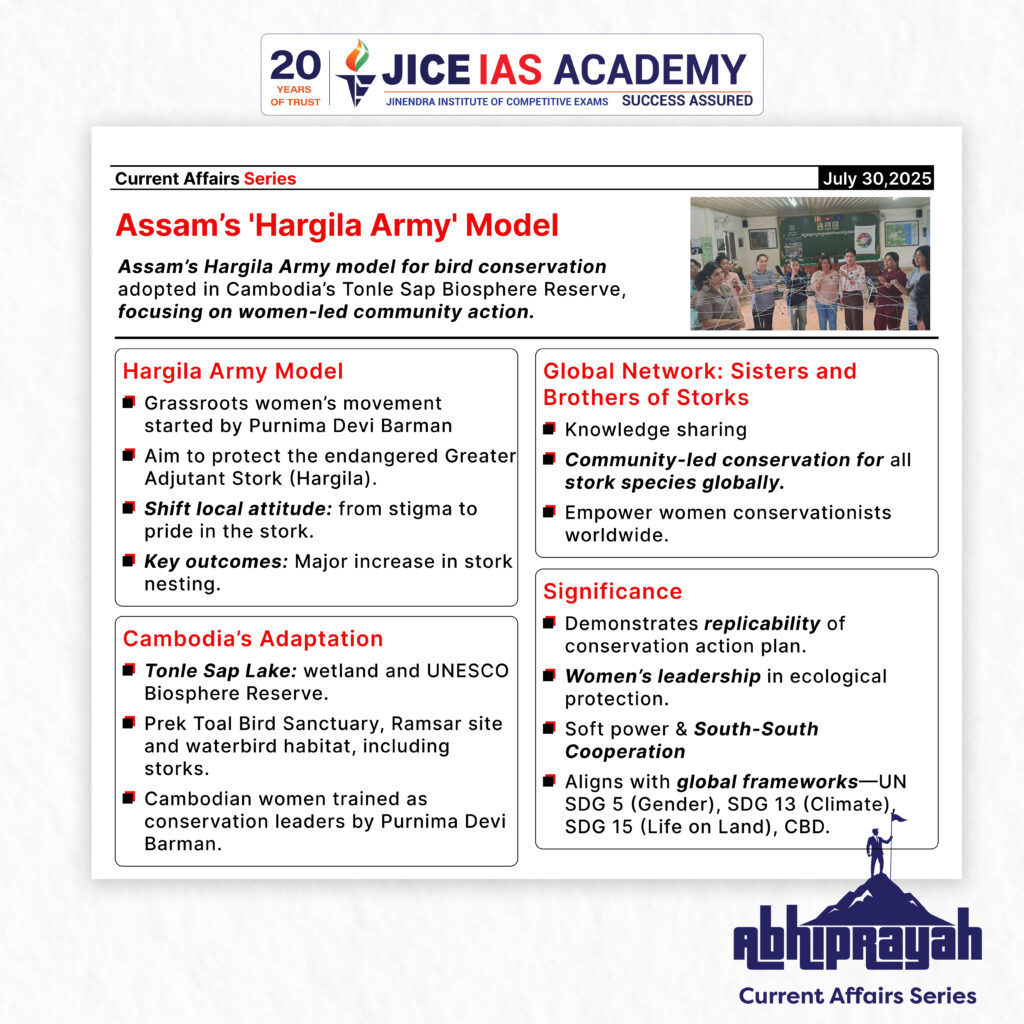
Assam’s 'Hargila Army' Model adopted in Cambodia’s Tonle Sap Biosphere Reserve
Why in News?
- The Hargila Army has been adapted for community-led conservation in Cambodia’s Tonle Sap Biosphere Reserve.
Introduction
- A unique, community-led conservation model from Assam, India—the Hargila Army, led by conservationist Purnima Devi Barman—is now inspiring global wetland conservation efforts.
- The model has been adapted for a transformative initiative in Cambodia’s Tonle Sap Biosphere Reserve, particularly in the Prek Toal Bird Sanctuary, a designated Ramsar site known for its rich birdlife.
Background: The Hargila Army Model (Assam, India)
- What is the Hargila Army?
- A women-led grassroots conservation movement initiated in Assam to protect the endangered Greater Adjutant Stork (Leptoptilos dubius), locally known as Hargila.
- Founded by Purnima Devi Barman, a wildlife biologist at Aaranyak and UNEP Champion of the Earth.
- Key Features of the Assam Model:
- Women empowerment through conservation leadership.
- Community engagement—conservation integrated with cultural traditions, education, and livelihood support.
- Activities like folk songs, textile art, community events, and awareness campaigns used to destigmatize the bird and make it a source of pride.
- Impact in Assam:
- Significant increase in local nesting populations of the Greater Adjutant.
- Changed attitudes from viewing the bird as ominous to a revered species.
Promoted women’s leadership in ecological protection.
Cambodian Adaptation: Tonle Sap Biosphere Reserve Initiative
- About the Region:
- Tonle Sap Lake is Southeast Asia’s largest freshwater lake and a UNESCO Biosphere Reserve.
- Prek Toal Bird Sanctuary, part of the Ramsar site, is a vital habitat for large waterbirds including storks.
- The New Initiative:
- Hosted by the Wildlife Conservation Society (WCS) Cambodia.
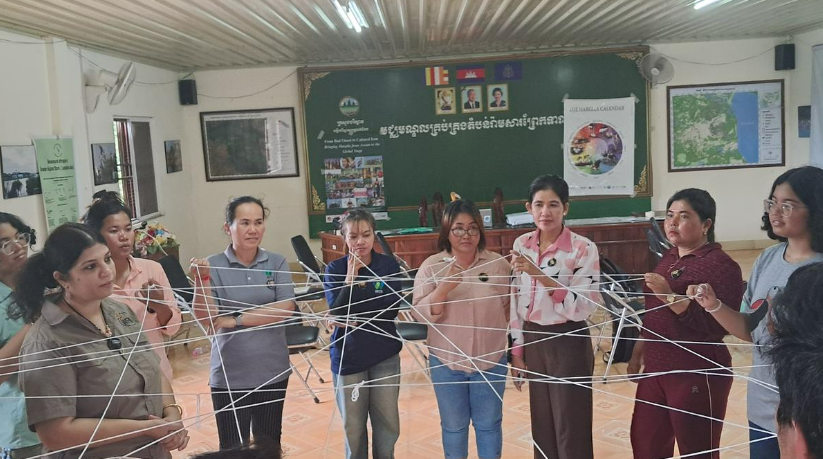
- Involves training 20 Cambodian women conservationists and park rangers in the Hargila Army model.
- Focus: Build community-based, women-led conservation leadership.
New Global Network: Sisters and Brothers of Storks
- A collaborative global network launched during the Cambodia training programme.
- Aims to:
- Facilitate cross-border knowledge sharing.
- Expand community-led conservation for all stork species globally.
- Support empowerment of local and indigenous communities, especially women.
Significance and Implications
- Conservation Impact
- Demonstrates the replicability of successful local models across geographies.
- Promotes community ownership of conservation goals.
- Gender Empowerment
- Positions women not just as participants but as leaders and guardians of biodiversity.
- Merges ecological science with traditional knowledge and cultural values.
- Cultural Diplomacy and South-South Cooperation
- Highlights India’s soft power and leadership in sustainable development and biodiversity protection.
- Strengthens India-Cambodia environmental cooperation under South-South exchanges.
- Alignment with Global Goals
- Supports:
- UN SDG 5 (Gender Equality),
- SDG 13 (Climate Action),
- SDG 15 (Life on Land),
- Convention on Biological Diversity (CBD).

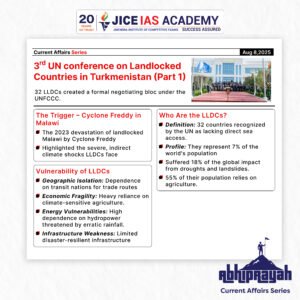
3rd UN conference on landlocked countries
UPSC CURRENT AFFAIRS – 08th August 2025 Home / 3rd UN conference on landlocked countries Why in News? At the
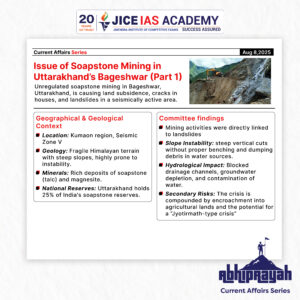
Issue of soapstone mining in Uttarakhand’s Bageshwar
UPSC CURRENT AFFAIRS – 08th August 2025 Home / Issue of soapstone mining in Uttarakhand’s Bageshwar Why in News? Unregulated
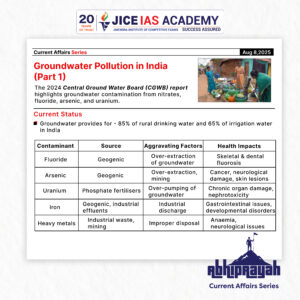
Groundwater Pollution in India – A Silent Public Health Emergency
UPSC CURRENT AFFAIRS – 08th August 2025 Home / Groundwater Pollution in India – A Silent Public Health Emergency Why
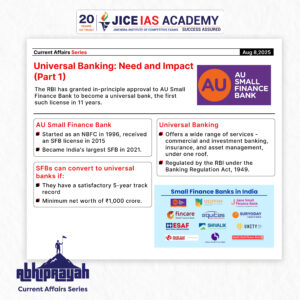
Universal banking- need and impact
UPSC CURRENT AFFAIRS – 08th August 2025 Home / Universal banking- need and impact Why in News? The Reserve Bank
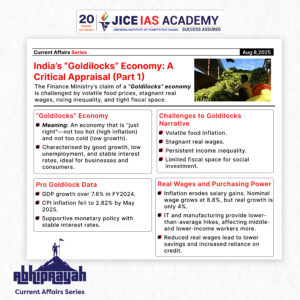
India’s “Goldilocks” Economy: A Critical Appraisal
UPSC CURRENT AFFAIRS – 08th August 2025 Home / India’s “Goldilocks” Economy: A Critical Appraisal Why in News? The Finance

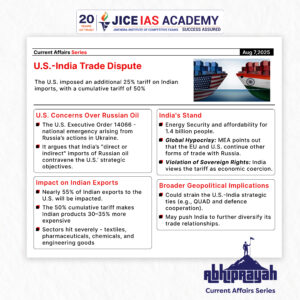
U.S.-India Trade Dispute: Trump’s 50% Tariffs and India’s Oil Imports from Russia
UPSC CURRENT AFFAIRS – 07th August 2025 Home / U.S.-India Trade Dispute: Trump’s 50% Tariffs and India’s Oil Imports from
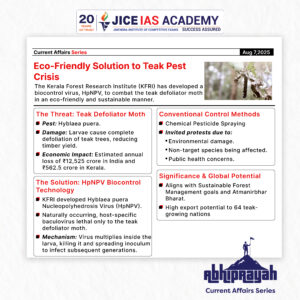
Eco-Friendly Solution to Teak Pest Crisis: KFRI’s HpNPV Technology
UPSC CURRENT AFFAIRS – 07th August 2025 Home / Eco-Friendly Solution to Teak Pest Crisis: KFRI’s HpNPV Technology Why in

New Species of Non-Venomous Rain Snake Discovered in Mizoram
UPSC CURRENT AFFAIRS – 07th August 2025 Home / New Species of Non-Venomous Rain Snake Discovered in Mizoram Why in
Introduction
Economic Implications
For Indian Exporters
- These reforms reduce transaction costs and compliance hurdles
- Encourage a more competitive and efficient export environment
- Promote value addition in key sectors like leather
For Tamil Nadu
- The reforms particularly benefit the state’s leather industry, a major contributor to employment and exports
- Boost the marketability of GI-tagged E.I. leather, enhancing rural and traditional industries
For Trade Policy
- These decisions indicate a shift from regulatory controls to policy facilitation
Reinforce the goals of Make in India, Atmanirbhar Bharat, and India’s ambition to become a leading export power
Recently, BVR Subrahmanyam, CEO of NITI Aayog, claimed that India has overtaken Japan to become the fourth-largest economy in the world, citing data from the International Monetary Fund (IMF).
India’s rank as the world’s largest economy varies by measure—nominal GDP or purchasing power parity (PPP)—each with key implications for economic analysis.